“In this day and age, that simply shouldn't be allowed” - Johan Bruyneel slams crash-marred Giro d'Italia Stage 1 finale
Cycling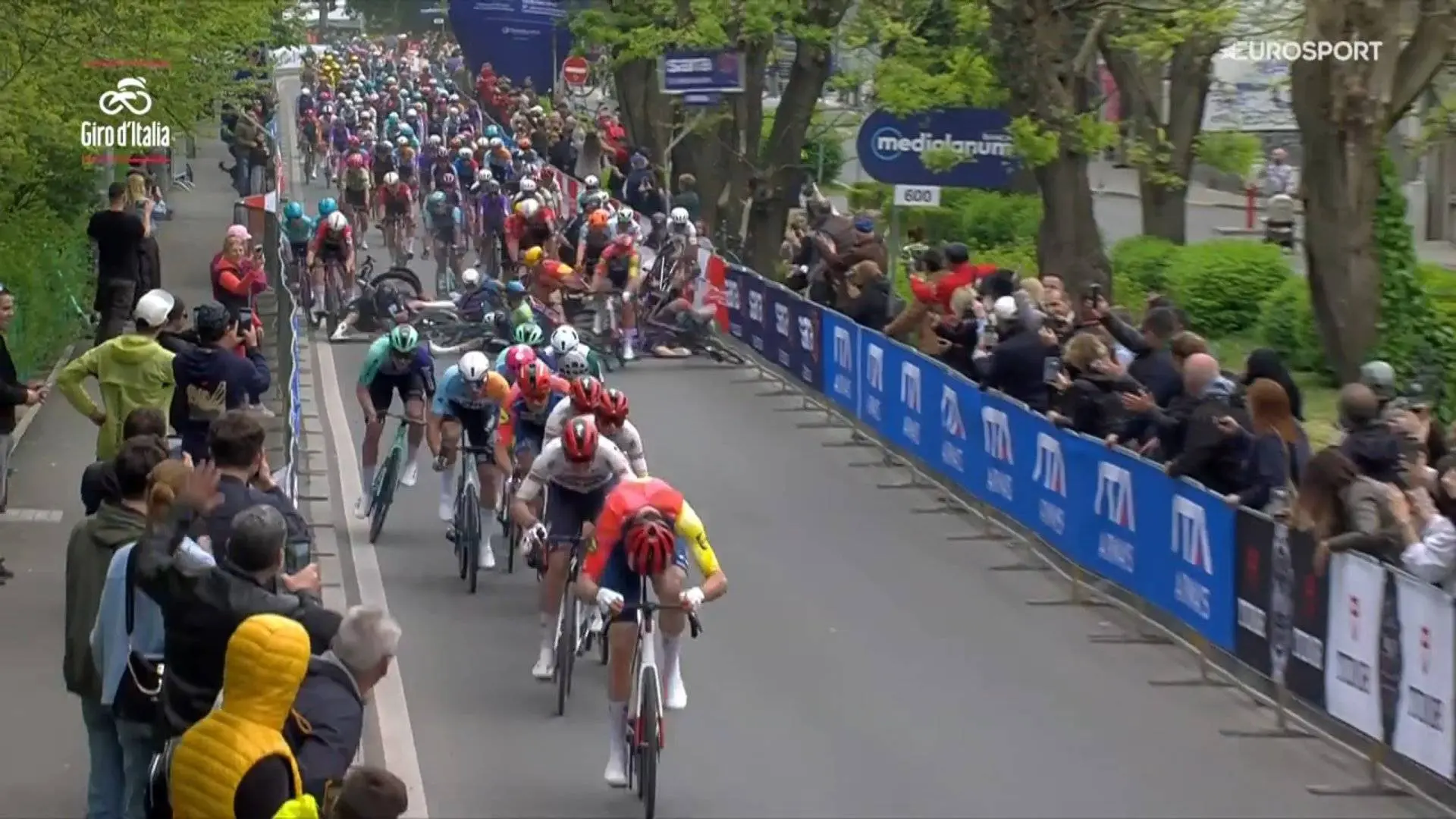
Johan Bruyneel believes the crash-marred opening stage of the 2026 Giro d’Italia was almost destined to end in disaster, with the former Grand Tour-winning team boss heavily criticising both the finale setup and the conditions which led to the huge crash in Burgas.
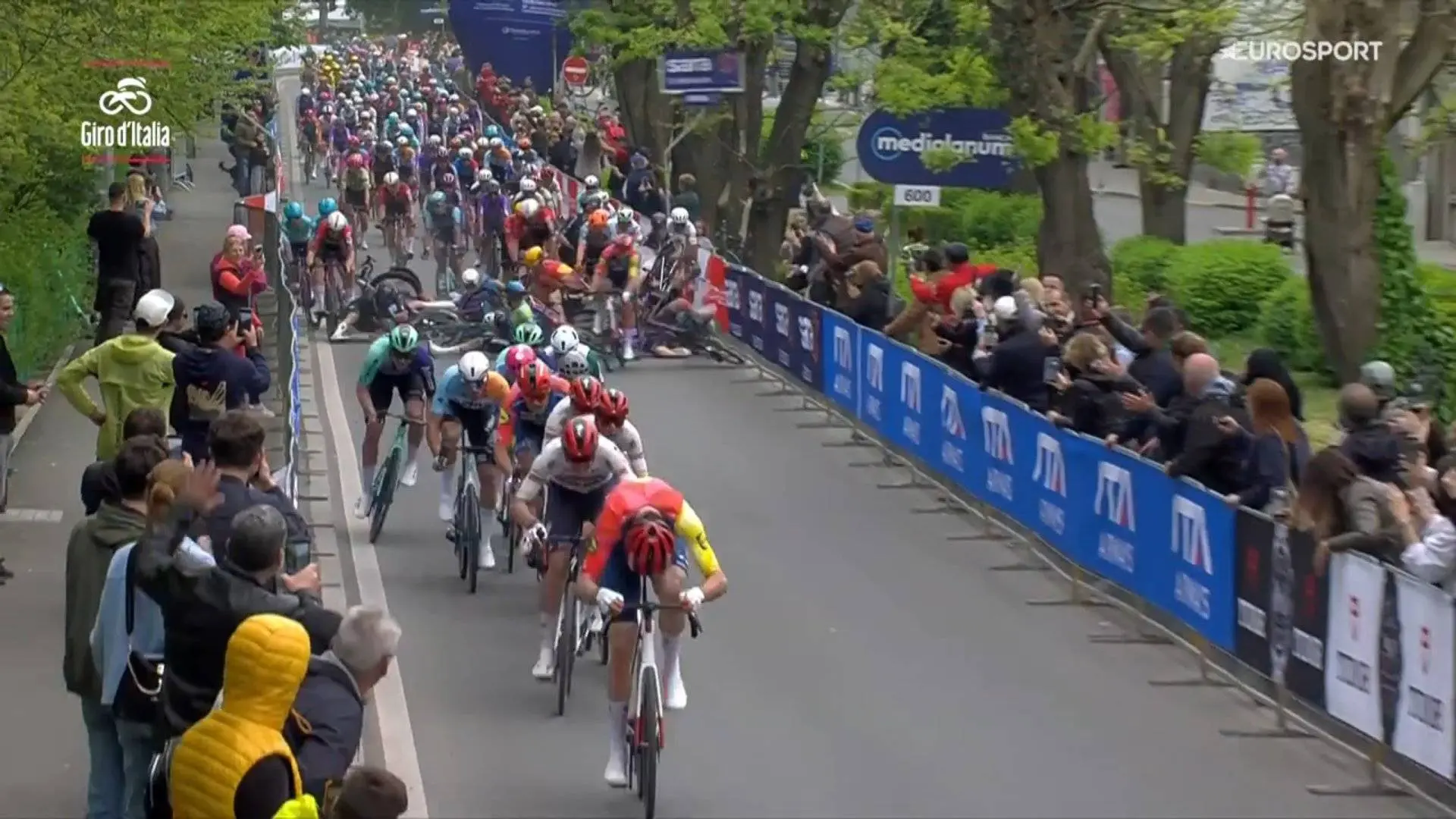
The opening day of this year’s Giro ended in chaos after a major incident inside the final kilometre split the peloton and wiped out much of the sprint field during the fight for the first Maglia Rosa.
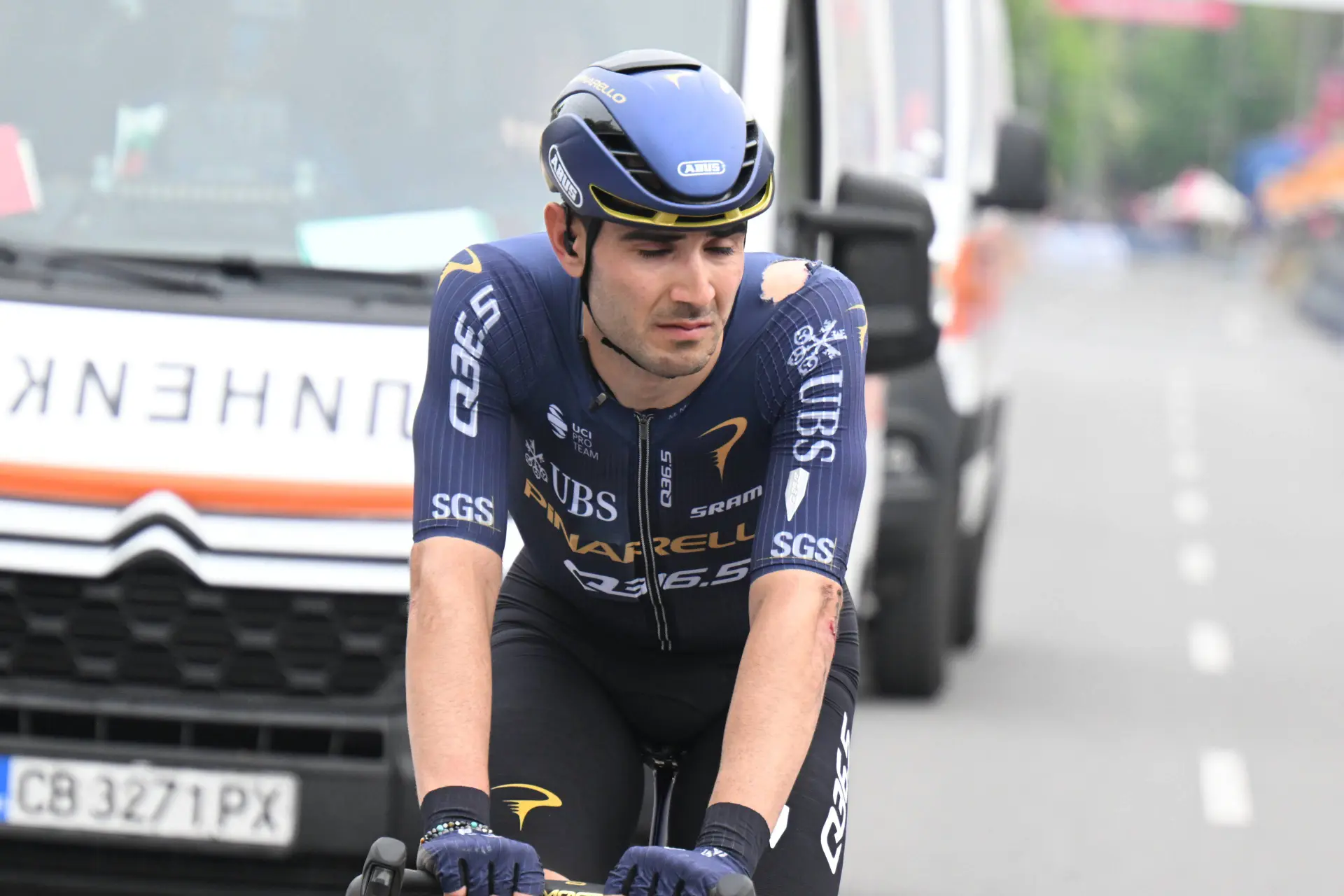
Paul Magnier ultimately emerged from the reduced front group to take victory ahead of Tobias Lund Andresen and Ethan Vernon, while notable sprint contenders including Kaden Groves, Dylan Groenewegen and Matteo Moschetti were all caught behind the crash. Moschetti has since abandoned the race after Pinarello Q36.5 confirmed the Italian suffered a concussion in the incident.
Speaking on the THEMOVE podcast afterwards, Bruyneel argued the finale had all the ingredients for a crash long before the peloton even reached Burgas. “You're 99.9 per cent certain it's going to be a mass sprint,” Bruyneel explained. “And then suddenly that final kilometre becomes that narrow... That's not good. That's a totally wrong decision.”
Read also
“You basically expect a crash”
Bruyneel also criticised the barriers used near the finish, particularly the protruding support legs visible along sections of the finale. “From around 300, 400 metres out there were already barriers in place,” he said. “But they were prehistoric crash barriers, sticking out into the road. I'm not saying that's what caused it, but in this day and age, that simply shouldn't be allowed.”
The Belgian’s criticism echoed wider concerns already raised following the opener, with Dutch analyst Thijs Zonneveld previously describing the barriers as “criminal” in reaction to the crash.
For Bruyneel, however, the problem extended beyond the barriers themselves and reflected the broader reality of modern sprint finishes. “Sprint speeds go well above 70 kilometres per hour,” he explained. “On top of that, everyone knows the course — everyone has done their reconnaissance. Everyone knows it's a bottleneck, which means nerves are running extremely high.”
That combination, Bruyneel argued, made the finale almost impossible to control once the sprint trains fully formed approaching the line. “You basically expect a crash, because there are too many people on too narrow a road.”
Bruyneel backs Visma approach around Vingegaard
The former US Postal and Discovery Channel directeur sportif also pointed toward Team Visma | Lease a Bike’s tactical approach with Jonas Vingegaard as evidence that several GC teams already anticipated the danger before the finale unfolded.
Throughout the closing kilometres, Vingegaard and Visma deliberately stayed deeper inside the peloton rather than fighting for position alongside the sprint teams at the front. “It’s not a bad strategy,” Bruyneel said. “There’s a risk that you lose time if you’re caught behind a crash. But you save so much energy by staying out of it — plus the energy from the stress. You can relax, and that's also saving energy, which is hugely important.”
Bruyneel also stressed, however, that such an approach is only realistic on certain stages and cannot become a permanent tactic throughout a three-week Grand Tour.
“They knew that if something was going to go wrong, it would happen in the final three kilometres, and that you'd receive the same time anyway,” he explained. “I'm not against it — especially on stage one — but they can't do it every day. They need to look at the course each time.”
The debate around rider safety and sprint finish design is unlikely to disappear quickly following the scenes in Burgas, especially after the opening stage of the Giro d’Italia has already produced both a major crash and the race’s first abandonment less than 24 hours into the Grand Tour.
Read also

Kieran WoodDeputy Editor-in-Chief
Kieran Wood is a sports journalist based in Wales and has been active in journalism since 2022. He regularly contributes to DartsNews.com and CyclingUpToDate.com, where he covers professional cycling and darts. In cycling, his work includes liveblogs from major races, including the Tour de France, the Giro d’Italia, and La Vuelta a España, alongside race reports and analysis. He has also conducted interviews with professional riders.
His reporting spans the full racing calendar, from one-day classics to stage races, with a focus on accurate, real-time coverage and clear contextual analysis. For statistics, results, and historical context, he regularly uses resources such as ProCyclingStats. To support reporting on rider activity and training context where relevant, he also references Strava.
In his work, Kieran places strong emphasis on careful sourcing, editorial accuracy, and updating articles as new, verified information becomes available.
claps 0visitors 0
Just in
Popular news
Latest comments
- Also, it's supposed to be hard to gain an advantage from drafting off Remco because he is so aero.Hills3319-10-2026
- How would stats back it up? You realise tactics involved could mean Vine saved his legs for a faster finish? Some riders can choose to go all out and fade later in the ride, others can hold steady state the whole way, and others can have a reserved start and power up later in the ride. You can't judge just by the stats unless you have power data to be able to prove Vine is riding faster even though he is putting out the same or less power (suggesting drafting). I'm sure the stats prove that Vine didn't cheat because UCI would monitor the stats to make sure this exact scenario doesn't happen (and disqualify them for drafting if the stats proved it).Pogboom19-10-2026
- Only one person would say such a thing here. Sorry to burst your bubble but I’m afraid that window of opportunity has now closed. You can beat some of the people all of the time and all of the people some of the time but you can’t beat all of the people all of the time.Jumpyjohn19-10-2026
- Both prizes are actually pathetic, almost amateur like, not even covering the cost of participatingJumpyjohn19-10-2026
- It depends on how you define doping and you would do well to give your definition so we can see how against it you are. If you consider the use (as a hypothetical example) of a new beneficial artificial product unknown to anti-doping agencies ok without considering asking them if it would constitute doping if you told them about it then we’re never going to agree on who could be or couldn’t be doping and according to what threshold, moral, statistical, legal, comparative. In football even financial doping is now consideredJumpyjohn19-10-2026
- I can’t wait to follow Pogi's races in 2027. Cycling will be exciting again!!!PogiSloFans19-10-2026
- I saw it for quite a while and the stats back it up
 Rafionain-Glas19-10-2026
 - Hope he can make a redemption by winning all grand tour or all monuments in single seasonZamorano19-10-2026
- great for Brandon to get this monkey off his back - first win in Rainbow has got to feel good.mij19-10-2026
- they are super good.mij19-10-2026
Loading
Write a comment