“If you don’t have a professional race on TV, small children can’t see the stars” – Jonas Abrahamsen warns Norway risks failing next generation of cyclists
Cycling
Norway can put riders on the top step of the Tour de France, yet Jonas Abrahamsen believes the sport at home is quietly being starved of the visibility it needs to survive.
The concern is not framed around medals, prestige or even his own breakthrough season. Instead, Abrahamsen is questioning what happens next, and who gets inspired, if professional cycling continues to drift off Norwegian television screens.
Speaking in an interview with Domestique, the Uno-X Mobility rider laid out a warning that goes well beyond one race or one calendar decision.
“If you don’t have a professional race on TV, small children can’t see the stars,” Abrahamsen said, pointing to a growing disconnect between international success and domestic exposure.
Visibility, not success, is the real problem
Abrahamsen’s argument is rooted in absence rather than failure. The disappearance of the Tour of Norway from the calendar, inconsistent broadcast coverage, and limited mainstream attention have combined to leave cycling increasingly marginalised in a country dominated by winter sport.
The scale of the issue frustrates him precisely because it is solvable. “It is maybe one million euros. It is nothing for Norway,” he said, arguing that the cost of sustaining a professional race and meaningful coverage is negligible when set against the long-term impact on participation and development. “It is so important for the sport.”
For Abrahamsen, the consequences are generational. Without visible role models, cycling struggles to compete for attention, regardless of how well Norwegian riders perform abroad. “Norway has always loved winter sports,” he added. “It can love cycling too.”

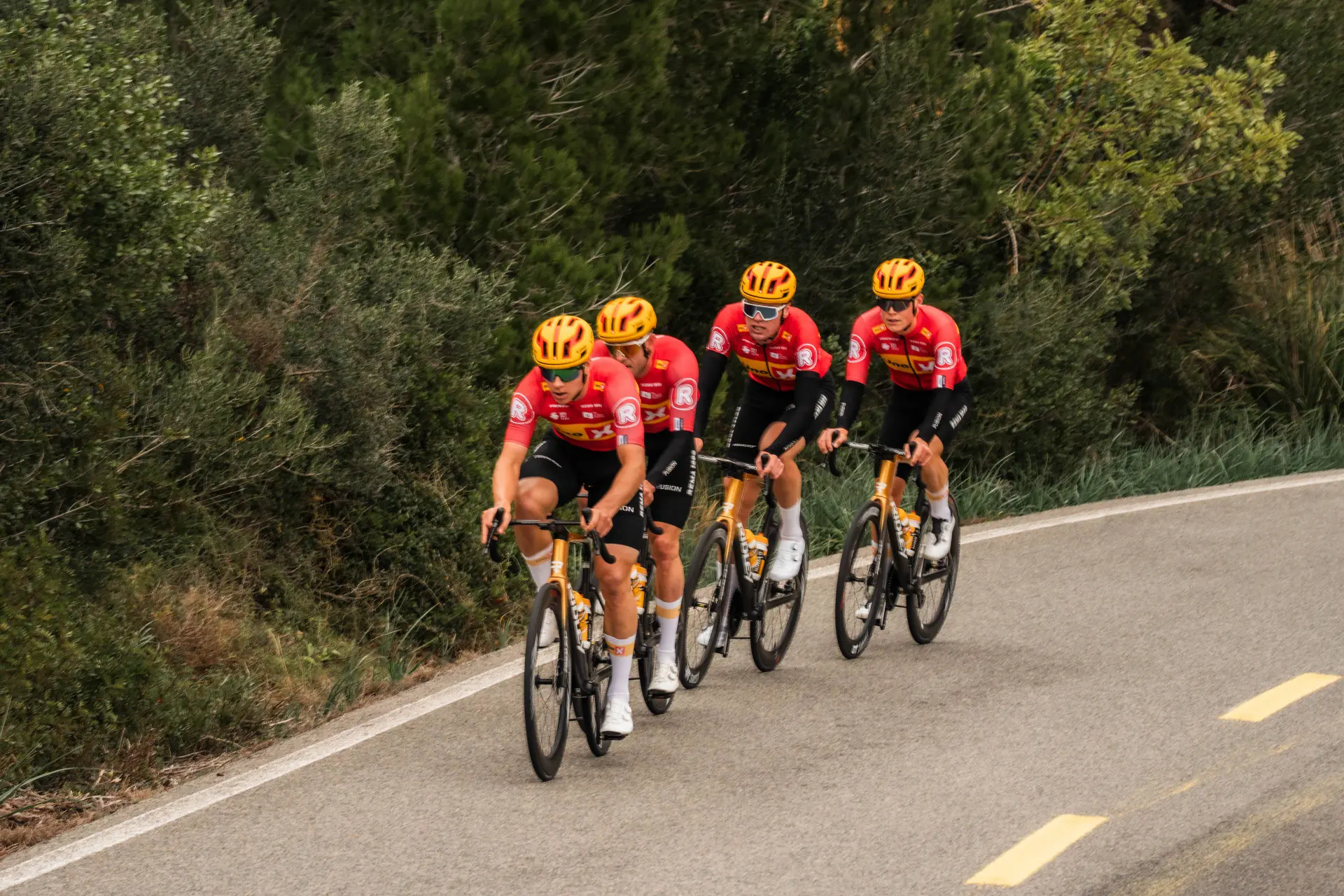
Abrahamsen took Uno-X's first ever Tour stage win in 2025
A season that shows what is possible
Those words carry extra weight given Abrahamsen’s own trajectory. His Tour de France stage win in Toulouse was not a romantic one off, but the product of accumulated experience and correction. He has spoken openly about learning from mistakes made in previous Tours, adjusting his sprint timing after going too early in 2023 and approaching decisive moments with greater restraint.
“If I used my energy before the sprint, I could not win,” he said, describing a victory built on patience and calculation rather than impulse.
That same clarity applies to his return from injury earlier in the season. After fracturing his collarbone shortly before the Tour, Abrahamsen sought a definitive medical answer rather than gambling on instinct. “It was nice to have a specialist saying you are good to go or not,” he said, before returning to training almost immediately. The result was not just participation, but success on cycling’s biggest stage.

Uno-X, standards and responsibility
Abrahamsen’s perspective is also shaped by his long association with Uno-X Mobility, a project he has watched grow from domestic roots into a WorldTour presence. He credits the influence of experienced figures such as Alexander Kristoff for embedding standards around effort and professionalism, describing how behaviour rather than rhetoric set the tone within the team. “Every time he is in a race he gives everything,” Abrahamsen said.
With that progress, however, comes expectation. “We need more riders to take the step to victories,” he added, acknowledging that opportunity alone does not guarantee results. The team’s WorldTour status was earned through sustained pressure and late-season points battles, not handed out by reputation.
A warning, not a complaint
Abrahamsen is careful not to frame his comments as resentment. Instead, they read as a warning from someone who has seen both sides of the system. Internationally, Norwegian cycling is thriving. Domestically, he fears it is becoming invisible.
“It is so shit,” he said of the current situation, returning to the core issue of exposure. Without races on television, without a consistent domestic presence, the pathway risks narrowing before it ever begins.
For Abrahamsen, the danger is simple. Success that cannot be seen struggles to inspire, and a sport without visible stars rarely produces new ones.

Kieran WoodDeputy Editor-in-Chief
Kieran Wood is a sports journalist based in Wales and has been active in journalism since 2022. He regularly contributes to DartsNews.com and CyclingUpToDate.com, where he covers professional cycling and darts. In cycling, his work includes liveblogs from major races, including the Tour de France, the Giro d’Italia, and La Vuelta a España, alongside race reports and analysis. He has also conducted interviews with professional riders.
His reporting spans the full racing calendar, from one-day classics to stage races, with a focus on accurate, real-time coverage and clear contextual analysis. For statistics, results, and historical context, he regularly uses resources such as ProCyclingStats. To support reporting on rider activity and training context where relevant, he also references Strava.
In his work, Kieran places strong emphasis on careful sourcing, editorial accuracy, and updating articles as new, verified information becomes available.
claps 2visitors 2
Just in
Popular news
Latest comments
- I hope he takes Lombardia. It will be interesting to see him with Remco - guaranteed Primoz doesn't work for him.mij09-10-2026
- Maybe Net Company INEOS should be signing Roglic. Feels like they have been mostly irrelevant since G hung up the shoes. At least they would have someone who is there or there abouts on GC.MASnell09-10-2026
- Maybe Net Company INEOS should be signing Roglic. Feels like they have been mostly irrelevant since G hung up the shoes. At least they would have someone who is there or there abouts on GC.MASnell09-10-2026
- i guess there's journalism and then there's journalism. this website simply collects cycling stories and aggregates them in one portal for us fans to access. they aren't really investigative reporters, and their team likely isn't big enough to go into real depth... which is fine by me since i don't expect much more from them. that said, i agree with your view. it would be nice to see a bit more follow-up that pushes the people in charge to actually take a stance.Ketterechts08-10-2026
- UAE was really badly positioned at the last climb, and Ineos did a great job of making that happen at the bottom. That must have affected del Toro and the rest. His attack wasn't spectacular, and they hadn't ripped apart the bunch enough, letting a large group remain in back to reel him in. UAW lost the race on the road to the climb and the bottom third of it, I think.RidesHills08-10-2026
- He won in exactly the same way as others. By being the fastest to complete the stages.mobk08-10-2026
- Very surprised del toro couldn't beat everyone here against lesser competition. He's well on his way to being top 5 in the worldbruins3008-10-2026
- Being the best rider left in the race is pretty much the only way to win in any edition, surely? Seems reductive to say "they only won because the entire peloton wasn't as absolutely stacked as it could've been" - you can only beat who is in front of you.wrsty08-10-2026
- I’m sorry but generally the coverage on your site is first class but this incident highlights something I just don’t get with cycling journalism. This accident should never have been allowed to happen, it comes uncomfortably close to the Finlay Tarling tragedy and two other incidents took place within days of this. I checked all of the cycling websites and you all put out basically the same story. Pidcock gave journalists the perfect opening to blow this sky high, what has the UCI got to say? What is Adam Hansen doing? What do the organisers say? Nothing, you all trot out the same easy quotes taken from Pidcocks interview after the race but do nothing to follow it up. I see it time and time again, journalists taking the easy way out but being outraged when it happens again as it surely will. Riders can’t do this but journalists should be independent and should be able to raise these uncomfortable questions but cyclinguptodate and every other on line publication prefer to take the easy way out. That’s the real tragedy here.Paul53108-10-2026
- Happy to help :-)Mistermaumau08-10-2026
Loading
Write a comment