"His highest peaks can still be just as high" - Wout Van Aert stands out as a new contender for Montréal World Championships
Cycling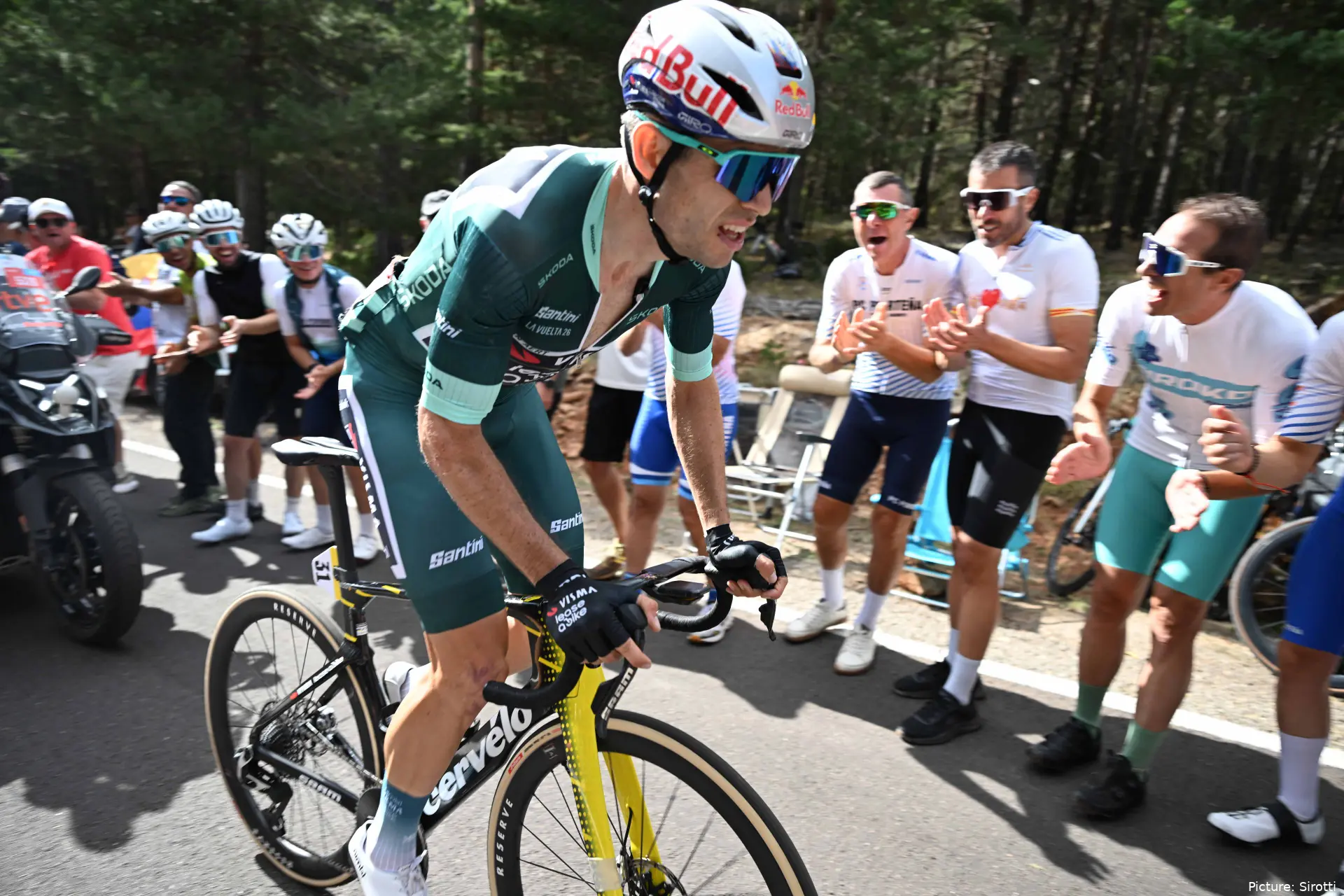
At age 31, Wout Van Aert still reaches his best form at times, but it is not as easy as earlier in his career. Ahead of a World Championships road race where Tadej Pogacar is unlikely to be present, Belgian national coach believes that the Vuelta a España is just what the Team Visma | Lease a Bike rider needs and might propel him into his best form.
“Even if Wout had ridden the Tour, he would still have started the Vuelta. That was always the idea, to ride the Vuelta with the World Championships in mind," Pauwels said in words to Het Nieuwsblad.
The Belgian began his season later than initially planned at Le Samyn, after having suffered an ankle fracture during one of the opening races of the year in cyclocross. His form was strong, as within days he finished in the Top10 of Strade Bianche.
The Visma rider showed his best legs at Milano-Sanremo where he finished third, despite being involved in the same crash that took down Tadej Pogacar. Second at Dwars door Vlaanderen and fourth at the Tour of Flanders followed, but despite all this racing, his form only improved all the way into Paris-Roubaix.
The Belgian won the 'Hell of the North' for the first time in his career, something that also came as a result of the busy racing schedule he had. “Wout is someone who absorbs a lot of workload and volume very well. All those days of racing make him better.”
Third-week Van Aert is usually the best
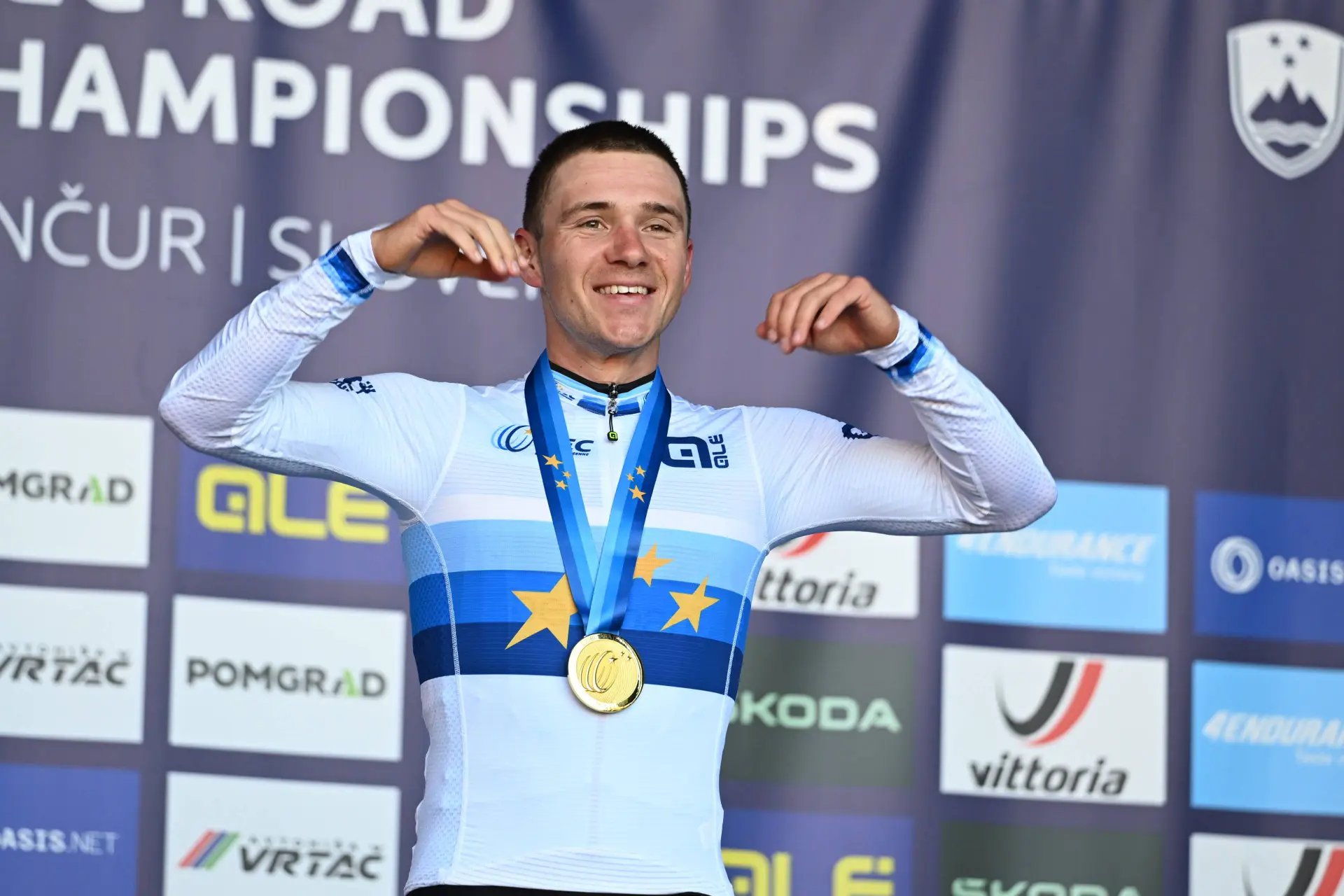
Pauwels speaks as someone who's in charge of the Belgian national team. At the time being, he is working on the selection for the worlds, in which Van Aert will join Remco Evenepoel - perhaps to form a winning duo. The Visma rider is currently leading the points classification at the Vuelta a España and his form appears to be improving already.
“We have seen so many times that he can still play a crucial role in the third week for Vingegaard or another classification rider. That proves that he does not simply reach the end of a Grand Tour completely empty. Racing day after day actually makes him better, and that is something you cannot reproduce in training.”
Pauwels is eager to see what his rider will do in the second half of the race, hoping it will take him to his very best level ahead of Montréal.
“Maybe he will finish the Vuelta exhausted, just like everyone else. But then, from around seven days after the final stage and for the following weeks, you get that supercompensation effect. The World Championships in Montréal therefore come at the perfect moment.”

Wout van Aert in action on Stage 7 of the 2026 Vuelta a Espana
World Championships at a perfect time
Pauwels hints that Van Aert not often reaches his best level, unlike riders such as Tadej Pogacar and Mathieu van der Poel, but that he knows how to reach it through the experience he's gathered through the years.
“I believe his highest peaks can still be just as high as they were five years ago. But it would not be unusual if it takes him a little longer now to reach top form and if he needs more work to get there.”
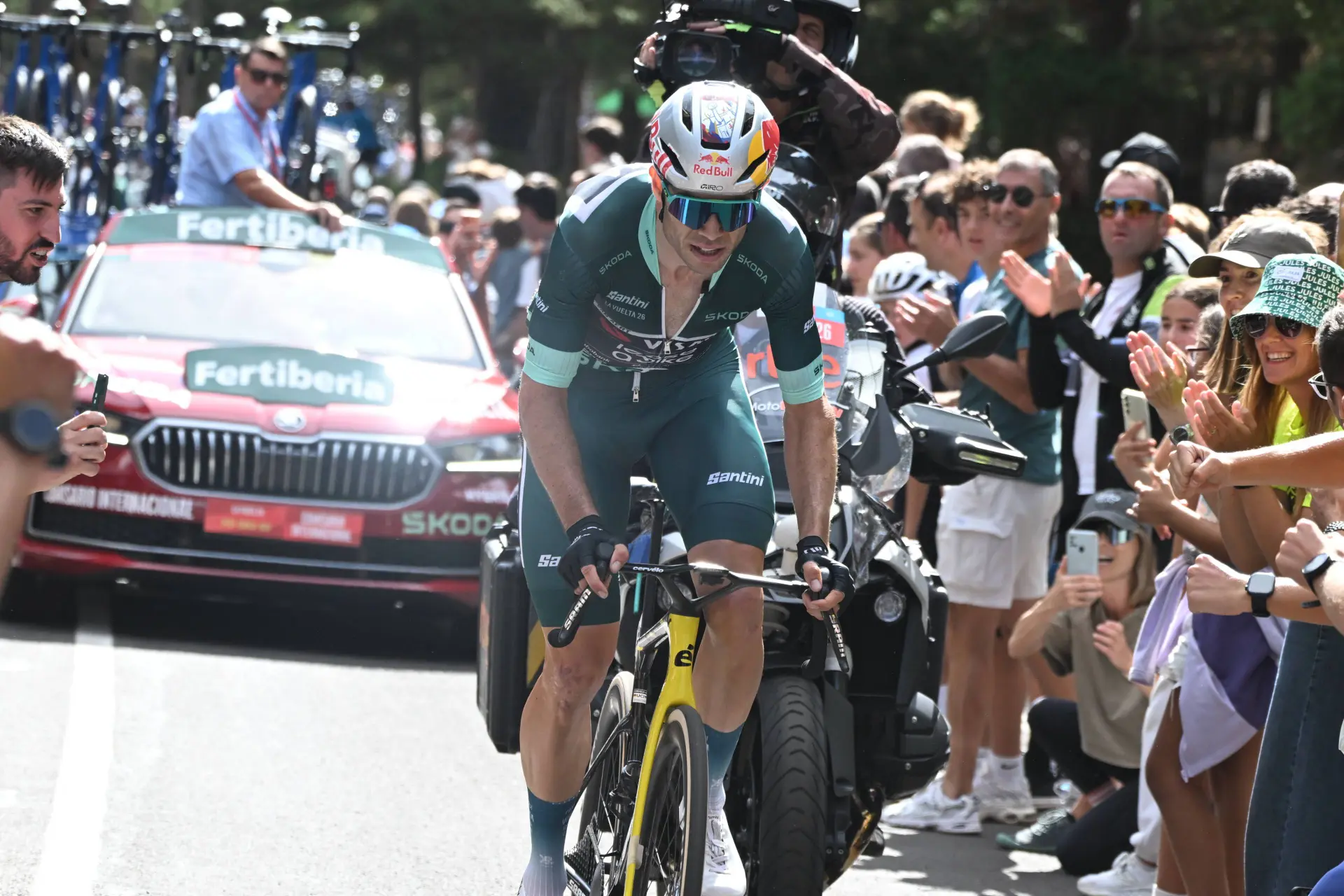
Equal to experience and tactics will be weight management. As a cobbled classics specialist, he often favours the raw watts, not the power-to-weight ratio. Whilst the climbs in Montréal won't be long, they will be very frequent.
Van Aert will need his best climbing legs to be in contention for a result, and this will require him to also arrive lean in a way that is different from what he had in the spring classics. “The World Championships in Montréal have 3,800 metres of climbing. That means weight will play a big role.”
“The target weight is easier for Wout to reach by riding a Grand Tour. That is another advantage the Vuelta gives him," Pauwels assures.
Rúben SilvaEditor-in-Chief
A founding contributor to CyclingUpToDate since its launch in January 2022, Ruben Silva has played a central role in shaping the site’s editorial direction and long-term growth. Before joining the project, he built his experience through independent blogging at Echelons Hub and by producing race previews for Ciclismo Internacional, developing a strong analytical voice rooted in daily engagement with professional cycling.
Beyond editorial work, he has been closely involved in the expansion and coordination of CyclingUpToDate’s wider network, helping establish and support sister platforms across multiple languages. This includes ongoing collaboration with CiclismoAlDia (Spanish), CiclismoAtual (Portuguese), WielrennenUpToDate (Dutch), and RadsportAktuell (German), contributing to a shared editorial vision and consistent international coverage.
He also helps oversee editorial governance across the network, setting standards for accuracy and consistency and coordinating updates or corrections when needed.
Originally from the Porto metropolitan area in Portugal, he holds a bachelor’s degree in Geography. His path into cycling journalism was shaped not through formal media training, but through independent reporting, community engagement, and sustained on-the-ground involvement in the sport.
Over the course of his career, he has conducted approximately 100 interviews across road cycling and cyclocross, ranging from one-to-one conversations and online formats to press conferences and on-site pre- and post-race coverage. His interviews include leading riders, team managers, and prominent figures within cycling media: Tadej Pogacar, Jonas Vingegaard, Mathieu van der Poel, Primoz Roglic, Wout van Aert, Joao Almeida and Tom Pidcock; managers like Patrick Lefevere and Joxean Matxin; and YouTube personality Bryan Kennedy (BKXC)...
Within 18 months of launch, he helped grow CyclingUpToDate’s English-language platform into one of the most-read cycling news websites, built entirely from the ground up. As both a professional journalist and lifelong cycling enthusiast, his focus remains on delivering accurate, timely, and well-contextualized coverage.
claps 0visitors 0
Just in
Popular news
Latest comments
- A broken contract by mutual agreement is perfectly fine. The problem is if one side does it without the other agreeing which isn't the case in this situationvappaxbipmv09-10-2026
- Maybe Ineos are planning to concentrate on GC after recent statements about getting back to winning the Tour?Lozza09-10-2026
- lol maybe a better questionmij09-10-2026
- Does Ineos?Mistermaumau09-10-2026
- ThanksMistermaumau09-10-2026
- It depends on your religion or opinion of science but if you feel he did the right thing I suggest you go complain to guys like Mohorič, Mas, etc. for reminding him not to try to copy Senna too much.Mistermaumau09-10-2026
- yeah that was poorly written, but Gulio was in the pink, and they didn’t work for him to protect the jersey. they let a group get up the road. the transfers are out of hand. what is a contract for?mij09-10-2026
- does he make it two years?mij09-10-2026
- A lot of things should not be happening but everything seems to be getting worse, not just in cycling or sport or professional surroundings. People are abandoning (common) standards in their belief they are only responsible towards themselves and have lost the ability to care, consider or understand consequences for others. If you ride , you should have noticed by now. I’m not one to stick to rules per se but when, I don’t go round aggressing or criticising others who don’t either. On the bike you constantly get hooted, harassed, insulted or nudged off by drivers who broke at least double the number of rules you did before they point yours out. That said, I haven’t seen many specifics on this case yet so I’m not going to comment specifically, for now. If anyone knows more…Mistermaumau09-10-2026
- it is crazy. is this UAE at the end of Tadej’s reign? it happens!mij09-10-2026
Loading
Write a comment