"He can completely unplug for now": No more pumpkin-carrot diet for Derek Gee-West after Giro top-5
Cycling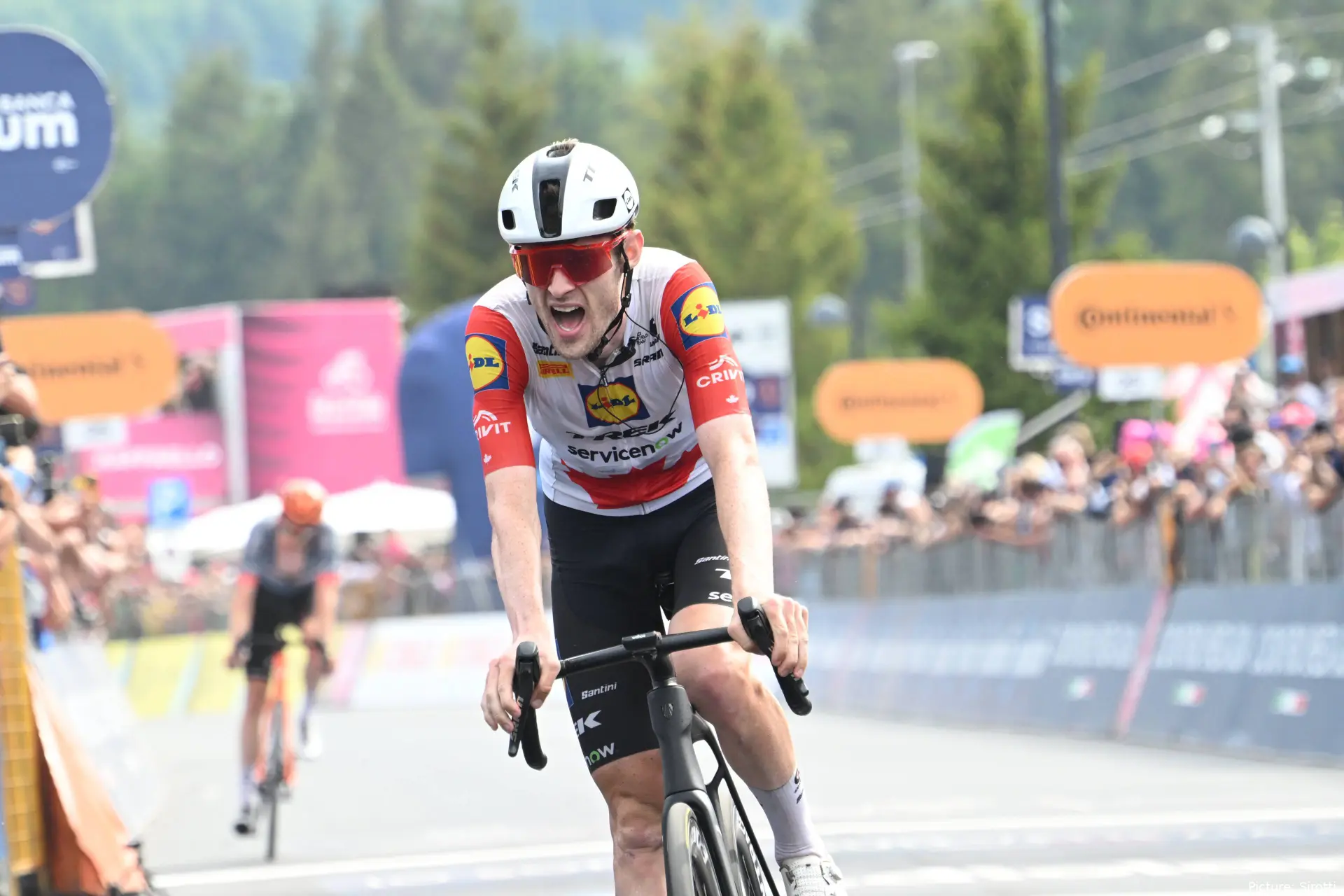
Derek Gee-West completed the 2026 Giro d'Italia without displaying any major weaknesses, used his strong weapon - time trial - to move up the rankings, and through a daring attack in the queen stage secured a top-5 result, his second within two years following a 4th place in 2025. This confirms Gee-West as a proven GC rider; his story to reach this point was unique.
Even though the Canadian rider would've always competed on road here and there since the juniors (when he became Canada's junior time trial champion), his early career revolved more around track cycling. Part of Canada's team pursuit national team, Gee-West's track career culminated at the 2021 Tokyo Olympics with a fifth-place finish.
Around this time, Israel-Premier Tech identified Derek Gee's road talent and gave him a chance on their development team for the 2022 season, during which Gee-West earned a promotion to the main team, where he debuted at the age of 26. And the rest is history.
It was a fascinating transition, one that required more than just a change of mentality, Gee-West explains in a team interview: "When I was doing track racing, I was around 77 to 80 kilos. Then I switched to the road and did my first year at around 76. I found my success when I dropped down to about 72 kilos with a top-10 at the Tour de France the year after."
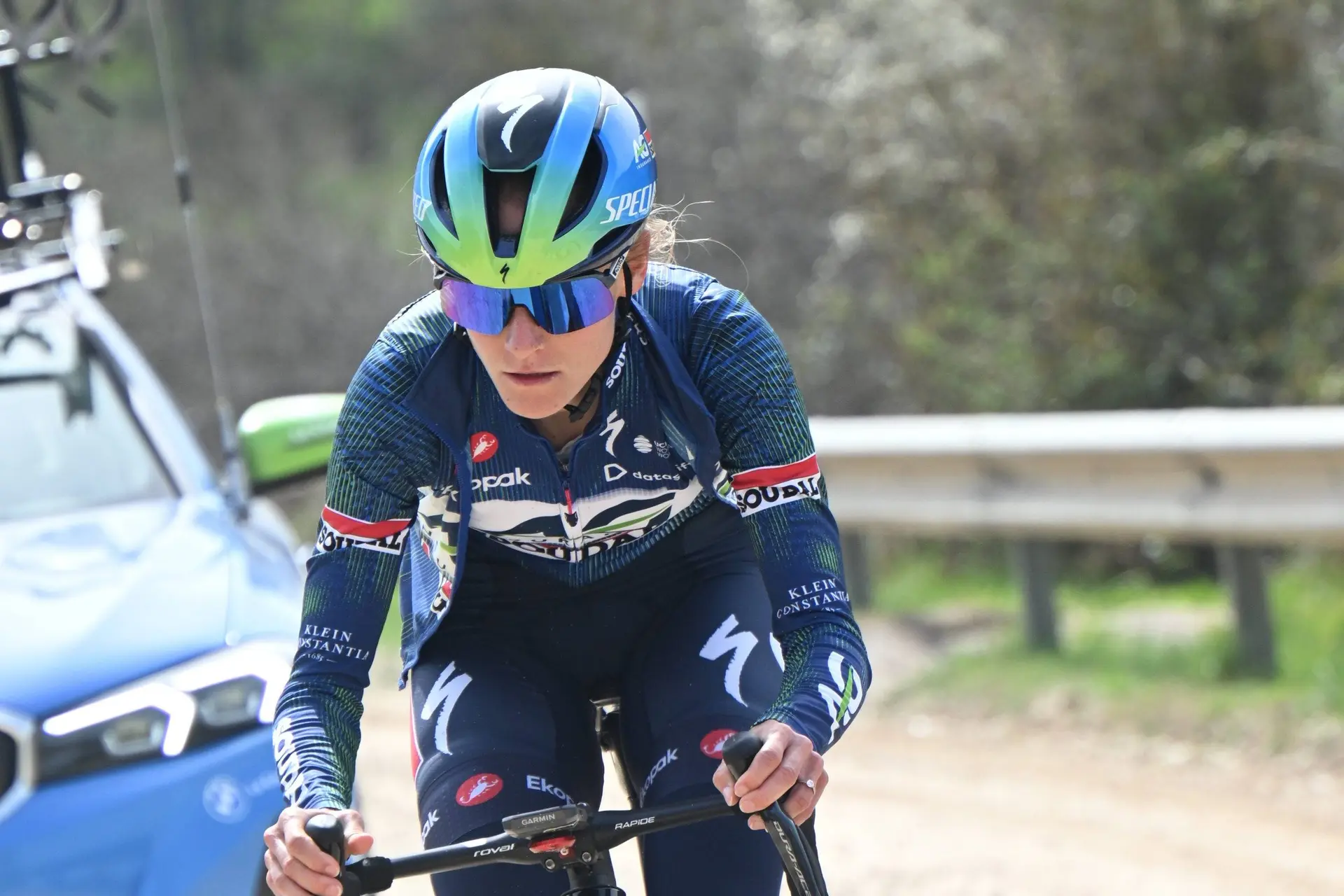
"It was a fight as I didn’t want to start thinking weight was the be-all-and-end-all and push it too far. It’s definitely a struggle between trying to find the right balance of being skinny for a competition, but at the same time, trying not to push it too far, because even at my lightest race weight, I’m probably still the heaviest guy in the GC field," he laughs.

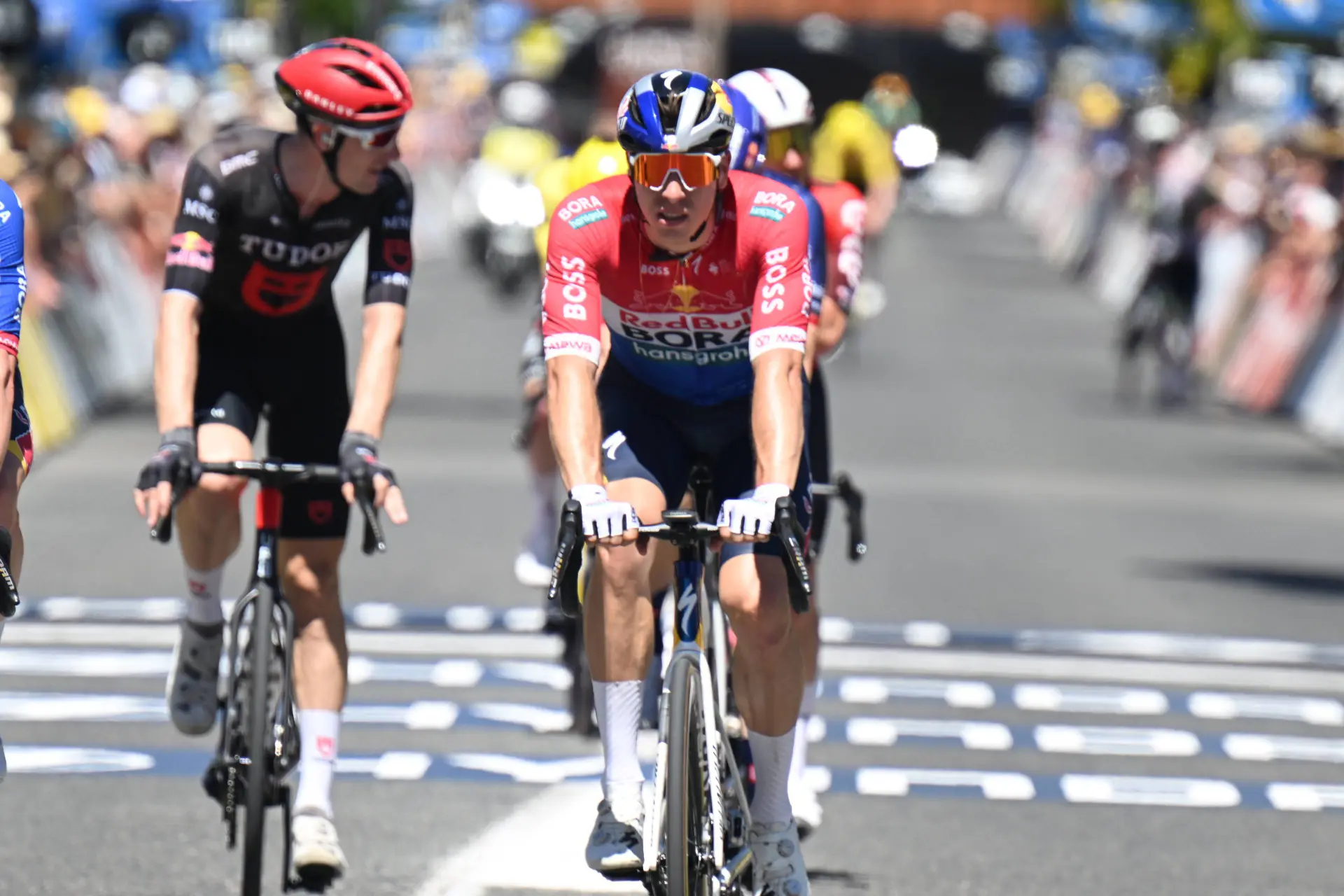
Derek Gee at the 2026 Giro d'Italia
Just like pushing massive watts per kilo, nutrition has become an inseparable aspect of cycling. For this cause, Gee-West works with experienced nutritionist Marco Sassi, who explains some of the factors that influence feeding during a race:
"Many things can change during the race, depending on whether you’re in the break or in the peloton. That can impact your consumption. Sometimes, even what you eat on the bike can change because you might not feel like you need as much as planned. After all, the peloton is riding easier than expected," Sassi says.
Pumpkins and carrots for climbing gains
Nutritionists also focus on the types of food riders eat to ensure the best feeling on the bike.
"We choose lower fibre food on climbing days, for example, to make sure the gut is free and empty. We reduce wholegrains and vegetables to just certain types like zucchini, pumpkin, carrot," Sassi explains.
At least after the Grand Tour, Gee-West will be allowed some "cheat days" with no further big goals in his calendar at the moment. "After the Giro, Derek will have some time when he’s not tracking the food, and he can completely unplug, which is good for the mental part," Sassi explains.
You need to know when to switch off
There is no denying that the term "power-to-weight ratio" has transcended to somewhat of a magic formula when it comes to cycling. The physics is strict there; in order to go uphill faster, a rider either needs to produce more power or weigh less. But there's a limit to both approaches, and finding a sweet spot that allows the rider to perform at the highest level possible is the real alchemy.
"I know focusing on your weight is just part of the sport, but you have to know when to switch off, enjoy life, and recover. Then when you’re at a training camp or something, it’s super easy to be dialled and get where you need to go," Gee-West says.
"On a normal day, I would probably weigh everything up until dinner, then just eyeball dinner, knowing what I want left. That’s how I find a balance because I feel like if I weighed every single thing all day, it would crack me eventually. That being said, as it gets closer to the Giro, those are the little things that you dial in, and it leaves a little bit of room for being more precise closer to the big goals."

Ondrej ZhasilCycling Journalist
Ondřej Zhasil is a cycling journalist at CyclingUpToDate and has been part of the team since 2023. He is based in Ostrava, the third-largest city in the Czech Republic, and covers professional cycling across the main UCI competitions, including the Tour de France, the Giro d’Italia, and La Vuelta a España. A key focus of his work is startlist analysis and pre-race coverage, where he examines team selections, rider line-ups, and tactical scenarios ahead of major events.
Alongside WorldTour coverage, Ondřej has developed specific expertise in junior cycling and in racing across East Asia, including competitions in China and Japan. He also maintains a broad working knowledge of other disciplines and levels, including cyclocross, while continuing to expand his understanding of mountain bike racing.
Ondřej holds a bachelor’s degree in Mathematics and Physics, which supports his analytical, data-driven approach to performance and race analysis. In his reporting, he regularly uses ProCyclingStats for results, statistics, and historical context. He places strong emphasis on careful sourcing, editorial accuracy, and updating articles promptly when new, verified information becomes available.
claps 3visitors 2
Just in

Popular news
Latest comments
- glad you're still making it happen!mij27-10-2026
- With the exception of Axel Laurence, the rest are in their 30's. My opinion is I think, perhaps, we're beginning to see the effects of younger riders coming into the pro ranks. I believe we're going to see those effects in the coming years. All teams are looking for the next Pogi, Jonas & Seixas. Of course, Seixas hasn't proved himself yet. He's just a kid. I believe he will though. Remco is a strange case. I believe if he can overcome being erratic, he should wn a few Tours, What do you guys think?Paggss27-10-2026
- And, at 2% he'll still destroy the competition...Paggss27-10-2026
- I agree.Paggss27-10-2026
- I hear you, I'm 73 with C5 & C6 fused. Also, I'm two aortic valve replacements and three pacemakers down. Yea, Father time is catching up. I'm just glad I can ride at a good level. Uphills are not my favorite however, I love those downhills! I guess I give us 'old guys' some inspiration. :~ )Paggss27-10-2026
- Prove otherwise... I'm sure there's thousands of Glaswegians will be happy to tell you their version of it!slappers6627-10-2026
- they should allow teams to add to the roster limit if they are adding riders in other disciplines. for example, you can have 30 road riders, 3 gravel, 3 mountain bike, 3 cyclocross. that way a team isn't penalized by losing road riders by expanding into other disciplines. of course it needs to be policed as does a team classify Pidcock, MVDP or WVA as cross, mountain, or what? But that is workable.mij27-10-2026
- great guy and a winner if he can stay healthy.mij27-10-2026
- Utter rubbish
 Rafionain-Glas27-10-2026
 - Ha! For “spring” read “sprint”.Lozza27-10-2026
Loading
Write a comment