“Everyone’s racing with the belief that they are going to win” - Tadej Pogacar’s absence transforms the peloton, says Ben Healy
Cycling
Tadej Pogacar’s absence has changed how his rivals approach some of cycling’s biggest races, according to Ben Healy. An autumn without the Slovenian brought a new world champion in Brandon McNulty and ended his five-year hold on Il Lombardia, with Healy among those who sensed an opportunity long before the finish.
“Everyone’s racing with the belief that they are going to win, and that motivates a lot of guys,” Healy told Road.cc before Il Lombardia in Bergamo. “It makes the races unpredictable and you can get an unpredictable winner.”
The Irishman had helped shape the World Championship in Montreal, bridging across to a front group containing Mathieu van der Poel, Primoz Roglic and Quinn Simmons. That move was eventually caught, and McNulty escaped after several of the favourites had already spent considerable energy trying to get clear.
Healy finished tenth, having been involved in the fight well before the eventual winning attack. “And what I learned at the worlds is that in the right situation I can win a race like this, and that keeps you motivated,” he said.

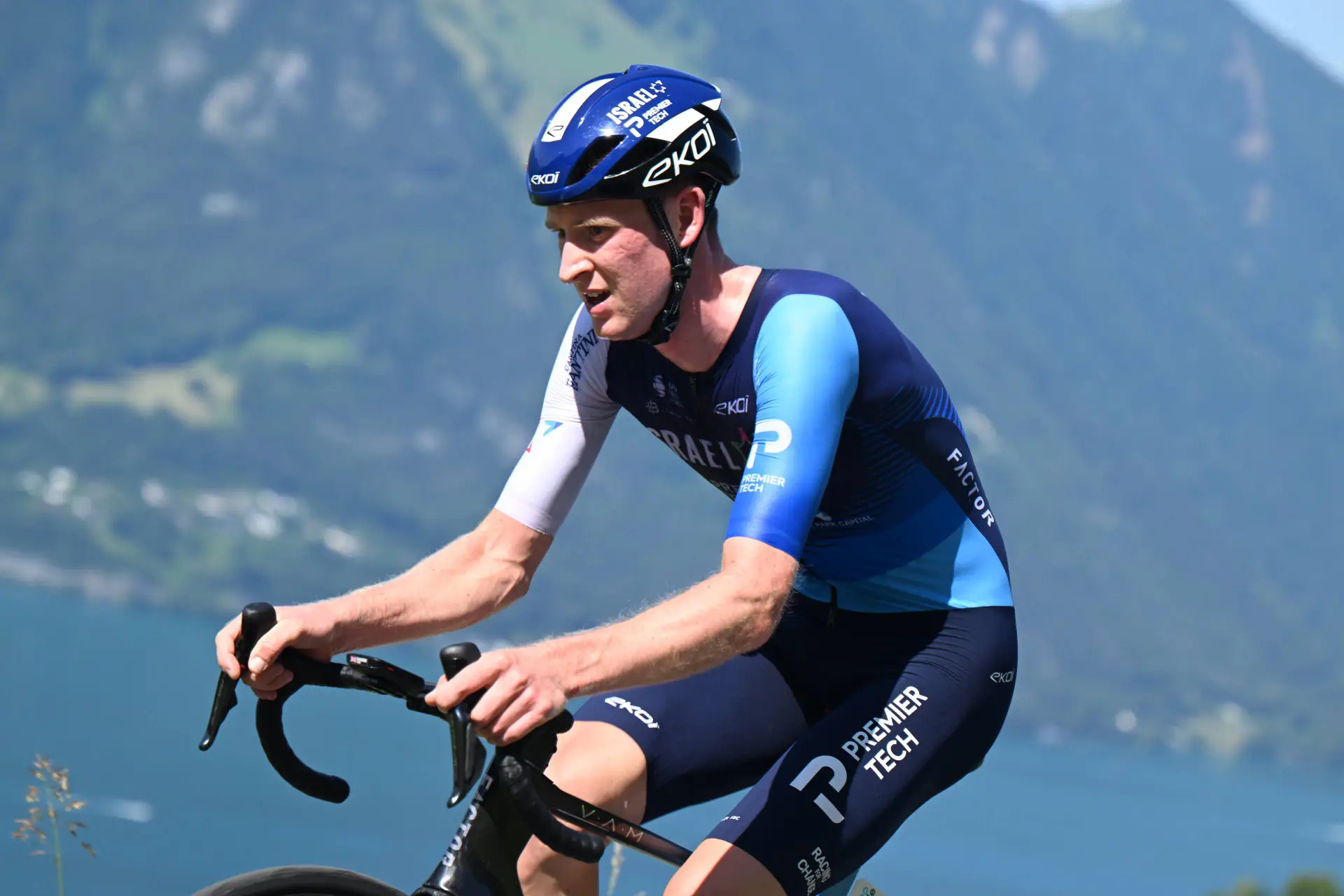
Ben Healy in action at the 2026 Montreal World Championships
Montreal kept the favourites guessing
Van der Poel repeatedly tried to force a selection, Isaac del Toro and Paul Seixas drove the chase, and Remco Evenepoel returned to contention after appearing in difficulty. Tom Pidcock remained a threat deep into the finale, as riders who had looked beaten worked their way back into the race.
The Americans had options throughout. Simmons followed the earlier offensive, McNulty attacked with around 33 kilometres remaining, and Matteo Jorgenson could then cover moves behind. McNulty’s advantage fell to around ten seconds late on, but he survived to win by 13.
Asked how Pogacar’s absence had affected the peloton’s racing style that autumn, Healy replied: “It changes things one hundred percent.”
Pogacar had left his opponents chasing from much further out in the previous two World Championships. His Zurich offensive in 2024 began more than 100 kilometres from the finish; in Kigali a year later, he rode the final 66 kilometres alone.
In Montreal, following one dangerous move could leave a rider short of energy for the next. Those pursuing McNulty also had to consider who they were bringing towards the finish, with Michael Matthews still in contention and Jorgenson able to follow attacks without helping the chase.
Matthews eventually took silver and Van der Poel bronze. Healy, Pidcock, Evenepoel, Seixas and Del Toro all missed the medals despite having influenced the decisive phases.
Read also
An open door, but no easy victories
The Vuelta had already undergone an abrupt change following Pogacar’s crash on stage eight. He had led Enric Mas by 3:50, with Roglic and Felix Gall almost another minute further back.
Mas inherited the jersey with Roglic a minute behind. On Aitana the following day, he attacked repeatedly but could not shake Oscar Onley, who stayed with him to contest the stage win. Roglic finished 12 seconds behind and Gall 18 seconds back.
Mas continued to build his advantage in the mountains, while Gall displaced Roglic from second overall. Roglic recovered that position in the final-week time trial, taking 33 seconds from Mas but leaving himself 1:37 to make up. Mas ultimately kept the jersey all the way to Granada.
For Healy, the autumn opportunities brought strong rides rather than victories. After tenth in Montreal came sixth at the Giro dell’Emilia, where Davide Piganzoli won with support from Jorgenson and Pidcock finished second.
Team Visma | Lease a Bike’s strength gave their opponents another problem to solve. Pidcock and Healy could no longer measure their chances primarily against one overwhelming favourite, but they still had to find a way past a team with riders available to attack and cover the chase.
Lombardia then produced a different kind of winner. Healy made his comments before the start, with the race awaiting its first champion other than Pogacar since 2020.
Seixas attacked on Civiglio to claim his first Monument, while Healy finished 12th. After McNulty’s well-timed move and Piganzoli’s success with team support, the final Monument went to a rider who simply proved too strong on the decisive climb.
Pogacar’s eventual return will bring another test for Seixas as well as for Healy and the rest of the peloton. The Frenchman could give the Slovenian a rival capable of answering his attacks, or become another formidable obstacle for those who welcomed this autumn’s opportunities. Whether the belief Healy described survives a start list containing both is a question for next season.

Kieran WoodDeputy Editor-in-Chief
Kieran Wood is a sports journalist based in Wales and has been active in journalism since 2022. He regularly contributes to DartsNews.com and CyclingUpToDate.com, where he covers professional cycling and darts. In cycling, his work includes liveblogs from major races, including the Tour de France, the Giro d’Italia, and La Vuelta a España, alongside race reports and analysis. He has also conducted interviews with professional riders.
His reporting spans the full racing calendar, from one-day classics to stage races, with a focus on accurate, real-time coverage and clear contextual analysis. For statistics, results, and historical context, he regularly uses resources such as ProCyclingStats. To support reporting on rider activity and training context where relevant, he also references Strava.
In his work, Kieran places strong emphasis on careful sourcing, editorial accuracy, and updating articles as new, verified information becomes available.
claps 0visitors 0
Just in
Popular news

Latest comments
- First: If there has been a translation error then I gave you my answer... sarcasm. Second: The author knows nothing on the state of doping within the peleton. His guess is no better than yours or mine. Maybe he's having an illusion, his own misinterpretation of reality. PS: No, I didn't miss the point of your post.PogiSloFans15-10-2026
- hey, brother. well, it took some real jerry-rigging this time, but you found a way to talk about your hero in response to an article that’s 100% about cyclocross and has 0% to do with pogačar. a bit inelegant — “cyclocross doesnt matter so i’m going to just talk about tadej” — but you’ve certainly shown commitment.OCexile15-10-2026
- All very good, we know what the word means. But you missed the point of my post. There are two questions to answer. Quote: "Has there been a translation error, or is the author of the piece making a comment on the state of doping within the peleton?!Cyclingsbestfan15-10-2026
- Hey awp, what's your beef with Pogi? So Seixas wins Lombardia and now he's going to demolish Pogi next year or what? You have to understand, Pogi isn't "old" yet, he can be on his highest level until 32 or 33 years old, that's another 4 to 5 years. What more does he need? For many cycling experts he's already the G.O.A.T. and he will keep proving it for the next few years. So what are you trying to say, that 10 years from now young cyclists will be beating Pogi??? Common, pull yourself together and stop making a fool of yourself. Capish? PS: What was this BS?: "I'm not sure Tadej could have beaten him last Saturday. But with his experience he may have been able to." !?!?!? Can you hear yourself? All of a sudden you think Pogi could have lost? Why does your brain work this way?PogiSloFans15-10-2026
- An ILLUSION is something that appears real or true, but is actually false, fake BS or a misinterpretation of reality. Saying that, the anti-doping bodies are an important part of cycling. Thanks to their hard work, the community can live in an ILLUSION that the current cycling is a "clean sport." In other words, cyclists like Pogi, Remco, Jonas, MVDP, Van Aert, Pidcock, Mads Pedersen, tilted head Ben Healy... might all be doped to the gills but we'll never know it.PogiSloFans15-10-2026
- i hope they DO, so sven has to eat this stupid argument he’s making.OCexile15-10-2026
- They’ll retire anyway sooner or later, so get over it!Lozza15-10-2026
- Hope it’s not gone for good!Lozza15-10-2026
- I can no longer take you seriously here. I suppose you don't want to be a part of our community.awp15-10-2026
- Keep it coming Fabio!Cyclingsbestfan15-10-2026
Loading
Write a comment