“Every podium contender should receive the same treatment”: Richard Plugge demands answers after Jonas Vingegaard's late-night anti-doping test
CyclingThursday, 23 July 2026 at 06:00
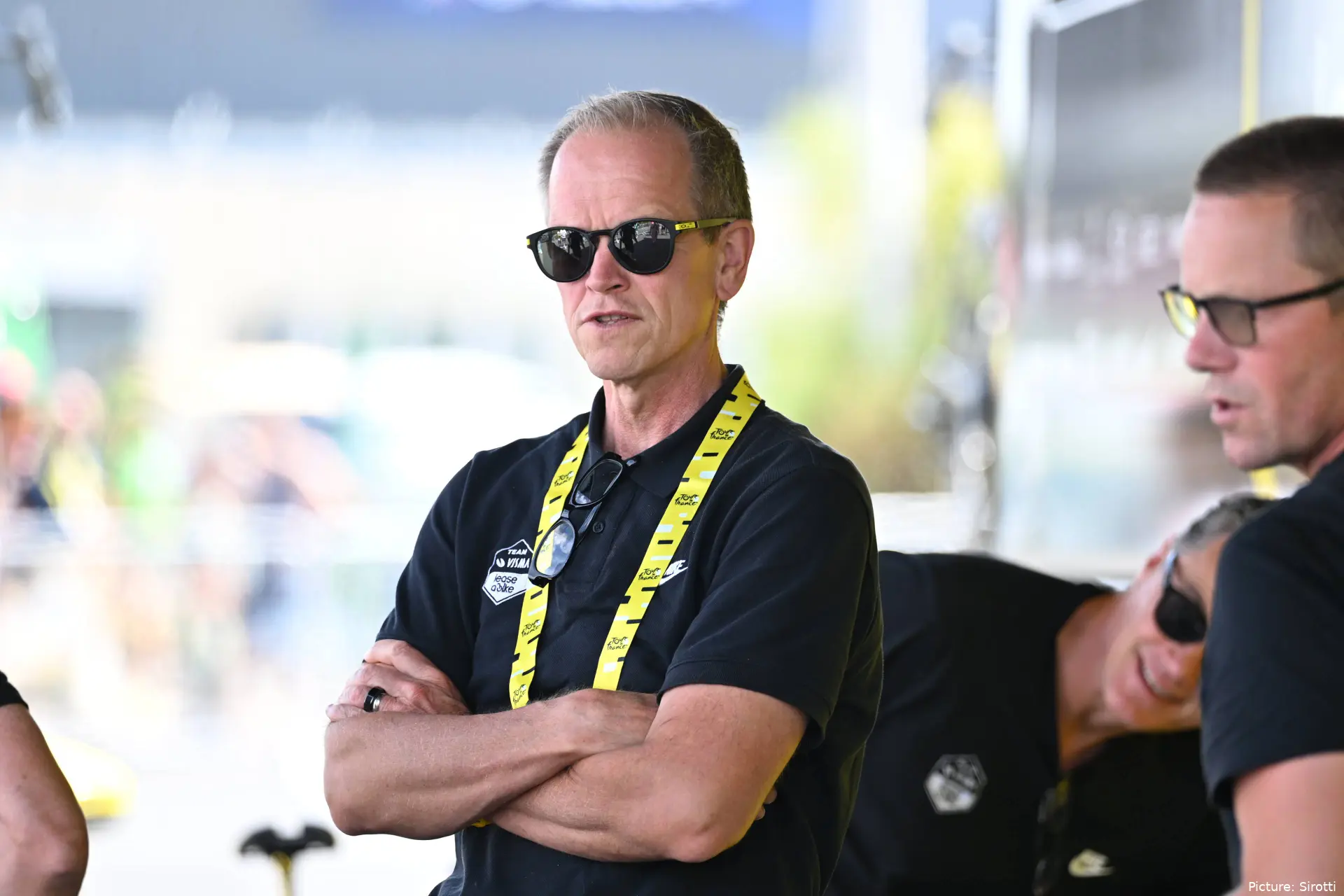
Team Visma | Lease a Bike CEO Richard Plugge has called for greater consistency in anti-doping controls after Jonas Vingegaard underwent a night-time test just hours before his Tour de France ended. While reaffirming his team's commitment to strict anti-doping measures, Plugge argued that all general classification contenders should be subject to the same testing conditions.
Plugge defends anti-doping but questions consistency
Plugge remained silent during Monday's rest day following Vingegaard's overnight anti-doping test and subsequent crash-induced withdrawal from the Tour. Speaking before Tuesday's individual time trial, however, the Visma | Lease a Bike boss addressed the controversy in detail.
The Dutchman began by highlighting his team's long-standing commitment to clean cycling. “In 2012, I named the team Blanco [meaning white in Spanish] because we wanted to start with a clean slate and leave the dark past behind us,” Plugge said in words gathered by L'Équipe.
Read also
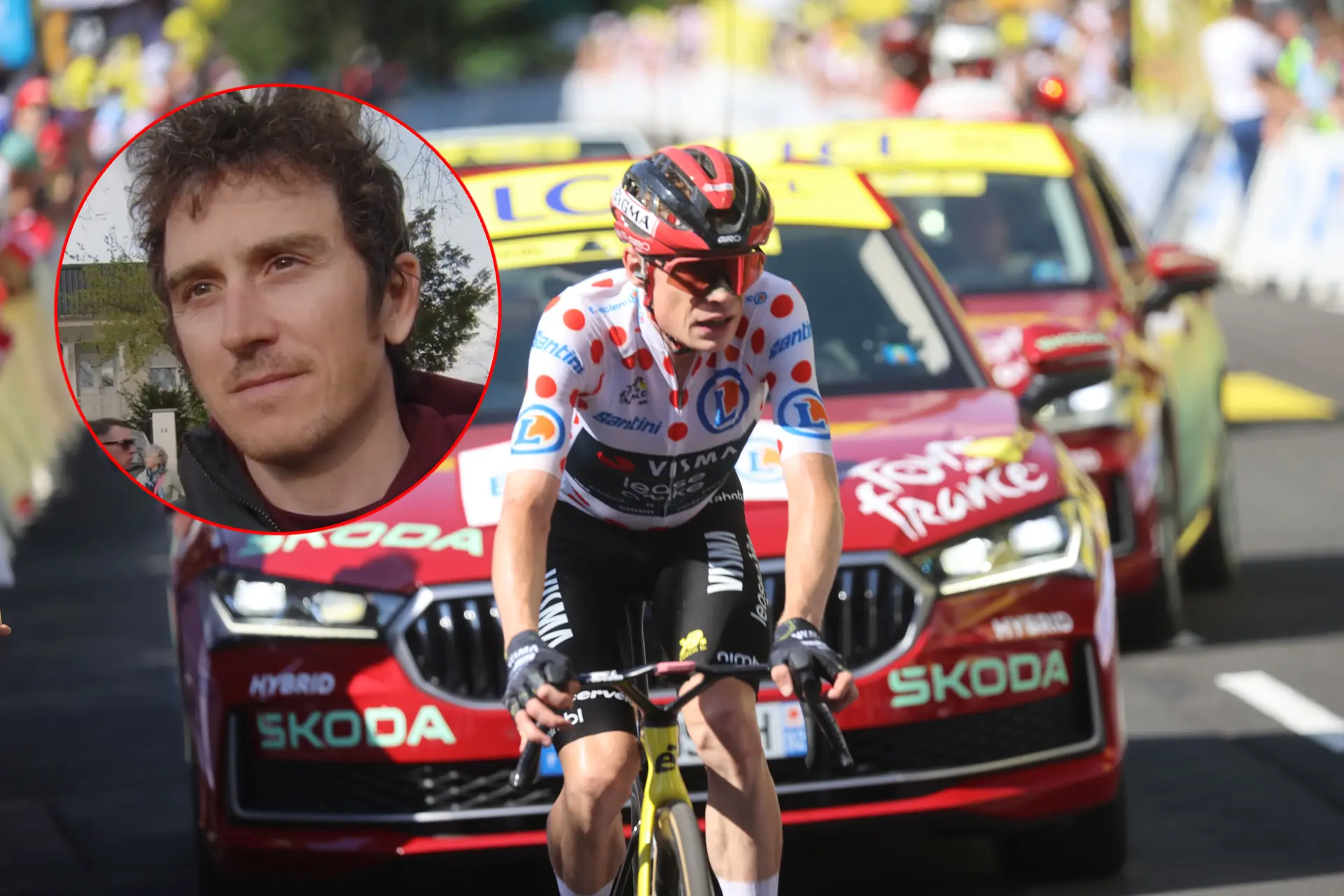

He argued that the squad has consistently supported stronger anti-doping measures. “Since then, as a team, we have had a very strict, very rigorous policy against doping, and we were among the first to push the International Testing Agency (ITA) to be at the forefront of testing and prevention. We have worked very hard on that.”
However, Plugge questioned why only certain riders appeared to be targeted with overnight controls. “On the other hand, all the other general classification contenders should be subject to the same strict rules, let's say the top ten, at the same time.”

Jonas Vingegaard and Tadej Pogacar chat before the start of a stage at the 2026 Tour de France
Visma seeks answers from the ITA
According to Plugge, Visma has formally requested an explanation from the ITA regarding the timing and selection of the overnight tests.
“We have asked the ITA these questions: can you explain why there was different treatment? Why was only one rider (Vingegaard) tested at 2 a.m., apparently another rider at 5 a.m. (Tadej Pogacar), and why not the rest of the top ten?”
For Plugge, equal treatment is fundamental to maintaining trust in the anti-doping system. “If you want to safeguard the integrity of the sport, every podium contender should receive the same treatment, in my opinion.”
At the same time, he made clear that he is not opposed to overnight testing itself. “The purpose of anti-doping is that everyone is treated equally. And if the ITA believes that night-time controls are the best way to proceed, then that is probably the best way.”
Plugge said he hopes to receive a response from the ITA before the Tour de France concludes in Paris.
Félix SernaCycling Journalist
Félix Serna is a writer at CyclingUpToDate and has been part of the team since 2025. He covers professional cycling across both the men’s and women’s calendars, with a focus on UCI rankings, race developments, and rider performance. His work includes interview-based reports, liveblogs, and tournament coverage designed to provide clear, accurate context throughout the season.
In his reporting, Félix regularly uses ProCyclingStats for results, statistics, and historical reference. He places strong emphasis on careful sourcing, editorial accuracy, and updating articles promptly when new, verified information becomes available. He holds a bachelor’s degree in International Studies.
claps 7visitors 5
Just in
Popular news
Latest comments
- Glad to hear it!AndrewK22-09-2026
- I’d say there’s a 50% chance of a Remco/Wout/MVDP podium but won’t wet myself trying to attribute an order. 80% chance 2 of them medal. Again, not going to try to predict which 2Jumpyjohn22-09-2026
- Yep, as far as I know, Pog only wins road cycling, doubt he’d win on the track or break the hour record, or do that well at any of the other cycling disciplines that get rainbow jerseys. I think Vos managed to collect 5 different ones.Jumpyjohn22-09-2026
- At least you don’t have to pay attention to anyone or road clutter. Sometimes it’s more relaxing to be in front than surrounded by nervous movers. As for the peleton, I thought there was a chase group in between too? And in the end, nobody knows how deep he really went, he may have kept back a little in case of necessity.Jumpyjohn22-09-2026
- Would have been so much more interesting to have them ride the elite course so we could discuss a second asterisk for PS not riding.Jumpyjohn22-09-2026
- Ganna was not actually much better than the very young 4th nobody is speaking about, the crash kind of hides the reality, Remco is smaller, Jakob is younger, Paul is younger and not even a specialist, Ganna’s days of domination are slowly coming to an end, if not already over.Jumpyjohn22-09-2026
- I would have a very good look at the aerodynamics of his upper body positioning compared to e.g. RE, seems to me he’s using far too many watts fighting against wind. We aren’t all born to slipstream so unless he’s prepared to start looksmaxxing, he’s not going to catch up now that all the youngsters are already being prepared for this discipline at an early age. It’s similar to swimming, if you don’t sculpt your profile for it very early on, your body will never naturally optimise for something so unnatural.Jumpyjohn22-09-2026
- That dryness snuck up on me like a silent assassin. Bravo @AndrewK, that was delivered beautifully, genuinely made me chuckle out loud.anonymouscyclist22-09-2026
- Well said Seth ❤️anonymouscyclist22-09-2026
- Did Horner somehow miss the Paris Olympics, Remco as the first man in history to sweep both the Road and TT gold? Doubting his ability by comparing this Sunday’s course to Rwanda is a bold choice. I’d liken this weekend's course to the Paris 2024 road race. Whilst the course is almost identical in length to the Paris Road course, it does include an extra 1000m elevation gain, with longer, steeper climbs. I’m confident Remco could podium this, but win? I’m hesitant to hedge my bets. I don’t think tired legs will be the main factor, but more a course that doesn’t entirely suit his unique repertoire. Who knows, but I’m looking forward to it. There are a few riders I’d like to see in the rainbow colours next year.anonymouscyclist22-09-2026
Loading
4 Comments