Decathlon sign Olympic gold medalist biathlete Émillien Jacquelin to its development ranks - "A dream I've had for quite a few years..."
Cycling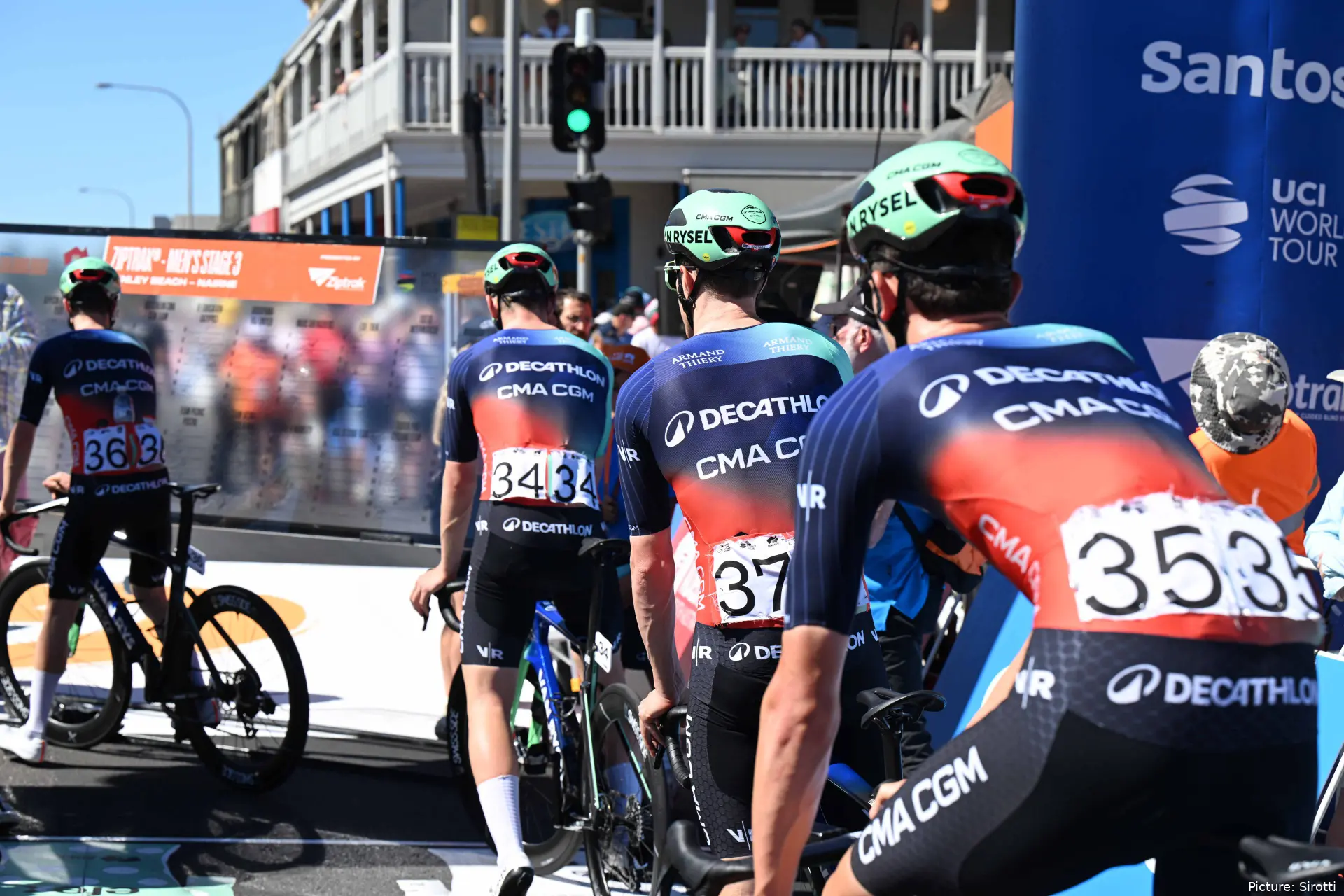
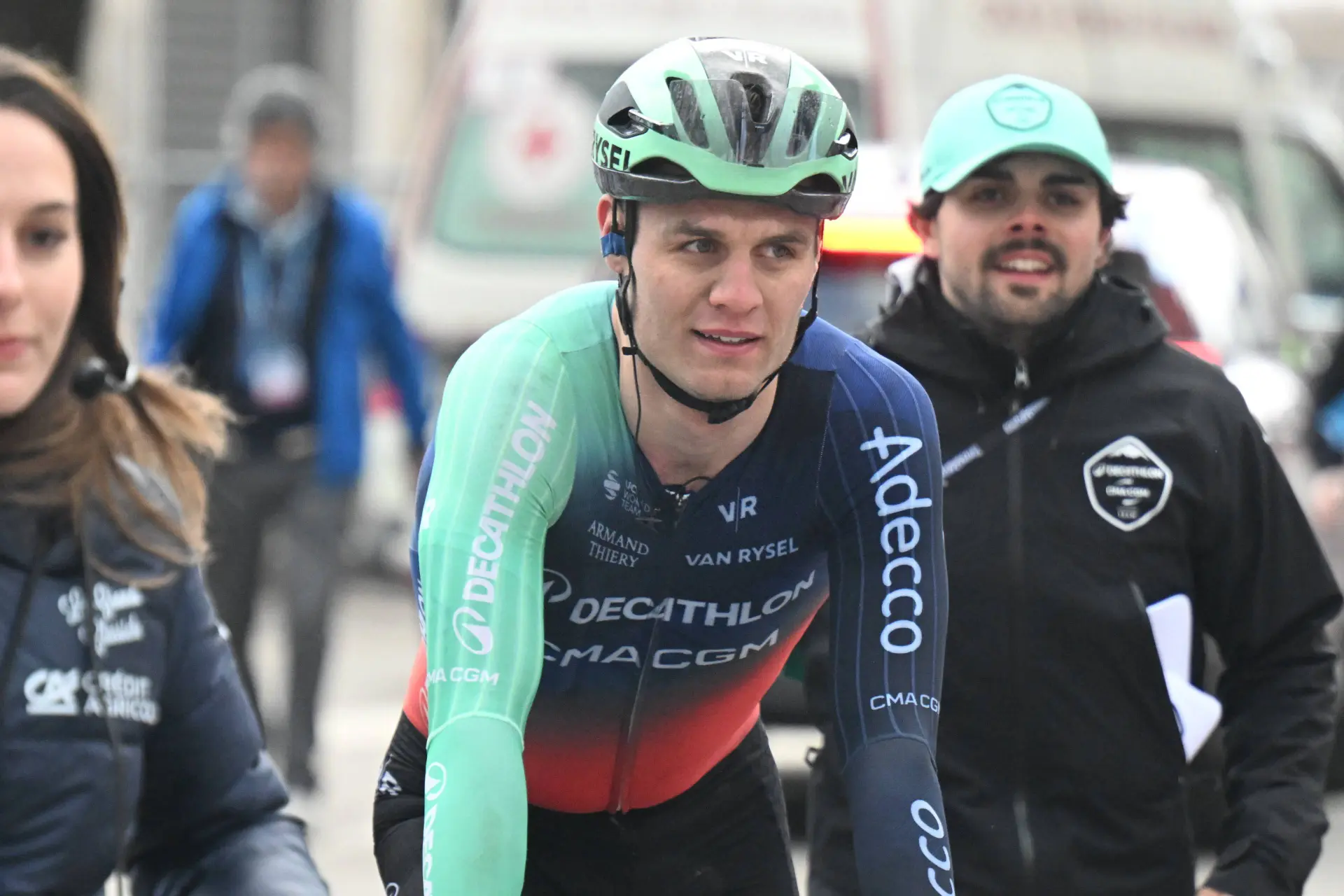
"My dream since I was little has been to be a professional cyclist". French biathlete Émillien Jacquelin has become one of the very best in his sport, and at age 30 he is making the switch to pro cycling. The Olympic gold medalist has signed a contract with Decathlon CMA CGM Team's development team and has become a racer for the French tam.
“Émilien has always maintained close ties with the team, whether with the riders the coaching staff," team manager Jean-Baptiste Quiclet said in a press release. "Cycling is already a key component of his training for biathlon. In this post-Olympic year, the idea is to give him the opportunity to try his hand at cycling with the team’s support, so that he can develop his skills".
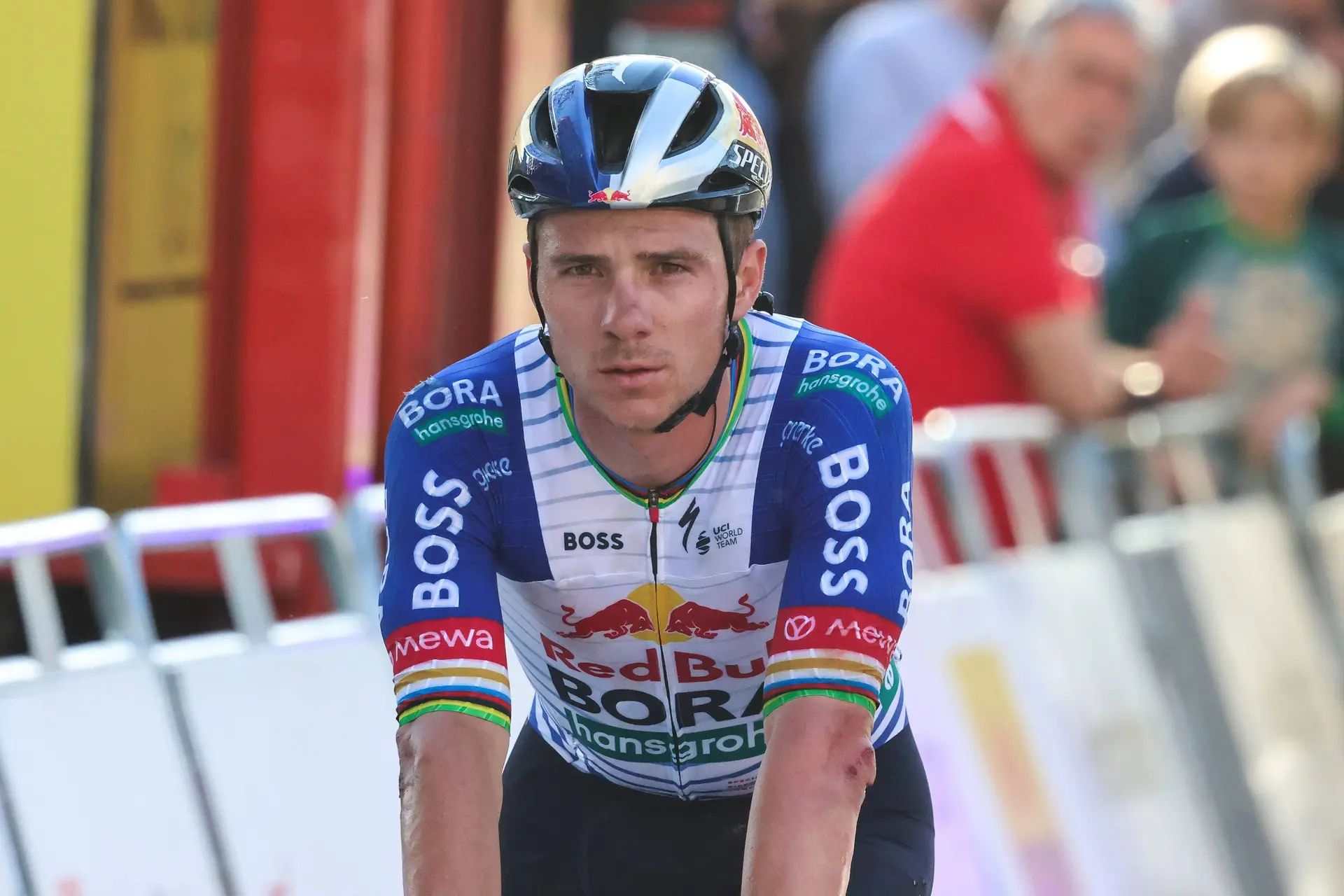
Jacquelin is a five-time World Championships winner in biathlon, two of those occasions in individual events. In the recent Milano-Cortina Winter Olympics he took his first Olympic gold medal in the 4 x 7.5 Team Relay event, whilst he himself was bronze at the individual 12.5Km pursuit. He is one of the best in the sport and, like Florian Lipowitz of Red Bull - BORA - hansgrohe in the past, is making the transition to cycling.
"This support will focus primarily on training, including guidance from a coach and a nutritionist, the provision of equipment, as well as a high-altitude training camp Arc 1950 with NewGen. We plan to conduct an evaluation cycle in late spring to better assess his profile: his explosive power in biathlon could very well make him an excellent sprinter on the road. We are banking on strong athletic potential and a high VO2 max, which, having already proven itself on skis, should come into its own on the bike.”
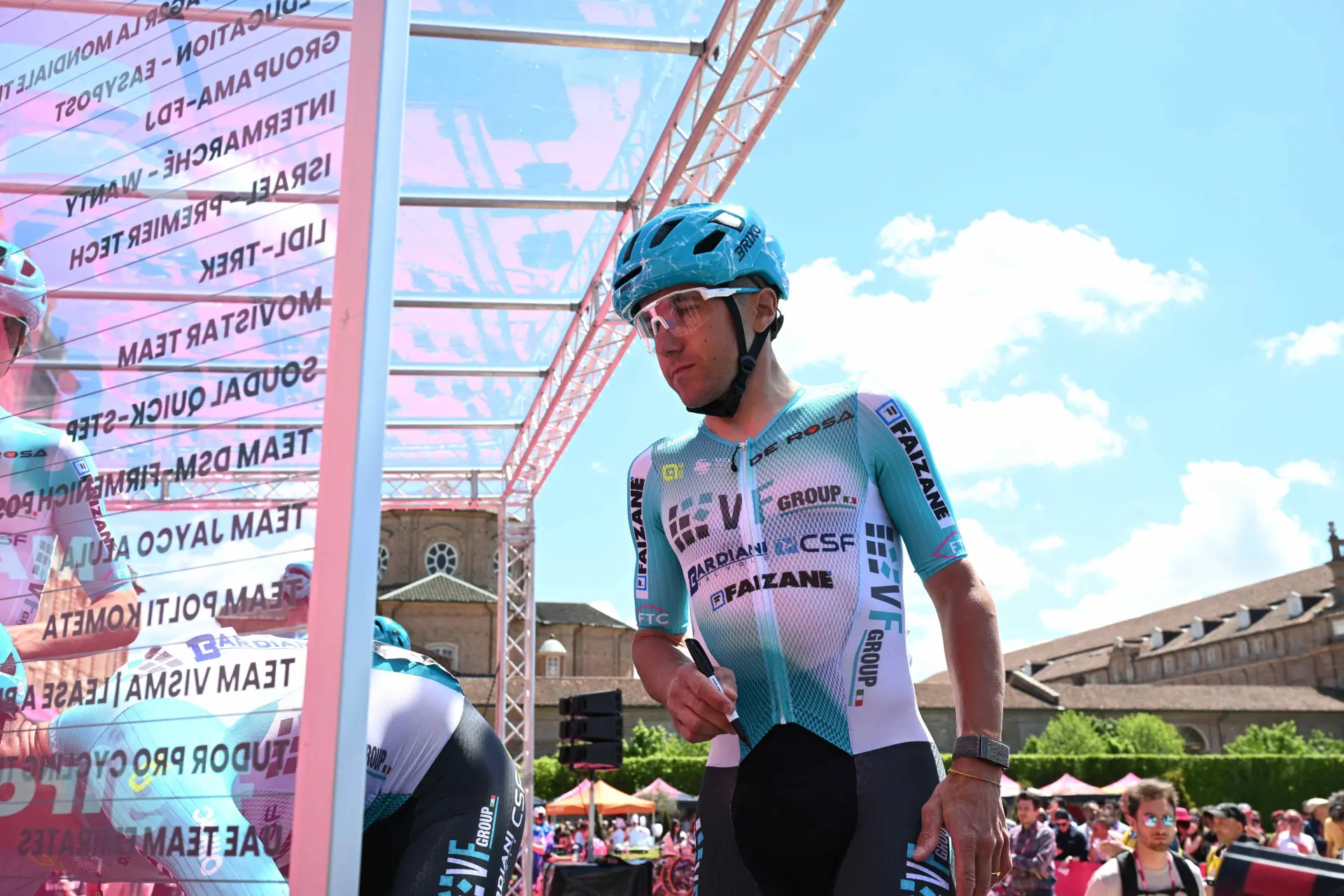
Jacquelin is not the first pro cyclist to make such a steep change in his path, however at age 30 it certainly is an unusual one. He is following along a similar route to that of former MotoGP rider Aleix Espargaró who raced for Lidl-Trek in 2025.
"It's a bit of a crazy project. It's an idea, a dream I've had for quite a few years, and biathlon fans have known about it for a long time [...] It's a chance to challenge myself, to prove to myself in another sport that I'm capable of performing, and it's also about trying to fulfill one of my childhood dreams," Jacquelin said in an interview with RMC Sport.
He isn't dropping biathlon as a whole, but instead testing his potential as a professional cyclist, albeit with the team's development project, where he will mostly be racing with under-23 riders. "It was after the Milan-Cortina Olympics that we felt it was the best time to try this challenge together". Soon enough, the deal was put on paper.
"I think it's primarily a new challenge. I don't think my story with biathlon is over. The 2030 Games, as I've said before and still believe, are a goal. It's about trying to become an Olympic champion in France in front of the French public. But I also know that in certain aspects I've reached my limits in biathlon, and this challenge excites me. It motivates me to push myself every day, and I think I need that now in my athletic career and as a person".
A classics rider in development?
As a biathlete, weight is not the most relevant aspect, and so he comes into cycling as a heavyweight, much of it in muscle mass however. "I'm 1.86m tall and weigh 80kg today, 79kg at the end of the season [...] I haven't necessarily discussed it with the nutritionist or the team yet, but I think losing a good five kilos wouldn't hurt".
However he is aware that the change will be abrupt into the racing scene, which takes a lot more than being able to put out good numbers in training. "It's a huge challenge because the effort is completely different. I think in cycling, it's more about repeated efforts. Today, I'm certainly capable of being good for 50 minutes in a single burst. But repeating that several times in the same race or stage requires extreme effort".
His role is also likely to be that of a support rider, at least until he is able to prove otherwise. "In my early days as a young cyclist, I had no problem, quite the opposite, working for the team, going down to get water bottles, riding for a teammate who's better than me in the sprint. That's always been something that motivated me, that inspired me".
"I've never necessarily been focused on being a leader in cycling. Biathlon leads to that position, because we're all our own leaders. But in any case, working within a team and giving my all for other riders isn't something that bothers me. I'm not focused on "performing" for myself and not for the team. No matter what type of rider I am, no matter what task I'm given, I'd like to give 100% to it".
The Tour de France and Paris-Roubaix are races that inspire him, and that he dreams of racing one day. But if that's to ever happen, the path is still long. "We're in the realm of fantasy, we're in the realm of dreams, because there are so many steps to take before even thinking about World Tour races. So, before I can say 'I want to ride the Tour de France', I think there's a lot to accomplish first".
Read also
Emilien Jacquelin, c’est le panache, tout pour l’attaque !
— DECATHLON CMA CGM TEAM (@decathloncmacgm) March 29, 2026
Hâte de voir ce que cela va donner sur un vélo.
Bienvenue @EmilienJck dans ta nouvelle équipe !
//
Emilien Jacquelin is all about panache ! Pure attack mode!
We can't wait to see what he brings to the bike.… pic.twitter.com/fTYVVSVfde
Rúben SilvaEditor-in-Chief
A founding contributor to CyclingUpToDate since its launch in January 2022, Ruben Silva has played a central role in shaping the site’s editorial direction and long-term growth. Before joining the project, he built his experience through independent blogging at Echelons Hub and by producing race previews for Ciclismo Internacional, developing a strong analytical voice rooted in daily engagement with professional cycling.
Beyond editorial work, he has been closely involved in the expansion and coordination of CyclingUpToDate’s wider network, helping establish and support sister platforms across multiple languages. This includes ongoing collaboration with CiclismoAlDia (Spanish), CiclismoAtual (Portuguese), WielrennenUpToDate (Dutch), and RadsportAktuell (German), contributing to a shared editorial vision and consistent international coverage.
He also helps oversee editorial governance across the network, setting standards for accuracy and consistency and coordinating updates or corrections when needed.
Originally from the Porto metropolitan area in Portugal, he holds a bachelor’s degree in Geography. His path into cycling journalism was shaped not through formal media training, but through independent reporting, community engagement, and sustained on-the-ground involvement in the sport.
Over the course of his career, he has conducted approximately 100 interviews across road cycling and cyclocross, ranging from one-to-one conversations and online formats to press conferences and on-site pre- and post-race coverage. His interviews include leading riders, team managers, and prominent figures within cycling media: Tadej Pogacar, Jonas Vingegaard, Mathieu van der Poel, Primoz Roglic, Wout van Aert, Joao Almeida and Tom Pidcock; managers like Patrick Lefevere and Joxean Matxin; and YouTube personality Bryan Kennedy (BKXC)...
Within 18 months of launch, he helped grow CyclingUpToDate’s English-language platform into one of the most-read cycling news websites, built entirely from the ground up. As both a professional journalist and lifelong cycling enthusiast, his focus remains on delivering accurate, timely, and well-contextualized coverage.
claps 1visitors 1
Just in
Popular news
Latest comments
- You can add weight to a bike and limit gears or make it single speed if you like. I doubt that would reduce crashes. It would just add another dymanique. All good and well, but It wont stop cars getting on to the course.Cyclingsbestfan18-10-2026
- Seixas is probably second best in the World on short climbs. But that hasn't translated as well to long climbs
 Rafionain-Glas18-10-2026
 - Idiotic fellaRafionain-Glas18-10-2026
- Nothing. Against Pogi nothingabstractengineer18-10-2026
- He didn't even try to sprint all outvappaxbipmv18-10-2026
- Campenaerts looked like a rolling pumpkin with that all orange leaders skinsuit !frieders318-10-2026
- He can take his dumb a$$ politics somehwere else !frieders318-10-2026
- good to have her back. fingers crossed she‘ll be able to stay!Ketterechts17-10-2026
- A tenner and he wins the Tour next year, too 😂anonymouscyclist17-10-2026
- the answer is either stick to classics or GTs but not bothabstractengineer17-10-2026
Loading
Write a comment