Introducing the Col du Haag - The brutal wall could decide the Tour de France today as Pogacar, Vingegaard and GC favourites take on stage 14
Cycling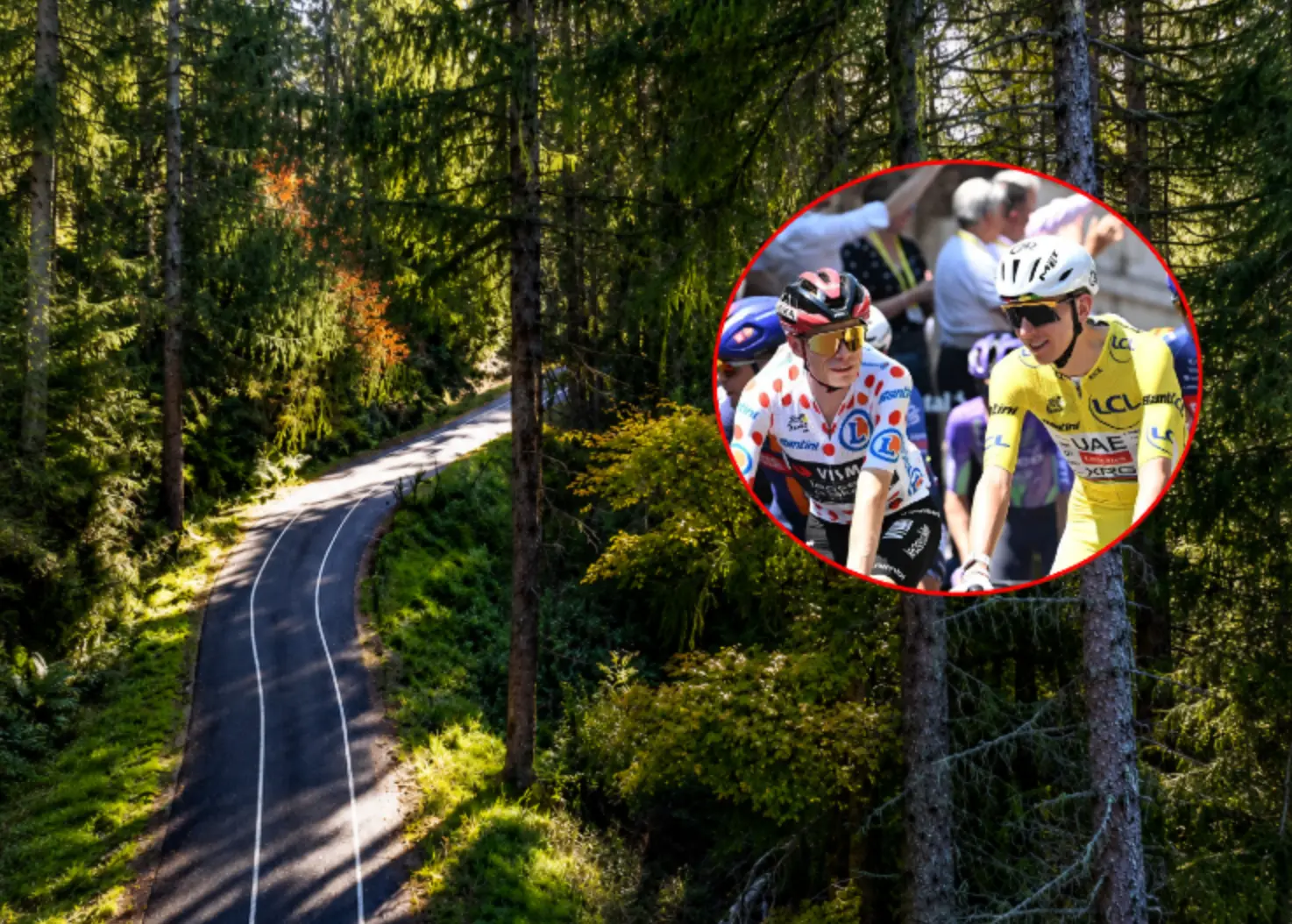
The Tour de France thrives on legendary names like Alpe d’Huez, the Tourmalet, or Mont Ventoux. But on Stage 14, a largely unknown climb could become the peloton’s new nightmare: the Col du Haag.
The 1,233-meter pass makes its Tour de France debut today. On paper, it’s 11.2 kilometers at an average of 7.3 percent. Yet those numbers tell only part of the story. The Col du Haag is not a steady mountain road where the favourites can comfortably settle into a rhythm. It’s a wall that strikes immediately and offers almost no respite in the finale.
The ascent begins in Saint-Amarin. As soon as the riders leave the town, the gradient shoots up with ramps of up to 13 percent. After this brutal opening, there’s a brief stretch around Geishouse where the road eases slightly.
But that relief is deceptive. The true cruelty of the Col du Haag waits in the final six kilometers. There’s virtually no flat section there. The road rises almost without interruption at ten to twelve percent.
That’s exactly where this new Vosges giant differs from Alpe d’Huez. On the famous climb with its 21 hairpins, the toughest part is right at the base. If you survive the first two to three kilometers, you can at least try to find a rhythm at around eight percent. On the Col du Haag, that moment never comes. Once you go over your limit here, you’ll hardly get a chance to recover.

Florian Lipowitz Tour de France 2026 stage 6
An old forest road becomes a Tour stage
The origin of this ascent also makes its debut special. For a long time, the route followed a dilapidated forest road that has since been renewed and expanded as a cycling link. Now it will be ridden for the first time by the world’s best pros.
The road winds through the dense forests of the Vosges. There are hardly any wide switchbacks where a rider could briefly gather momentum. Instead, long, direct stretches dominate. Looking up the road can be almost as painful as the gradient itself: riders see the ramp, know exactly what’s coming, and still can’t avoid it.
That makes the Col du Haag a climb for explosive punchy climbers—but also a tactical trap. An attack that comes too early can be fatal. Wait too long, and you risk running out of road on the steepest sections.
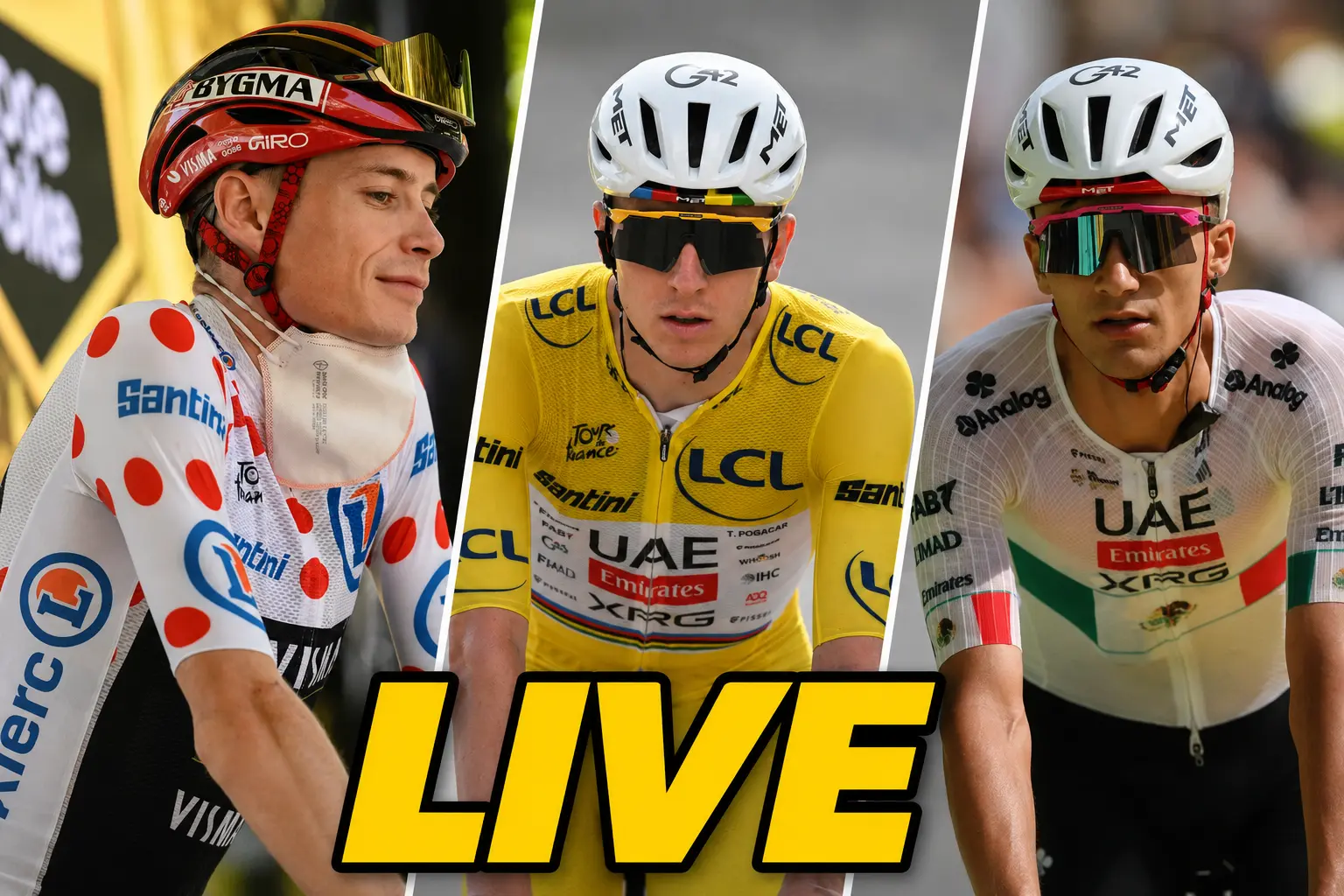
This mountain will be particularly interesting for the podium fight. Remco Evenepoel sits in third, while only 38 seconds separate Evenepoel, Tom Pidcock, Juan Ayuso, Paul Seixas, and Florian Lipowitz.
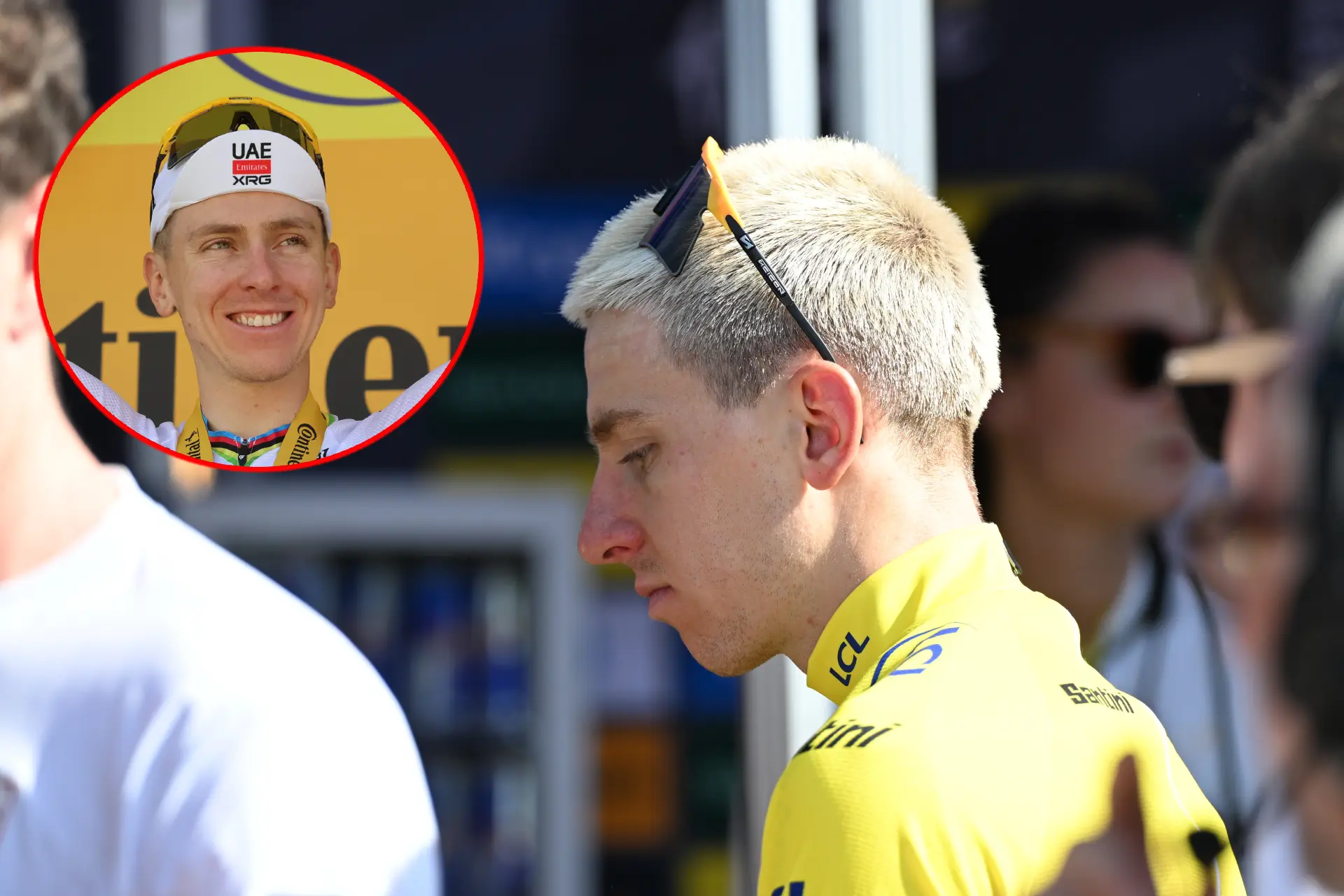
That means the Col du Haag isn’t just about the stage win or the duel between Tadej Pogačar and Jonas Vingegaard. Even a brief weak spell could cost podium competitors several positions. Conversely, the steepness also offers a big opportunity: anyone with reserves can open up massive gaps in a matter of minutes.
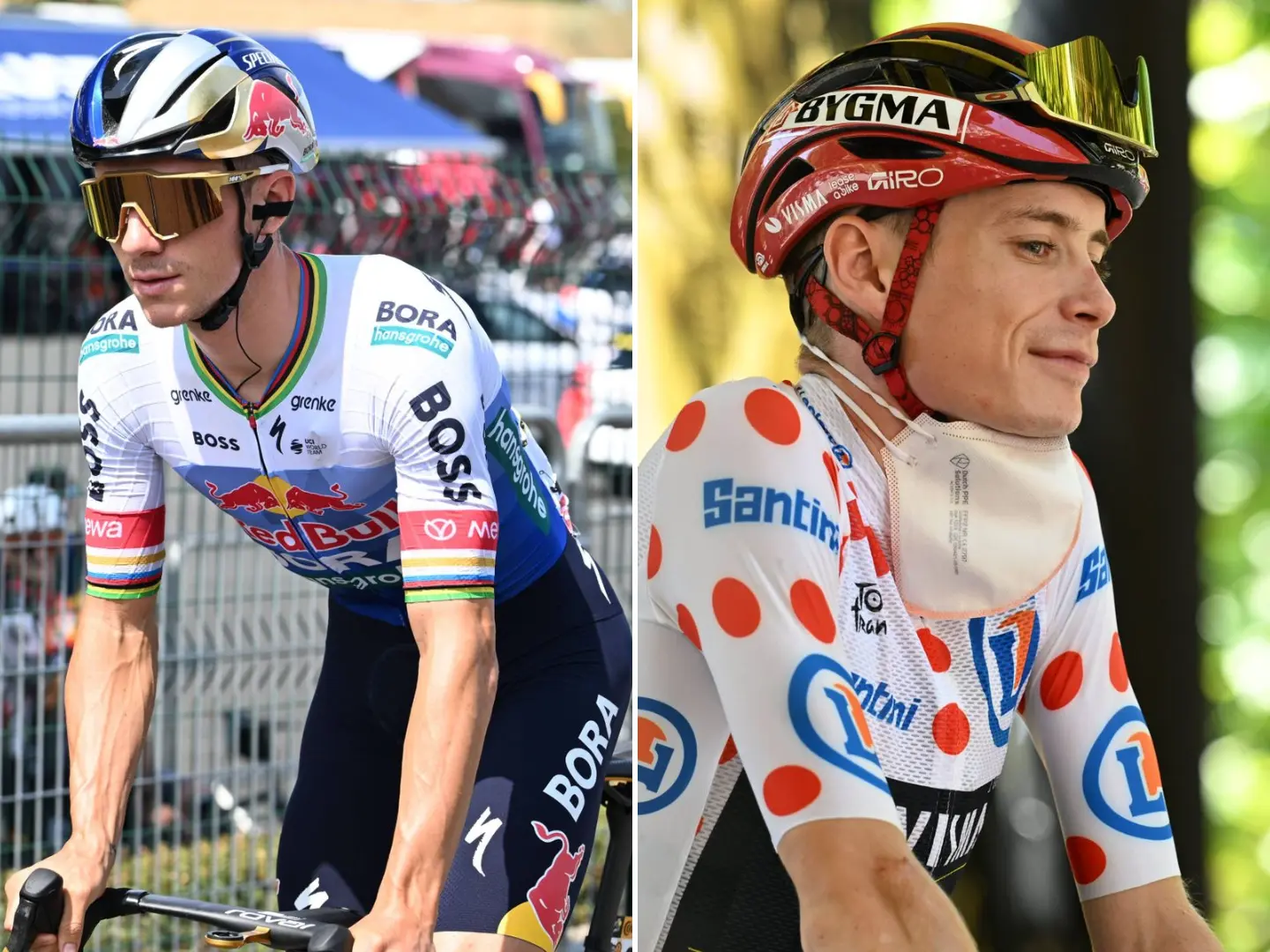
Focus will also be on Red Bull's dual leaders as they try to find a delicate balance. The team wants to protect Evenepoel’s podium spot, but it also can’t lose sight of Lipowitz in the tight battle for the top five. On such a steep road in particular, a clear division of roles could be decisive.
Read also
The summit isn’t the finish
There’s added drama because the stage doesn’t end on the Col du Haag. After the KOM point, there are still just under six kilometers to Le Markstein. The official route lists the summit at kilometer 149.4, with the finish at 155.3 kilometers.
A rider therefore not only has to survive the steep ramps. He also needs enough strength after the summit to press on with an attack or close any gaps.
Before that, the Grand Ballon, the Col du Page, and the Ballon d’Alsace are already waiting. In total, the 155.3-kilometer stage includes around 3,800 meters of climbing. The Col du Haag is thus not an isolated test, but the final and most brutal blow after a long day in the Vosges.
Today, the Tour has discovered a new mountain. Perhaps the Col du Haag won’t immediately attain the myth of Alpe d’Huez. But its debut has all the ingredients for a spectacle: an unfamiliar road, double-digit gradients, a tight battle for the podium, and German hopes right in the thick of it. There’s hardly any place to hide on the Col du Haag. The weak will be exposed. The strong can make history.
Gavin QuinnCycling Journalist
Gavin Quinn is a cycling journalist and ultra-distance cyclist with a BA in Journalism from Dublin City University. Formerly the Press & Communications Officer for Cycling Ireland, Gavin has worked inside the national team at the World Championships and has reported for the Irish Mirror, Mirror UK, and The42.
His expertise is backed by elite-level access, having interviewed stars like Sam Bennett and Ben Healy, as well as immense personal endurance. In 2025, he completed a 12,000km solo cycle from Ireland to Vietnam, following a 4,600km tour across Europe. From the cobbles of Paris-Roubaix to the gradients of the Tourmalet, Gavin’s writing focuses on the "romance and brutality" of the sport. Having visited 50+ countries, he brings a global, cultural perspective to his coverage of the pro peloton for CyclingUpToDate.
claps 3visitors 1
Just in
Popular news
Latest comments
- UAE was really badly positioned at the last climb, and Ineos did a great job of making that happen at the bottom. That must have affected del Toro and the rest. His attack wasn't spectacular, and they hadn't ripped apart the bunch enough, letting a large group remain in back to reel him in. UAW lost the race on the road to the climb and the bottom third of it, I think.RidesHills08-10-2026
- He won in exactly the same way as others. By being the fastest to complete the stages.mobk08-10-2026
- Very surprised del toro couldn't beat everyone here against lesser competition. He's well on his way to being top 5 in the worldbruins3008-10-2026
- Being the best rider left in the race is pretty much the only way to win in any edition, surely? Seems reductive to say "they only won because the entire peloton wasn't as absolutely stacked as it could've been" - you can only beat who is in front of you.wrsty08-10-2026
- I’m sorry but generally the coverage on your site is first class but this incident highlights something I just don’t get with cycling journalism. This accident should never have been allowed to happen, it comes uncomfortably close to the Finlay Tarling tragedy and two other incidents took place within days of this. I checked all of the cycling websites and you all put out basically the same story. Pidcock gave journalists the perfect opening to blow this sky high, what has the UCI got to say? What is Adam Hansen doing? What do the organisers say? Nothing, you all trot out the same easy quotes taken from Pidcocks interview after the race but do nothing to follow it up. I see it time and time again, journalists taking the easy way out but being outraged when it happens again as it surely will. Riders can’t do this but journalists should be independent and should be able to raise these uncomfortable questions but cyclinguptodate and every other on line publication prefer to take the easy way out. That’s the real tragedy here.Paul53108-10-2026
- Happy to help :-)Mistermaumau08-10-2026
- Well, ok but, it’s also a structural, team, budgeting, direction and all sorts of other issueMistermaumau08-10-2026
- I wouldn’t call it an analogy but maybe his criticism is a little unfair. On the other hand, the fact Cicco made a public affair out of it despite having received all the explanations and proof makes me feel he now deserves being criticised for not accepting there is nothing to discuss.Mistermaumau08-10-2026
- Much as I like him (one of my favourites), I do want to attract a little attention to the coincidence of his recent performances in the current context. Not the first time a rider improves noticeably when there’s a job interview to prepare. In the same lighthearted humour of his, i hope the UCI will let him wear it at home as the rules quite strictly state you can only wear it during participation in the discipline you won in, and we all know how capable they are of interpreting rule interpretation ;-) Also, if it’s going to be retirement (please not), I wouldn’t call that an agreement as somebody will probably feel they didn’t get what they wanted.Mistermaumau08-10-2026
- Agreed. There used to be a team willing to pay though. I take all these figures (that vary enormously according to who is publishing) with handfuls of salt. We don’t know how salaries are treated (especially between a UK employer and Andorran resident), we don’t know how numbers are derived and from where, if deductions have been taken into consideration, etc. but if he returns to Colombia, he’s going to need quite a bit in protection money.Mistermaumau08-10-2026
Loading
Write a comment