Can Isaac del Toro win the World Championship alone? History says it is nearly impossible — but Sagan did it three times
CyclingSunday, 27 September 2026 at 06:00
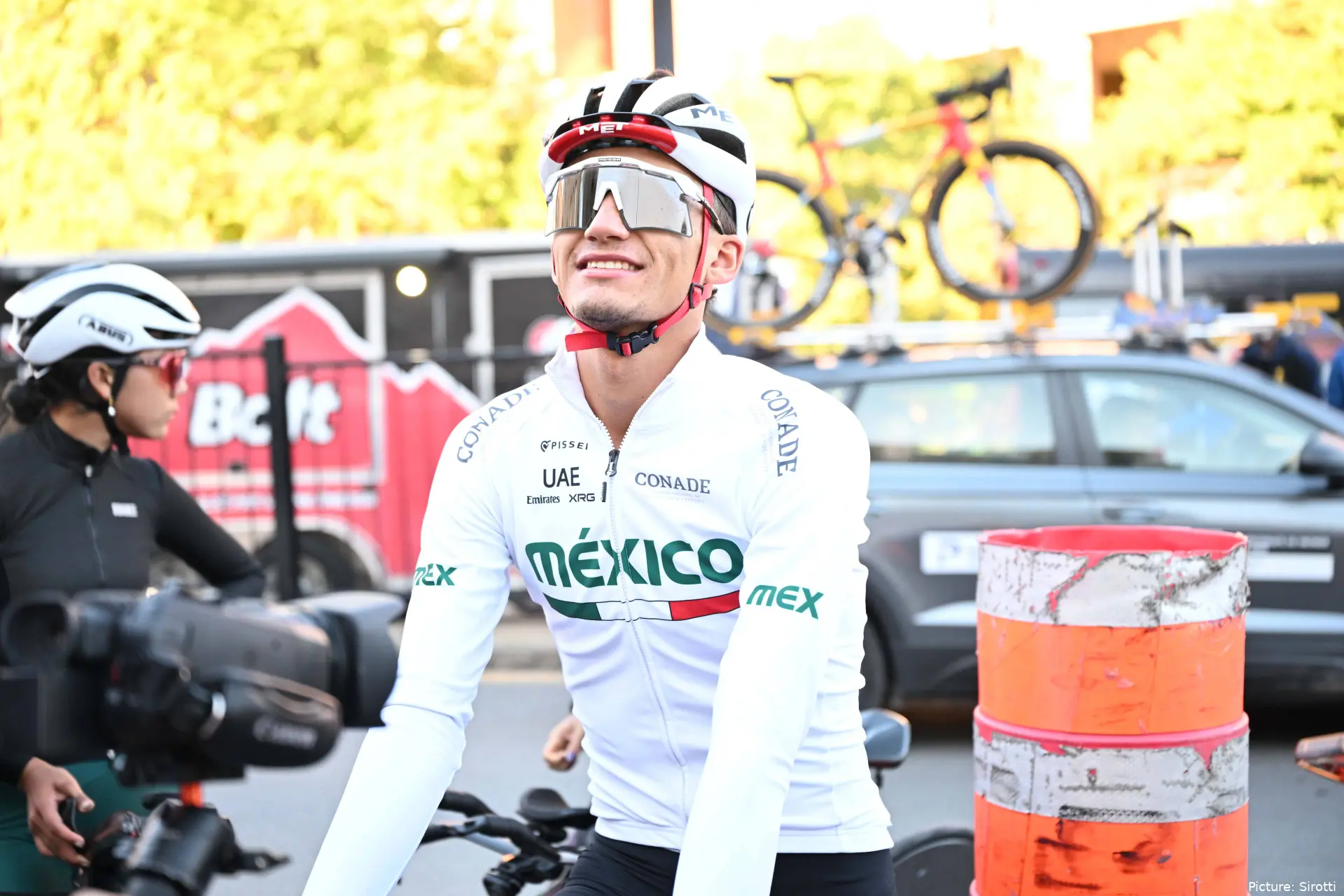
There is something almost paradoxical about the UCI Road World Championships. The most prestigious one-day race of the year, the one every rider dreams of winning from childhood, is also the one where individual talent counts the least. Unlike a Monument or a Grand Tour stage, the Worlds is a team race disguised as an individual one. The rider who crosses the line first earns the rainbow jersey for themselves, but behind every world champion there is almost always a national squad that sacrificed everything to put them there.
That is the rule, but Peter Sagan was the exception. And as the 2026 World Championship road race takes shape in Montreal on Sunday, a 22-year-old Mexican rider named Isaac del Toro is about to find out which side of that equation he falls on.
Del Toro heads into this race as one of the genuine favourites. He is the GP de Montreal winner, having beaten Paul Seixas on the very circuit the Worlds will use. He finished seventh at last year's Worlds in Kigali despite being barely out of the under-23 ranks. The talent is not in question. What is in question is everything around him.
Mexico will line up in Montreal with six riders, and del Toro will be the only one whose name most of the peloton knows. His teammates (Edgar Cadena, Eder Frayre, Carlos Garcia, Jose Escarcega and Tomas Aguirre) ride for small teams on the margins of professional cycling. They will do what they can, but the reality is that in a 273-kilometre race at the hardest pace of the year, they will be gone long before the race reaches its decisive moments. Del Toro, in all likelihood, will be alone.
The pattern of the modern Worlds: strength in numbers
To understand just how unusual del Toro's situation is, it helps to look back at recent editions of the race and the teams that won them. The story that emerges is consistent: world champions are almost never made alone.
Mark Cavendish's 2011 victory in Copenhagen was perhaps the most obvious example. Great Britain built their entire race around getting the Isle of Man sprinter to the line in a bunch sprint, and they executed it with military precision.
The squad spent the better part of 250 kilometres at the front of the peloton, chasing down every attack and neutralising every threat to ensure the race ended in a sprint. It was a masterclass in team cycling, and Cavendish acknowledged it openly: the rainbow jersey had Great Britain written all over it.
Philippe Gilbert's 2012 win in Limburg was different in nature - a hilly course that rewarded puncheurs - but Belgium still rode as a cohesive unit, creating pressure on the climbs and giving Gilbert the freedom to do what he does best. The following year, Michal Kwiatkowski benefited from a Polish squad that was strategically sound in Ponferrada, ensuring he arrived at the key moment with legs to burn.
Alejandro Valverde's 2018 triumph in Innsbruck came at the end of a race where Spain were typically organised and numerous. The Spaniards managed the race intelligently, keeping rivals in check while Valverde - already in his late thirties - saved himself for the brutal final climb up the Gramartboden.
Mads Pedersen's 2019 victory in Yorkshire was, if anything, the most team-dependent win of recent times. Denmark had a plan - ride aggressively, disrupt the favourites, and trust their man in a wet and chaotic finale - and it worked to perfection in conditions that few had anticipated.
Julian Alaphilippe's back-to-back victories in 2020 and 2021 told a similar story. France is one of the few nations that consistently fields a strong and motivated roster at the Worlds, and in both Imola and Leuven, Alaphilippe had teammates who kept the race hard and chaotic in the way that suited his attacking style.
Van der Poel's 2023 win in Glasgow came on the back of a Dutch team loaded with riders capable of surviving deep into the race. Pogacar's last two victories in Zurich and Kigali further underlined the point: Slovenia may be a small nation but their team has grown in quality and tactical awareness to the point where they have become one of the most formidable units at the Worlds.
Read also
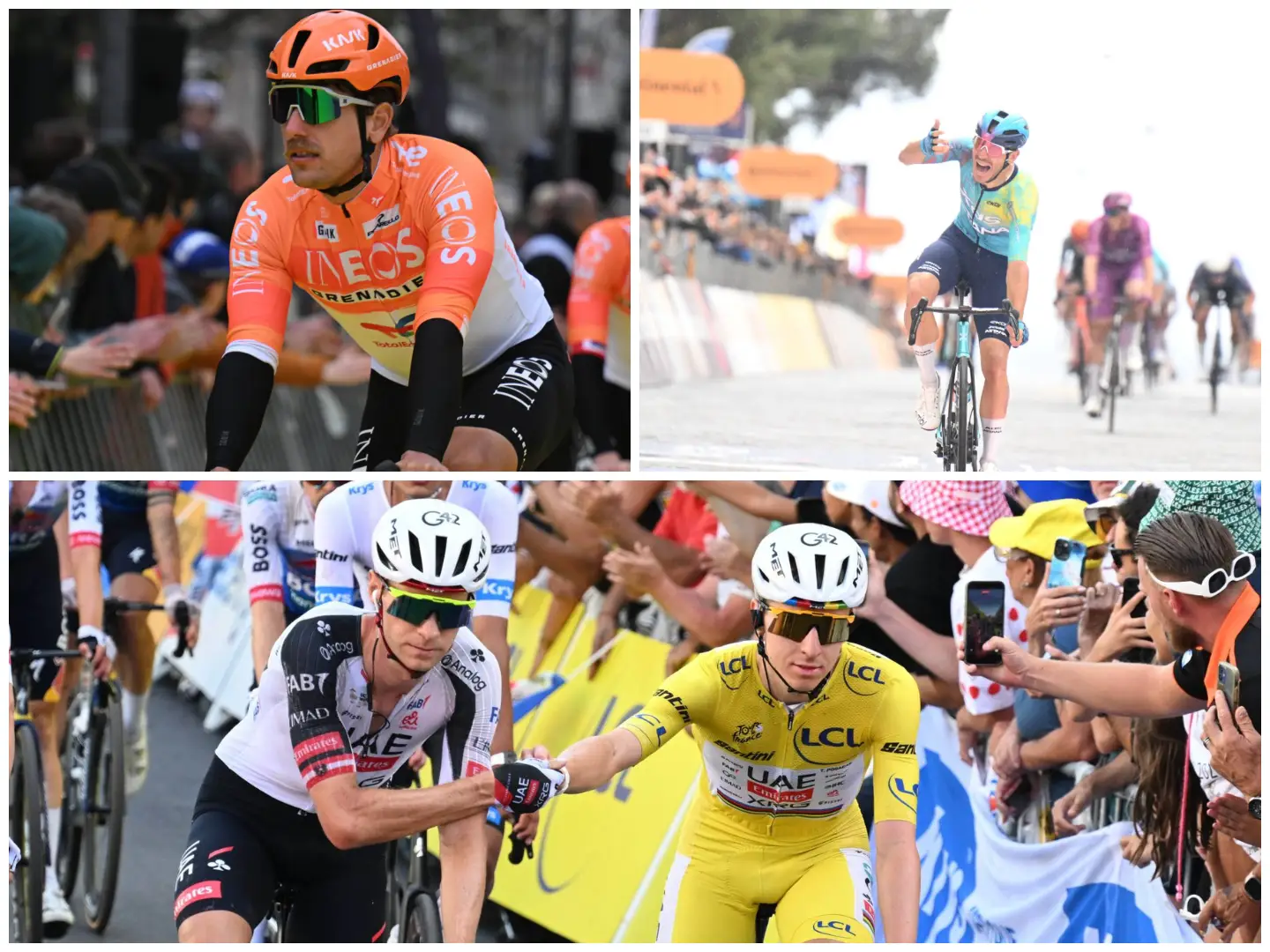
The Sagan years: the greatest outlier in Worlds history
And then there is Peter Sagan. Three world titles in a row, from Richmond in 2015 to Doha in 2016 and Bergen in 2017. No male rider before or since has won three consecutive rainbow jerseys in the road race. What makes it truly extraordinary is not just the achievement itself but the circumstances in which it was achieved.
Slovakia is not a cycling powerhouse. When Sagan lined up in Richmond for his first title, he had just two teammates alongside him - his brother Juraj and Michal Kolar - against nine-man squads from Belgium, Spain and Italy. "We are not a national team for making the race, no?" Sagan himself said before the race, almost laughing at the absurdity of the numbers. He was not wrong. The Slovakian federation could barely field a functional support squad by the standards of the top nations.
What Sagan could do that nobody else could match was survive. He was a rider of unique versatility: fast enough to win a bunch sprint, strong enough to climb with the best on circuit-style courses, and tactically intelligent enough to read a race that was constantly in motion.
In Richmond he simply sat in the wheels, let the big teams exhaust themselves trying to control the race, and was there when it mattered in the sprint. In Doha the following year, on a flat course in Qatar that was almost tailor-made for his particular combination of strength and speed, he did it again without a team capable of shielding him through the desert crosswinds.
Bergen in 2017 was the hardest of the three. The course was brutal and wet, the climbs were real, and Sagan was not at his absolute best that year, having already admitted to illness in the build-up. Yet he survived, adapted, and was there at the finish.
The secret, if there was one, was that Sagan never needed his team to win the race for him. He needed them merely to survive long enough to make him possible. And because he was so much better than any individual rival that the bigger teams could put up against him, the numbers advantage of Belgium or Spain or France never fully translated into an outcome.
There is a certain type of rider who can do this - someone with such an unusual combination of attributes that no single team strategy can reliably contain them. Sagan could sprint like a pure sprinter, climb like an all-rounder, and suffered no obvious weakness on any terrain short of a mountain finish. That made him almost impossible to isolate, because whatever the race became, he had an answer for it.

Isaac del Toro won the 2026 GP de Montréal ahead of Seixas
Del Toro's case: a different kind of outlier
Isaac del Toro is not Peter Sagan - in style, profile or stage of career. But there are elements of his situation that rhyme uncomfortably. He is a rider without a meaningful national team behind him, heading into a race where teams matter enormously, and he is doing so as a genuine contender.
Del Toro is first and foremost a climber, arguably one of the best in the world at his age. His 2026 season has been extraordinary: overall wins at the UAE Tour, Tirreno-Adriatico and Tour Auvergne-Rhone-Alpes, a stage win and third place overall at the Tour de France, and most recently the GP de Montréal on the very circuit the Worlds will use.
That last victory is the most relevant data point, but it is worth noting the context: at the GP de Montreal, del Toro had Brandon McNulty and Adam Yates working actively for him throughout the decisive finale, with McNulty even finishing third on the day. At the Worlds, none of those riders will be on his side.
The problem is that del Toro's path to victory requires the race to come down to the climb and a small group, and getting to that point alone, without anyone to chase attacks in the earlier part of the race, without anyone to set tempo when it matters, is an enormous ask over 273 kilometres. His Mexican teammates will try, but realistically they will not be there in the final circuits when Belgium, the Netherlands or France are still playing their tactical games with multiple cards in hand.
Sagan's answer to that problem was completeness, as he could handle any scenario. Del Toro's answer, if he has one, is simpler and more direct: survive the chaos, get to the final climbs in good position, and trust that on this terrain nobody is going to ride away from him. On a different course that might not be enough. On Mount Royal in Montreal, with the Worlds being decided on roads he already won a race on two weeks ago, it might just be.

Félix SernaCycling Journalist
Félix Serna is a writer at CyclingUpToDate and has been part of the team since 2025. He covers professional cycling across both the men’s and women’s calendars, with a focus on UCI rankings, race developments, and rider performance. His work includes interview-based reports, liveblogs, and tournament coverage designed to provide clear, accurate context throughout the season.
In his reporting, Félix regularly uses ProCyclingStats for results, statistics, and historical reference. He places strong emphasis on careful sourcing, editorial accuracy, and updating articles promptly when new, verified information becomes available. He holds a bachelor’s degree in International Studies.
claps 0visitors 0
Just in
Popular news
Latest comments
- Non-pros are eligible to ride, it's the Worlds. Last place in the time trial was over 24 minutes slower than Evenepoel, averaging 33.8 km/h, and any serious-ish amateur in Britain can beat that
 Rafionain-Glas27-09-2026
 - The thing is that del Toro is nowhere as dominant as SaganRafionain-Glas27-09-2026
- And why would Kasia want all 4 together? If that was her goal, she could have helped ELB with the chase.Mistermaumau27-09-2026
- Making it easy means that only Ayuso's explosiveness can do anything and not much. Making it hard means thar Mas's climbing form and potentially Ayuso's can come into play. Spain are going with climbers - a hard race is obviously what they need. From the races we've seen, it's very difficult for the favourites to get away from each other when they are evenly matchedRafionain-Glas27-09-2026
- Why was she being slagged off, she did her job perfectly.Mistermaumau27-09-2026
- Amazing what you learn from situations like this. Didn’t know you get free points just by turning up. This leads to questions like how are the limits to a field decided seeing as so many nations aren’t there to pick up free points. Does this mean the establishment locks out newcomers? Didn’t know a non-pro was eligible to ride. Are Unibet in trouble that they have to be so selfish (other than maybe being sponsored by someone too much in a scandal limelight having to keep a low profile for a while)? Anyway, I guess it’s good for the media stuff like this happens. Imagine the guy actually gets a result, or causes a crash.Mistermaumau27-09-2026
- Right. Unless they don’t declare a winner today ;-)Mistermaumau27-09-2026
- Sorry Marlene but that doesn’t cut it. Everyone had their strategies and expectations of others, some were better than yours. You could have done the sane by hitching a ride with ELB to catch Demi, you could have waited longer forcing someone else to do the chasing, you could have prepared for a Demi attack like MVDP does with Pogi, you could have divided EBL and Niwa to chase with a collaborator. That’s the nature of strategy, you might have to adapt at any moment to try to turn it back into your favour, especially after you know you’ve made a mistake.Mistermaumau27-09-2026
- Making he race hard will also make the race hard for you Ayuso, it will also helps Sexias, Del Toroabstractengineer27-09-2026
- She did make an error in overconfidence over her current form. She was the strongest but not by much. If Kasia doesnt give her turns, all 4 would be togetherabstractengineer27-09-2026
Loading
1 Comments