"We already know who will win the Tour" - Bruyneel delivers Tour de France verdict as Tadej Pogacar dominates yellow jersey fight
Cycling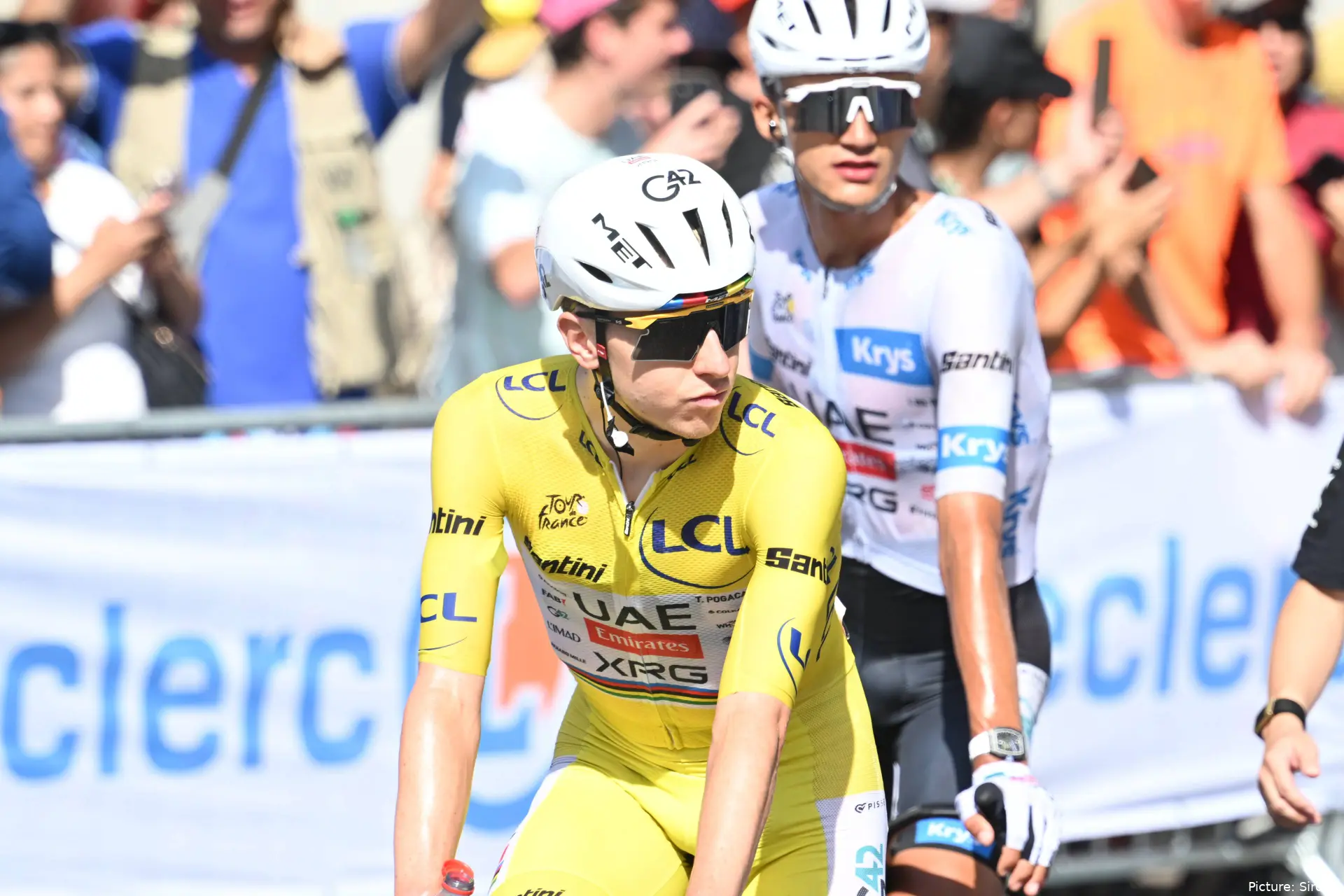
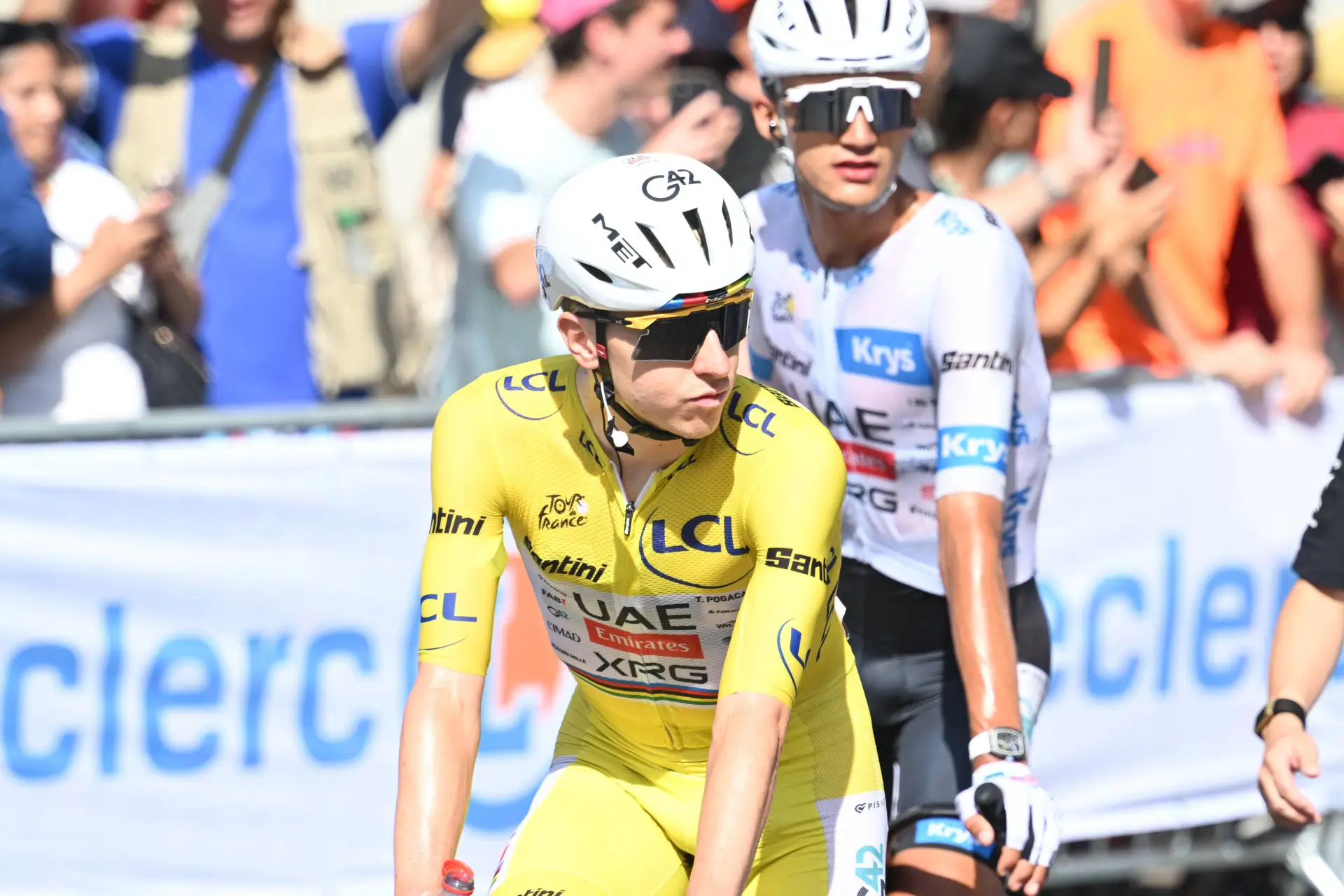
Stage 10 of the Tour de France 2026 delivered one of the race’s defining images: Tadej Pogačar attacking in the Massif Central to win solo and extend his lead over Jonas Vingegaard.
On the The Move podcast, Spencer Martin and Johan Bruyneel agreed the Slovenian seized a perfect opening to land both a psychological and sporting blow on his main rival.
Martin stressed the scale of the gap earned by the UAE Emirates leader. He noted that Pogačar not only won the stage, but “took almost a minute on his main GC rival,” a margin he deems huge in a modern Tour. He added that medium-mountain days often create wider splits than many big Alpine stages.
Bruyneel went further, framing the triumph as a kind of settling of scores. The Belgian recalled that Vingegaard had beaten Pogačar on a very similar finish two years earlier and argued the Slovenian seems especially driven to return to places where he was beaten. “Every time he’s been defeated in a specific spot, he’s come back to win,” the former sports director summed up.
The decisive moment came on the penultimate climb, when Pogačar launched an explosive attack and caught Richard Carapaz, who was up the road. Martin underlined how quickly the Slovenian reeled in the Ecuadorian, while Bruyneel said the difference in pace between them was “absolutely striking.”
For the former US Postal director, the key was not just the initial move but Pogačar’s ability to keep building the gap to the line. While the chase group worked with organised turns, the race leader continued to pull away and ultimately put more than half a minute into riders sharing the effort.
Vingegaard a concern
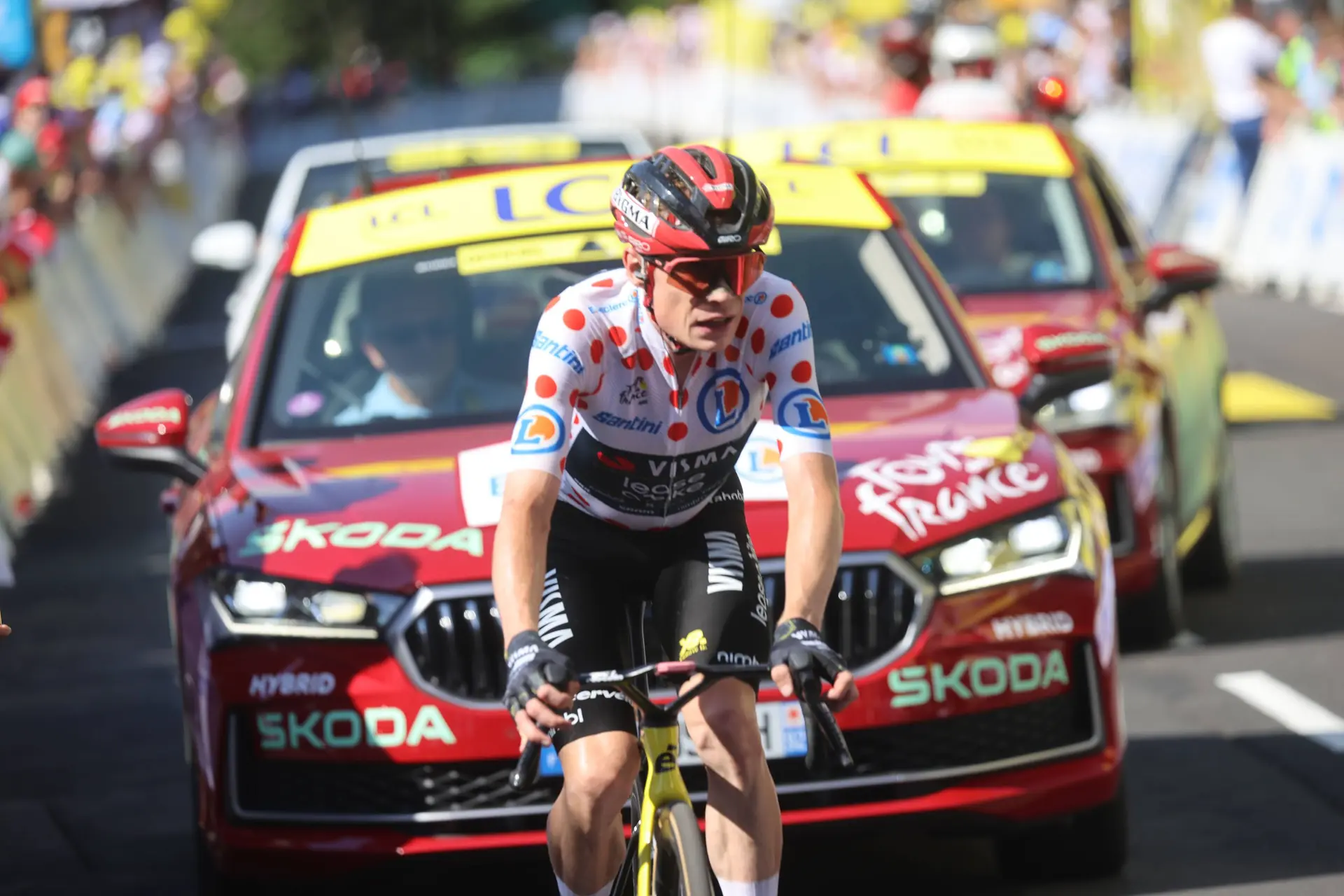
The Dane’s performance dominated much of the show’s debate. Bruyneel acknowledged that short, punchy climbs are not Vingegaard’s ideal terrain, but felt that alone didn’t explain a 54-second loss on GC. “I don’t think you can call that a small deficit,” he said.
The Belgian also linked the Visma leader’s display to accumulated fatigue in recent months. Vingegaard has strung together the Giro, the Vuelta and now the Tour without a true break between Grand Tours, something that, according to Bruyneel, may be taking a toll physically and mentally.
Martin agreed that Visma’s overall condition is a question mark. He pointed out that several key riders showed signs of fatigue and that, on a day when UAE lost support earlier than expected, Visma still failed to impose collective strength to isolate Pogačar.

Vingegaard raises concerns over his form
Is the Tour already decided
The big question on the episode was whether the race is effectively decided. Bruyneel answered cautiously, noting there are still eleven stages left and that surprises can happen. However, he admitted that “everything suggests we already know who will win the Tour, unless something truly unexpected happens.”
Martin added that the race interest could shift to the fight for second. With Vingegaard showing weakness and riders like Paul Seixas, Florian Lipowitz and Juan Ayuso growing more solid, the battle to join Pogačar on the podium has opened up unexpectedly.
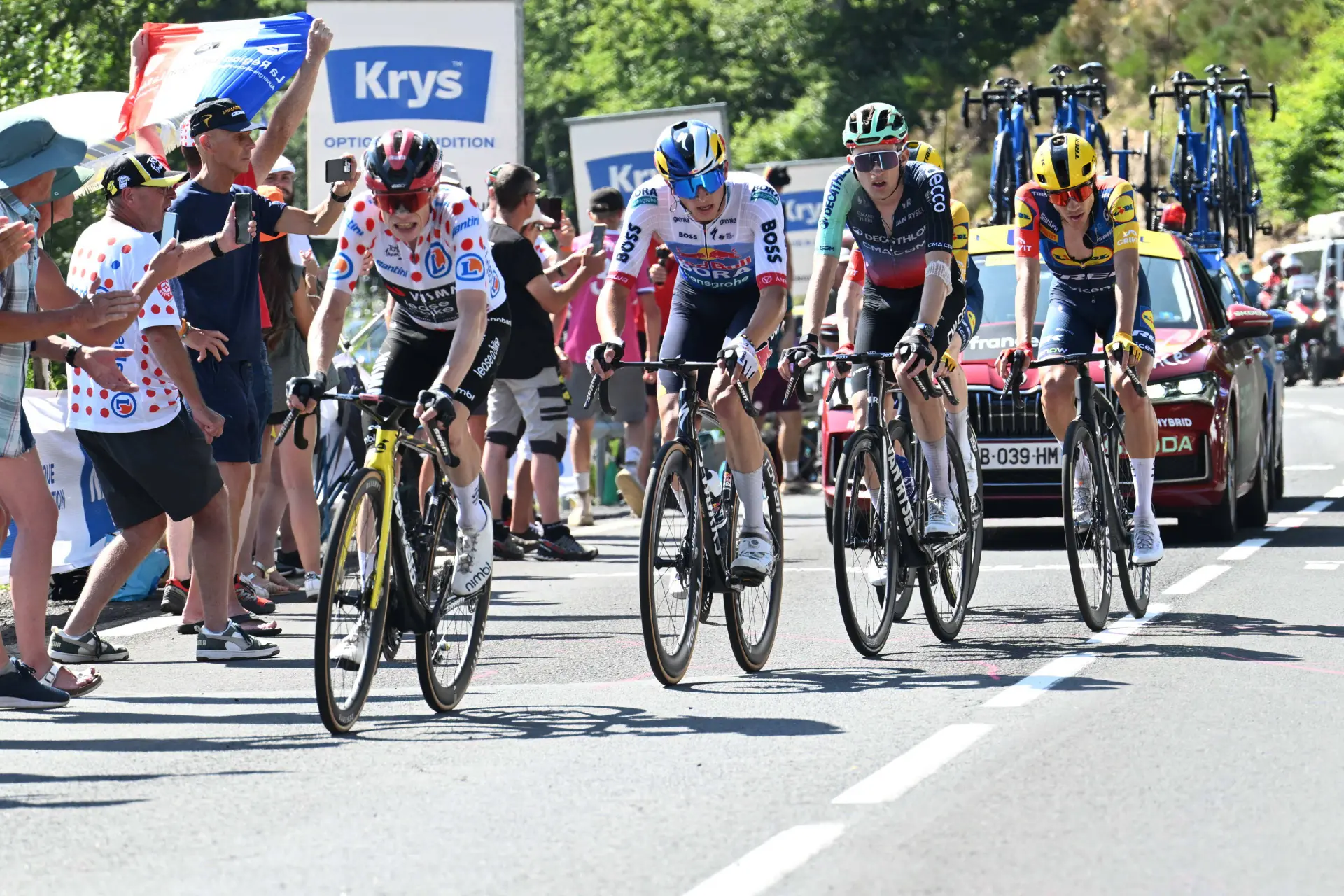
Among the day’s standouts, both analysts highlighted Paul Seixas. The young Frenchman finished third and showed maturity beyond his years in a demanding stage after the rest day. Bruyneel said he “passed a major test” and that his ride confirms the huge engine and talent he had already displayed.
Read also
A display that reshapes the Tour
Martin shared that view and noted Seixas’s rise contrasts with the dip from Isaac Del Toro, another youngster tipped for prominence. For the American, it was normal to see a debutant suffer after the rest day, which is precisely why he values the Frenchman’s performance so highly.
The episode’s conclusion was clear: stage 10 was not just another stage win for Pogačar. According to Martin and Bruyneel, the Slovenian sent a message to the peloton by showing he can attack on any terrain and keep extending his lead even when rivals appear to be collaborating at full tilt.
With 24 Tour de France stage wins already and an ever-wider GC cushion, Pogacar heads into the coming flat days with room to manage his efforts. And, as Bruyneel summed up during the analysis, “UAE are executing their own plan and seem a step ahead of the rest.”
Gavin QuinnCycling Journalist
Gavin Quinn is a cycling journalist and ultra-distance cyclist with a BA in Journalism from Dublin City University. Formerly the Press & Communications Officer for Cycling Ireland, Gavin has worked inside the national team at the World Championships and has reported for the Irish Mirror, Mirror UK, and The42.
His expertise is backed by elite-level access, having interviewed stars like Sam Bennett and Ben Healy, as well as immense personal endurance. In 2025, he completed a 12,000km solo cycle from Ireland to Vietnam, following a 4,600km tour across Europe. From the cobbles of Paris-Roubaix to the gradients of the Tourmalet, Gavin’s writing focuses on the "romance and brutality" of the sport. Having visited 50+ countries, he brings a global, cultural perspective to his coverage of the pro peloton for CyclingUpToDate.
claps 0visitors 0
Just in
Popular news
Latest comments
- Agreed, but nobody thinks ahead that much, especially so-called fans, they are the first to demand their rights to joy and entertainment, regardless of the price their hero pays. You only have to look at boxing/rugby research on past athletes’ problems in retirement to see how little their OWN fans really care.Jumpyjohn26-10-2026
- He might very well accept lower salary voluntarily (whilst others might get pressured into that anyway over the coming years) in exchange for non financial benefits such a move would bring. Wouldn’t be the first rider to get positive results from a change of team and wouldn’t be the first star rider to do well in a smaller outfit. MVDP has never suffered from not being in a leading team, MP did extremely well before his team started expanding (maybe too) fast, PS certainly didn’t underdevelop until now. Everyone fits in best in a unique situation that won’t work for anyone else, we should all be striving for finding that.Jumpyjohn26-10-2026
- Always best to focus on “a good beginning is half the work” philosophy Which also makes mathematical sense. If you look at the probabilities of things happening in a chain, each event has less than one. For two to happen you multiply, the result will thus always be even less. The earlier in the chain you affect probability, the more often that is multiplied each time you add a subsequent link in the chain. Or oppositely, it’s extremely inefficient to focus on the last event in the chain because the chances of that happening AFTER all the other events have also happened is far too small to consider. And realistically, it is also obvious that if you allow uncertainty into event 1 or 2, not only do you enormously increase the chances of a last event, you also increase the chances of other non-considered events. In non-mathematical terms, one day a car might drive into a whole peleton. Oups, what did I suggest, oh no, we actually already saw this almost happening on video, it was only the drivers’ unexpected fast reaction to reverse that averted the possible cancellation of cycling for an extended period as the sport would have been forced to question itself way more than it has ever had to.Jumpyjohn26-10-2026
- This is Trump level like distortion of information, shame on you CUTD!!!! I will boycott for a week from tonight on and unlike all the Moulike characters here, I keep my promises.Jumpyjohn26-10-2026
- sounds positive news for Lidl-Trek...still dirty on them for not resigning Lucinda Brand and why they arent all in with sponsorship of the Baloise team in 'cross.
 Davide26-10-2026
 - yeah your point about accidents happening in a chain of events, not a single event, is key. no police or barriers at a crossing. a car gets on the road. a trailing cyclist doesn't have an escort. no radio and GPS is being used to track stragglers. and tragedy. break one thing in the chain and it could be accident avertedmij26-10-2026
- The doctors called the concussion severe, even at the scene of the accident, because that is the term for it. The concussion protocol is the best they can do right now, with further research being done. It makes sense for Tadej's concussion to be severe because the freak circumstances lead to twisting of his head (and body) as he fell at high speed. Look at reports on the Toronto research published in early 2025 for starters, with images of the brain showing the effects that persist after symptoms clear up. Btw if Tadej had ridden the EC and fallen, he could have suffered more serious injury to the spine as the vertebra would not have been fully healed. Also serious consequences if he had hit his head. Don't know why you are so keen to downplay the impacts.Hills3326-10-2026
- Complete bullshit headline. The best thing this website can do is commit suicide.Renz26-10-2026
- If he wants to retire, he can spend a couple of non intensive low key seasons at UNO-X for lower salary as well.abstractengineer26-10-2026
- we need facts about these accidents and see the stats about these facts to find what can be done and what cannot be done. That is the job of the UCI. This has been done in many industries, Airlines, and Spacecrafts. Once teh UCI sets the rules, then the organizers can decide upfront whether or not they want to hold the race or not. UCI also needs to make the rules applicable to all stakeholders including riders and staff about what to do and not do, for safety. Parachutes are the safest to exit a jet fighter/bomber but none are provided on a passenger aircraft. most safety mechanisms are not viable on a spacecraft. in industries most accidents are the result of a chain of events, a single link not happening will not cause that accident. all these things are thoroughly investigated. inspite of all the safeguards, accidents happen and will happen, because humans remain inherently flawed but following rules/procedures minimize the risk and stats, not an individual accidentabstractengineer26-10-2026
Loading
Write a comment