“An ambulance had to come because I’d fallen into a coma” – How Kim Le Court went from a 10% survival chance to the top of women’s cycling
Cycling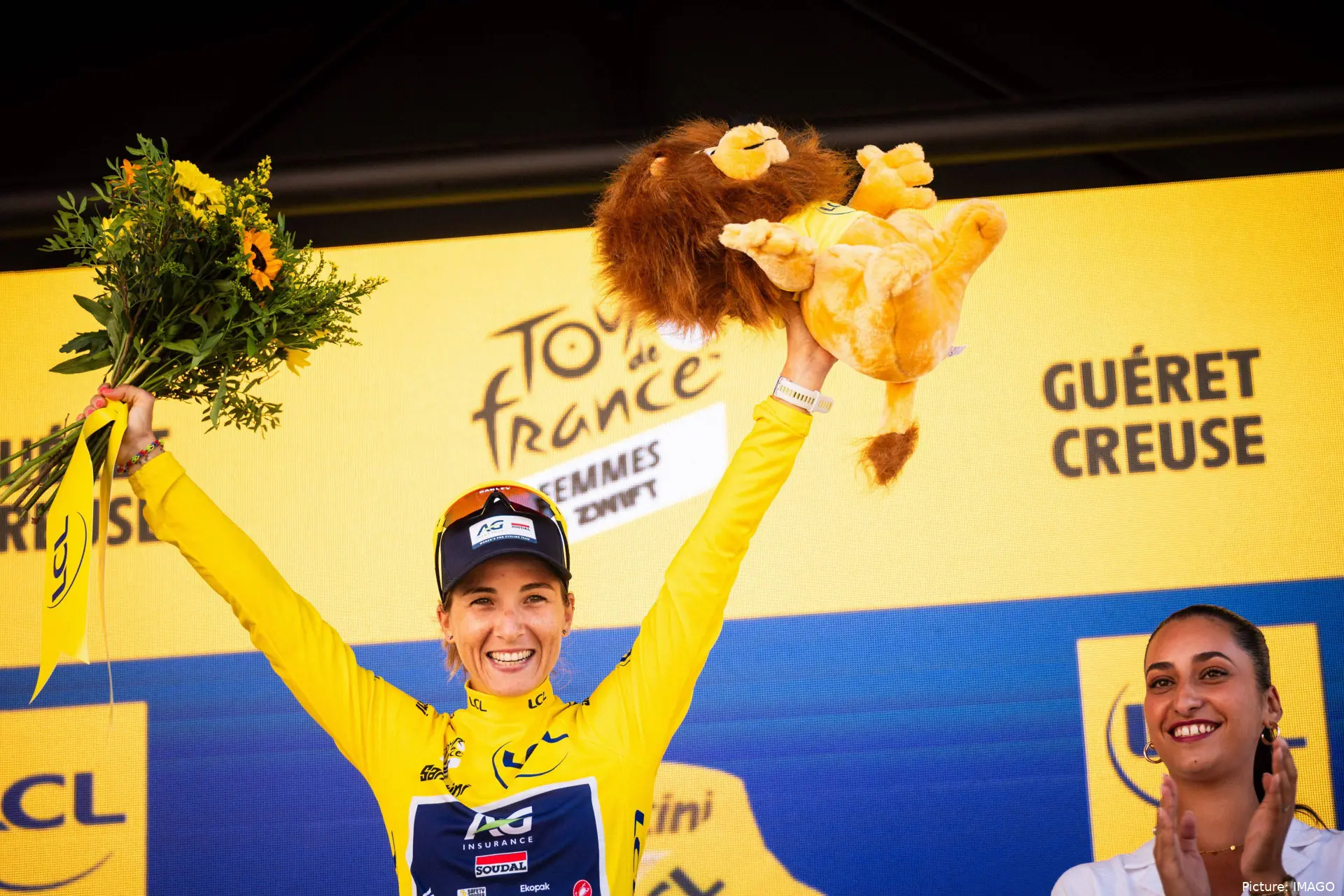
Kim Le Court’s rise to the top of women’s cycling has taken her from mountain bike stages in South Africa to victories in some of the sport’s biggest races. But long before she became one of the most recognisable riders in the Women’s WorldTour, her story almost ended before it had even begun.
The Mauritian rider revealed in the Radio Peloton podcast that a childhood battle with malaria left doctors fearing the worst after a series of misdiagnoses allowed the disease to spiral out of control.
“That’s where I caught malaria,” Le Court explained, recalling a childhood move from South Africa to Madagascar that quickly turned from adventure to crisis.
The illness would ultimately leave her fighting for her life.
A diagnosis that came almost too late
When Le Court returned to France, the severity of the illness initially went unnoticed. Doctors, unfamiliar with the tropical disease, believed her symptoms were far less serious. “There, they said it was just the flu,” she recalled.
The mistake proved critical. Twice she was sent home as her condition deteriorated, until the situation finally reached breaking point. “I couldn’t walk anymore. An ambulance had to come and pick me up because I had fallen into a coma.”
Only when doctors realised she had recently been in Madagascar did the true diagnosis emerge. By then, the prognosis was grim. Le Court was given only a ten percent chance of survival.
Her family were forced to prepare for the possibility that she might not recover.
In a final attempt to save her life, doctors sourced a risky medication from Madagascar. The treatment did not work for everyone, and Le Court’s father had to sign a declaration taking full responsibility before it could be administered. “My brother was called and told he should come and say goodbye to me,” Le Court remembered.

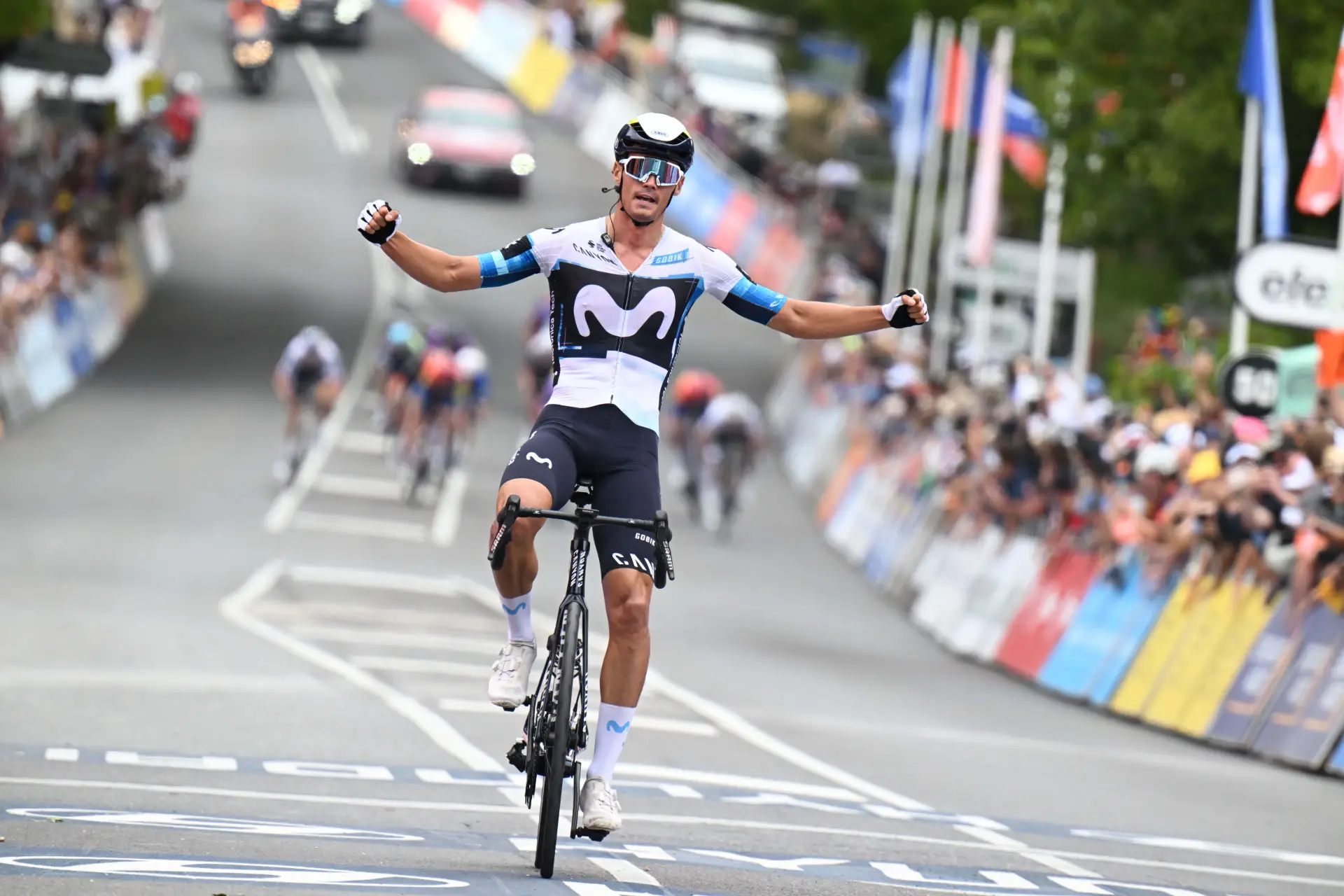
Kim Le Court won Liege-Bastogne-Liege in 2025
A moment that foreshadowed a future cyclist
The following morning, the unexpected happened.
After receiving the treatment, Le Court woke up in the corridor of the hospital in a scene that still feels almost surreal in hindsight. “The next morning, I woke up on a bike in the hospital corridor. What I remember is that I had an IV in my arm, but I had to keep my arm straight while I was on the bike.”
It was a moment that now feels strangely symbolic, given the career that would follow.
At the time, however, the experience left the deepest impression on her family. “It was a very difficult period for my parents and my brother. They remember everything. I was still young.”
From unlikely beginnings to the Women’s WorldTour
Le Court’s path into professional cycling was anything but straightforward.
Born in South Africa and raised partly in Mauritius, she grew up far from the traditional pathways that funnel riders into the European peloton. Early attempts to establish herself in Europe during the middle of the last decade proved difficult, and her career briefly moved away from the road scene.
Instead, she built her reputation in mountain biking, where endurance and technical ability became defining strengths. The turning point came with her victory at the Cape Epic in 2023, one of the sport’s most prestigious stage races.
That success helped reopen the door to road racing.
A year later, she secured a contract with the AG Insurance - Soudal Team, and the impact was immediate. Le Court quickly proved herself capable of competing at the highest level of the Women’s WorldTour, delivering victories and breakthrough performances that elevated her profile across the sport.
Her results have since cemented her reputation as one of the most exciting riders to emerge from outside cycling’s traditional heartlands, a Mauritian athlete capable of challenging the established European powerhouses.
Perspective after survival
Looking back now, the story that began with a childhood medical emergency has become part of the identity that shapes Le Court’s career.
The episode left scars for her family, but it also provided a reminder of just how unlikely her sporting journey has been.
Today, she can reflect on the experience with a sense of distance and even humour. “In the meantime, I never get bitten by mosquitoes anymore.”
For a rider who once faced only a ten per cent chance of survival, reaching the top of professional cycling represents a comeback that few could have imagined.
Kieran WoodDeputy Editor-in-Chief
Kieran Wood is a sports journalist based in Wales and has been active in journalism since 2022. He regularly contributes to DartsNews.com and CyclingUpToDate.com, where he covers professional cycling and darts. In cycling, his work includes liveblogs from major races, including the Tour de France, the Giro d’Italia, and La Vuelta a España, alongside race reports and analysis. He has also conducted interviews with professional riders.
His reporting spans the full racing calendar, from one-day classics to stage races, with a focus on accurate, real-time coverage and clear contextual analysis. For statistics, results, and historical context, he regularly uses resources such as ProCyclingStats. To support reporting on rider activity and training context where relevant, he also references Strava.
In his work, Kieran places strong emphasis on careful sourcing, editorial accuracy, and updating articles as new, verified information becomes available.
claps 0visitors 0
Just in
Popular news
Latest comments
- The article makes it sound like a great thing and something to be applauded. The reality is is gives the Americans another 6 years to fleece European cycling fans or force them to hunt around Europe with VPN’s for free feeds. Not something to be celebrated in my book. Before someone points out that coverage of this depth costs money, yes, I agree but not £30+ per month a fee I will wager will gradually increase now this deal has been cemented.Paul53119-10-2026
- Great. Thrilled. (Satire) Oh, how I miss the days of GCN. Still wear my GCN hoodie with pride.anonymouscyclist19-10-2026
- You could also look at it another way. How many riders have had better or more consistent results since the Tour?Jumpyjohn19-10-2026
- Whilst I love Tadej (and Remco, who deserves to be mentioned here, too), @JumpyJohn makes a valid point, and he isn’t wrong @MajorPayne. It is a fact that today’s official broadcasters of cycling struggle to keep our attention once the likes of Tadej (or Remco) attacks at ~80km or so. In the 142nd issue of Rouleur, Ned Boulting reflects on the often stressful paradox of commentating on a race that is effectively over before the broadcast window even hits its stride. In this edition, he centres on Remco’s 1hr solo at the Challenge Mallorca this year, and captures the panic and dread shared by the commentators when a dominant rider kills off the racing tension early. I recommend you read it, it’s a fascinating insight into the world of commentary, and the true viewing figures of today’s cycling. I must add here, I love Tadej and Remco, but I would be lying if my heart rate wasn’t higher when watching the World Championships this year. And I’m sure Rob Hatch would say something akin regarding his commentary!anonymouscyclist19-10-2026
- The shattered women’s marathon record was clean and highly surprising and then a few months later the athlete was very positive in another test for something not taken by mistake when recording far less impressive results. Sounds to me like the problem is still the age old one, detection is often way behind. Just like with crime, it’s not because you can’t catch the criminals that you aren’t aware of the crime.Jumpyjohn19-10-2026
- Listen, you have a point but on the other hand in cycling, once some of the riders go solo and build a minute’s gap, there’s hardly any action left to watch. Cycling is definitely not for today’s generations of accelerated viewing. Other people find skydiving or chess exciting but you can’t force everyone to feel the same.Jumpyjohn19-10-2026
- That’s a funny one. Yeah obviously he’s more aero than some but most of the aero effect at elite level is the bike. Now you have me starting to feel sorry for the guy behind him when he pulls a groupetto.Jumpyjohn19-10-2026
- Knew a World Tour promotion was coming for Ben this season. Thrilled for him, and can't wait to see what he can do at this level. Another one to watch at the TTs.anonymouscyclist19-10-2026
- It honestly breaks my heart to see this. I had a feeling this might happen over the last few years, but I kept praying it wouldn't, and that Joey would find his niche, especially back racing alongside his brother. After growing up racing alongside PH-MAS, the Pidcock brothers have always felt like one of our own, as we’ve watched them grow from Club level all the way up to PC and WT. I wish Joey nothing but the best of luck in whatever he does next, but selfishly… I do wish for him to move into the role of Q36.5 team staff.anonymouscyclist19-10-2026
- Predictable, sure! But boring??? OMG! Was Mike Tyson predictable and boring in his prime? Air Jordan? Schumacher or Senna? OMG!!!MajorPayne19-10-2026
Loading
Write a comment