A chat over a coffee: the Giro d'Italia from our team’s perspective. The good, the bad and the near future
Cycling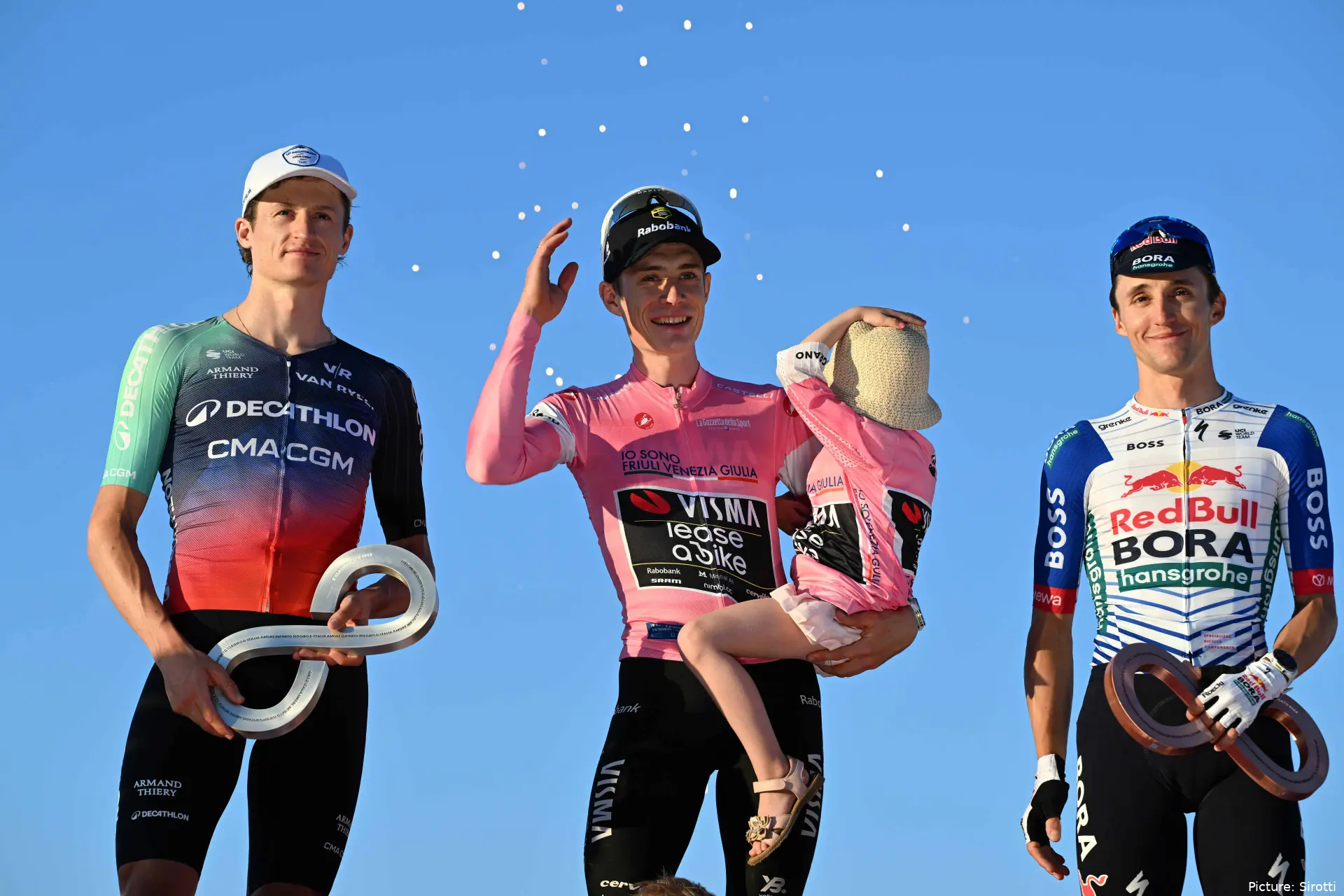
The 2026 edition of the Giro d'Italia 2026 will forever be remembered as the race where Jonas Vingegaard completed cycling’s elusive Grand Tour Triple Crown. The Dane arrived in Italy with enormous pressure on his shoulders and left Rome having delivered one of the most commanding performances seen in modern Grand Tour racing.
Five stage victories, complete control of the general classification and a near-flawless display from Team Visma | Lease a Bike elevated Vingegaard into cycling immortality. Yet despite the magnitude of the achievement, the race itself has divided opinion among our journalists and analysts.
They sat down together to reflect, in a concise way, on everything they witnessed out on the road during the twenty-one days of racing. Between plenty of laughter and a few playful jabs, several hours were spent sharing a coffee and enjoying a long, insightful conversation.
Admiration was universal. Excitement, however, was not.
Throughout the three weeks, the dominant conversation surrounding the Giro revolved around the same question: can a race still become legendary when the outcome never truly feels uncertain?
As Ondřej Zhasil noted, Visma entered the race with a very straightforward objective, to win the Giro with Vingegaard. Expectations beforehand suggested the Dane might rely heavily on consistency and the time trial before making decisive moves in the mountains. Instead, the Dutch squad completely suffocated the race.
The team controlled virtually every situation with remarkable calmness. Tim Rex emerged as one of the revelations of the race during his Grand Tour debut, while Davide Piganzoli transformed perceptions about his long-term potential by looking capable of a top-five finish himself despite working as a domestique. Even Sepp Kuss, usually one of the stars of Visma’s mountain support unit, often appeared secondary within the collective strength surrounding Vingegaard.

Jonas Vingegaard on the final podium of the 2026 Giro d'Italia in Rome
The day Vingegaard entered cycling’s Hall of Fame
For Javier Rampe, the Giro was above all a historic coronation. The Spanish writer described May 31 as the day Vingegaard “entered the Hall of Fame of the Triple Crown,” highlighting the authority with which the Dane dismantled his opposition. According to Rampe, Vingegaard not only dominated the race, but did so without appearing to overextend himself physically ahead of his looming clash with Tadej Pogacar at the Tour de France 2026.
Rampe pointed out that Vingegaard imposed himself almost immediately after the race started in Bulgaria. Even moments where riders such as Giulio Pellizzari attempted to pressure him on climbs like the Blockhaus ultimately proved temporary illusions.
While Vingegaard dominated, Rampe believed several other riders still succeeded in shaping the race’s identity. Felix Gall emerged as the only rider capable of consistently surviving the brutality of the race alongside the Dane, eventually securing second place in Rome. Meanwhile, Jai Hindley once again showed his Grand Tour resilience by fighting his way onto the podium.
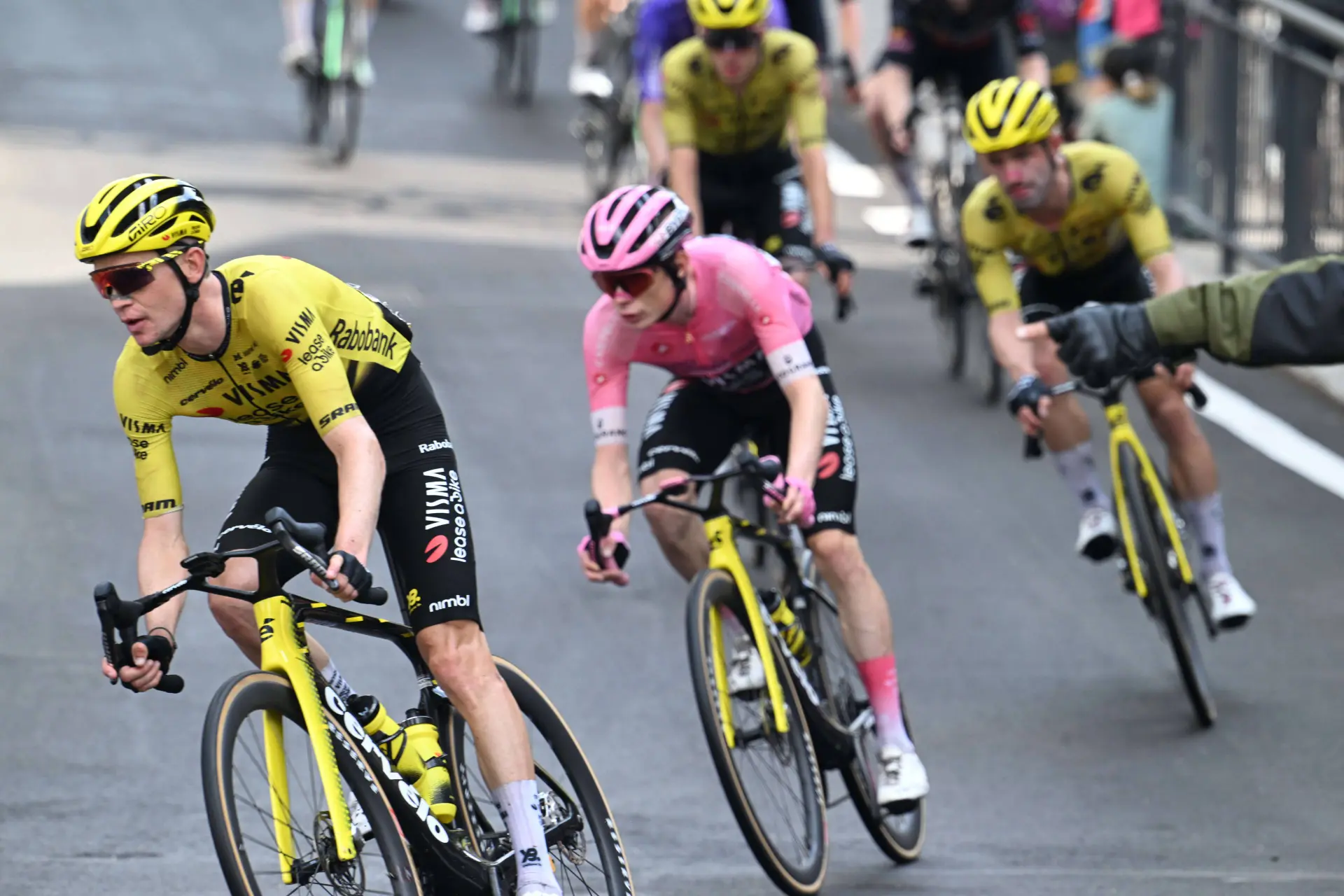
Rampe also praised the bravery of Afonso Eulálio, whose unexpected spell in the Maglia Rosa became one of the emotional highlights of the race for Portuguese fans.
Away from the general classification, Rampe highlighted the rise of Paul Magnier as perhaps the sprint revelation of the Giro. The Frenchman claimed three victories for Soudal Quick-Step and secured the points classification, confirming himself as one of the sport’s major sprinting talents for the future.
Rampe also pointed toward the performances of Jhonatan Narváez and Igor Arrieta as major positives for UAE Team Emirates - XRG, particularly considering the team arrived without several headline stars.
Yet Rampe did not avoid the race’s disappointments either. He singled out Movistar Team and especially Enric Mas as one of the Giro’s major failures, contrasting Mas’ collapse with the relentless attacking spirit of teammate Einer Rubio.
A Giro that may not stay in memory
If Rampe focused on the greatness of Vingegaard’s achievement, Rúben Silva took a far more critical view of the race itself.
In Silva’s opinion, the Giro lacked the unpredictability and emotional chaos that once made the Italian Grand Tour so special. He compared the 2026 edition unfavourably with the legendary Giros of the 2010s, races defined by brutal weather, collapsing favourites and dramatic swings in the general classification.
Instead, Rúben felt the race became predictable far too early.
Visma’s tactical perfection was undeniable, but it also removed suspense from the race. According to Rúben, there was never a single moment during the three weeks where he genuinely believed Vingegaard might lose the Giro. Even the Dane’s weaker time trial did little to alter the broader feeling that the race was already decided.
Rúben argued that the lack of a real fight for the Maglia Rosa drained the Giro of emotional intensity. The battle for the podium eventually became more interesting than the fight for victory itself, especially once it became clear that riders like Gall, Hindley and Thymen Arensman were competing for secondary positions rather than truly threatening Vingegaard.
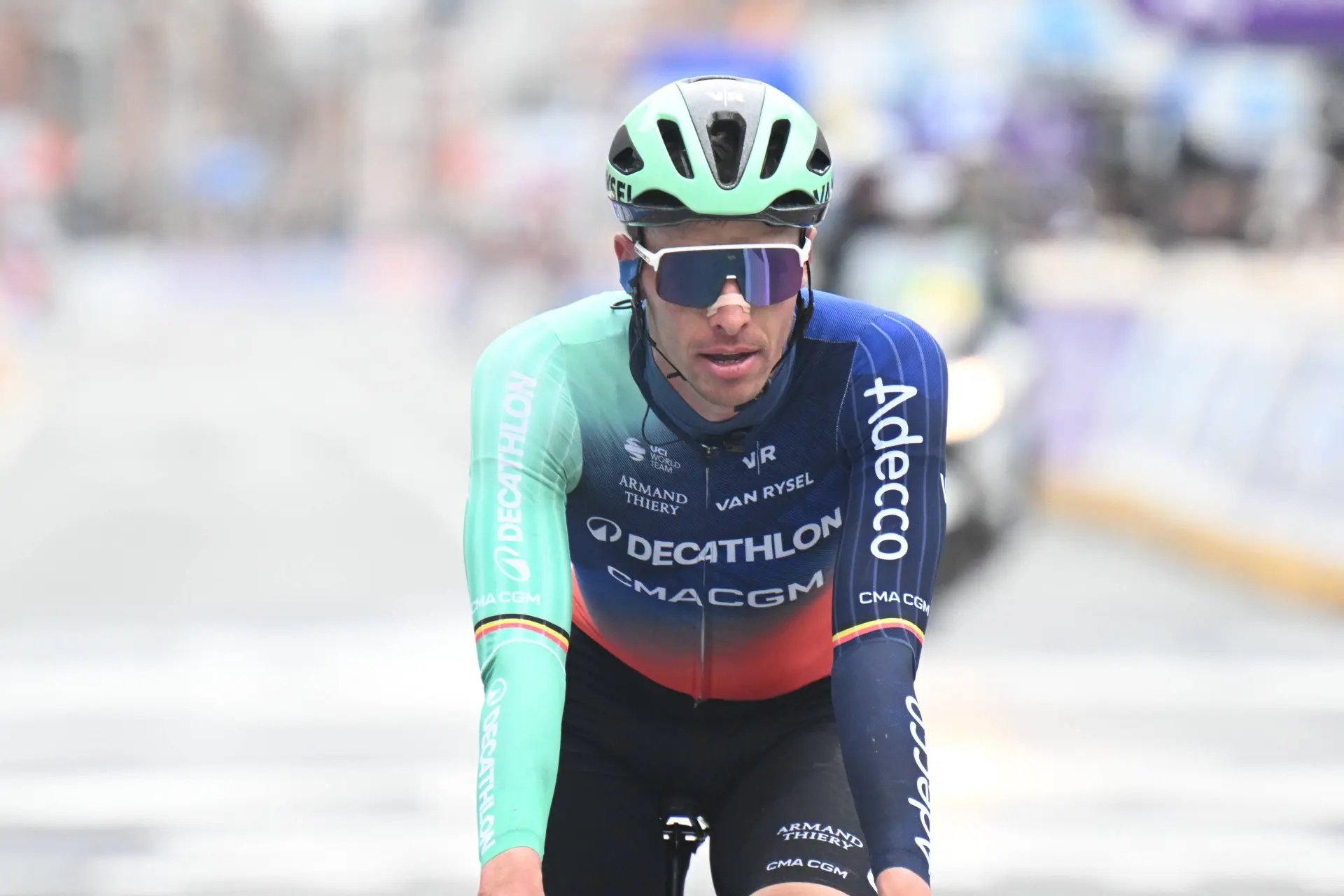
Still, Rúben found one story impossible not to embrace: the breakthrough of Afonso Eulálio.
For the Portuguese journalist, Eulálio’s Giro became the emotional heart of the race. His fearless attack during the opening week transformed the young rider into a national sensation. Wearing both the pink and white jerseys, Eulálio attacked without fear and proved himself capable of handling pressure far beyond expectations.
He described it as a “golden moment in Portuguese cycling,” one that will remain meaningful regardless of what happens next in Eulálio’s career.
The Portuguese writer also praised several smaller subplots that added entertainment to an otherwise predictable race. He highlighted the tactical confusion surrounding Einer Rubio, Giulio Ciccone’s desperate hunt for a stage win and the aggressive racing on stages where Movistar unexpectedly animated the action.
At the same time, Silva criticised teams such as Groupama-FDJ United and Team Picnic PostNL for contributing almost nothing to the race.
His biggest criticism, however, remained the repetitive nature of the mountain stages. Six mountain days produced six Visma victories, and according to Rúben, four of them followed virtually the exact same script: Visma controls the race, Vingegaard attacks and nobody can follow.

Giulio Pellizzari and Davide Piganzoli ahead of stage 20 at the 2026 Giro d'Italia
The mountain stages felt like sprint stages
Juan López perhaps summarised the Giro’s central issue most directly. For the Spanish analyst, Vingegaard’s superiority was so overwhelming that the mountain stages lost their traditional tension entirely. López described experiencing a strange sensation while watching the climbs, comparing them to flat sprint stages because the outcome felt inevitable long before the finish.
Just as viewers expect sprint teams to catch breakaways on flat stages, López argued that Visma controlled the mountains with identical predictability. The breakaway never truly stood a chance, the favourites were always going to fight for victory and Vingegaard was always going to attack.
That predictability led López toward a broader concern for modern Grand Tours. Whenever riders operating on the level of Vingegaard or Pogacar enter races like the Giro or the Vuelta a España, suspense inevitably suffers.
In López’s view, cycling desperately needs more riders capable of genuinely competing at that level if Grand Tours are to maintain their emotional unpredictability.
The Giro raised more questions than answers
For Gavin Quinn, the Giro was fascinating not only because of what happened in Italy, but because of what it may mean for the future.
Quinn viewed Vingegaard’s Giro as a calculated gamble that paid off perfectly. Had the Dane struggled, failed to win stages or appeared vulnerable, both he and Visma would have entered the Tour de France under enormous pressure. Instead, Vingegaard leaves Italy having completely reignited the debate over whether he can stop Pogacar in July.
That looming rivalry shaped Quinn’s entire interpretation of the race. While the Giro itself often lacked suspense, it dramatically increased anticipation for the Tour de France. Quinn argued that Visma management likely care far more about July 4 than about historical discussions surrounding the Giro itself.
Beyond the Vingegaard-Pogacar debate, Quinn also focused heavily on the future implications for several teams and riders.

Afonso Eulalio on the final podium of the 2026 Giro d'Italia in Rome
The emergence of Paul Magnier raised immediate questions for Soudal Quick-Step regarding how they manage both the Frenchman and Tim Merlier moving forward. Meanwhile, Quinn wondered whether Lidl-Trek may now reconsider how they structure Grand Tour campaigns around riders like Derek Gee-West, especially given his ability to improve deep into three-week races.
Quinn also highlighted some of the Giro’s memorable moments beyond the general classification. He pointed toward the public disagreements involving Jonathan Milan and race organisers, Giulio Pellizzari briefly making the peloton dream of a genuine showdown and the explosive performances of Jhonatan Narváez.
Yet Quinn ultimately arrived at a similar conclusion to Silva and López: the race lacked true tension.
Outside of Sepp Kuss’ spectacular raid in the queen stage and a handful of breakaway days, Quinn felt the general classification battle effectively ended after stage seven. The hierarchy among the favourites became obvious too early, leaving many mountain stages feeling repetitive and emotionally flat.
Greatness alone is not enough
Pascal Michiels perhaps captured the Giro’s emotional contradiction more elegantly than anyone else.
For the Austrian writer, the 2026 Giro absolutely deserves its place in cycling history. Vingegaard completed the Triple Crown with astonishing authority and Visma delivered what Pascal described as a “sporting masterclass.”
But therein lay the problem. Vingegaard was simply too strong. Visma were too organised. The rest of the peloton never came close enough to generate real suspense.
Pascal argued that there was never a stage where the Maglia Rosa genuinely appeared in danger. Even when Vingegaard remained relatively quiet during the first half of the race, the sense of control never disappeared.
For Austrian and German-speaking fans, however, Felix Gall fundamentally changed the race’s emotional texture. His second place gave supporters a reason to remain invested deep into the third week and turned the battle behind Vingegaard into something meaningful rather than merely symbolic.

Giulio Ciccone on the final podium of the 2026 Giro d'Italia in Rome
Pascal described Gall as representing a style of rider modern cycling increasingly struggles to reward: the pure climber capable of surviving through resilience rather than overwhelming explosiveness.
Without Gall, Pascal argued, the Giro may have felt emotionally empty. Like several other analysts, Pascal also praised Afonso Eulálio, Jhonatan Narváez and Paul Magnier for providing flashes of excitement throughout the race. He highlighted the entertainment value brought by Giulio Ciccone and Einer Rubio, as well as the strange tactical inconsistencies displayed by Movistar throughout the three weeks.
Still, Pascal returned to the same central criticism. A Grand Tour lives on uncertainty, tactical mistakes, collapses and impossible moments suddenly becoming real. Too often in this Giro, the formula remained identical: Visma controlled the race, Vingegaard attacked and nobody responded.
It was extraordinary sporting dominance, but over time it became monotonous viewing.
Results powered by FirstCycling.com
The paradox of the 2026 Giro
In many ways, the 2026 Giro d’Italia may ultimately become remembered as both a masterpiece and a warning.
On one hand, the race elevated Jonas Vingegaard into cycling immortality. Winning all three Grand Tours places him within one of the most exclusive clubs in the history of the sport. His Giro campaign was not merely dominant, it was historically significant.
On the other hand, the race also exposed a growing problem within modern stage racing. When riders like Vingegaard or Pogacar operate at their absolute peak, entire Grand Tours can become processions rather than battles.
That is not a criticism of greatness. Champions are supposed to dominate. Vingegaard did exactly what legends do: remove doubt, crush rivals and leave history with no questions about who was strongest.
Yet cycling has always thrived not only on greatness, but on vulnerability. Fans remember collapses, unexpected attacks, chaotic mountain weather and tactical implosions just as much as they remember victories. This Giro often lacked those moments.
Still, despite the predictability of the overall classification, the race was far from empty. The emergence of Afonso Eulálio, the emotional rise of Felix Gall, Paul Magnier’s sprint dominance, Narváez’s explosiveness and the drama surrounding riders like Ciccone and Rubio ensured the Giro never became entirely sterile.
Perhaps that is why opinions on the race remain so divided.
The 2026 Giro was not a classic in the traditional sense. It did not produce a legendary duel for pink or a final-week collapse that will be replayed for decades. But it did produce one of the greatest individual performances of the modern era. And maybe, years from now, that will be enough.
Carlos Silva is a writer for CyclingUpToDate.com, where he contributes race reports, interviews, analysis pieces, and live coverage of the international cycling calendar. Holding a degree in Sports from the Jean Piaget Institute, he combines academic knowledge of performance, training, and competition with hands-on journalism experience in professional cycling.
Throughout his career, Carlos has conducted interviews with leading figures in the sport, including Alberto Contador, Joaquim Rodríguez, Óscar Pereiro, João Almeida, Isaac del Toro, Derek Gee, John Degenkolb and Geraint Thomas. These conversations reflect direct engagement with Grand Tour winners, Classics specialists, and emerging talents.
He has provided on-site coverage at major events ranging from the Vuelta a España to the Tour de France, alongside stage races such as Vuelta a Andalucía, Volta ao Algarve, Volta a Portugal and O Gran Camiño. Covering the mythical climbs of the Giro d'Italia remains one of his professional ambitions.
Carlos is responsible for liveblog coverage of all major WorldTour races and beyond, including the Tour de France, Giro d'Italia and Vuelta a España. His reporting integrates verified data from ProCyclingStats to ensure statistical accuracy, contextual depth, and analytical precision.
A lifelong cycling enthusiast, he approaches storytelling across written, photographic, and video formats with a focus on credibility, tactical insight, and informed race interpretation.
claps 3visitors 3
Just in

Popular news
Latest comments
- All key riders are old and ageing fast and downward trajectory at visma and visma clearly asinking ship..Something clearly is rotten at visma by looking everyone who breaks contract from coaches to staff to riders so this would lowkey benefit jonasmiguel25-10-2026
- yeah they are incredible at this, also retained and secured all key riders and major for long contracs....miguel25-10-2026
- agreed, make the stage with something in GCmij25-10-2026
- Now that G is out of the races he doesn't mind risking GC positions, A GC race makes it very tightly control along with the sprinters teams and you will not get the spectacle.abstractengineer25-10-2026
- yeah looking at the ages of the replacements, and the quality of the riders, I see upgrades all around.mij25-10-2026
- Individual Gautherat is the most exciting given his age too I agree. But Frigo and Balderstone for uae will be super valuable as doms areound those leaders. UAE just quitly uppgrade w/stronger and younger guys. Sivakov was on the down and Frigo replace all that with bigger engine. Balderstone seems like another brilliant under the radar pickup UAE is masters off....so exhausting they never missmiguel25-10-2026
- Surprised it’s that inexpensive!Lozza25-10-2026
- Nah, I like it here. I like a challenge, against the people who hate me here. Jumping John, you ain't getting rid of me :))PogiSloFans25-10-2026
- Pogi deserves every penny he gets paid... and he's the only cyclist that should be paid more. If he's two classes above everyone else, his salary should also be. Ad acta.PogiSloFans25-10-2026
- It’s not only that, it’s this obsession with running after money, whether it be teams, riders, sponsors, broadcasters. As soon as one player gets ahead, others feel obliged to match their moves with increases for fear of losing out and for fear of someone else following in your place instead without looking at the long-term consequences of blindly following. Other sports ahead (or behind depending on how you look at it) in such matters should serve as a warning but humanity has a habit of heading straight into walls even when the writing is on it. When financial objectives and limits aren’t clear, it’s impossible to manage any organisation, you can’t even recruit the right riders or tell them what is needed to make sure they’re a good fit because you can’t clearly explain what they can expect. Not all riders are motivated by money alone and some of the teams are proof of that.Jumpyjohn25-10-2026
Loading
1 Comments