“You’re a professional cyclist. Weight does matter” - Former Vuelta winner criticises Demi Vollering’s post-Tour comments on body image in cycling
Cycling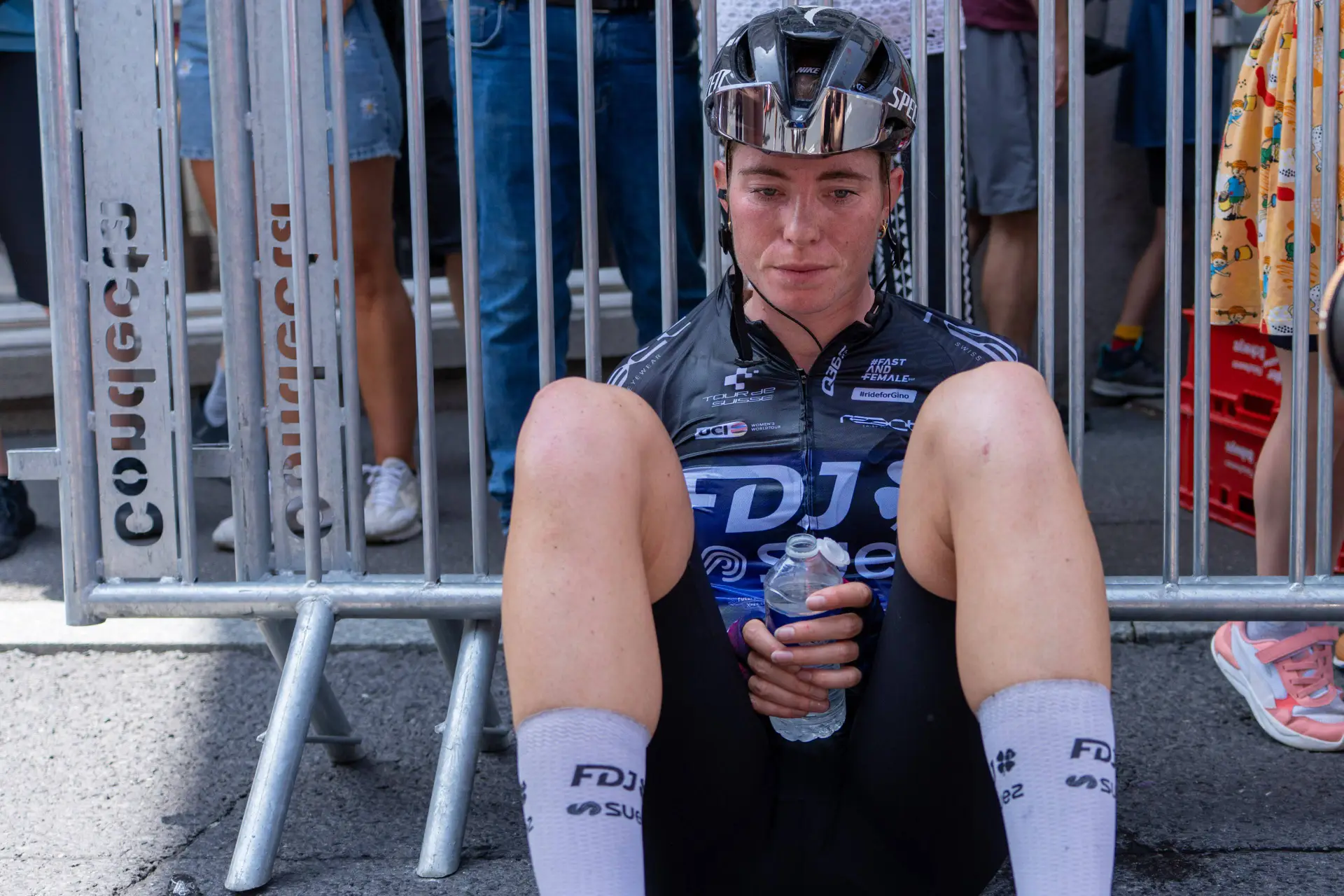
In the days following her defeat at the 2025 Tour de France Femmes, Demi Vollering made headlines not just for finishing runner-up, but for the tone she struck in addressing the media scrutiny around her weight. In a lengthy Instagram post, the former Tour champion sought to reframe the discussion, prioritising health over kilograms, and pushing back against what she characterised as an unhealthy fixation on body weight in elite sport.
But former Vuelta a Espana winner turned cycling analyst Chris Horner isn’t convinced. In a characteristically forthright edition of his YouTube channel analysis, Horner dissected Vollering’s performance on Stage 9, the final mountain test of the race, and took issue with what he perceived as a disconnect between Vollering’s post-race narrative and the tactical and physiological realities of elite-level cycling.
“You’re a professional cyclist. Weight is always going to be a factor,” Horner said. “If you’re not going to have watts per kilo better than the rider next to you, then you better have tactics better than the rider next to you. Otherwise, you have zero chance of winning.”
Vollering’s post-Tour message
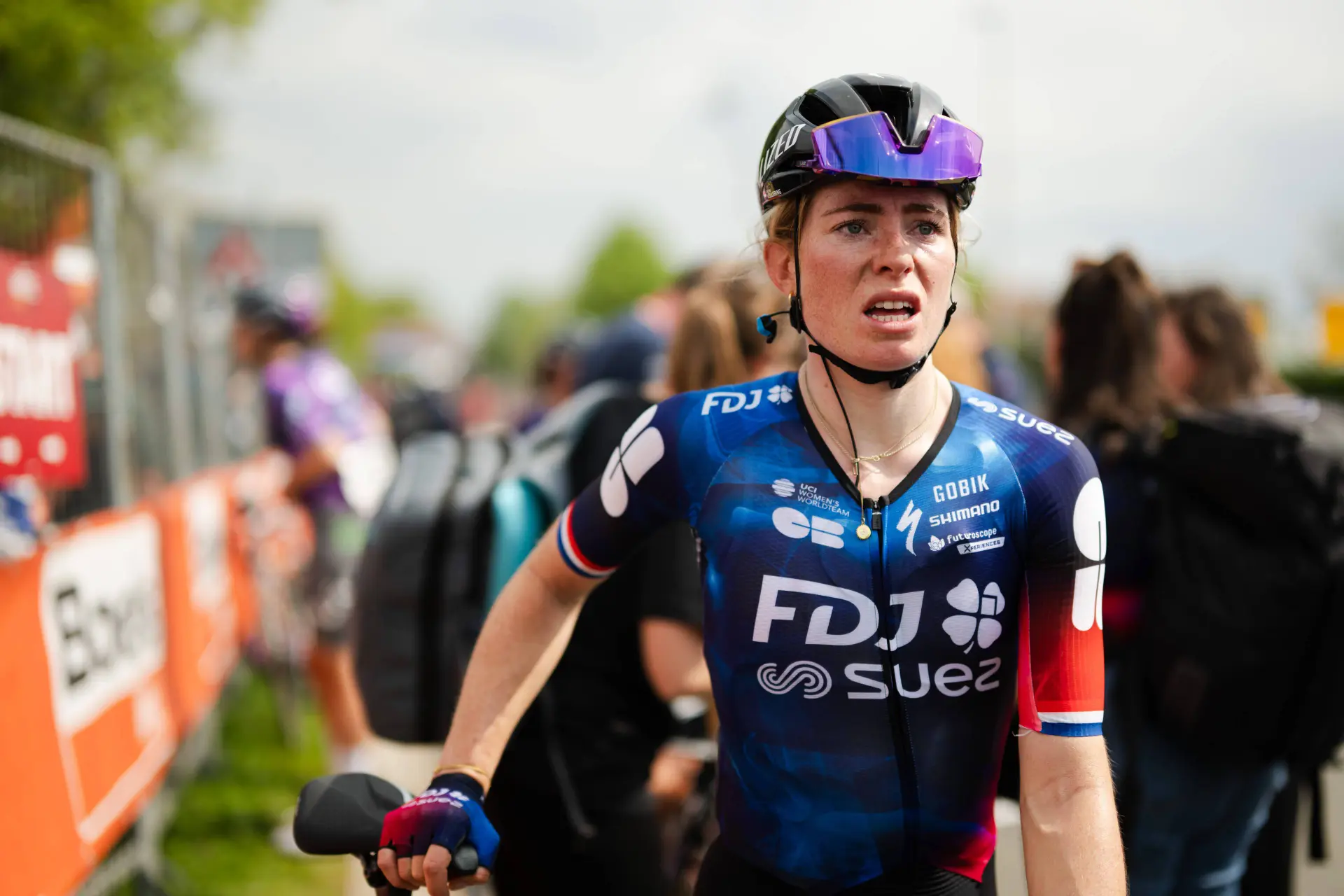
Vollering’s social media post — shared several days after the Tour concluded — offered a heartfelt and thoughtful reflection on the pressures faced by female athletes. In it, she acknowledged the volume of post-race media attention directed at her body weight, and made clear that for her, the priority would always be long-term health over short-term performance gains.
“I’m not built to be the lightest rider in the peloton. And I don’t want to force my body to become something it’s not,” she wrote. “We did everything we could to arrive at the Tour in the best possible shape — for me… Losing weight is not the ultimate solution.”
She also pointed to the influence of elite athletes on younger generations: “Because young girls are watching us. They notice what we say — and what we don’t… The risk is real… disordered thinking can grow quietly and stay hidden for a long time.”
The post has been widely praised across the sport for its maturity and candour, particularly given the delicate balance female athletes often must strike between performance, health, and public expectation. But Horner, while not dismissing the sentiment, saw it as out of step with the tactical errors he believes defined Vollering’s race — and her inability to match eventual winner Pauline Ferrand-Prévot on raw physical performance.

Vollering was a distant 2nd behind Ferrand-Prevot in France
“You went 0 for 2”: Horner’s critique
Much of Horner’s criticism centred on Stage 9, a brutal 125km route featuring three classified climbs and a steep drag to the finish. Vollering’s FDJ–Suez squad rode aggressively, with Juliette Labous and Evita Muzic setting pace for much of the day while Ferrand-Prévot remained isolated in the yellow jersey.
Yet despite this apparent numerical advantage, Horner argues that FDJ’s tactics effectively handed the race to Ferrand-Prévot.
“You had the yellow jersey isolated for 80% of the stage, and no one took advantage,” Horner said. “Juliette Labous was riding on the front, pulling the yellow jersey. Demi Vollering pulled her all the way to the finish.”
Horner was particularly scathing about the missed opportunity to force Ferrand-Prévot onto the front, or to isolate her under pressure by launching repeated attacks. “If Demi Vollering is not at her optimal watts per kilo, you do not want to go one-on-one against Ferrand-Prévot,” he said. “Instead, you want to get her working. Get her covering attacks. But what happened? She sat back there like she was having a coconut Snickers, getting a free ride.”

The debate around weight, performance, and responsibility
Horner acknowledged the complexity of weight in professional cycling — but made no bones about its significance. “Yes, the way you get to race weight is important. Health is important. But let’s not pretend it’s not a performance factor. It is.”
He recounted his own experience riding for FDJ in the late 1990s, describing how his directeur sportif could detect even a half-kilo gain, despite winter jackets and layers. “That’s just the reality of racing in the European peloton,” he said.
Still, Vollering’s message resonates in a sport where stories of disordered eating, underfueling, and long-term health consequences have increasingly come to light — particularly in the women’s peloton. While Horner’s analysis focuses on tactical and physiological shortcomings, Vollering’s post aims to broaden the conversation to include athlete welfare and the message sent to future generations.
Ultimately, the debate comes down to the balance between realism and responsibility. Vollering insists that there is no single path to success in the sport. Horner, meanwhile, sees Stage 9 as a textbook case of a rider losing out because they didn’t get either of the two most critical elements — power-to-weight and tactics — right.
Both views can be true. What’s clear is that Vollering’s words — and Horner’s response — have sparked a conversation that goes far beyond a single stage or a single Tour.

Kieran WoodDeputy Editor-in-Chief
Kieran Wood is a sports journalist based in Wales and has been active in journalism since 2022. He regularly contributes to DartsNews.com and CyclingUpToDate.com, where he covers professional cycling and darts. In cycling, his work includes liveblogs from major races, including the Tour de France, the Giro d’Italia, and La Vuelta a España, alongside race reports and analysis. He has also conducted interviews with professional riders.
His reporting spans the full racing calendar, from one-day classics to stage races, with a focus on accurate, real-time coverage and clear contextual analysis. For statistics, results, and historical context, he regularly uses resources such as ProCyclingStats. To support reporting on rider activity and training context where relevant, he also references Strava.
In his work, Kieran places strong emphasis on careful sourcing, editorial accuracy, and updating articles as new, verified information becomes available.
claps 13visitors 12
Just in


Popular news
Latest comments
- That is a very lazy way of putting it but so far on this website it seems like everyone is happy to look at everything lazily, even things that annoy them intensely. All they want to do is state their feeling and position but ask most to analyse a problem or come up with solutions or improvements and you’re stunned by silence. Nobody even really knows how this all happens. It’s very simple and quick to just say the UCI did it but I bet you they didn’t, I bet you not more than 2 people were involved, more likely just 1. The UCI may be ultimately responsible but it is not their decision, this is about hierarchy, power and delegation. The fact that protest is possible also means it isn’t over and that MORE people could get involved for a thorough review which could throw up anything. It is highly likely it was a sole commissar who decided and has that power in a first round. Therein might lie the problem the UCI has to consider, is it acceptable to give so much authority to one single person when it is quite possible for them to have a natural bias or be too easily susceptible to imposed bias. Who is to say an individual in this position isn’t susceptible to collaboration with outside players with interests in the results, nations, families, teams, betting companies, etc. On the one hand we have sports where these problems have been worked on way more to reduce such problems, on the other hand we have sports with far stricter and more draconian rules not even concerning safety or obstruction that nobody really questions like false starts or stepping out of lane or zones in athletics. If cycling hastowork on itself, it would be good if protagonists (all kinds) would start doing a little more than just moaning over outcomes.Jumpyjohn08-11-2026
- Yes, so why not make comments less pointless?Jumpyjohn08-11-2026
- What a race! I didn't expect Vanthourenhout to collapse like that, and Wyseure did take the fight to Nys, but there was no doubt at the end. I also wonder what Aubin Sparfel would be capable of were he to race in the elites now. In the U23 ranks he is making good work of Giel Lejeune, who himself is among the better riders in the elites, and a top 10 contender in the big races (3rd at Kleebergcross, 8th at Berencross and 5th at Heerderstrand). In the French Cup, Sparfel is significantly better than Romain Debord (8th at Koppenbergcross and 10th at the Euros) and Rémi Lelandais (12th at Koppenbergcross and 19th at the Euros).
 Rafionain-Glas08-11-2026
- There really was nothing in it. Schreiber was so much faster, and Brand was fighting to stay in the wheel in the sprint. Schreiber did move a bit, but to say she closed the door doesn't make sense because Brand couldn't enter it anyway, abd she wasn't impeded.Rafionain-Glas08-11-2026
- He should have been allowed to go to Movistar. Right now both arent a good fit for each other and are just wasting each other's time and effortabstractengineer08-11-2026
- Thibau Nys does exactly what Iserbyt is calling forRafionain-Glas08-11-2026
- i did not see it. was the relegation justified or an overly hard decision? and don‘t cross riders deviate from straight lines all the time? bumping into each others when they cut corners, etc … why being more strict with the rules on the finish sprint?Ketterechts08-11-2026
- seems like we are advertising the website with pointless comments…Ketterechts08-11-2026
- So?Jumpyjohn08-11-2026
- The UCI do have their favorites.
 Front24208-11-2026
Loading
24 Comments