“Why should we cyclists be forced to race in 45°C?” - Riders’ union demands Tour de France rethink as 2026 edition risks becoming most dangerous in recent memory
Cycling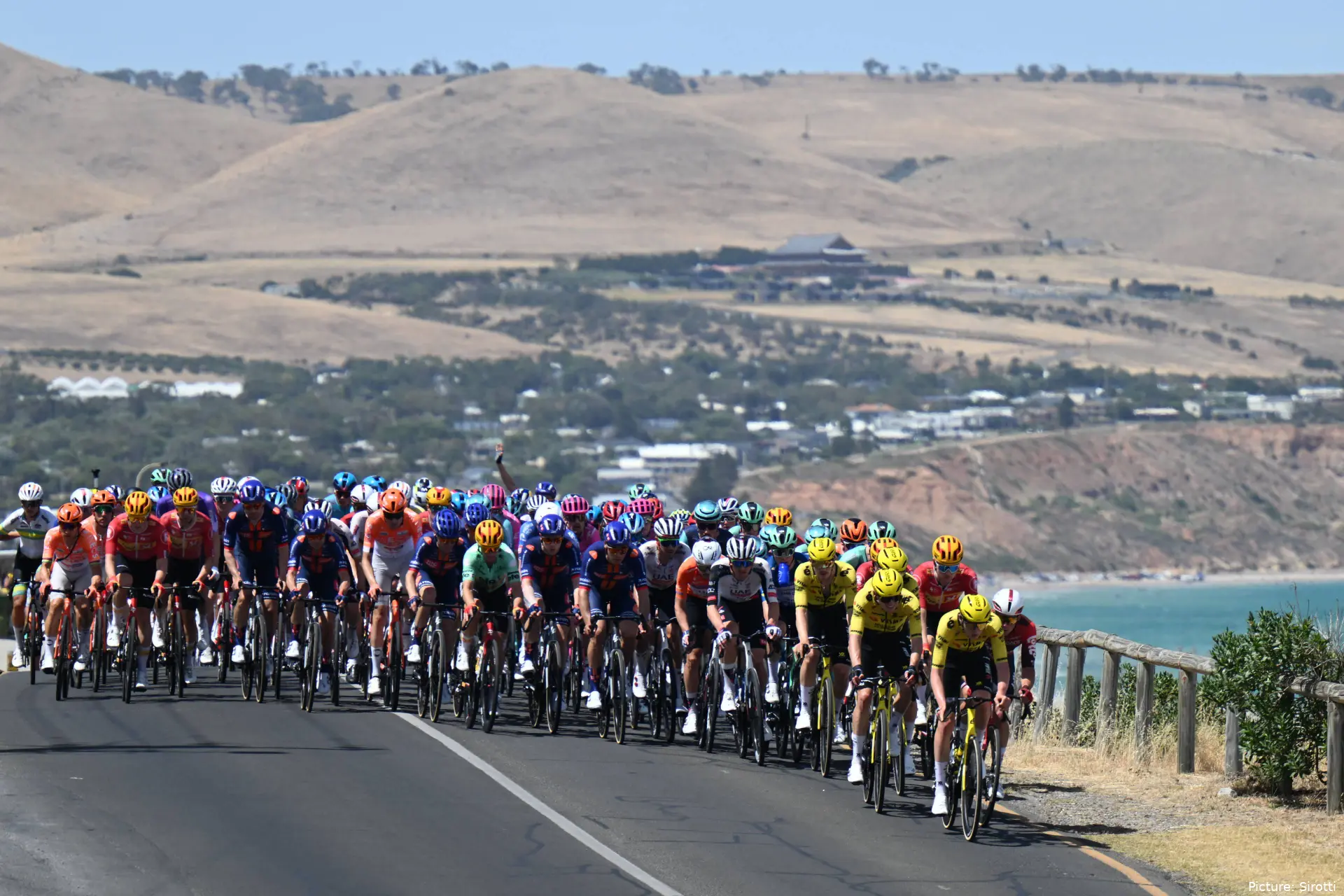
The riders’ union has called for cycling to rethink race schedules during periods of extreme heat, with the 2026 Tour de France facing renewed safety concerns after France’s latest heatwave.
Pascal Chanteur, president of the Union Nationale des Cyclistes Professionnels, wants organisers, teams, media partners and other stakeholders to act before riders are exposed to dangerous conditions.
Speaking during the French National Championships in La Tour-du-Pin, where riders spent several days racing in intense heat, Chanteur said cycling can no longer leave competitors as the “adjustment variable” when temperatures climb.
The Tour begins in Barcelona before returning to France, with fresh heatwave concerns already hanging over the opening phase of the race. In these conditions, the danger is not only dehydration or a bad day on the bike. Heatstroke can cause confusion, loss of coordination, collapse and, in extreme cases, become life-threatening.
“Why should we cyclists be forced to race in 45°C?”
“The riders want to race, but the riders also want to protect their health,” Chanteur told L’Equipe. “Health is something essential. We talk about it all the time, and we must not just talk about it. We also have to take action, anticipate, and not always be reacting, with the rider becoming the adjustment variable.”
Chanteur wants races moved earlier in the day during periods of extreme heat. Instead of late starts and late-afternoon finishes, he believes organisers should bring the schedule forward.
“At some point, I am asking that we sit around a table and work, that we anticipate,” he said. “Instead of having starts as we do today, we should have starts at 9am, so that we have finishes at 2:30pm, and television would still benefit, because at 2:30pm there are people in front of the TV. I am convinced it is common sense to do it like that.”
He questioned why cycling should continue pushing riders through conditions that would force delays in other sports. “We would protect the riders’ health, the riders would do their job in good conditions, and everyone would be happy,” he continued. “Why should we cyclists be forced to race in 45°C? It is not possible. In other sports, when the weather conditions are difficult, the players stay in the changing rooms for two hours waiting...”
“The Tour de France is even worse”
The French Championships took place over several days in severe heat. The Tour demands 21 days of racing, travel and recovery, with even rest days shaped by sleep, hydration and cooling demands.
“The Tour de France is even worse,” Chanteur said. “You repeat the efforts over 21 days, so imagine that when we have just experienced this for six days. And we are being told there could be a second period of major heatwave.”
That repeated exposure is where the Tour risk becomes more serious. Riders do not simply cool down and reset once the stage finishes. Core temperature, fluid loss, disrupted sleep and the strain of repeated days in the sun can carry into the next stage, especially when climbs reduce airflow and leave riders exposed for long periods at low speed.
Chanteur also raised the pressure on emergency services during heatwave conditions. If hospitals are already under strain, a crash or medical incident in the race would leave cycling facing difficult questions. “Look at the hospitals being overwhelmed,” he warned. “If something happens this weekend and we have an accident, what do we do? What do we say?”
Chanteur insisted the union is not threatening strike action, but wants cycling’s different power centres to share responsibility. Television, he argued, cannot be treated as separate from rider safety if broadcast schedules help determine when races take place.
“So now is the moment, today, and I say this solemnly, to sit around a table and find solutions together,” said Chanteur. “If television, at some point, remained firm on truly keeping certain time slots, then they also have to take responsibility for that.”

Christian Prudhomme is the race director of the Tour de France
Prudhomme says Tour route design is already changing
Tour de France director Christian Prudhomme has also discussed how the race can adapt to extreme heat, with the focus on route design rather than start times.
Speaking to readers of Le Dauphine Libere in Grenoble earlier this month, Prudhomme was asked how the Tour could avoid riders racing in 40°C heat. He pointed to a change in how certain routes are now planned. “Our way of designing certain routes,” said Prudhomme. “The Haag climb, which is among the new features of 2026, is entirely under the trees.”
The Tour’s approach has shifted from the old preference for exposed roads that worked well for television pictures and roadside visibility. “Five or six years ago, when we imagined a route, we said to ourselves that it needed to be exposed for television links and for the public,” he explained. “Today, we are looking instead, when possible, for climbs under tree cover.”
The race will not abandon its most famous exposed climbs, however. “But obviously, we will never remove places like the Galibier or the Tourmalet from the Tour de France,” Prudhomme added.
Chanteur wants earlier racing; Prudhomme points to shaded roads where the route allows it. Between 45°C warnings, repeated exposure across three weeks and climbs that cannot simply be removed from the Tour, the 2026 edition may have to find out quickly whether those adaptations are enough.

Kieran WoodDeputy Editor-in-Chief
Kieran Wood is a sports journalist based in Wales and has been active in journalism since 2022. He regularly contributes to DartsNews.com and CyclingUpToDate.com, where he covers professional cycling and darts. In cycling, his work includes liveblogs from major races, including the Tour de France, the Giro d’Italia, and La Vuelta a España, alongside race reports and analysis. He has also conducted interviews with professional riders.
His reporting spans the full racing calendar, from one-day classics to stage races, with a focus on accurate, real-time coverage and clear contextual analysis. For statistics, results, and historical context, he regularly uses resources such as ProCyclingStats. To support reporting on rider activity and training context where relevant, he also references Strava.
In his work, Kieran places strong emphasis on careful sourcing, editorial accuracy, and updating articles as new, verified information becomes available.
claps 1visitors 1
Just in
Popular news
Latest comments
- Yes, question is, why is Ineos so easy to convince ?Mistermaumau09-10-2026
- Or maybe they’ll just abandon the sport and focus on RE, unless they can revive MU. Maybe it’s all just about budget adjustments in preparation for takeover by the new sponsor who might have no use for some people in their idea of a projectMistermaumau09-10-2026
- Sounds like management did their job pretty well then ;-)Mistermaumau09-10-2026
- Tour down under awaits... and nothing beyond that
 Rafionain-Glas09-10-2026
 - God, what a crowd gathers in these comments. You post a quote from a true champion—a quote that has nothing to do with his tragic accident (on the contrary, with his very passion)—and people interpret it however suits them.MajorPayne09-10-2026
- What needs to be understood? That you're linking a single statement to his death? Could it get any more stupid?MajorPayne09-10-2026
- Are you saying that statement led him somewhere related to religion? Could it get any more stupid?MajorPayne09-10-2026
- A broken contract by mutual agreement is perfectly fine. The problem is if one side does it without the other agreeing which isn't the case in this situationvappaxbipmv09-10-2026
- Maybe Ineos are planning to concentrate on GC after recent statements about getting back to winning the Tour?Lozza09-10-2026
- lol maybe a better questionmij09-10-2026
Loading
Write a comment