Tour de France 2027 route revealed: Most time-trial kilometres since 2012 and brutal Pyrenean showdown
Cycling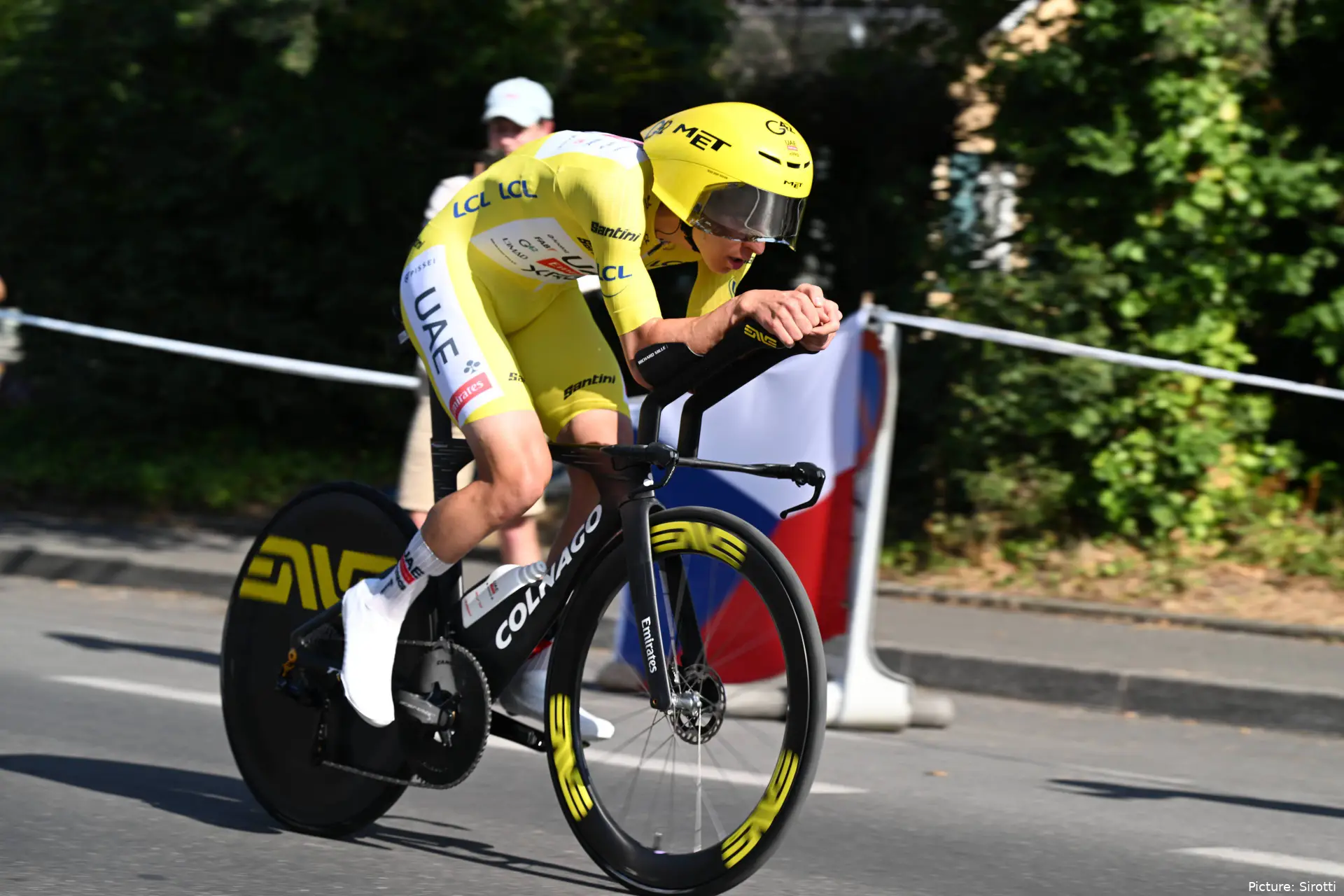
The Tour de France will feature its most individual time-trial kilometres since 2012 in a 2027 route that combines 71km against the clock with a late mountain showdown on the Col du Portet and the road to Laruns. Starting in Edinburgh on 2 July and finishing in Paris on 25 July, the race will visit the Grand Colombier, Les Saisies and Mende before reaching the Pyrenees in the final week.
The route revealed by organisers ASO gives Remco Evenepoel substantially more time-trial mileage to exploit as Tadej Pogacar pursues a record sixth Tour title. A 38km test from Blois to Chambord precedes the first mountain finish, while a second, 33km effort around Toulouse opens the final week.
Biggest individual time-trial programme in 15 years
Blois–Chambord hosts the first time trial on stage seven. The longer of the two tests arrives after an opening week dominated by rolling terrain, with a stage to Le Creusot separating it from the Grand Colombier summit finish.
The Toulouse time trial follows the final rest day on stage 16. Together, the two stages provide 71km of individual racing against the clock, the highest total since Bradley Wiggins won the 2012 Tour.
That represents a substantial increase from the 26.1km individual time trial in 2026, when the race also included an opening team time trial in Barcelona. The 2027 itinerary contains no team time trial, and both individual tests will be completed before the final mountain double.

Tadej Pogacar won the 2026 Tour de France
British start before Grand Colombier and Bastille Day mountains
Scotland hosts the Grand Depart for the first time, with Edinburgh–Carlisle offering the sprinters a chance to claim the opening yellow jersey. Keswick–Liverpool follows before a demanding Welshpool–Cardiff stage completes the British visit.
The Welsh finale includes the steep Cote de Caerffili, bringing an early opportunity for the punchier GC riders. A transfer to France and a rest day in Cherbourg-en-Cotentin follow, with three rest days scheduled across the race.
The first French stages take the peloton through Normandy and Brittany before the Loire time trial. Bourges–Le Creusot then leads towards the first mountain finish on stage nine at the Grand Colombier, where Pogacar won in 2020 and Michal Kwiatkowski triumphed from the breakaway in 2023.
After the second rest day, Annecy–Sallanches opens the Alpine sequence. A 150km stage from Cluses to Les Saisies follows on Bastille Day, completing a block of three mountain stages across four racing days.
Flatter stages towards Valence and Montpellier offer opportunities for the sprinters before the 199km Montpellier–Mende stage adds another mountain test. Rodez–Albi completes the second week before the peloton pauses in Toulouse.
Read also
Portet and Laruns provide the final mountain tests
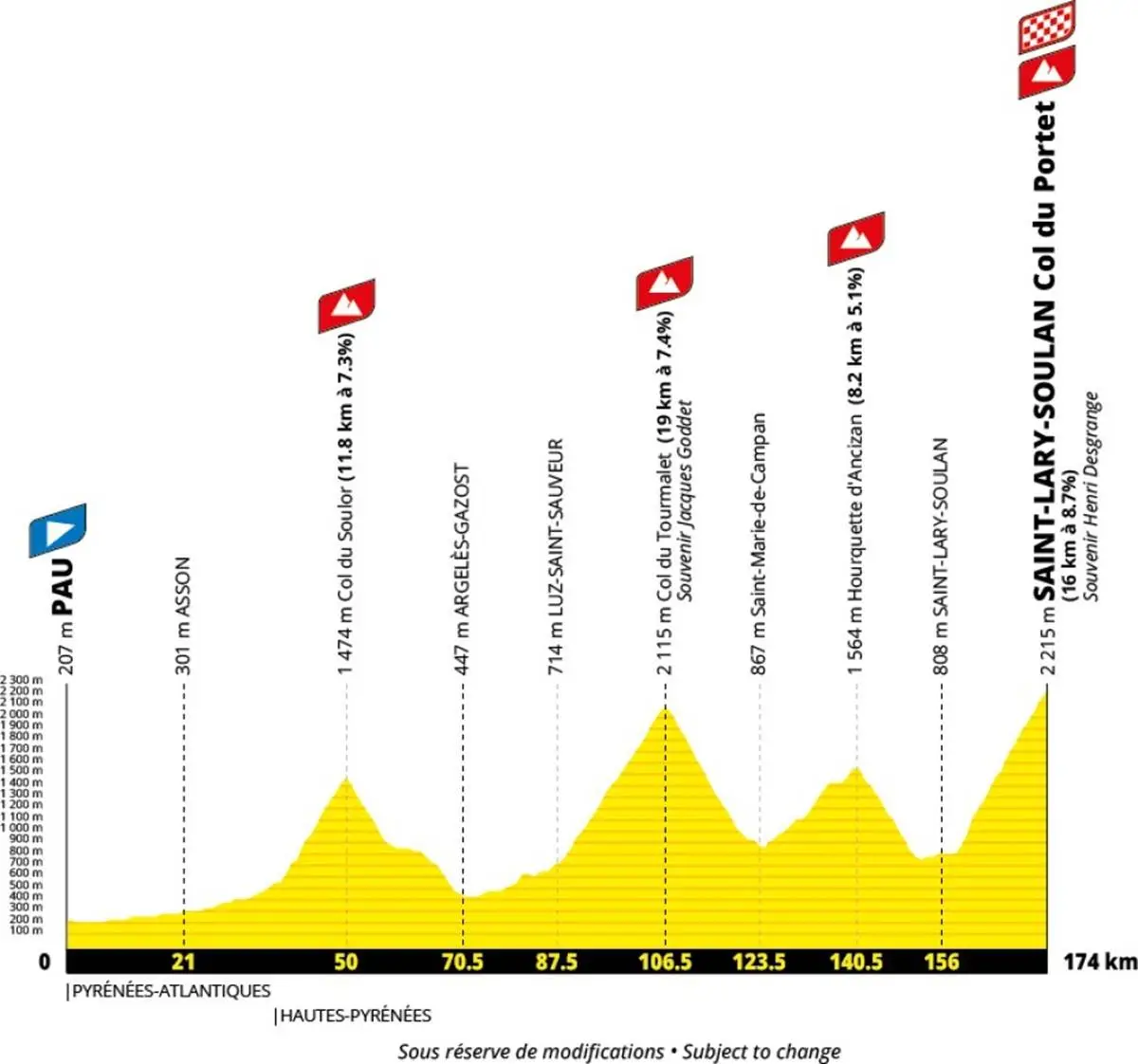
After the Toulouse time trial and a flatter stage from Muret to Pau, stage 18 covers 174km to Saint-Lary-Soulan and the Col du Portet. The summit finish returns to a climb where Nairo Quintana won in 2018 and Pogacar triumphed in 2021.
Hasparren–Laruns follows over 160km on stage 19, taking the race from the Basque Country into its last mountain stage. Laruns hosted Pogacar’s first Tour stage victory in 2020 and Jai Hindley’s stage win and move into yellow in 2023.
Maubourguet–Libourne offers the sprinters a late opportunity on the penultimate day. The Tour concludes with a 116km stage from Saint-Quentin-en-Yvelines to the Champs-Elysees on 25 July.

Kieran WoodDeputy Editor-in-Chief
Kieran Wood is a sports journalist based in Wales and has been active in journalism since 2022. He regularly contributes to DartsNews.com and CyclingUpToDate.com, where he covers professional cycling and darts. In cycling, his work includes liveblogs from major races, including the Tour de France, the Giro d’Italia, and La Vuelta a España, alongside race reports and analysis. He has also conducted interviews with professional riders.
His reporting spans the full racing calendar, from one-day classics to stage races, with a focus on accurate, real-time coverage and clear contextual analysis. For statistics, results, and historical context, he regularly uses resources such as ProCyclingStats. To support reporting on rider activity and training context where relevant, he also references Strava.
In his work, Kieran places strong emphasis on careful sourcing, editorial accuracy, and updating articles as new, verified information becomes available.
claps 0visitors 0
Just in


Popular news
Latest comments
- That used to be the norm, 100 kms of TTs. Now look at the '87 route...acem8222-10-2026
- Well, crashes can happen, so it's not impossible...acem8222-10-2026
- that would be kinda cool. there is a lot of untapped potential. which I'm sure the UCI will overlook. in order to get sock length correct.mij22-10-2026
- Nice! Now Remco can finally show that he cannot win the Tour!!! 😂😂😂PogiSloFans22-10-2026
- Nice! Now Remco can finally show that he cannot win the Tour. 😂PogiSloFans22-10-2026
- 10 K or 100k , Pogi will gain the same amount of time on Remco No balls in 1 stage. All this shows is that they have run out of ideasabstractengineer22-10-2026
- BenAflec, good one! LOL!MajorPayne22-10-2026
- Nearly! LOL!MajorPayne22-10-2026
- What the tdf have done here is make a very intriguing route, Pog by nature is more at home on the mountains, Remco TT's, Seixas an all-rounder.. RE, nearly got the better of Pog this yr & they've capitalised on that!
 leedorney22-10-2026
- Hopefully any potholes on the British roads can be repaired so everyone arrives safely in France, and Pog, Jonas, Remco and Seixas can all be fighting it out in Paris.Hills3322-10-2026
Loading
7 Comments