“Some of them may be able to go beyond 120 grams per hour”: Lotto-Intermarché tests 140g/h fueling strategy in revolutionary nutrition study
Cycling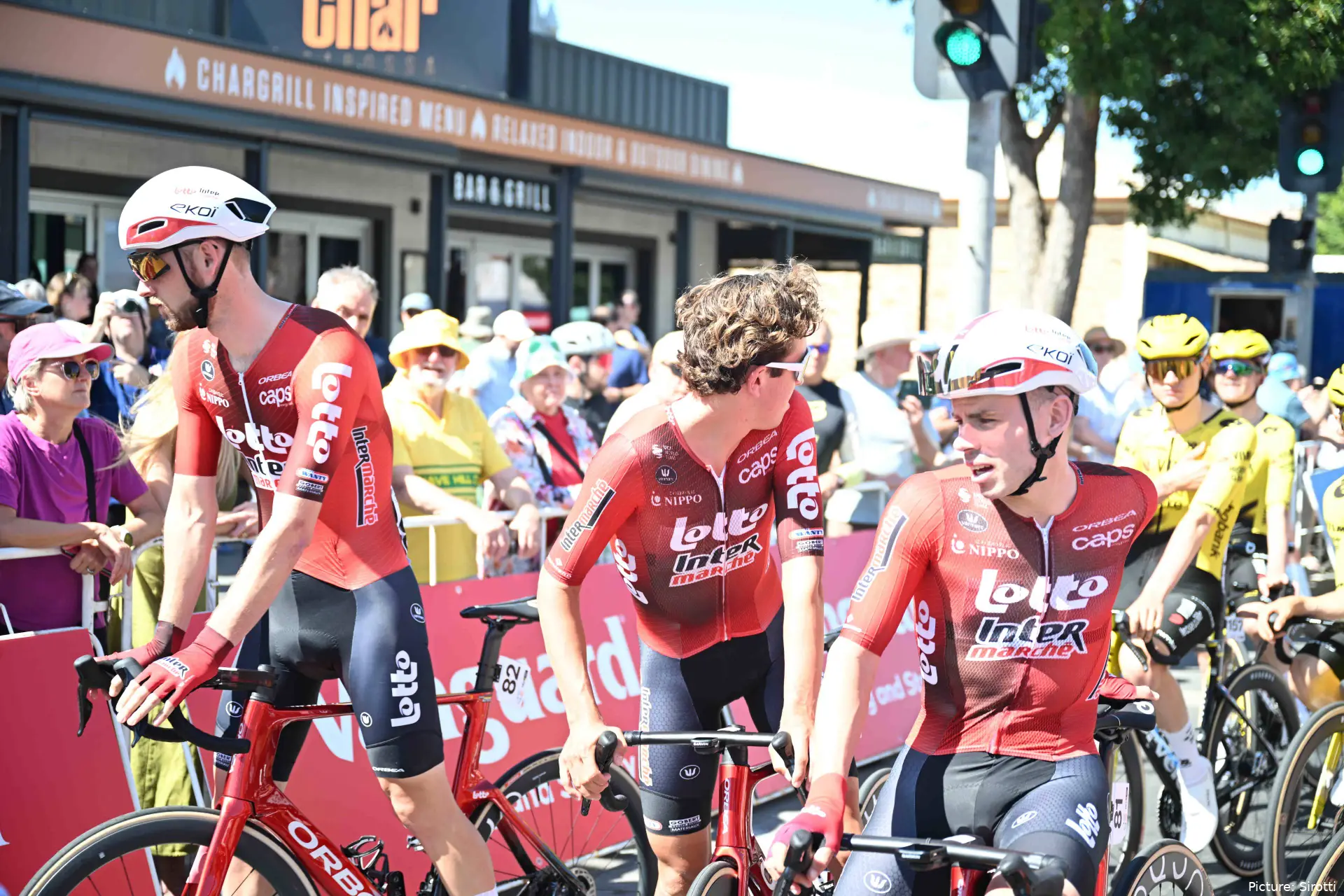
Lotto-Intermarché is working with researchers at Ghent University to investigate whether professional cyclists can consume and effectively use more than 120 grams of carbohydrates per hour, a target that has become increasingly common in elite road racing. The Belgian team is testing riders at an intake of around 140 grams per hour, hoping to identify individual differences that could help refine nutrition strategies during races.
Carbohydrate intake has become a major focus of performance planning in professional cycling. While riders typically consumed around 60 grams per hour two decades ago, the current benchmark has doubled as teams have developed more advanced fueling strategies. Yet the 120-gram figure should not be considered a universal limit, and research specifically involving elite professional cyclists remains relatively limited.
Lotto-Intermarché is now working with scientists from Ghent University to establish how much carbohydrate individual riders can actually use during prolonged exercise. The collaboration has already identified differences between athletes, suggesting that some may be able to benefit from a higher intake than the conventional target.
“Our riders are a special group because they are used to consuming large amounts of carbohydrates during training. We suspect that some of them may therefore be able to go beyond 120 grams per hour. What we are already seeing in our results is that there are individual differences,” said Kobe Vermeire, a postdoctoral researcher at UGent and a coach with Lotto-Intermarché.
A three-hour test using carbon isotopes
The research involves a cycling test lasting approximately three hours, during which a rider consumes a carbohydrate-rich drink providing around 140 grams per hour. Researchers add special isotopes to the drink, using variants of carbon atoms as markers to track what happens to the ingested carbohydrates inside the body.
During exercise, some of the consumed carbohydrates are used to provide energy. By collecting the rider's exhaled air and measuring the amount of isotopes it contains, researchers can estimate how much of the ingested fuel has actually been oxidized - the process through which the body uses it for energy.
“During exercise, the rider uses the carbohydrates, and the isotopes enter the body as well. We then collect the rider's exhaled air, which contains these isotopes,” Vermeire explained.
“Based on their quantity and the rate at which they are exhaled, we can calculate how much of the ingested carbohydrates the rider effectively uses,” added Jan Boone, a professor of exercise physiology and sports nutrition.
Read also
Potential gains in the closing stages of races
The practical implications could be significant if the research enables riders to maintain a higher rate of carbohydrate use over prolonged periods. During a long race, the body relies heavily on carbohydrate availability to sustain high-intensity efforts. As its readily available stores decline, the contribution from fat metabolism increases, which can make it harder to maintain the same level of performance.
“If we can increase the amount of carbohydrates a rider can absorb and use, they may be able to maintain their performance level for longer, including during the final hour of a race,” Boone said. “In stage races, this could also have an impact on recovery ahead of the following day.”
That possibility is particularly relevant in Grand Tours, where riders must repeatedly produce high levels of effort over several consecutive days. Better fueling during one stage could help preserve performance late in the race, while an improved nutritional strategy might also support preparation for the following day's efforts.
However, the research does not mean every rider should immediately increase their intake beyond 120 grams per hour. “It is important to measure individually how much each rider can handle. If someone consumes more carbohydrates than they can effectively process, this can cause gastrointestinal discomfort. That is why we want to tailor the nutrition strategy to each rider's individual capacity,” Vermeire concluded.

Félix SernaCycling Journalist
Félix Serna is a writer at CyclingUpToDate and has been part of the team since 2025. He covers professional cycling across both the men’s and women’s calendars, with a focus on UCI rankings, race developments, and rider performance. His work includes interview-based reports, liveblogs, and tournament coverage designed to provide clear, accurate context throughout the season.
In his reporting, Félix regularly uses ProCyclingStats for results, statistics, and historical reference. He places strong emphasis on careful sourcing, editorial accuracy, and updating articles promptly when new, verified information becomes available. He holds a bachelor’s degree in International Studies.
claps 2visitors 2
Just in

Popular news

Latest comments
- Contract year means you gotta win, at least collect UCI points, helping be damnedabstractengineer13-11-2026
- Arensman is their best rider and he is paid very less in comparisonabstractengineer13-11-2026
- I'm not trying to argue with you but if you didn't see Del Toro struggling in the Tour I'll pay for some glasses for you lol. He struggled so much that Tadej missed winning stage 15, Tadej also dropped the pace along some stages to help Del Toro hold onto the podium. Now he may have been sick, that is a possibility, but he definitely struggled. You have a nice weekend as well brother.awp13-11-2026
- Im not copmaring him to jonas palmares...but current level of power and again like you even pointed out 19sec difference and on other ocassions del toro dropping him. Its evidently their close and based on both their different trajectory its self explanatory...where we are next year.And Del Toro didnt struggle if getting a podium in his first TDF at 22 year old is struggling you sure dont know how to be objective haha. But have a good weekend this is so dumb to discuss as its not even a discussin in reality as facts speak for themselves of what were actually speaking of - and self explanatory.miguel13-11-2026
- fingers crossed. my son has a poster of wout and mathieu battling each other at the beach at ostend up in his room. would be great to see them again there!Ketterechts13-11-2026
- This Giro is very strange in it's circular route. If you were to have stage starting in Trieste and ending atop Monte Zoncolan (end stage 20) you'd get a stage only 145 km long
 Rafionain-Glas13-11-2026
- When Thomas gets the bullet from INEOS he can get a job as a comedian.
 Senna196013-11-2026
- Right on. The more the merrier.Occam13-11-2026
- Remember, Del Toro struggled in this Tour. He is great, no doubt about that, but comparing him to a four time gt winner is absurd at this point. He has the potential. We'll have to see how he develops.awp13-11-2026
- what did Jonas gift and to whom? just curious, haven’t heard about this.mij13-11-2026
Loading
Write a comment