From €25,000 to more than €600,000 - Women’s cycling’s huge financial leap in nine years clear from blockbuster transfer
Cycling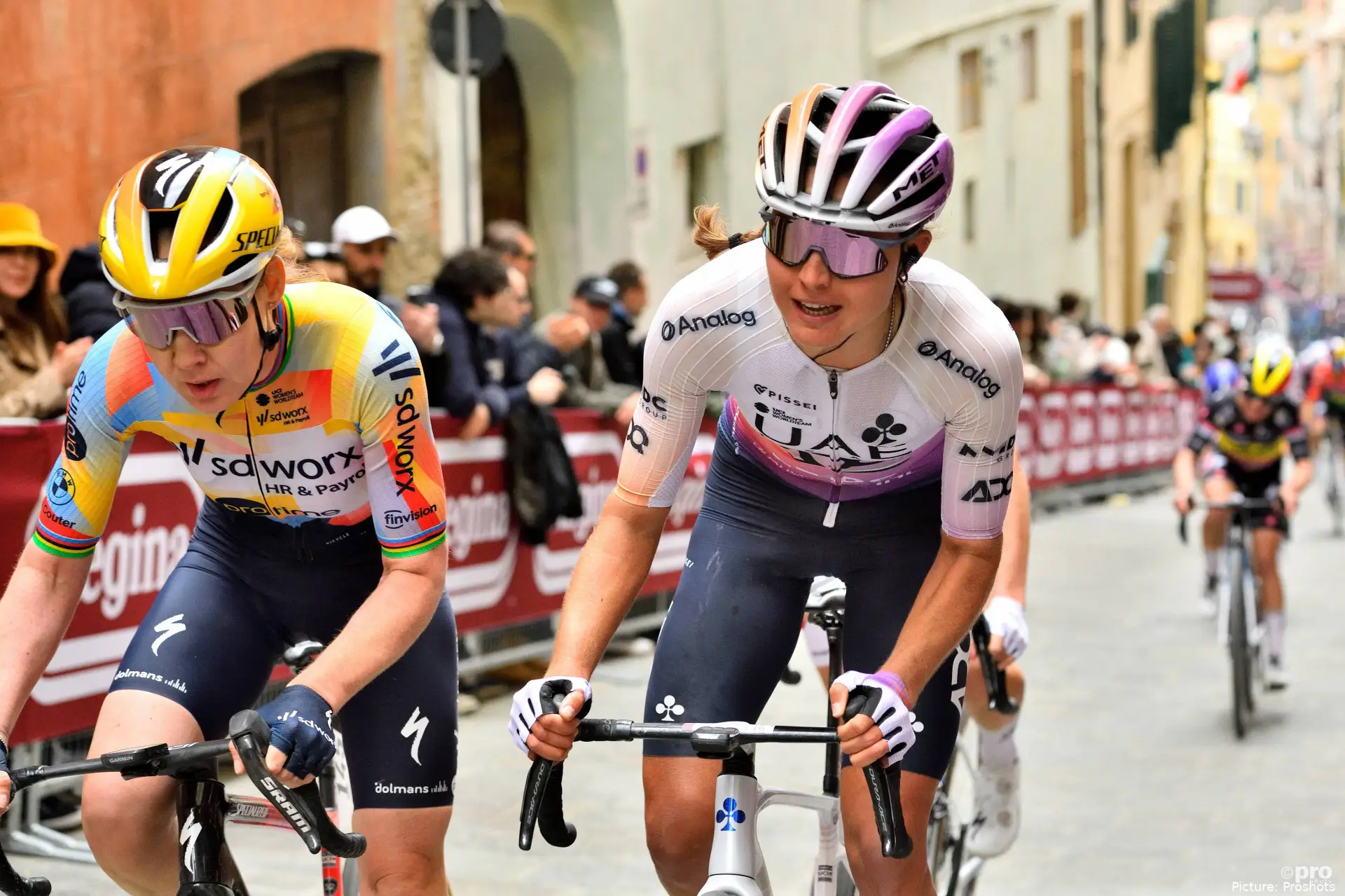
In 2018, Andreu Canals negotiated an annual salary of €25,000 for Mavi García at Movistar. The figure, recalled by the former president of the Balearic Cycling Federation and García’s first coach, puts a number on the transformation women’s cycling has undergone in recent years.
The difference between the two contracts exceeds €575,000 a year. Blasi’s salary will be more than 24 times what García earned in that deal, although the two individual agreements reflect different stages in their respective careers and a market that has evolved considerably. Movistar has committed to the Catalan rider on a three-season contract through the end of 2029, highlighting the level of investment leading figures in the women’s peloton can now command.
The same team will bring Paula Blasi on board in 2027 on a salary that, according to Marca, will exceed €600,000 per season. The timeline requires some clarification: nine years will separate García’s contract signing from Blasi’s arrival, while eight years will have passed between the negotiations and the announcement of Blasi’s signing. That span shows how the financial terms available to some of the best riders have changed. Today, they can secure deals that would have been unthinkable for many professionals less than a decade ago.
The growth of women’s cycling has been reflected in more professional teams, greater media attention for races and the emergence of new stars capable of attracting investment.
These two contracts offer a concrete measure of that progress, though they cannot be used to extrapolate salary growth across the entire peloton. The highest salaries show what the market can offer certain stars, but they do not, by themselves, describe the financial reality for all professional women cyclists.

Paula Blasi
Blasi, a long-term investment for Movistar
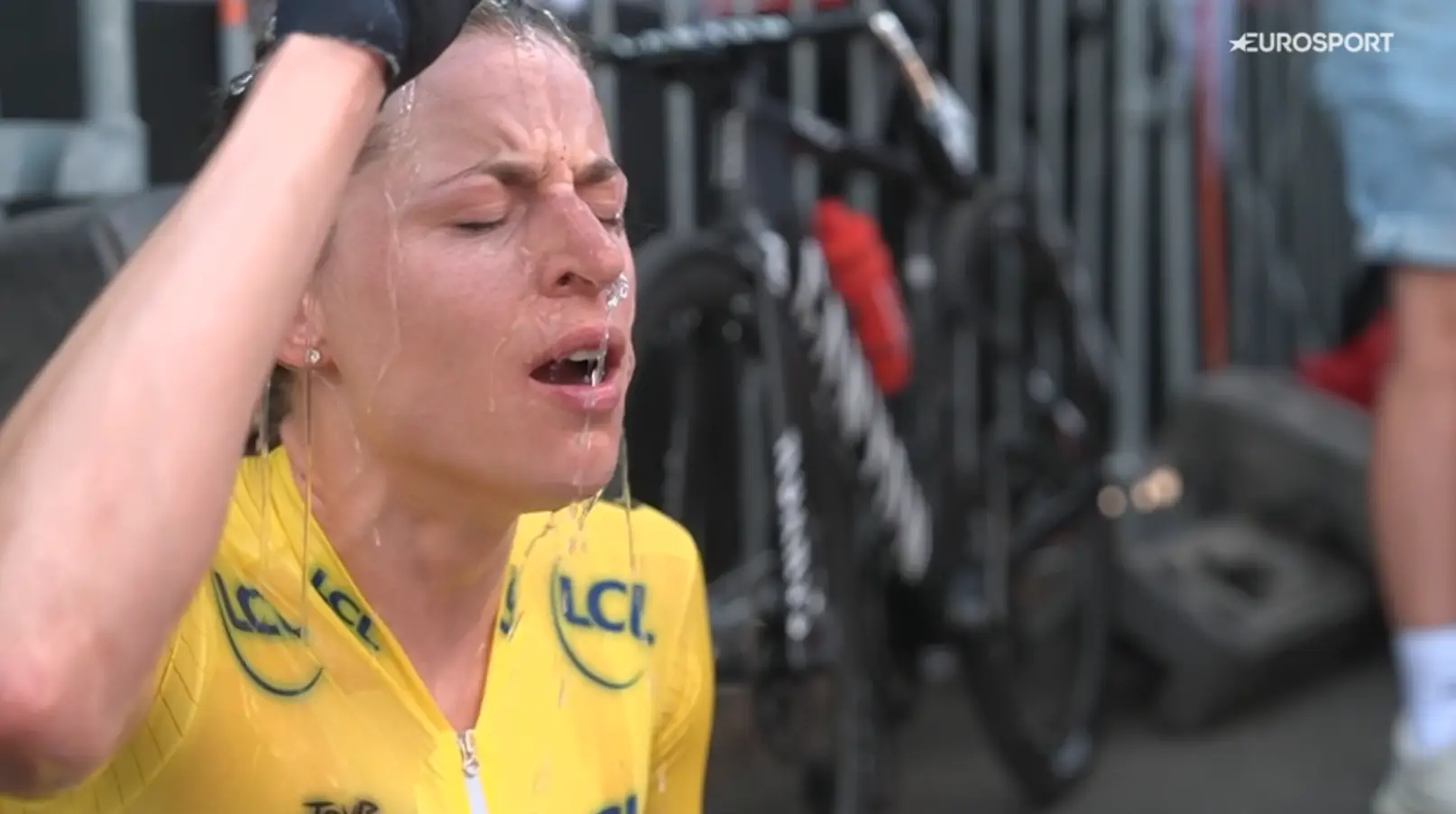
Paula Blasi will join Movistar after a season in which she has achieved top-level results. The Catalan rider has won the Amstel Gold Race and La Vuelta Femenina, and finished fifth at the Tour de France. That record strengthens her standing as one of Spain’s most promising riders and helps explain the scale of the deal that will keep her with the team for three seasons.
Her signing is also an investment in the future. With her contract running through the end of 2029, Movistar has secured the services of a rider who has already shown she can compete for major victories and still has room to develop.
The length of the deal provides stability as the team plans her sporting goals and supports her long-term career within a structure aiming to establish itself among the leading forces in women’s cycling.
Read also

€600,000 salary reflects growing market
The annual salary of more than €600,000, according to MARCA, reflects how the market values riders who combine results, potential and the ability to compete in the calendar’s biggest races. It is not simply a reward for past success, but also an investment in a rider who could become one of a team’s sporting pillars over several seasons.
The comparison with Mavi García puts that change into perspective without suggesting the two riders are directly comparable. In 2018, the €25,000 Canals negotiated for the Mallorcan rider reflected the financial terms of the time.
Nine years later, Blasi’s move to Movistar shines a light on a market offering its leading riders very different opportunities. Two contracts, two generations and the same team illustrate the evolution of a sport that has gained ground, visibility and investment.

Javier RampeCycling Journalist
Javier Rampe is a sports analyst with more than 15 years of experience. He holds a degree in Economics from the University of Rome and a Diploma in Business Studies from the University of Cádiz. Despite coming from an academic background not particularly associated with cycling, his passion for both cycling and journalism was instilled in him from an early age. He grew up following Miguel Indurain and José María “El Chava” Jiménez. An admirer of Michael Robinson’s communication style and journalistic approach, he was inspired to pursue a degree in Journalism at the University of Buenos Aires, which he is currently completing.
He has always maintained close ties with the worlds of sport and culture, contributing from a young age to sports blogs and film and music review websites. His work has appeared in media outlets such as Cope, RAI, and Radio Con Vos. He is also the founder of the cycling-focused podcast El Contraanálisis and the football interview channel Días De Fútbol, dedicated to conversations with professional footballers.
In addition to his work at Ciclismoaldia, Javier has interviewed some of the most influential figures in modern cycling, including Alejandro Valverde and Tadej Pogačar, as well as key voices in anti-doping policy such as Alberto Yelmo, David Varillas, and Marcelo Milano. Marcos Maynar, in relation to the ‘Operación Ílex’ case, is also among the personalities he has interviewed. He enjoys conducting in-depth analysis of the cycling ecosystem and has attended major events such as Strade Bianche, the Vuelta a Andalucía, and Itzulia, as well as numerous national cyclo-cross races.
His background in economics, combined with extensive experience in marketing and corporate communications, drives his continuous study of positioning strategies and ensures that he always keeps his focus on crafting compelling and evocative headlines.
claps 0visitors 0
Just in


Popular news
Latest comments
- Are you MrMauMau 2.0? Nothing you are saying is really relevant. Vaguely connected, but irrelevant. The conversation is whether Schreiber impeded Brand or not.
 Rafionain-Glas08-11-2026
- He is boring
 leedorney08-11-2026
- To Twoje przemyślenia te bla, bla :)
 Dariusz08-11-2026
- Uwielbiam patrzeć, jak wyjeżdża na czoło peletonu i zaczyna się rzeź...Dariusz08-11-2026
- Yeah, unreal.
 parisbound0008-11-2026
- there needs to be space in life for pointless comments!Ketterechts08-11-2026
- That is a very lazy way of putting it but so far on this website it seems like everyone is happy to look at everything lazily, even things that annoy them intensely. All they want to do is state their feeling and position but ask most to analyse a problem or come up with solutions or improvements and you’re stunned by silence. Nobody even really knows how this all happens. It’s very simple and quick to just say the UCI did it but I bet you they didn’t, I bet you not more than 2 people were involved, more likely just 1. The UCI may be ultimately responsible but it is not their decision, this is about hierarchy, power and delegation. The fact that protest is possible also means it isn’t over and that MORE people could get involved for a thorough review which could throw up anything. It is highly likely it was a sole commissar who decided and has that power in a first round. Therein might lie the problem the UCI has to consider, is it acceptable to give so much authority to one single person when it is quite possible for them to have a natural bias or be too easily susceptible to imposed bias. Who is to say an individual in this position isn’t susceptible to collaboration with outside players with interests in the results, nations, families, teams, betting companies, etc. On the one hand we have sports where these problems have been worked on way more to reduce such problems, on the other hand we have sports with far stricter and more draconian rules not even concerning safety or obstruction that nobody really questions like false starts or stepping out of lane or zones in athletics. If cycling hastowork on itself, it would be good if protagonists (all kinds) would start doing a little more than just moaning over outcomes.Jumpyjohn08-11-2026
- Yes, so why not make comments less pointless?Jumpyjohn08-11-2026
- What a race! I didn't expect Vanthourenhout to collapse like that, and Wyseure did take the fight to Nys, but there was no doubt at the end. I also wonder what Aubin Sparfel would be capable of were he to race in the elites now. In the U23 ranks he is making good work of Giel Lejeune, who himself is among the better riders in the elites, and a top 10 contender in the big races (3rd at Kleebergcross, 8th at Berencross and 5th at Heerderstrand). In the French Cup, Sparfel is significantly better than Romain Debord (8th at Koppenbergcross and 10th at the Euros) and Rémi Lelandais (12th at Koppenbergcross and 19th at the Euros).Rafionain-Glas08-11-2026
- There really was nothing in it. Schreiber was so much faster, and Brand was fighting to stay in the wheel in the sprint. Schreiber did move a bit, but to say she closed the door doesn't make sense because Brand couldn't enter it anyway, abd she wasn't impeded.Rafionain-Glas08-11-2026
Loading
Write a comment