"Our decisions are based on..." - ITA forced to prove impartiality during Tour de France night time testing
Cycling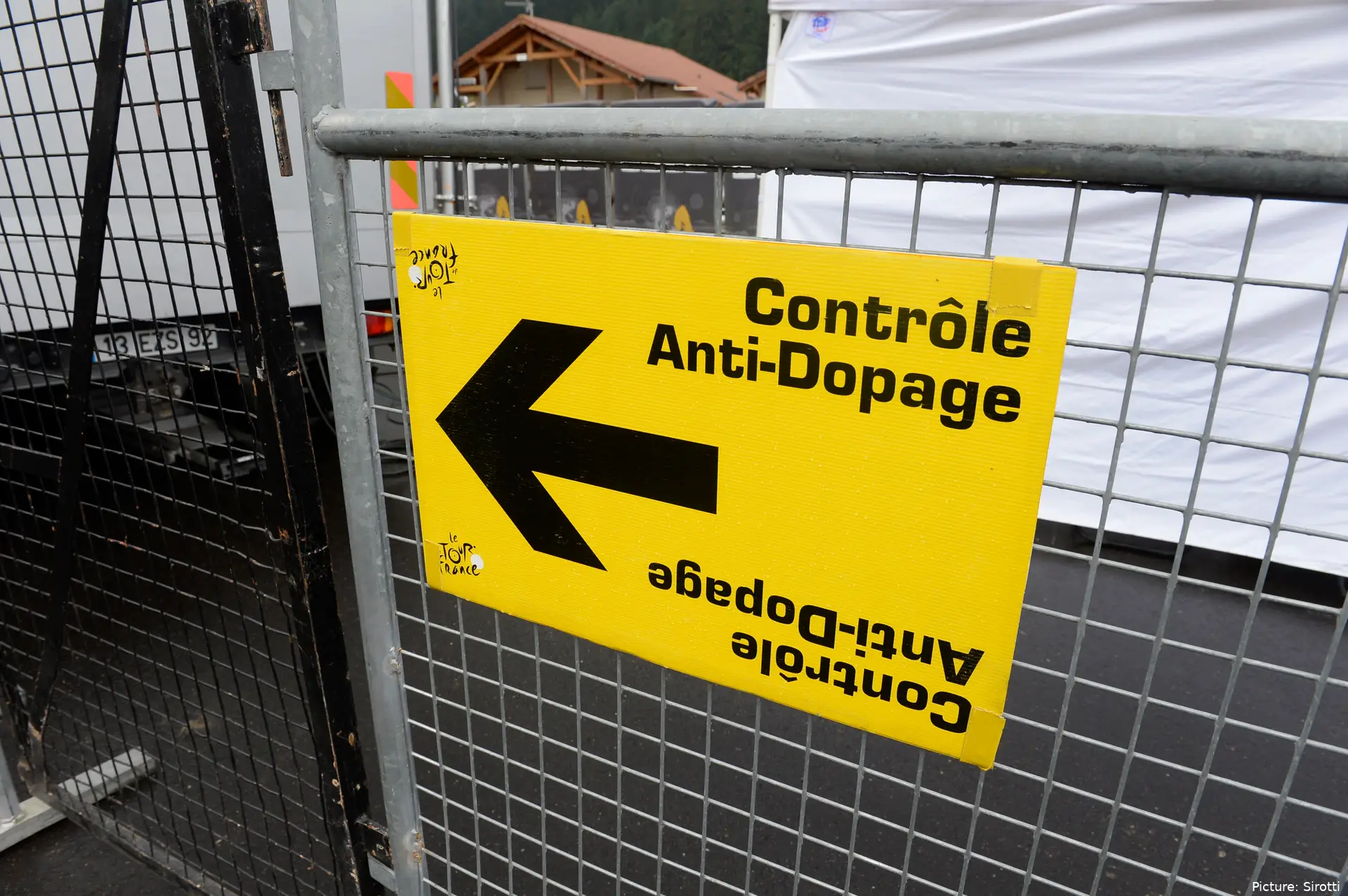
The International Testing Agency has been active at the Tour de France, but the difference in testing schedules has risen a debate about specific possibility of it bringing advantage to certain riders. The ITA has dismissed the idea that it has not been impartial during the race.
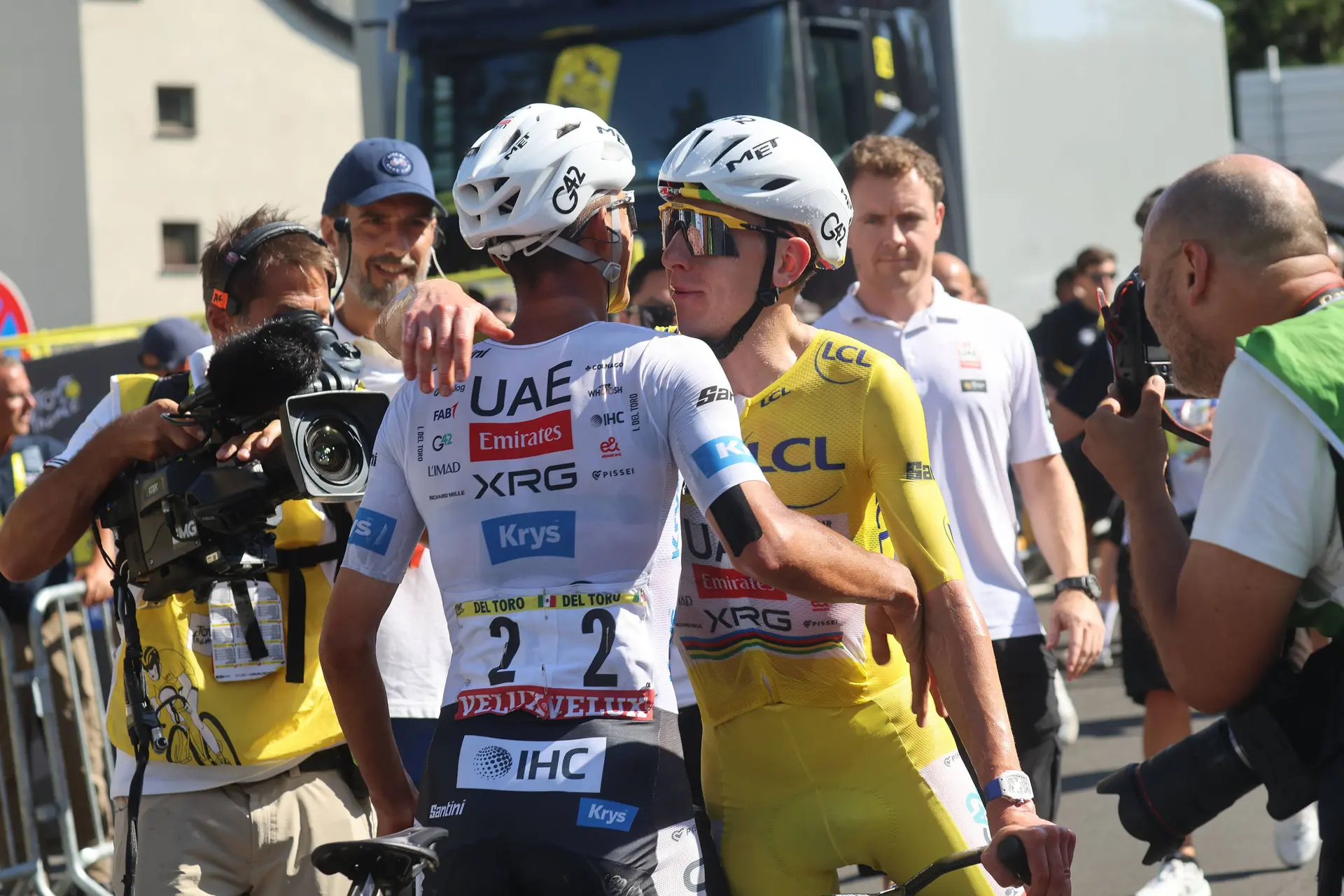
Overnight from stage 14 to 15, both Jonas Vingegaard and Tadej Pogacar were amongst the riders tested in the middle of the night, having been woken up at their team hotels - at 2 and 5am respectively.
Later it became known through numerous reports that the wide-scale night testing has been carried out throughout the Tour, before and after stage 15 when the testing of the Tour's first and second in the overall classification - at that point in time - took place.
Is testing inequality affecting the Tour de France?
Between the 11pm and 6am time period, in which tests cannot be carried out without a specific reason and legal permission, other riders and teams have been tested. Bahrain - Victorious were one such during the opening phase of the race, and Matej Mohoric fired back at this, as it did not happen to other teams that featured key figures in the Tour.
Specifically, the Slovenian lashed out and put Paul Seixas on the spotlight as someone who didn't have to handle such a disrupting situation.
"We are paying for cycling’s past, but it would still be good to have limits, or at least ensure that the rules are the same for everyone," he argued. "Because we know that the Frenchman who occupies the top positions in the general classification has not been subjected to any checks of this kind.”

Matej Mohoric pointed out the differences in which the Tour de France teams are being subjected to doping tests
Read also
Impartial testing is key for the ITA
"The ITA is responsible for the anti-doping programme strategy for the Tour de France, not the AFLD (the French anti-doping agency, ed.). We have our own staff for the doping controls," the testing agency wrote in response to The Guardian.
The Tour de France is serving as a stage for some of the most intense testing in decades, with the authorities working different methods so as to potentially uncover very specific methods of performance enhancing.
This has been done under the knowledge that certain methods are only detectable under a very specific time range, and that the fact that under regular conditions riders can't be tested from 11pm to 6am could be used for this. "There are substances that remain detectable in the blood for only three hours," Decathlon CMA CGM Team rider Oliver Naesen argued this week.
"The AFLD may occasionally support the ITA with additional staff for doping controls, if necessary, for example during the testing mission on Monday evening, but the decision as to who is tested and when remains with the ITA".
"Our decisions are based on facts, risk assessments, performance, scientific findings and insights, intelligence and investigations, as well as data analysis. This approach enables us to act as accurately and impartially as possible, independent of external influences, political interests or opinions".
Rúben SilvaEditor-in-Chief
A founding contributor to CyclingUpToDate since its launch in January 2022, Ruben Silva has played a central role in shaping the site’s editorial direction and long-term growth. Before joining the project, he built his experience through independent blogging at Echelons Hub and by producing race previews for Ciclismo Internacional, developing a strong analytical voice rooted in daily engagement with professional cycling.
Beyond editorial work, he has been closely involved in the expansion and coordination of CyclingUpToDate’s wider network, helping establish and support sister platforms across multiple languages. This includes ongoing collaboration with CiclismoAlDia (Spanish), CiclismoAtual (Portuguese), WielrennenUpToDate (Dutch), and RadsportAktuell (German), contributing to a shared editorial vision and consistent international coverage.
He also helps oversee editorial governance across the network, setting standards for accuracy and consistency and coordinating updates or corrections when needed.
Originally from the Porto metropolitan area in Portugal, he holds a bachelor’s degree in Geography. His path into cycling journalism was shaped not through formal media training, but through independent reporting, community engagement, and sustained on-the-ground involvement in the sport.
Over the course of his career, he has conducted approximately 100 interviews across road cycling and cyclocross, ranging from one-to-one conversations and online formats to press conferences and on-site pre- and post-race coverage. His interviews include leading riders, team managers, and prominent figures within cycling media: Tadej Pogacar, Jonas Vingegaard, Mathieu van der Poel, Primoz Roglic, Wout van Aert, Joao Almeida and Tom Pidcock; managers like Patrick Lefevere and Joxean Matxin; and YouTube personality Bryan Kennedy (BKXC)...
Within 18 months of launch, he helped grow CyclingUpToDate’s English-language platform into one of the most-read cycling news websites, built entirely from the ground up. As both a professional journalist and lifelong cycling enthusiast, his focus remains on delivering accurate, timely, and well-contextualized coverage.
claps 0visitors 0
Just in


Popular news


Latest comments
- he is fun - he goes back to the Sagan days with his showmanshipmij23-11-2026
- he doesn't sound ready to retire anytime soonmij23-11-2026
- U17 and juniors on national races are routinely using caffeine tablets before races. They are also using creatine and the like. sure, it's legal. the point is, it is performance enhancing and they are 14-17 years old. as juniors it will be decided whether they have a chance to move towards some sort of (semi-)professional cycling, no matter which discipline. what do you think they will regard acceptable to reach this goal and then to sustain it?Ketterechts23-11-2026
- Both of them, Geraint Thomas and Alberto Contador said if Pogi had gone to the Vuelta in 2024, he would have won. Ofcourse considering he wouldn't crash. They were right.PogiSloFans23-11-2026
- Merckx said that Pogi could race the Giro, Tour and Vuelta in a single season? Pogi said: "I can’t rule that out. In fact, I’ll try it sooner or later, but certainly not in 2027. I'm feeling great at the moment. I'm training and eagerly looking forward to getting back to racing. I'm confident that I can return to the same level, or even a higher one. Life moves fast, very fast. Sometimes you need a break; you need to stop for a while. That's what I needed. If I hadn't taken a break, my body would simply have forced me to.”PogiSloFans23-11-2026
- One of the most tenacious and entertaining riders in the peloton. His (and Jorgensen's) work at the world championships was elite craftmanship.Occam23-11-2026
- I'd add being seriously annoying to your self-description.Occam23-11-2026
- Meh. For whatever their sins, the boys at The Move know cycling strategy, building a team and tactics. You don't win the TdF 7 times in a row if you're a hack.Occam23-11-2026
- Of course there is doping in any professional sport. Game theory dictates that someone will do it for an advantage. Human nature always wins. And for all those who criticize, imagine what you'd do if you were facing the possibility to be a pro but you had to dope to do it. Almost everybody would do it at that point.Occam23-11-2026
- It's not nice to think about all the stuff that athletes must take to return to the top level long before they could heal naturally (Jonas after the Itzulia crash, for example). But it's not doping.Hills3323-11-2026
Loading
1 Comments