Opinion: ITA must explain why specifically Tadej Pogačar and Jonas Vingegaard were selected — and not Paul Seixas
CyclingSunday, 19 July 2026 at 16:20

Correction: An earlier version of this article attributed the night-time anti-doping controls to the French Anti-Doping Agency, AFLD based on LIVE reporting by Belgian's Sporza Cycling channel. Available reporting released recently now indicates that the controls were conducted by the International Testing Agency as part of the UCI anti-doping programme. The article and headline have been amended accordingly. French law remains relevant because the controls took place in France and reportedly required judicial authorisation.
Doping controls are indispensable in professional cycling and the Tour de France. No one who demands a credible and clean competition can seriously argue that Tadej Pogacar, Jonas Vingegaard, or other top riders should be tested less. It is precisely the best who must expect to be at the center of the testing system at any time.
But a test at 2 a.m. is not a routine check. Under French regulations, it is an exceptional intervention that requires significantly stricter conditions than a visit early in the morning or in the evening.
That is why it is not enough to dismiss the case with the blanket statement that professional athletes must be prepared for doping controls around the clock. Formally, that is only partly true. Anyone who looks at the differences between the UCI rulebook and French sports law will see why this control raises questions.
The UCI allows night tests only for “valid grounds”
The UCI generally assumes that tests take place between 6 a.m. and 11 p.m. A test between 11 p.m. and 6 a.m. is possible, but it requires “valid grounds,” meaning compelling or substantial reasons. At the same time, the regulations maintain that a rider can, in principle, be asked to provide a sample at any time and anywhere. He may not refuse the test solely because it takes place outside usual hours.
This means: A test at 2 a.m. is not automatically inadmissible under UCI rules. But it is by no means intended as a normal standard measure either. The exceptional timing requires an exceptional justification.
Source: UCI Anti-Doping UCI TIR and radsportaktuell.de
Read also
French law goes much further
Since the test in France is said to have been carried out by the anti-doping agency ITA, French sports law is the key factor.
Under Article L232-14 of the French Code du sport, testers may generally enter residential and accommodation premises only between 6 a.m. and 11 p.m. Special exceptions apply to tests in hotels or private accommodations between 11 p.m. and 6 a.m.
Between 11 p.m. and 6 a.m., a general justification is not sufficient. The law additionally requires “serious and concordant indications” that the athlete has violated or will violate anti-doping regulations. There must also be a risk that evidence could disappear. The measure must remain proportionate and respect the athlete’s privacy.
In addition, such a night test may only be conducted if the athlete has previously given consent to the competent international sports federation. This consent must be in writing and can be obtained, for example, when being included in a testing pool or when registering for an international event.
However, this consent is not a blank check. It merely answers the question of whether a test at night may, in principle, be conducted. For a specific test at 2 a.m., the additional requirements still appear to have to be met under French law.
This is precisely why the ITA itself invites speculation
This is where the real problem arises. It is not the fact that Pogacar and Vingegaard were tested that leads to speculation. It is the exceptional timing combined with the exceptionally high legal threshold.
If French law requires serious and concordant indications, as well as a risk of loss of evidence, for tests between 11 p.m. and 6 a.m., the inevitable question is why the ITA deemed a test at 2 a.m. necessary.
This is not an accusation against Pogacar or Vingegaard. A doping control is not a positive test and not proof of wrongdoing. It must not be portrayed journalistically as an indirect attribution of guilt.
But by the same token, one cannot expect the public, teams, and riders to regard such an unusual measure as a trivial routine.
By choosing this timing, the ITA itself created a context in which questions are inevitable. If it remains completely silent about the reasons, an information vacuum arises. And that vacuum will inevitably be filled with conjecture.

Doping burdens cycling and other sports
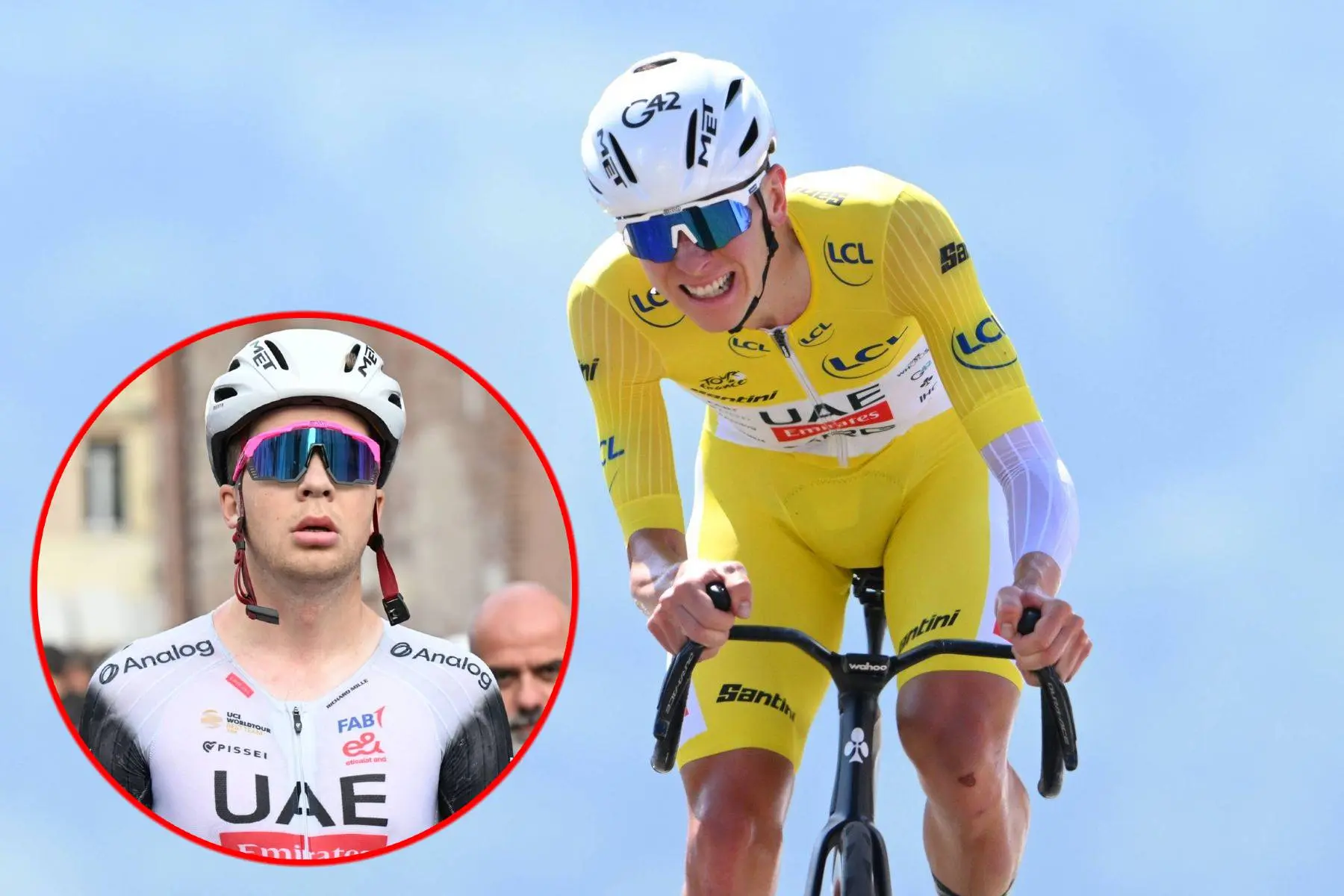
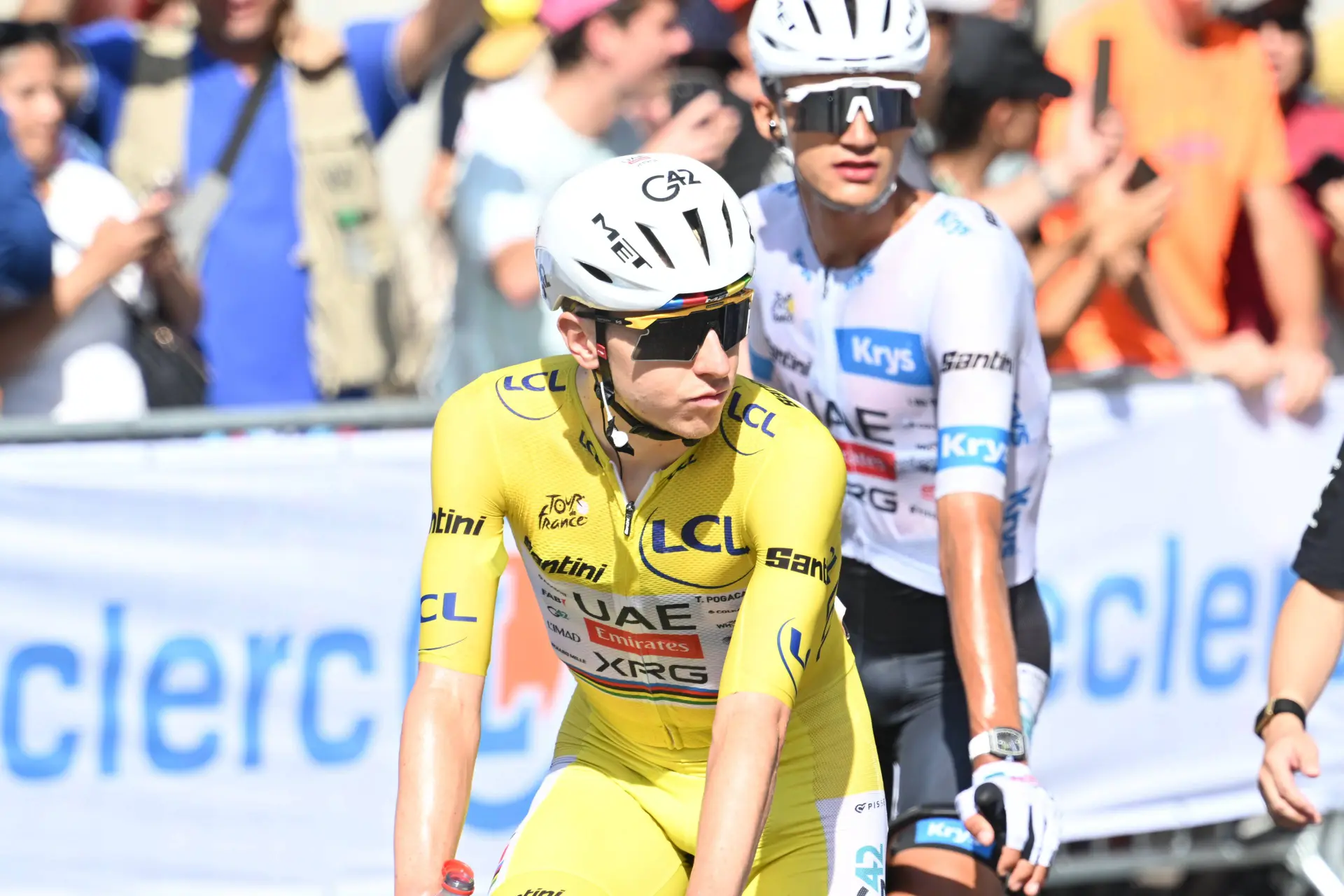
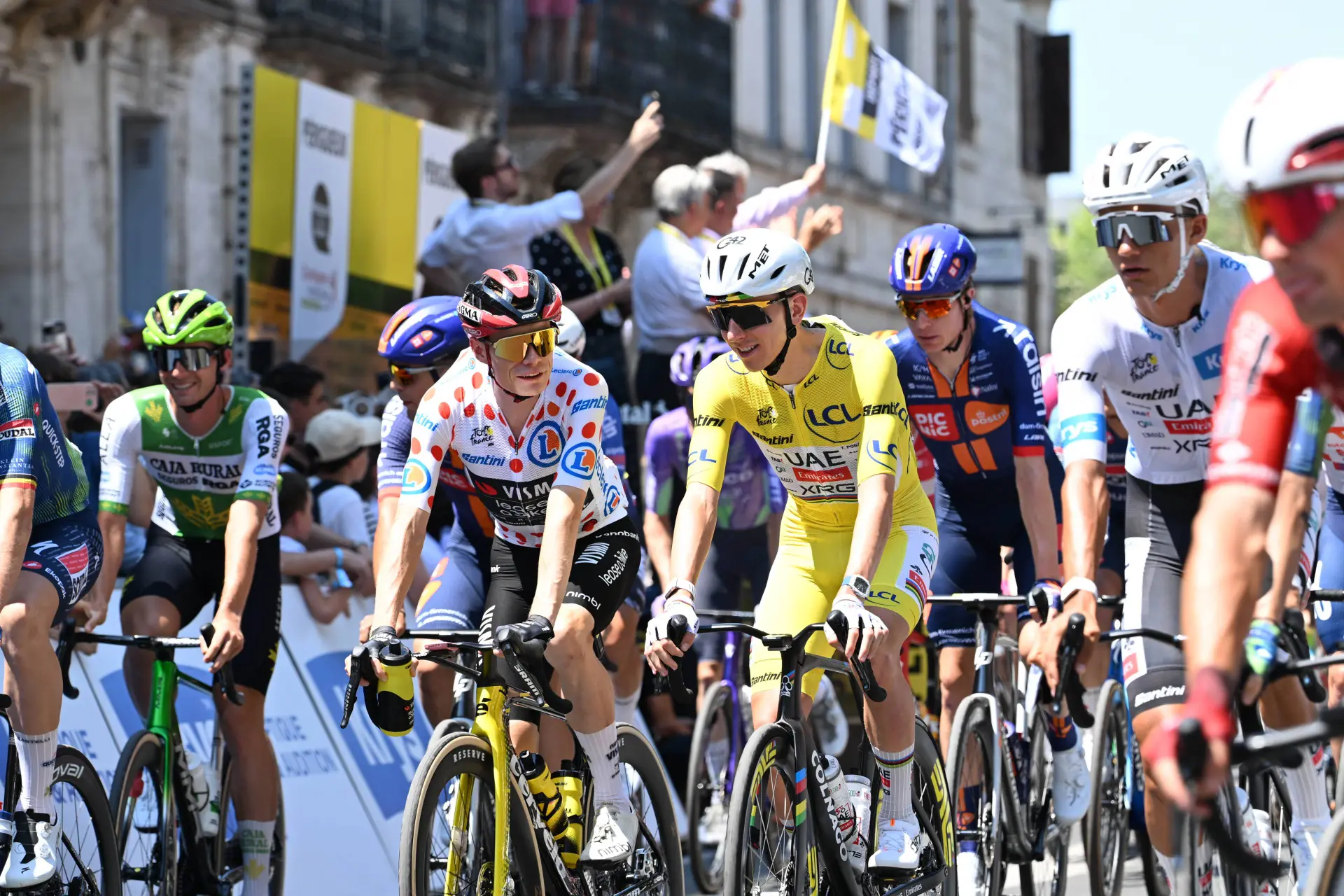
Why only Pogacar and Vingegaard?
The selection would require particular explanation if, in fact, only Pogačar and Vingegaard were tested during the night.
Both have dominated the Tour de France for years and are the race’s most prominent riders. More frequent tests would therefore be understandable in principle. Targeted tests are also explicitly part of the international anti-doping system. The UCI cites, among other things, exceptional performances, performance developments, testing histories, and available information as possible criteria for target testing.
But Paul Seixas is also well placed in the general classification. The 19-year-old Frenchman was in fourth place after stage 14 and led the young rider classification.
If the night-time control was ordered solely due to athletic standing and exceptional performances, the legitimate question arises as to why Seixas was not tested at the same time. The same could apply to Remco Evenepoel or Florian Lipowitz from the immediate leading group.
There may be a completely plausible explanation for this. The selection may have been based on specific biological passport data, earlier testing times, concrete information, or a coordinated testing strategy. Perhaps other riders were tested at other times without this being made public.
But as long as the ITA does not explain anything, that remains speculation.
Seixas’s nationality makes the selection especially sensitive
The fact that the French top rider in particular is said not to have been among the named riders makes the situation particularly delicate politically and athletically.
This does not mean that the ITA deliberately protected Seixas. There is no solid evidence for such a claim. Anti-doping agencies must operate independently, and without knowledge of the testing plan, such an accusation would be unfounded.
Nevertheless, the ITA must be aware of how this selection appears from the outside. When two foreign Tour favorites are woken in the middle of the night while the most successful French GC rider is apparently not part of the same measure, it creates the impression of unequal treatment—even if the actual reasons were purely technical.
An authority working on French soil in particular should avoid any appearance of treating domestic and foreign riders by different standards.
The best answer would be transparency, insofar as it is possible without compromising ongoing investigations or the testing system.

Paul Seixas and Remco Evenepoel were not tested in the same time frame as Pogacar and Vingegaard
Transparency does not mean disclosing confidential findings
Of course, an anti-doping agency cannot publish all the reasons for targeted tests. It must not disclose confidential information, biological data, or lines of investigation. Surprise and secrecy are essential components of an effective testing system.
However, the ITA could at least explain the legal basis.
It could confirm under which jurisdiction the tests were ordered, whether they were in fact ITA controls, and whether the conditions of Articles L232-14-1 to L232-14-3 were applied. It could also clarify whether other riders were tested the same night or within a comparable timeframe, without naming them.
Above all, it must be clarified whether the often-cited time of 2 a.m. actually marks the start of the control, or whether a previously initiated procedure extended until that time. This distinction would be significant from both a legal and journalistic standpoint.
Read also
Pogacar and Vingegaard also deserve clarity
This transparency would not only be in the public interest. It would also be fair to the two riders.
As long as phrases like “serious and consistent grounds for suspicion” are circulating without the specific legal context being explained, it can create the impression that the control was carried out due to an individual suspicion of doping.
That need not have been the case. The provisions may be applied differently depending on the competent organization, prior consent, the specific testing mandate, and the actual sequence of events. It would therefore be dangerous to infer a suspicion against Pogačar or Vingegaard directly from the legal text.
That is precisely why the responsible authority should contextualize the process.
Tough controls also require rigorous procedural standards
In the fight against doping, there can be no comfort zone. Cycling’s stars should be protected from neither unpleasant tests by their name nor by their sporting significance.
But a strict testing system earns its credibility not only through toughness. It also earns it through proportionality, equal treatment, and transparent procedures.
A control at 2 a.m. intrudes deeply into a rider’s recovery and privacy. During a Grand Tour, sleep is not a side issue but a central part of physical performance. That is why the French legislature has deliberately created high thresholds for such measures.
If the ITA considered these thresholds to be met, there must have been a weighty reason. The public has no right to confidential investigative details. But it can expect the authority to explain why such an exceptional measure was, in principle, necessary and proportionate.
Until that happens, questions remain: Why at 2 a.m.? Why Pogacar and Vingegaard? Why apparently not Seixas or other riders from the front group?
Asking these questions is neither a conspiracy theory nor an attack on anti-doping efforts. Quite the opposite: anyone who wants a powerful and credible testing system must also demand that exceptional intrusions be carried out according to clear and equal standards.
Pascal Michiels leads search strategy and content performance at CyclingUpToDate.com, working across editorial, technical, and data-driven processes to improve discoverability and long-term content growth. His role goes beyond SEO, focusing on content structure, on-page clarity, and sustainable audience development.
He works closely with editors and journalists to support publishing standards while optimising articles for reach and readability. His responsibilities include search visibility, performance analysis, and translating audience demand into practical content guidance.
claps 43visitors 17
Just in
Popular news
Latest comments
- being reported that as many as 8 teams were tested at late hours and from Benjamin Cohen, head of ITA in April: “I don’t think you would want to do mass testing at the Tour de France, for example, and wake up all the athletes at 3am — that doesn’t make sense. I think you would need to have very concrete suspicions (about an athlete) and use that in a very cautious manner. “I wouldn’t advocate for mass night testing, but certainly for some flexibility if you believe that there is an issue.” so really doesn't seem like he's crazy about testing and thinks they should need evidence for late night testing. and here we are, they went to a judge and got the ok so I think they have credible evidencewhkman21-07-2026
- you don't believe or you know?whkman21-07-2026
- "a bit much" is an understatement.whkman21-07-2026
- UAE will suffocate Remco in the big mountains !frieders321-07-2026
- the ita obviously only had evidence on the riders that were tested and took it to the judge and the judge ok'd the 2am and 5am tests. maybe seixas is doped up who knows? but they didn't have any evidence on him to bring to a judge. anyone who thinks the French are biased has forgotten Festina.whkman21-07-2026
- Remco won, Pogi second ! Your worst nightmare ! Ad Acta Clown !frieders320-07-2026
- The youngest rider to start the TdF since 1937 is solidly in the top 5 of the GC contenders after 14 hard fought stages and he doesn't raise any "serious and consistent suspicions"? Seriously bad look for the frogs.mrvco20-07-2026
- Pogi was first 'loser' Sunday ! That would be second place in case that's to hard to figure out!frieders320-07-2026
- The ancient greeks invented sports doping, they ate sheep testicles to increase their testosterone. I'm not kidding..awp20-07-2026
- I've used those tires ... flying too close to the sun...bobo20-07-2026
Loading
18 Comments