Only three non-European riders had previously become World Champions - Brandon McNulty joined the likes of Armstrong and Lemond in Montréal
Cycling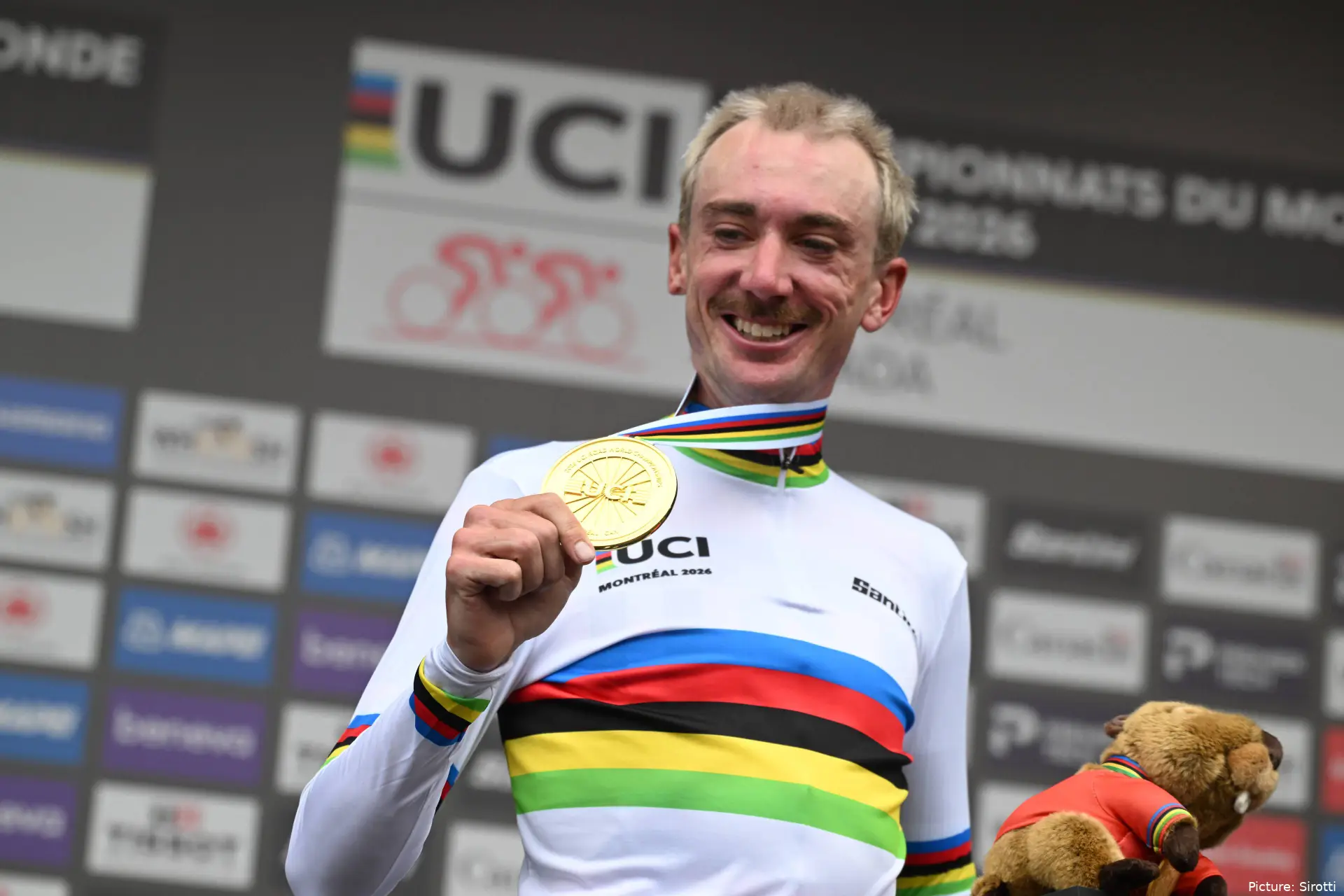
Since the creation of the World Championships, European dominance has been overwhelming, with only three men born outside the continent conquering the rainbow jersey in the men's elite road race until this year. Brandon McNulty has become the fourth.
Greg Lemond and Lance Armstrong came before McNulty when it comes to their success at the World Championships, Australia completes a roll that features one of the standout riders of his generation and one of the few cyclists to win both the Tour de France and the Worlds in their careers.
They are all different. LeMond was a complete rider, ahead of his time; Armstrong reached the rainbow jersey as one of America’s top prospects before building a career around the Grand Tours; Evans did it after becoming a global reference in mountain bike.
Their victories also unfolded on very different stages and in contrasting race scenarios. But they all share one remarkable trait: from outside Europe, they broke a hegemony that for decades made the Worlds almost exclusive territory for the major European cycling powers.
Greg LeMond: the pioneer, blazing a trail
Greg LeMond was one of the first great American riders able to go toe to toe with Europe’s elite. Born in Lakewood, California, he developed an exceptionally complete skill set, with the ability to shine in classics, Grand Tours, and time trials. His climbing talent and strength against the clock made him particularly hard to beat.
His first rainbow came in Altenrhein in 1983, when he was still very young. LeMond prevailed in a race marked by a fierce tempo and a finale in which he exploited his attributes to overcome his rivals. That triumph made the American the first road world champion born outside Europe.
The title was no one-off. LeMond reclaimed the Worlds six years later, in Chambéry, in 1989, in a race that confirmed his ability to deliver at the highest level across different scenarios. The American again used his high-speed engine and superb endurance to win on French soil.
The 1983 rainbow also opened an unprecedented chapter for American cycling. LeMond proved that a rider born across the Atlantic could become world champion and later win the Tour de France. The UCI itself notes that he is among the riders who won the Tour while wearing the rainbow jersey.

Lance Armstrong in the rainbow jersey with Motorola
Lance Armstrong, a precocious rainbow
Lance Armstrong was born in Plano, Texas, and arrived in professional cycling after first excelling in triathlon. His explosiveness and physical capacity allowed him to rise quickly and become one of America’s brightest prospects in the early nineties.
In 1993 he won the road Worlds in Oslo at just 21. That victory made him one of the youngest world champions in history and extended the American presence in a competition traditionally dominated by Europeans. The UCI recalls that Armstrong became the youngest world champion from 1993 until Remco Evenepoel in 2022.
The Norwegian race had added weight given the American’s age. Armstrong was not yet the Grand Tour figure he would later become, but an explosive, aggressive rider able to handle demanding courses. His win in Oslo was, at that moment, confirmation that the United States had found another contender for the rainbow.
Cadel Evans, from MTB to road gold
Cadel Evans represents a very different story. Born in Katherine, in Australia’s Northern Territory, he spent his early years in the Aboriginal community of Barunga and began his sporting path far from Europe’s roads. Before becoming one of the premier stage-race specialists, he was a leading figure in mountain bike.
His definitive move to the road turned him into one of the most complete riders of his generation. Evans stood out for his climbing, resilience, and consistency, qualities that kept him in the fight for Grand Tours for years. Before the Worlds he had already shown his level with numerous high finishes at the Tour de France.
The rainbow arrived in 2009, in Mendrisio, at an especially demanding Worlds. Evans prevailed in a race defined by toughness and cumulative fatigue, proving that his climbing and endurance could also make him world champion. His triumph was the first by an Australian in the elite men’s road race.
The world title became one of the great milestones of a career that peaked two years later with his victory at the 2011 Tour de France. Evans thus established himself as one of the most complete riders of his era and as the third and, to date, last male road world champion born outside Europe to appear in the official palmarès.

Brandon McNulty on the podium of the 2026 Montreal World Championships
Brandon McNulty, the new addition
In 2026, Brandon McNulty has added his name to this list. Over 30 years since Armstrong's rainbow jersey, the North American nation has once again reached the top of the sport and the rainbow jersey has been attributed to a rider who was not born in Europe.
The Arizona native is part of UAE Team Emirates - XRG and entered the race as one of the outsiders to take the win. In the absence of his trade teammate Tadej Pogacar, the race became more tactical than what it would otherwise.
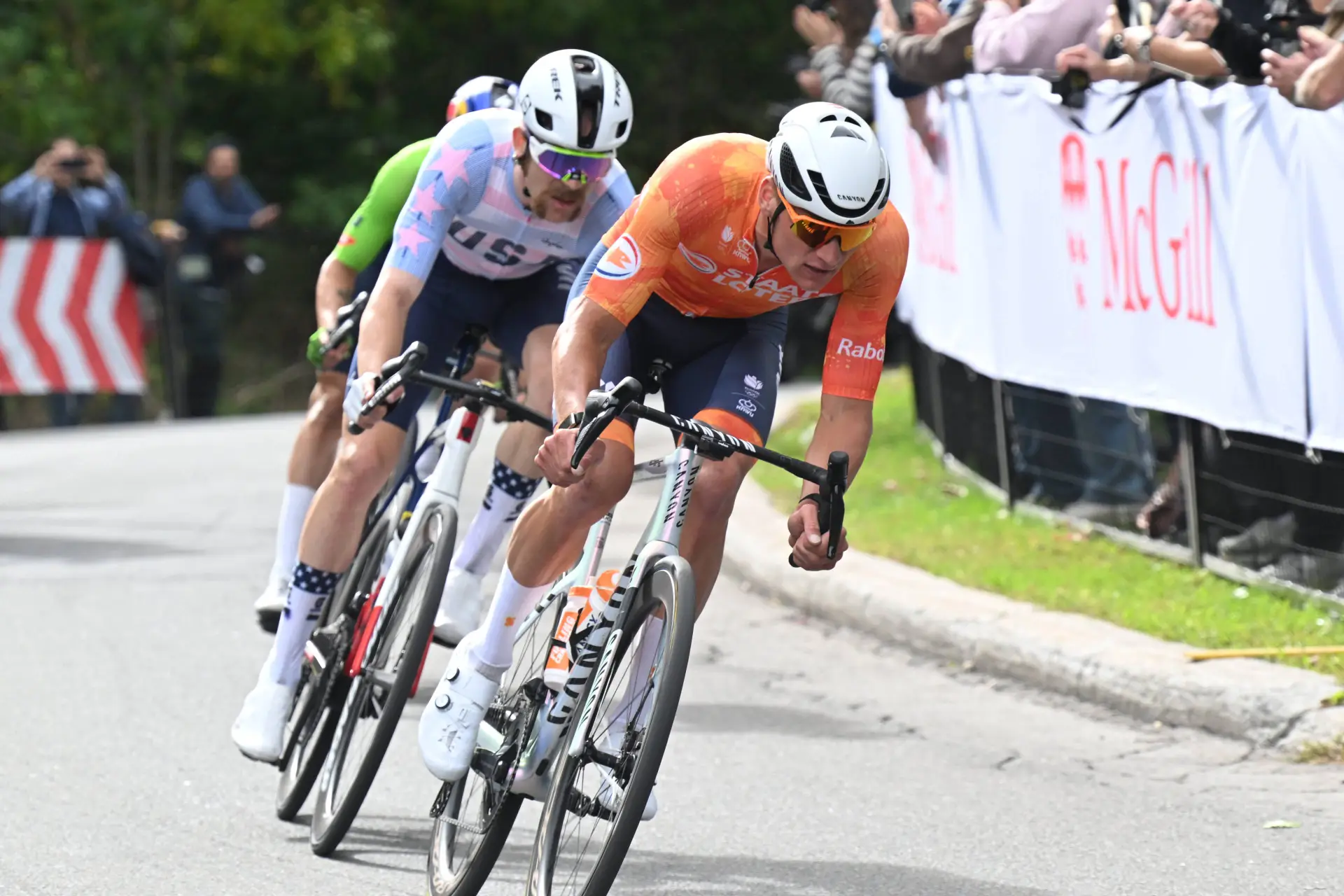
In Montréal, close to home, the Americans almost appeared to have a home advantage; with Quinn Simmons and Matteo Jorgenson also putting in astounding performances to complete the USA's masterclass.
McNulty won with a solo attack that came with just over 30 kilometers to go, then holding off a group including the likes of Mathieu van der Poel, Isaac del Toro, Remco Evenepoel and Paul Seixas.
Javier RampeCycling Journalist
Javier Rampe is a sports analyst with more than 15 years of experience. He holds a degree in Economics from the University of Rome and a Diploma in Business Studies from the University of Cádiz. Despite coming from an academic background not particularly associated with cycling, his passion for both cycling and journalism was instilled in him from an early age. He grew up following Miguel Indurain and José María “El Chava” Jiménez. An admirer of Michael Robinson’s communication style and journalistic approach, he was inspired to pursue a degree in Journalism at the University of Buenos Aires, which he is currently completing.
He has always maintained close ties with the worlds of sport and culture, contributing from a young age to sports blogs and film and music review websites. His work has appeared in media outlets such as Cope, RAI, and Radio Con Vos. He is also the founder of the cycling-focused podcast El Contraanálisis and the football interview channel Días De Fútbol, dedicated to conversations with professional footballers.
In addition to his work at Ciclismoaldia, Javier has interviewed some of the most influential figures in modern cycling, including Alejandro Valverde and Tadej Pogačar, as well as key voices in anti-doping policy such as Alberto Yelmo, David Varillas, and Marcelo Milano. Marcos Maynar, in relation to the ‘Operación Ílex’ case, is also among the personalities he has interviewed. He enjoys conducting in-depth analysis of the cycling ecosystem and has attended major events such as Strade Bianche, the Vuelta a Andalucía, and Itzulia, as well as numerous national cyclo-cross races.
His background in economics, combined with extensive experience in marketing and corporate communications, drives his continuous study of positioning strategies and ensures that he always keeps his focus on crafting compelling and evocative headlines.
claps 0visitors 0
Just in
Popular news
Latest comments
- Nothing. Against Pogi nothingabstractengineer18-10-2026
- He didn't even try to sprint all outvappaxbipmv18-10-2026
- Campenaerts looked like a rolling pumpkin with that all orange leaders skinsuit !frieders318-10-2026
- He can take his dumb a$$ politics somehwere else !frieders318-10-2026
- good to have her back. fingers crossed she‘ll be able to stay!Ketterechts17-10-2026
- A tenner and he wins the Tour next year, too 😂anonymouscyclist17-10-2026
- the answer is either stick to classics or GTs but not bothabstractengineer17-10-2026
- the exodus already stared with Ciccone. Already they were struggling with two sprinters, now there are three. Also Ganna will demand leadership. Gall is the most proven GC, Ayuso has the most potential. GC leadership for everybody will be impossible. Literally a UAE style mess without pogi.abstractengineer17-10-2026
- I raced as an amateur for 12 years, including six years on my country’s national road cycling team. I secured two national titles and competed in three World Championships plus more than 15 international stage races. At 23, we travelled to Italy for a training camp—or so I assumed. On a rest day, we watched a presentation about adopting a more “professional” training approach. It was crystal clear what “professional” meant. That moment first exposed me to this dilemma. After returning from Italy, I left cycling—at least at the competitive level I had known. Over the following two years, the whole team was caught doping. I hold that everyone is innocent until proven guilty. In my view, current stakeholders operate on a different scale, and the sums involved are vast. I am unsure whether any doping would ever be revealed. I try to stay positive and enjoy the show. My 2c.
 vannpelt17-10-2026
 - Fiver he wins 🤣
 leedorney17-10-2026
Loading
Write a comment