No Almeida, no problem? Adam Yates leads UAE Team Emirates' Maglia Rosa charge at the 2026 Giro d'Italia as he looks to follow in brother Simon's footsteps
Cycling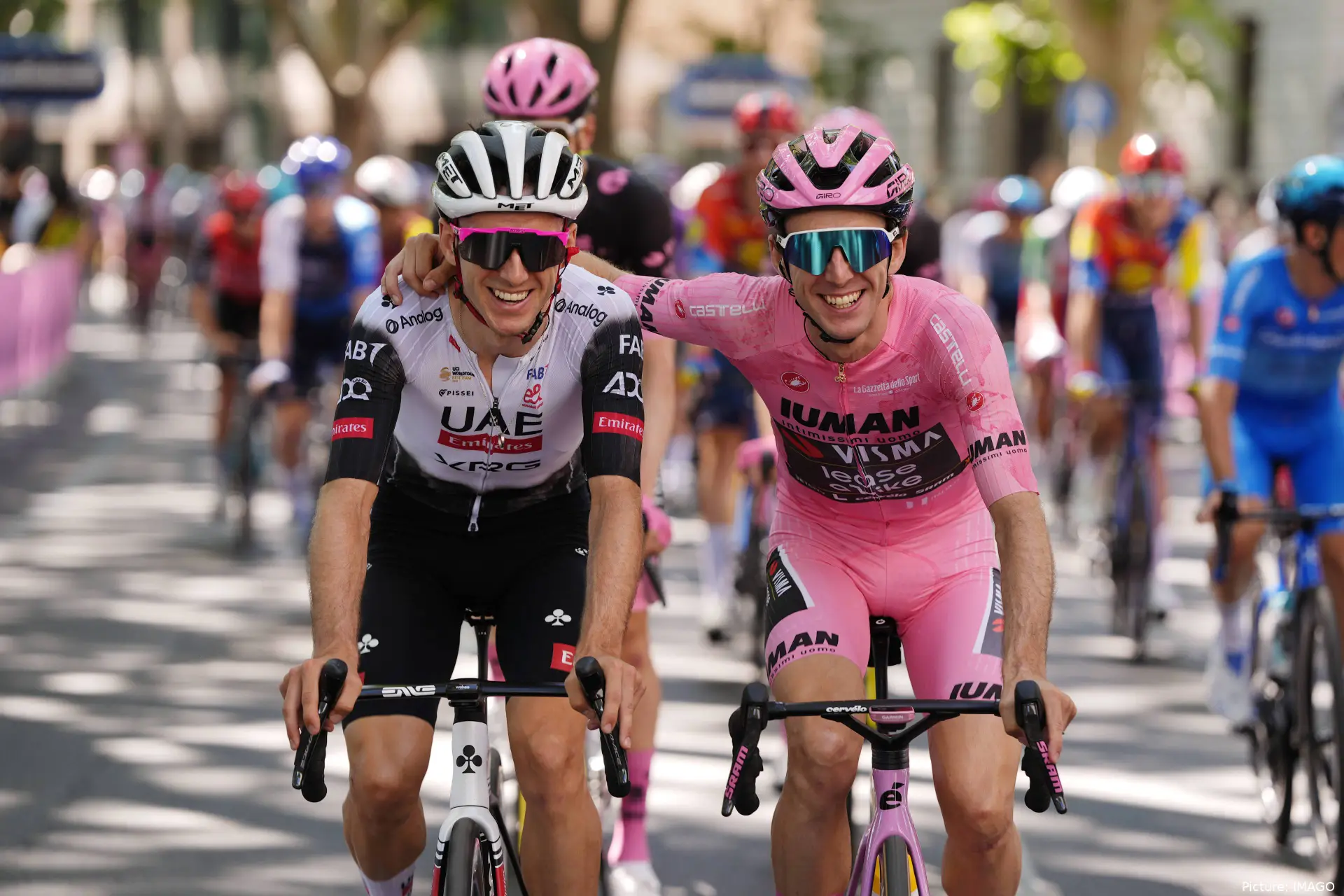
UAE Team Emirates - XRG have confirmed their lineup for the 2026 Giro d’Italia, with Adam Yates stepping into the role of team leader following the late withdrawal of Joao Almeida.
Almeida had been widely expected to spearhead the Emirati squad’s general classification ambitions, but his absence forces a reset in approach. Rather than arriving with a clearly defined GC hierarchy, UAE instead bring a more flexible setup built around Yates, supported by a mix of proven Grand Tour experience and emerging talent.
Yates handed leadership opportunity
Yates comes into the race in strong condition, having won the general classification at O Gran Camiño earlier this season, and now has the chance to lead UAE at the Giro for the first time in several years.
“Not having João Almeida will change our strategy slightly, but we still have big ambitions and still want to go for results,” Yates said ahead of the race. “Personally, I feel like the shape is good and if things go our way we can have a good crack at the GC and animate the race.”
That wording reflects the shift in tone. UAE are not framing themselves as the outright team to beat, but they are clearly not stepping back either. Yates’ consistency across three weeks, combined with his experience as a former Tour de France podium finisher, gives the team a credible route into the Maglia Rosa battle.
Depth and versatility in support
Around Yates, UAE have assembled a lineup that offers options across different terrains rather than focusing solely on GC support. Jhonatan Narvaez brings proven Giro pedigree, including a stage win and time in the Maglia Rosa, making him a clear stage-hunting threat. Marc Soler adds further experience and attacking intent, while Mikkel Bjerg offers strength against the clock and on flat terrain.
Igor Arrieta returns after playing a key support role in last year’s race, and there is added intrigue in the inclusion of Grand Tour debutants Jan Christen and Antonio Morgado, both of whom have already shown a willingness to race aggressively in their short professional careers.

Adam Yates' brother Simon won the Giro in 2025
Strong recent Giro pedigree
Despite the late change in leadership, UAE arrive with one of the strongest recent records in the race. The team have finished on the podium in each of the last three editions, with Tadej Pogacar winning the 2024 Giro d’Italia, Almeida finishing third in 2023, and Isaac Del Toro taking second overall in 2025.
That consistency underlines the team’s ability to remain competitive even when plans change, and provides context for their continued ambition in 2026.
Without Almeida, the Giro presents a different type of challenge for UAE. Rather than building around a single, clearly defined GC contender, they enter the race with a leader in Yates and a supporting cast capable of influencing the race in multiple ways.
Whether that approach proves enough to challenge the likes of Jonas Vingegaard remains to be seen, but the intent is clear. UAE may not arrive in their expected form, but they are not arriving to sit back.
Read also
UAE Team Emirates - XRG for the 2026 Giro d'Italia:
| Rider |
| Adam Yates |
| Igor Arrieta |
| Mikkel Bjerg |
| Jhonatan Narvaez |
| Marc Soler |
| Jan Christen |
| Antonio Morgado |
| Jay Vine |
Kieran WoodDeputy Editor-in-Chief
Kieran Wood is a sports journalist based in Wales and has been active in journalism since 2022. He regularly contributes to DartsNews.com and CyclingUpToDate.com, where he covers professional cycling and darts. In cycling, his work includes liveblogs from major races, including the Tour de France, the Giro d’Italia, and La Vuelta a España, alongside race reports and analysis. He has also conducted interviews with professional riders.
His reporting spans the full racing calendar, from one-day classics to stage races, with a focus on accurate, real-time coverage and clear contextual analysis. For statistics, results, and historical context, he regularly uses resources such as ProCyclingStats. To support reporting on rider activity and training context where relevant, he also references Strava.
In his work, Kieran places strong emphasis on careful sourcing, editorial accuracy, and updating articles as new, verified information becomes available.
claps 1visitors 1
Just in

Popular news
Latest comments
- They didn’t have or need “extraordinary information”. All they needed was for a French judge to sign off on the night-time testing for it to go ahead.Lozza25-11-2026
- If the sponsors voted for Primoz then you get him, otherwise not.flyer25-11-2026
- It sure can feel or seem that way but I wonder if the same amount of prodigious performances (compared to the others) would occur if no one was ever doping at all.flyer25-11-2026
- Given the similarity of two articles (published on I think the same date), I'm reusing (copy-n-pasting) my post from the twin: I've always thought the last day of each of the grand tours was problematic mostly in that the GC is considered completed before the race starts when that is not really true. There is some tension, but not desirable tension. What saves the awkward practice is the race finish is legit for those who participate - so it's not wholly different from the other stages. That neutralizations usually make good sense demonstrates their necessity so if that has to be the way to go I agree that the design plan for the neutralization should be completed before the race starts. This years end stage in the Vuelta had one of the best first half's I've seen in that many of the riders looked to be thoroughly enjoying themselves making it a joy to watch. But I think it was slightly closer to the exception rather than the rule.flyer25-11-2026
- Even I often win without being there at all, not even breaking a sweat. Beat that!flyer25-11-2026
- It is not about rest and peaking again - 5 weeks is not enough for that. It is about recovery while maintaining form. 4 weeks is easier for that. With a Giro-Vuelta, the 12 week break is enough to rest and then peak again. Not for the Tour
 Rafionain-Glas25-11-2026
- I fully agree that "2027 could completely reshape the pecking order" because this competition is a mix of skill, team support, luck opposition, and health. (What BS - as I start writing this post a popup hides what I've written so my only sane options are to hit POST prematurely or leave or reload the page. What a pathetic operation. I forgot where I was so I'm getting out of this crap trap.)flyer25-11-2026
- I've always thought the last day of each of the grand tours was problematic mostly in that the GC is considered completed before the race starts when that is not really true. There is some tension, but not desirable tension. What saves the awkward practice is the race finish is legit for those who participate - so it's not wholly different from the other stages. That neutralizations usually make good sense demonstrates their necessity so if that has to be the way to go I agree that the design plan for the neutralization should be completed before the race starts. This years end stage in the Vuelta had one of the best first half's I've seen in that many of the riders looked to be thoroughly enjoying themselves making it a joy to watch. But I think it was slightly closer to the exception rather than the rule.flyer25-11-2026
- Apparently that week is a MAJOR training disadvantage as "three major benefits" were claimed. When I read a proposal such as this, I want to also read the reasons why changing might not be so good - the CONS.flyer25-11-2026
- most likely they fudged it but i think they want to set an example to the riders that even the top riders are not exempt in the top races even during nighttime as a precedenceabstractengineer25-11-2026
Loading
Write a comment