Mental freshness, no altitude and time at home - How UAE prepared Tadej Pogacar for La Vuelta tilt
Cycling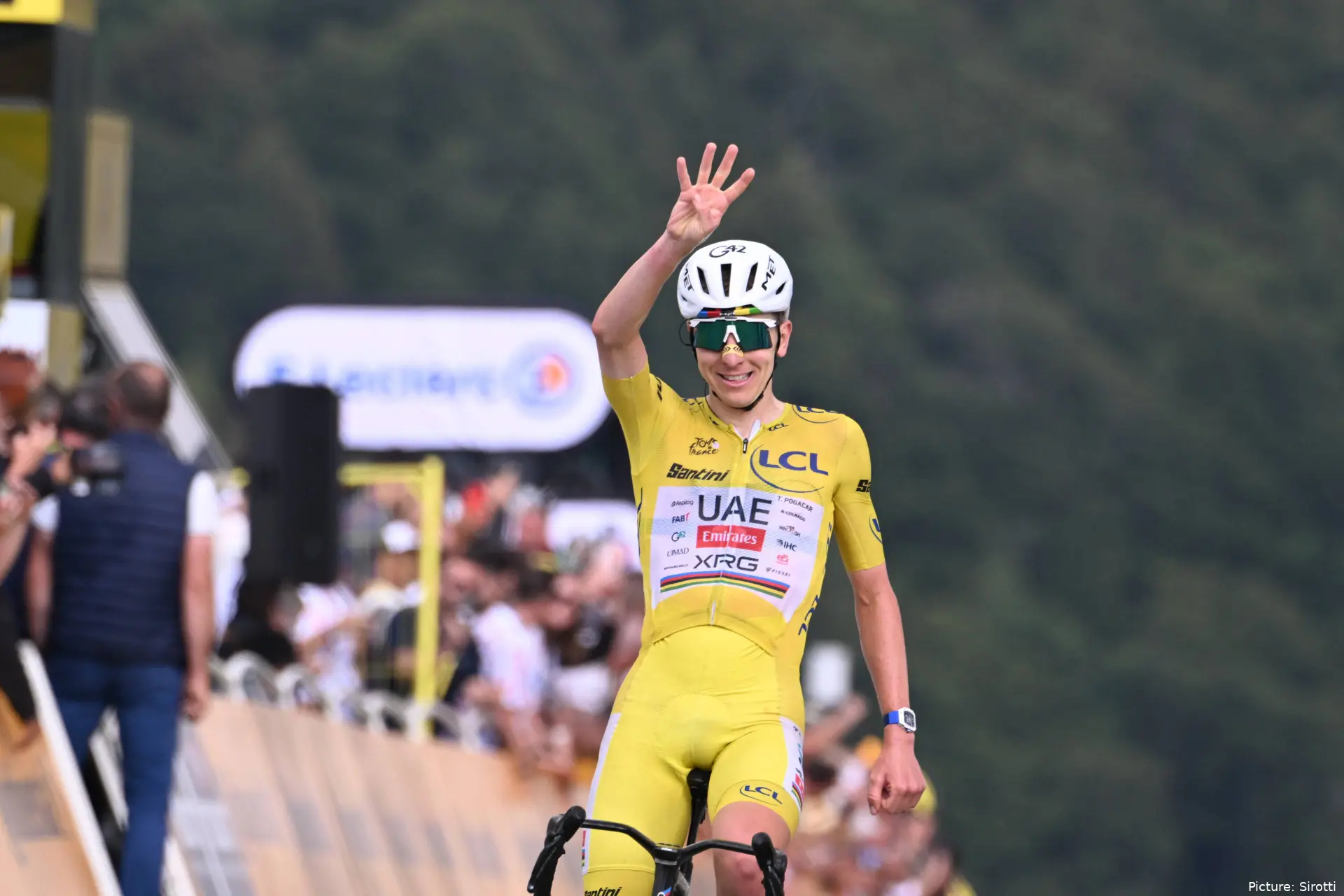
The 2026 Vuelta a España will see Tadej Pogacar make his return to the Spanish Grand Tour, seven years after his debut. UAE Team Emirates - XRG had this possibility taken into account at the beginning of the year, and the planning between Tour de France and La Vuelta has been explained in the meantime.
UAE always had La Vuelta in mind when planning Pogacar's season
Pogacar raced all throughout the spring, focusing exclusively on the one-day races which saw him win Milano-Sanremo for the first time - as well as add another Tour of Flanders and Liège-Bastogne-Liège title to his palmarès. The World Champion has since raced and won the Tour de Romandie and Tour de Suisse, before the Tour de France.
There, he took his fifth yellow jersey, matching the record previously established by several riders. The Tour was always the main priority, but his training and racing schedule was designed in a way so as to not sacrifice the Vuelta in case he wanted to race it late in the year.
"His physical preparation was focused on July, as it should be, in that sense the Vuelta comes simply as an add-on," team performance director Jeroen Swart said in an interview with Cyclingnews.
Pogacar's Vuelta return could've happened in 2025, but a large amount of fatigue and a small knee injury saw the World Champion take time off and not jeopardize his run-in to the World Championships. Without Jonas Vingegaard at the start line, the 2026 edition also felt like a more manageable race to win.
"It's not necessarily something that would dictate the training prior to the Tour. But the race calendar was by design, it was always aimed at giving him the mental freshness to be able to do the Vuelta if he decided that he definitely wanted to do it, after he'd finished the Tour."

Tadej Pogacar won the Tour de France with Isaac del Toro joining him on the podium
"The calendar definitely took into account the potential of doing the Vuelta and would have been purposefully less arduous to keep him mentally fresh and interested."
Above many things, UAE try to maintain Pogacar's mental health and interest in racing. The one-day races throughout the spring were partially planned around a lot of time spent at home and away from the spotlight, media duties and podium celebrations - and that has seemingly been achieved.
After the Tour, Pogacar spent some days at home, at his home event in Slovenia, and even on the side of the road at the Tour de France Femmes - cheering on his fiancée Urska Zigart. Whilst regular riders would ordinarily suffer from that lack of specific focus on a return to racing at La Vuelta, Pogacar might have the space to get away with it.
"There's not a lot of time, so there's not a lot you can do, it's pretty straightforward. But we omitted the altitude training," Swart says. Whilst there could be time for it, an altitude camp between the two races could later on lead to mental fatigue that Pogacar could later pay for.
"It definitely is. Tadej's physical ability is unmatched, and so it's important for him to stay motivated. And interested. He last did the Vuelta in 2019, he hasn't won it, winning would give him that triple crown and that's definitely a big motivator as well."
Racing a second Grand Tour is not an easy task for anyone, even Pogacar
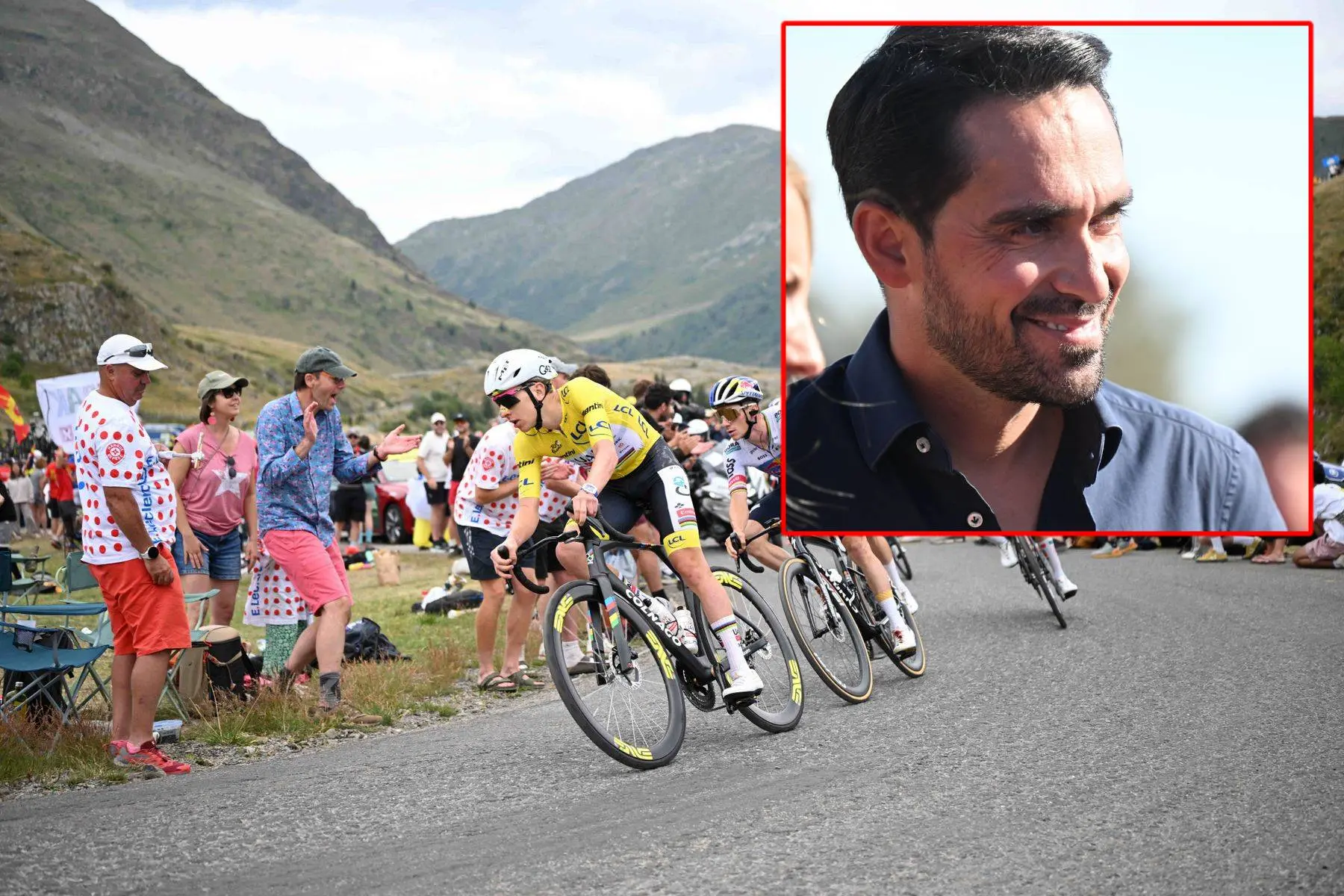
Of course, after months of preparation and an entire Tour de France, the Slovenian will still have to measure himself throughout the race not to go over the line. "This Vuelta is just full on all the way through. In some ways, that is helpful because it's decisive very soon and a GC lead can be built steadily and early on as well, but the Vuelta is going to be arduous, even for Tadej and especially after doing the Tour. It's a hard and a long race".
The hot weather and the many mountainous and hilly days that every year marks the course of the Spanish Grand Tour make it no easy task for any rider. But the built up fatigue from his expected schedule that should still include the World Championships and Il Lombardia is no concern.
"I don't think it'll have an effect on him going into 2027. Following the World Championships he'll get to his end of the season, I'm sure and recover more than adequately so I don't think it's a concern, really".
"However, obviously, you have to see how the race unfolds, I'm sure if you're looking at….starting with the TT and stage 4 already, it could be very decisive in terms of the GC".
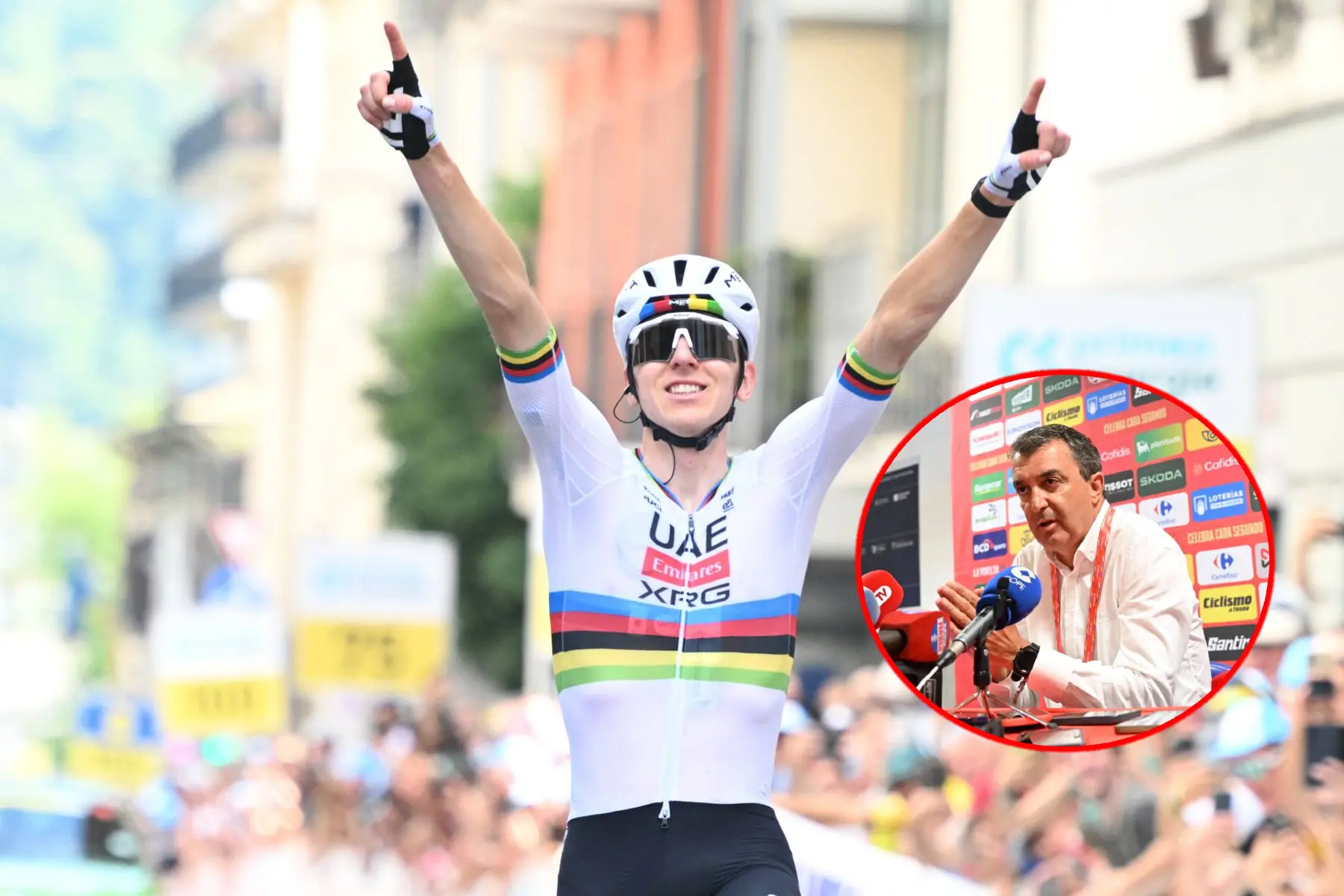
Pogacar is the overwhelming favourite to win the overall classification and, after he did the same at the Tour de France, he could in some instances keep some of his energy in reserve - even in the key stages - if the race pans out in his favour.
"I think it's one of those situations where the second half of the race may be an opportunity to be a bit more conservative and then save himself for those other goals. That would be an intelligent way to do things. We'll have to see how it unfolds, but that would definitely be a factor."
"I don't think there's going to be anything that's a revelation. I think Tadej has already proven that he can do two grand Tours, comfortably, in succession".
'Getting the job done' is how Swart describes the upcoming weeks for the five-time Grand Tour winner, who wants to add the only Grand Tour that lacks in his palmarès to his victory list.
"Then if we look at his form at the Tour de France and the margin he had on his competitors, so naturally, the level of competition at the Vuelta will be a little bit below that of the Tour de France, and so I don't necessarily think there's anything that we're looking for in terms of any spectacular revelation or performance. Rather, I think it's more a matter of getting the job done."
Rúben SilvaEditor-in-Chief
A founding contributor to CyclingUpToDate since its launch in January 2022, Ruben Silva has played a central role in shaping the site’s editorial direction and long-term growth. Before joining the project, he built his experience through independent blogging at Echelons Hub and by producing race previews for Ciclismo Internacional, developing a strong analytical voice rooted in daily engagement with professional cycling.
Beyond editorial work, he has been closely involved in the expansion and coordination of CyclingUpToDate’s wider network, helping establish and support sister platforms across multiple languages. This includes ongoing collaboration with CiclismoAlDia (Spanish), CiclismoAtual (Portuguese), WielrennenUpToDate (Dutch), and RadsportAktuell (German), contributing to a shared editorial vision and consistent international coverage.
He also helps oversee editorial governance across the network, setting standards for accuracy and consistency and coordinating updates or corrections when needed.
Originally from the Porto metropolitan area in Portugal, he holds a bachelor’s degree in Geography. His path into cycling journalism was shaped not through formal media training, but through independent reporting, community engagement, and sustained on-the-ground involvement in the sport.
Over the course of his career, he has conducted approximately 100 interviews across road cycling and cyclocross, ranging from one-to-one conversations and online formats to press conferences and on-site pre- and post-race coverage. His interviews include leading riders, team managers, and prominent figures within cycling media: Tadej Pogacar, Jonas Vingegaard, Mathieu van der Poel, Primoz Roglic, Wout van Aert, Joao Almeida and Tom Pidcock; managers like Patrick Lefevere and Joxean Matxin; and YouTube personality Bryan Kennedy (BKXC)...
Within 18 months of launch, he helped grow CyclingUpToDate’s English-language platform into one of the most-read cycling news websites, built entirely from the ground up. As both a professional journalist and lifelong cycling enthusiast, his focus remains on delivering accurate, timely, and well-contextualized coverage.
claps 27visitors 7
Just in

Popular news
Latest comments
- disrespectful thats a joke ...
 Davide20-10-2026
 - EF’s “island of misfit toys” squad is probably one of my favorites in the peloton. They are fun to watch, always trying stuff - they ride with heart and panache, and their kits are excellent.wrsty20-10-2026
- 'Children these days'... Wout, since the caveman learned to say "Ug", older generations have always said this about younger generations. Not every young rider is a cowboy. So what's to say that the fact that Poels was respectful meant that his peers were equally so?
 Rafionain-Glas19-10-2026
 - "...In a weakened field" Most definitely ! YAWN !frieders319-10-2026
- Noted. But I had to appease his fans.MajorPayne19-10-2026
- I wonder if he'll race Challenge MallorcaRafionain-Glas19-10-2026
- Head to head time-splits: Jay Vine vs Remco Evenepoel: 10.5 km - Vine lost 45 seconds to Evenepoel 34.2 km - Vine lost a further 1:10, and was caught in the vicinity of that checkpoint. Note: I remember Vine getting caught before the second checkpoint, and ProCyclingStats log supports that, however, the gap at the second checkpoint was less than 2 minutes. 45.4 km - Vine lost only 16 seconds Of course, Vine lost less time in the middle section than the early section, but at the final segment rate, he'd have lost 15 seconds in the opening section and and 34 seconds in the middle. It is possible that Vine paced himself very well but that seems unlikely. In comparison with Stefan Küng: Kung lost: 26 seconds at T1. A further 1:11 by T2. A further 40 seconds by the finish. Relative to Evenepoel, Küng did slow down by the end. Maxime Decomble: Lost 47 seconds at T1. A further 1:20 by T2. A further 26 seconds by the finish. Mikkel Bjerg: Lost 37 seconds at T1. A further 1:34 by T2. A further 46 seconds by the finish. It is not concrete evidence that Vine cheated though it certainly doesn't absolve him. However, watching the race, I am 100% sure that Vine did not pull over and follow a different line when Remco passed him. Remco pulled away quite quickly, but the gap did not balloon and Vine definitely got aero assistance.Rafionain-Glas19-10-2026
- That ship has sailed years agovappaxbipmv19-10-2026
- He doesn't have to. I'd be perfectly happy if he loses SB if he then wins everything elsevappaxbipmv19-10-2026
- Please don't put Remco in the same sentence as Tadej. It's disrespectful to Tadej. Please make a note of this.KissinKate19-10-2026
Loading
Write a comment