Mathieu van der Poel’s “normal life” showcased in new documentary: “At home he’s no different from the Mathieu you see in races”
Cycling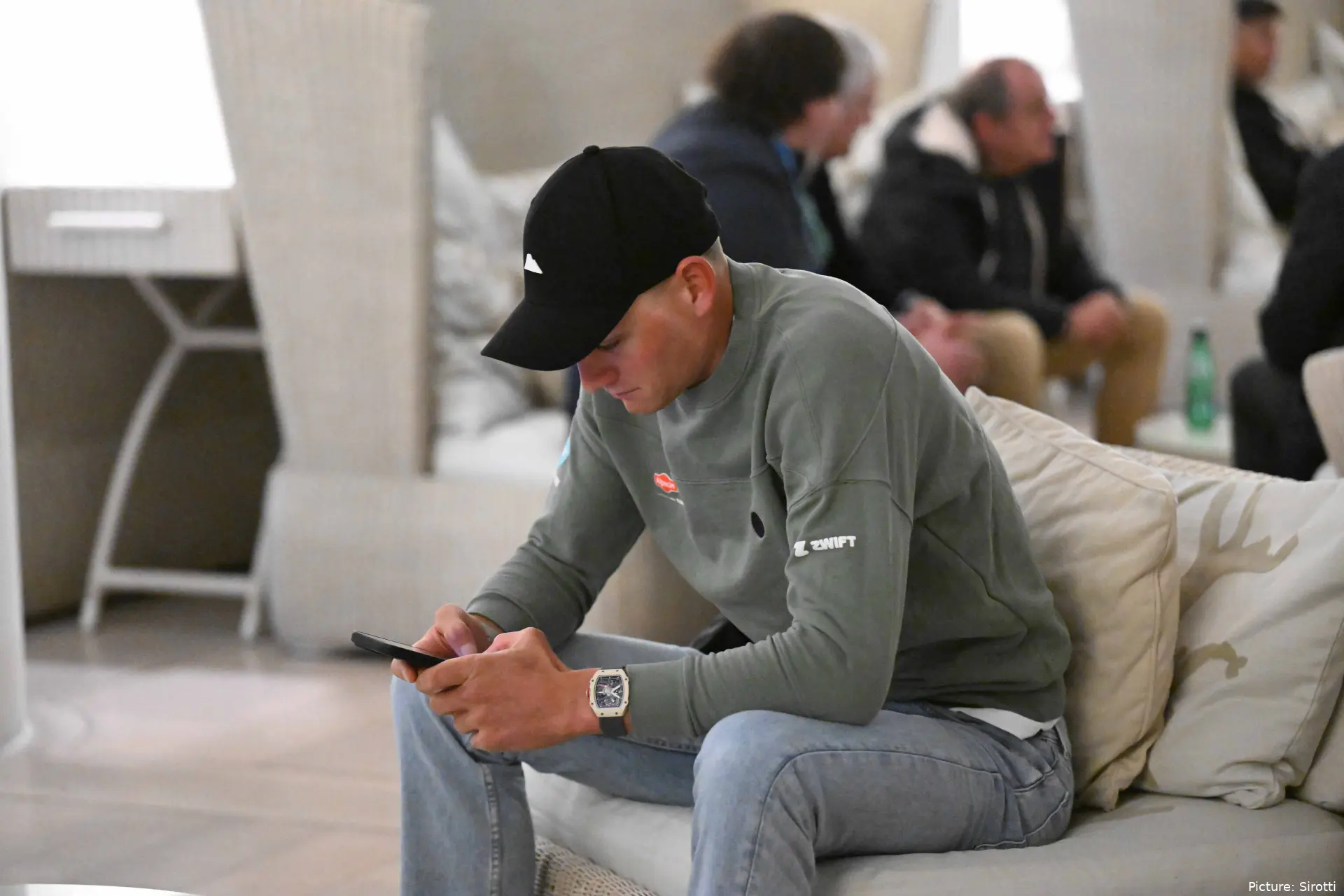
Mathieu van der Poel’s 2026 season has already reinforced his status as one of the defining riders of his generation, from an early statement win at Omloop Het Nieuwsblad to head-to-head battles with Tadej Pogacar in Sanremo and Flanders. But away from the cobbles and the spotlight, a newly released documentary offers a different perspective on the Alpecin-Premier Tech rider.
In This is Home, produced in collaboration with Shimano, Van der Poel opens the door to a side of his life rarely seen publicly, alongside his family and partner Roxanne. The central theme is not dominance or rivalry, but something far simpler. As Van der Poel himself puts it, “How normal my life is. And the close bond with my family.”
That idea of normality sits in contrast to the rider’s place in the modern peloton. Over the past year alone, Van der Poel has continued to shape the biggest races on the calendar, combining Monument success with his usual winter cyclocross dominance. Yet the documentary deliberately shifts the focus away from results and towards routine.
“We felt this was the right moment to show a more complete picture of who I am. As an athlete, but also as a person,” he explains, framing the project as a conscious decision rather than a departure from his usual guarded approach to privacy.
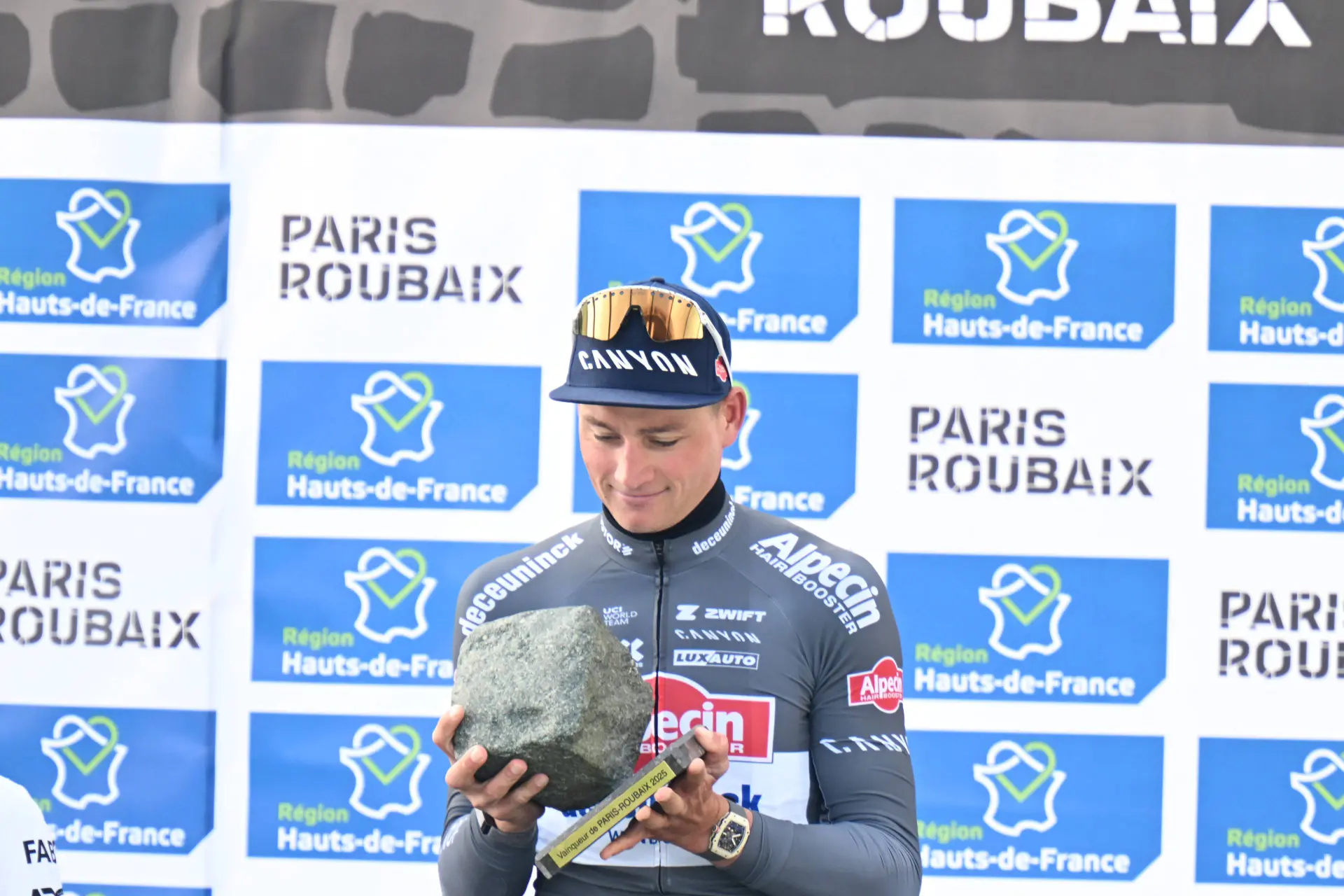
A different side to a defining Classics rider
The film moves between locations in Belgium and Spain, reflecting the structure of Van der Poel’s life away from racing. In ’s Gravenwezel, scenes inside the family home underline the influence of a lineage that has shaped his career, from his father Adrie’s guidance to the wider legacy of the Poulidor family.
That upbringing is not presented as mythology, but as something grounded. Stories from his early years point to a rider who was already independent, even stubborn at times, willing to ignore advice and follow his own instincts. Traits that remain visible in the way he races today.
Away from cycling, the documentary leans into the routines that underpin his consistency. Time spent with friends on the golf course is one example. “I’m a bit obsessed with golf,” he admits. “It’s a nice way to catch up with friends and to get away from the bike for a while.”
That balance between intensity and detachment has become a defining part of Van der Poel’s career. Even in a season where he has again been at the centre of the sport’s biggest races, the emphasis remains on maintaining a stable environment rather than chasing constant exposure.
“I stay focused by being in a familiar environment and sticking to simple routines,” he says. “But that also applies to our base in Spain, where I can really relax and recharge, often in much better weather.”
“The way you see him is how I see him too”
If the documentary offers insight into Van der Poel’s environment, it is Roxanne’s perspective that perhaps defines its central message.
In one moment inside their home, she highlights a consistency between public image and private life that is rarely associated with riders of his profile. “At home, he’s no different from the Mathieu you see in races,” she says. “The way you see him is how I see him, too.”
It is a line that cuts through the usual separation between athlete and individual. In a sport where narratives are often built around pressure, expectation and rivalry, This is home presents Van der Poel as someone whose identity remains largely unchanged by success.
That does not diminish the scale of his achievements. If anything, it reframes them. The same rider capable of dictating the biggest Classics in the world is also someone who places value on routine, familiarity and a tight circle away from the sport.
For a rider who has spent much of the past decade at the centre of cycling’s biggest moments, that may be the most revealing insight of all.

Kieran WoodDeputy Editor-in-Chief
Kieran Wood is a sports journalist based in Wales and has been active in journalism since 2022. He regularly contributes to DartsNews.com and CyclingUpToDate.com, where he covers professional cycling and darts. In cycling, his work includes liveblogs from major races, including the Tour de France, the Giro d’Italia, and La Vuelta a España, alongside race reports and analysis. He has also conducted interviews with professional riders.
His reporting spans the full racing calendar, from one-day classics to stage races, with a focus on accurate, real-time coverage and clear contextual analysis. For statistics, results, and historical context, he regularly uses resources such as ProCyclingStats. To support reporting on rider activity and training context where relevant, he also references Strava.
In his work, Kieran places strong emphasis on careful sourcing, editorial accuracy, and updating articles as new, verified information becomes available.
claps 1visitors 1
Just in
Popular news
Latest comments
- I think he does or goes to whichever team gives him the scope to become the rider everyone thinks he'll be when Tadej stops.. that simpleslappers6612-10-2026
- I remember at one time he was mentioned in the same breath as Seixas. no more. Onley has a lot of work to do to be deserving of that.mij12-10-2026
- I hope he goes to Bahrain-Victorious to mentor Jakob
 Rafionain-Glas12-10-2026
 - I hope he stays! Cycling is more fun with Primoz, even if he is not winning.mij12-10-2026
- yes for sure, there will be more chances for him at Euro than Lombardia. I wonder if that emotion wasn't also because he knows he has now been eclipsed by a younger rider w/o his goals being checked off. At least when Seixas over takes Tadej someday, Tadej will have accomplished his major goals. He still has Roubaix left, but Seixas isn't a threat there. And he should find a year to get Vuelta. Remco now is behind at least 2 riders w/o ever having won a Tour, one monument to his name, and the next few World Championships are not Remco friendly. I would still take Remco's wins though!!!mij12-10-2026
- Remco was at 100%. He raced as expected: 15th best on the climbs and then best in the sprint of the chasing group. Exactly what he did at Liège-Bastogne-Liège, where he was on similar form. His win in Amstel was comparable to Quebec or the EurosRafionain-Glas12-10-2026
- "inside the tent pissing out" is an idiom based on a quote from President Lyndon Johnson. Not sure if you're saying you don't understand the term. The full phrase is "it's probably better to have him inside the tent pissing out, than outside the tent pissing in."wrsty12-10-2026
- Pissing out?? Who is forcing them? They can follow Ayuso's example. And they can be leaders on another team. Ayuso's example again. :)MajorPayne12-10-2026
- Hmm it's an interesting take with certain disclaimers e.g. comparing them at the same age (Pogi wasn't given chances so early in his career so we will never know), the level of the competitors in the race or tour (really hard to compare, as you would be looking at multiple competitors, let alone comparing just Seixas vs Pogi). In any case, Seixas' future certainly looks very bright, especially as he has the advantage of youth, access to new scientific knowledge/methods that weren't around when Pogi started, and most importantly has Pogi as an extremely good example to aspire to (e.g. copying training methods, nutrition, tactics, race craft, etc., to list just a few...).Pogboom12-10-2026
- > He’s so much better than Pogacar was at 20 years old It does not mean NOTHING. What is important how long you can be at the top. Most of the best riders are (really) good for 4-5 years (Alaphilippe, Sagan), of course outside this window you can win stages etc. but forget about GC winner in main tours. Talents like Pogacar (in case of GC) or MvdP (monuments or CX - 15 years being on top!!!) are rarity. It might be that if you start being good fast, you end up being good still young.averagecyclist12-10-2026
Loading
Write a comment