“It’s not ideal, but it’s certainly not impossible” - Tom Pidcock’s coach explains unconventional build-up to Milano-Sanremo
Cycling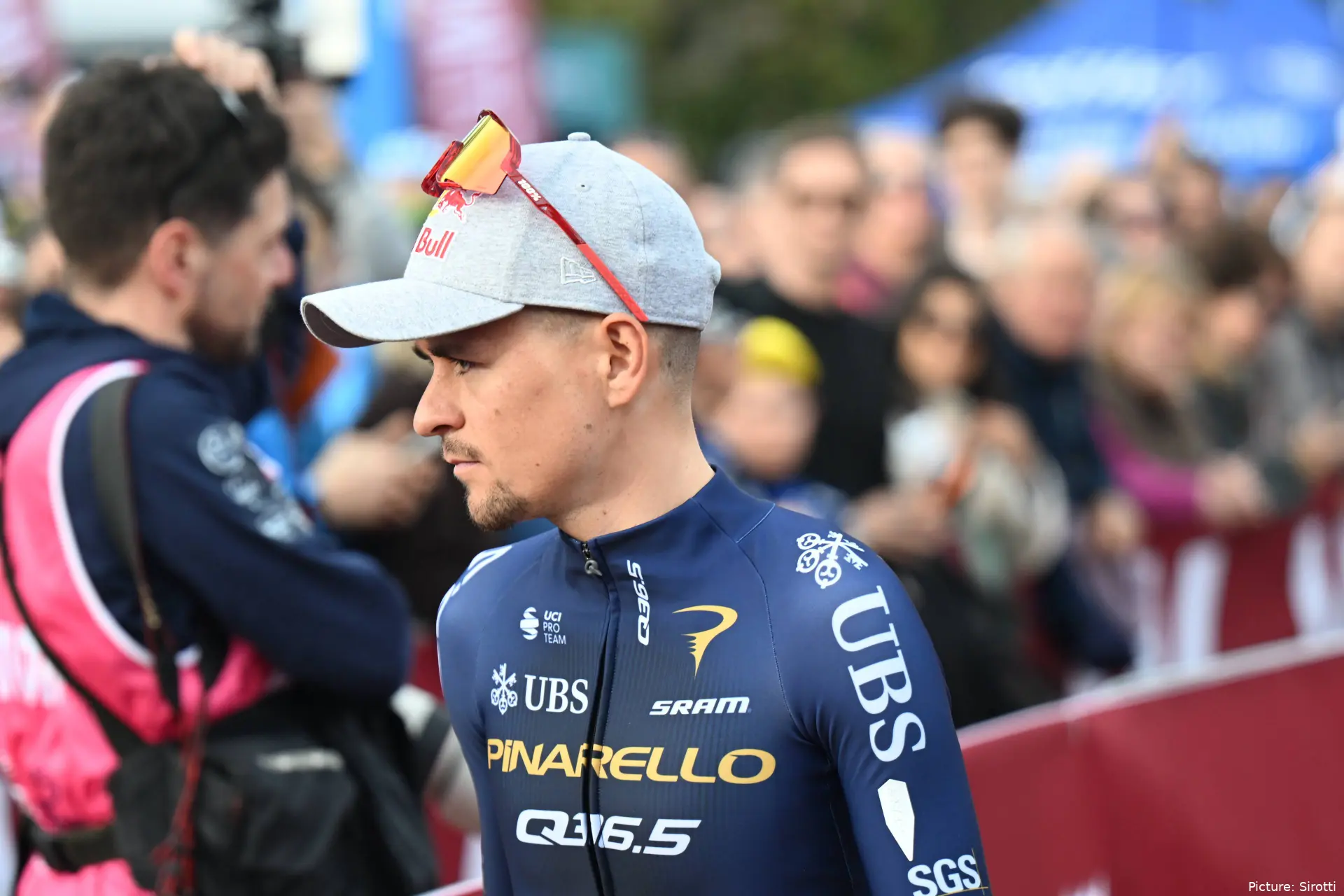
For Tom Pidcock, the road to Milano-Sanremo is not following the usual script. While many of the riders targeting the season’s first Monument traditionally arrive via Tirreno-Adriatico or Paris-Nice, the British rider has opted for a different build-up this spring. The decision reflects a wider approach within the Q36.5 Pro Cycling Team, where race programmes are increasingly shaped around specific objectives rather than long-standing peloton habits.
“Many riders still do it, but if you constantly keep doing the same thing or simply follow others, that is not necessarily good,” Kurt Bogaerts explained in conversation with Wielerflits. “Tom doesn’t mind riding the same races every year, but that mainly applies to the Monuments. Around those races, we look at where it’s possible to try something different.”
The Strade Bianche factor
After finishing seventh at Strade Bianche, where mechanical issues disrupted his chances of repeating last year’s runner-up performance, Pidcock now turns his attention to Milan-Sanremo.
The race’s position in the calendar is also one of the reasons behind the team’s unusual programme, according to Bogaerts. “Tirreno starts shortly after Strade Bianche, and combining it with Paris-Nice is even more difficult,” he said. “After such a tough race, you always see a bit of a release among riders. You carry that feeling into the stage race that follows.”
“It’s impossible to start another race feeling completely fresh after a race like Strade," added Bogaerts. "You feel it in your legs, and that already makes the first opportunities more difficult.”
Catalunya instead of Tirreno
Instead of heading to Tirreno-Adriatico, Pidcock will race the Volta a Catalunya, which begins two days after Milano-Sanremo.
At first glance, that schedule may appear just as demanding, but Bogaerts sees a fundamental difference between the two races. “That’s true, but in my opinion Milano-Sanremo is less demanding than Strade Bianche,” he said. “Strade is about 200 kilometres at full intensity, while Sanremo is longer but has a more compact finale. It’s not ideal, but it’s certainly not impossible.”
Looking beyond Sanremo
The Catalan stage race also plays a role in the wider shape of Pidcock’s season. Following his podium at the Vuelta a España last year, the British rider’s ambitions increasingly extend beyond one-day racing, and longer climbs are expected to play a role in his development as the year progresses.
“In terms of his ambitions in the Tour de France, Catalunya is a race where much longer climbs appear,” Bogaerts said. “It’s not that we specifically want to see where he stands in the mountains, but it’s a good exercise to maintain the climbing aspect. It’s not really a goal in itself, but more something that fits into what comes next.”
Building towards the Ardennes
That next phase of the season centres on the Ardennes classics: Amstel Gold Race, La Flèche Wallonne, and Liège-Bastogne-Liège.
Pidcock’s explosive climbing ability has long made those races natural targets, and Bogaerts believes the additional climbing work from Catalunya can sharpen that strength further.
“Tom already has the explosiveness. His numbers over five minutes are very good,” he said. “But racing Catalunya can also make you stronger between the climbs. Classics open earlier and earlier now. If you climb better, you fatigue less quickly, and you can maintain your punch much more easily.”
For Pidcock, the route to Milan-Sanremo may look unconventional on paper. But within his team, the belief is simple: preparation does not have to follow the peloton’s traditions to produce the right result.
Kieran WoodDeputy Editor-in-Chief
Kieran Wood is a sports journalist based in Wales and has been active in journalism since 2022. He regularly contributes to DartsNews.com and CyclingUpToDate.com, where he covers professional cycling and darts. In cycling, his work includes liveblogs from major races, including the Tour de France, the Giro d’Italia, and La Vuelta a España, alongside race reports and analysis. He has also conducted interviews with professional riders.
His reporting spans the full racing calendar, from one-day classics to stage races, with a focus on accurate, real-time coverage and clear contextual analysis. For statistics, results, and historical context, he regularly uses resources such as ProCyclingStats. To support reporting on rider activity and training context where relevant, he also references Strava.
In his work, Kieran places strong emphasis on careful sourcing, editorial accuracy, and updating articles as new, verified information becomes available.
claps 0visitors 0
Just in

Popular news
Latest comments
- sounds positive news for Lidl-Trek...still dirty on them for not resigning Lucinda Brand and why they arent all in with sponsorship of the Baloise team in 'cross.
 Davide26-10-2026
 - yeah your point about accidents happening in a chain of events, not a single event, is key. no police or barriers at a crossing. a car gets on the road. a trailing cyclist doesn't have an escort. no radio and GPS is being used to track stragglers. and tragedy. break one thing in the chain and it could be accident avertedmij26-10-2026
- The doctors called the concussion severe, even at the scene of the accident, because that is the term for it. The concussion protocol is the best they can do right now, with further research being done. It makes sense for Tadej's concussion to be severe because the freak circumstances lead to twisting of his head (and body) as he fell at high speed. Look at reports on the Toronto research published in early 2025 for starters, with images of the brain showing the effects that persist after symptoms clear up. Btw if Tadej had ridden the EC and fallen, he could have suffered more serious injury to the spine as the vertebra would not have been fully healed. Also serious consequences if he had hit his head. Don't know why you are so keen to downplay the impacts.Hills3326-10-2026
- Complete bullshit headline. The best thing this website can do is commit suicide.Renz26-10-2026
- If he wants to retire, he can spend a couple of non intensive low key seasons at UNO-X for lower salary as well.abstractengineer26-10-2026
- we need facts about these accidents and see the stats about these facts to find what can be done and what cannot be done. That is the job of the UCI. This has been done in many industries, Airlines, and Spacecrafts. Once teh UCI sets the rules, then the organizers can decide upfront whether or not they want to hold the race or not. UCI also needs to make the rules applicable to all stakeholders including riders and staff about what to do and not do, for safety. Parachutes are the safest to exit a jet fighter/bomber but none are provided on a passenger aircraft. most safety mechanisms are not viable on a spacecraft. in industries most accidents are the result of a chain of events, a single link not happening will not cause that accident. all these things are thoroughly investigated. inspite of all the safeguards, accidents happen and will happen, because humans remain inherently flawed but following rules/procedures minimize the risk and stats, not an individual accidentabstractengineer26-10-2026
- yeah total joke. It isn't at all attributed to MVDP, but you would never know it looking at the headlinemij26-10-2026
- there are no races, we gotta talk about something! The clickbait works, look at how many comments are here. I see these inane comments and can't hold my tongue. To compare Tadej's injuries to the others is an insult to all.mij26-10-2026
- exactly, it isn't even close. Tadej had a broken collarbone, standard issue cyclist break. he had a stable fracture at C7. since it was a stable fracture, it is no more serious than a broken wrist, in particular after it heels. And he had a concussion. the concussion itself will not hold him back at all. C7 is at the neck/shoulders, it won't affect his flexibility for a TT bike at all. the list of injuries for Froome, Bernal and Jonas are so much more extensive.mij26-10-2026
- he didn't break his back. he had a stable fracture at C7mij26-10-2026
Loading
Write a comment