"I lost my period 8 months ago. I’ve gained 9kg. I lost my drive": Chloé Dygert describes how RED-S took away her joy of cycling
Cycling
Chloé Dygert had all the tools to become a reference point for generations in women's timetrialing, but one crash ruined that ambition. Still, the American fought her way back, won another rainbow jersey, and underlined her status as one of women cycling's household names. However her career was far from linear with several setbacks causing the 29-year-old to spend way more time out of competition that she would've liked.
Most recently, the American broke last week that she's dealing with RED-S (Relative energy deficiency in sport), a condition which has been holding her back for close to a year, by her estimates.
In an Instagram story, Dygert describes the complications she has faced as a cause of RED-S:
"I lost my period 8 months ago. I’ve gained 9kg. I lost my drive, my excitement, and my desire for things I care about. I’ll go to lunch and come home needing to lie down. I’ll go for a walk and spend the rest of the day on the couch."

No time to recuperate
Dygert's been forced to take a break from racing and even training after her face-first crash at Paris-Roubaix Femmes, but has since resumed training at the end of May... however it lasted for just one session before the diagnosis struck back.
"On the first day I managed to ride my bike for an hour, I contracted coxsackievirus. There are days I can barely function from exhaustion, yet I’ll lie awake until four in the morning unable to sleep. I have dealt with fatigue in my career for years, always just assuming it’s from the constant comeback so I didn’t think this was any different."
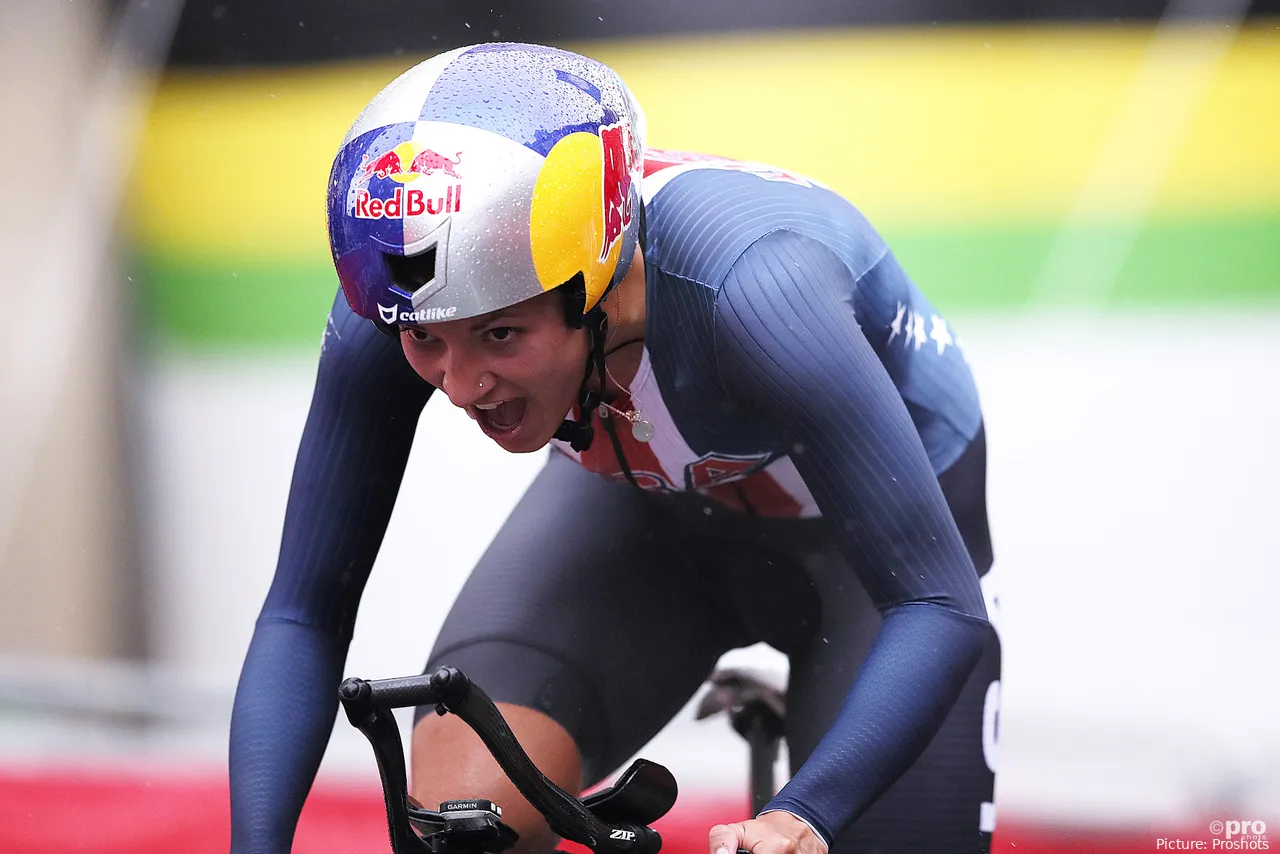
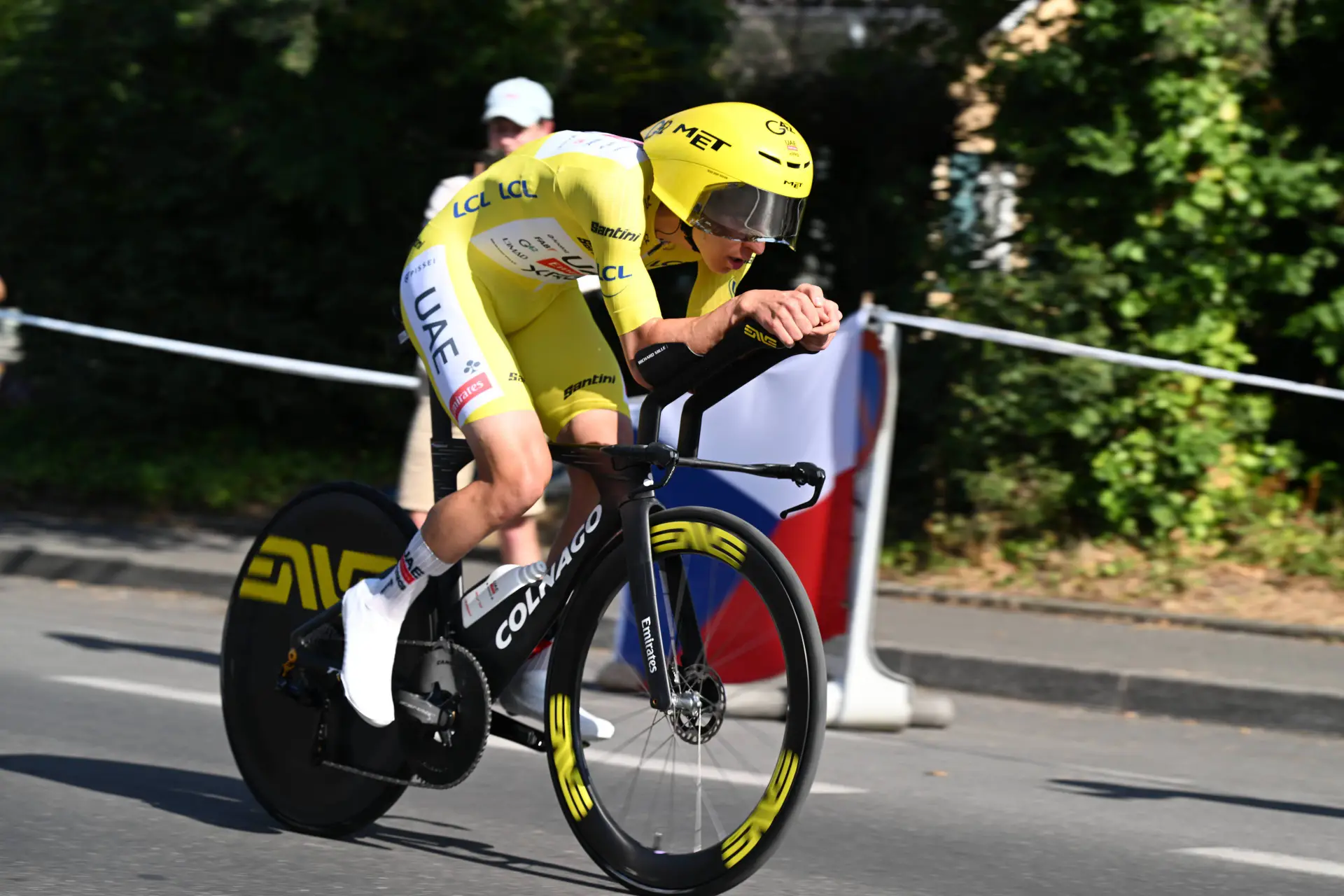
Chloé Dygert is one of the best timetrialists of her generation
Still, Dygert would normally disregard the shoulder surgery as yet another stroke of poor luck, had it not been accompanied by changes in her personal life.
"That is until there were signs of my body physically shutting down. More than my usual bout of injuries. Signs of unexplainable issues that normally are controllable. Uncharacteristic behavior. All things I ignored because I thought if I just pushed through, I’d get through."
Energy deficit
The weight issues were ultimately what first alarmed Dygert that something's not right.
"Most people who know me know that I've always been a good eater. I've never had issues with food, which is why being diagnosed with RED-S came as such a surprise."
"I've never been someone who was 'sickly skinny' There were certainly times I lost weight while preparing for a specific event, but never to a point that felt unhealthy. My body fat has never dropped below 15%, and outside of my mom occasionally telling me l was getting too thin, nobody has ever expressed concern that I was underweight. When the diagnosis came, my coach was just as surprised as I was. Those who know me know I don't have a problem eating."
"When I look at my situation, I don't believe my body was under-fueled because I was restricting food. I believe it was under-fueled because it was living under constant stress and was never given a chance to fully recover."
So many missed signs
"Looking back, there were signs everywhere. I just didn't see them."
The realization ultimately came through the professional eyes one of the team doctors who noticed something off with Dygert this spring.
"It wasn't until my team doctor pulled me aside in the hotel before Roubaix and told me something wasn't right that I started paying attention. Later, conversations with team management echoed the same concern: I wasn't acting like myself. My energy, mindset, and personality had changed."
But ultimately, it was the crash in Roubaix that allowed thoughts to settle and helped Dygert understand the problem: "Then came another crash, more time off the bike, and finally the conversations that started unraveling what had really been happening."
For a rider as talented, it's an insane amount of terrible luck to be dealing with yet another massive setback derailing her career. In order to resolve this issue, it's likely we'll have to wait for Dygert's competitive return a while longer. But hopefully, once she does so, she'll come back stronger.
"In my own mind, I struggle to justify it as enough of a reason for the results I’ve lost, the opportunities I’ve missed, and the failures I feel. But for those who have seen it all had the same reaction: how could one person go through all of that and still keep going? 11 seasons and not one went uninterrupted."
"It’s a question I am asked constantly... The answer is simple: it’s the only way I know."

Ondrej ZhasilCycling Journalist
Ondřej Zhasil is a cycling journalist at CyclingUpToDate and has been part of the team since 2023. He is based in Ostrava, the third-largest city in the Czech Republic, and covers professional cycling across the main UCI competitions, including the Tour de France, the Giro d’Italia, and La Vuelta a España. A key focus of his work is startlist analysis and pre-race coverage, where he examines team selections, rider line-ups, and tactical scenarios ahead of major events.
Alongside WorldTour coverage, Ondřej has developed specific expertise in junior cycling and in racing across East Asia, including competitions in China and Japan. He also maintains a broad working knowledge of other disciplines and levels, including cyclocross, while continuing to expand his understanding of mountain bike racing.
Ondřej holds a bachelor’s degree in Mathematics and Physics, which supports his analytical, data-driven approach to performance and race analysis. In his reporting, he regularly uses ProCyclingStats for results, statistics, and historical context. He places strong emphasis on careful sourcing, editorial accuracy, and updating articles promptly when new, verified information becomes available.
claps 1visitors 1
Just in

Popular news
Latest comments
- Man, I'm really looking forward to next season. Seeing these new line-ups, it's going to be VERY interesting.wrsty23-10-2026
- This Remco-friendly (and Seixas-friendly?) route was almost certainly designed to reduce Pog's dominance. But as Prudhomme has said straight out, now he thinks Pog's accident will have reduced his dominance anyway.Hills3323-10-2026
- We also don't know how much Pog was really putting into gaining time. Feels like watching Usain Bolt, where you can only wonder how much faster he'd have gone if he was sprinting 100% to the line, instead of being two feet ahead and starting to pull up with ten yards to go. If any of the other riders really started to close in on Pog, I do think he'd simply have gone even deeper and crushed them. I would really like that kind of race though, none of this "4 minutes lead by the first rest day" trouncing. So if introducing more TT and less summit finish makes the race go more to the wire, I'm all for that. I don't think it'll change the outcome necessarily, but it'll make the whole thing less of a foregone conclusion by week 2.wrsty23-10-2026
- That nearly is 7 mins and you win GTs comfortably by 2 mins. Remco fans - he almost won the TDF, He beat Pogi twice in the mountains this year.abstractengineer23-10-2026
- What would be your preferred Tour design then? Just out of interestwrsty23-10-2026
- I like Remco but even I'll admit he didn't get anywhere close to Pogacar, just like everyone else.megasmacky23-10-2026
- That's what y'all said this year, "remco will come fifth"bruins3022-10-2026
- That used to be the norm, 100 kms of TTs. Now look at the '87 route...acem8222-10-2026
- Well, crashes can happen, so it's not impossible...acem8222-10-2026
- that would be kinda cool. there is a lot of untapped potential. which I'm sure the UCI will overlook. in order to get sock length correct.mij22-10-2026
Loading
Write a comment