“I don’t want to think the best part of my life was when I was a professional cyclist” - Veteran rider at Vuelta a Espana looking forward to retiring
Cycling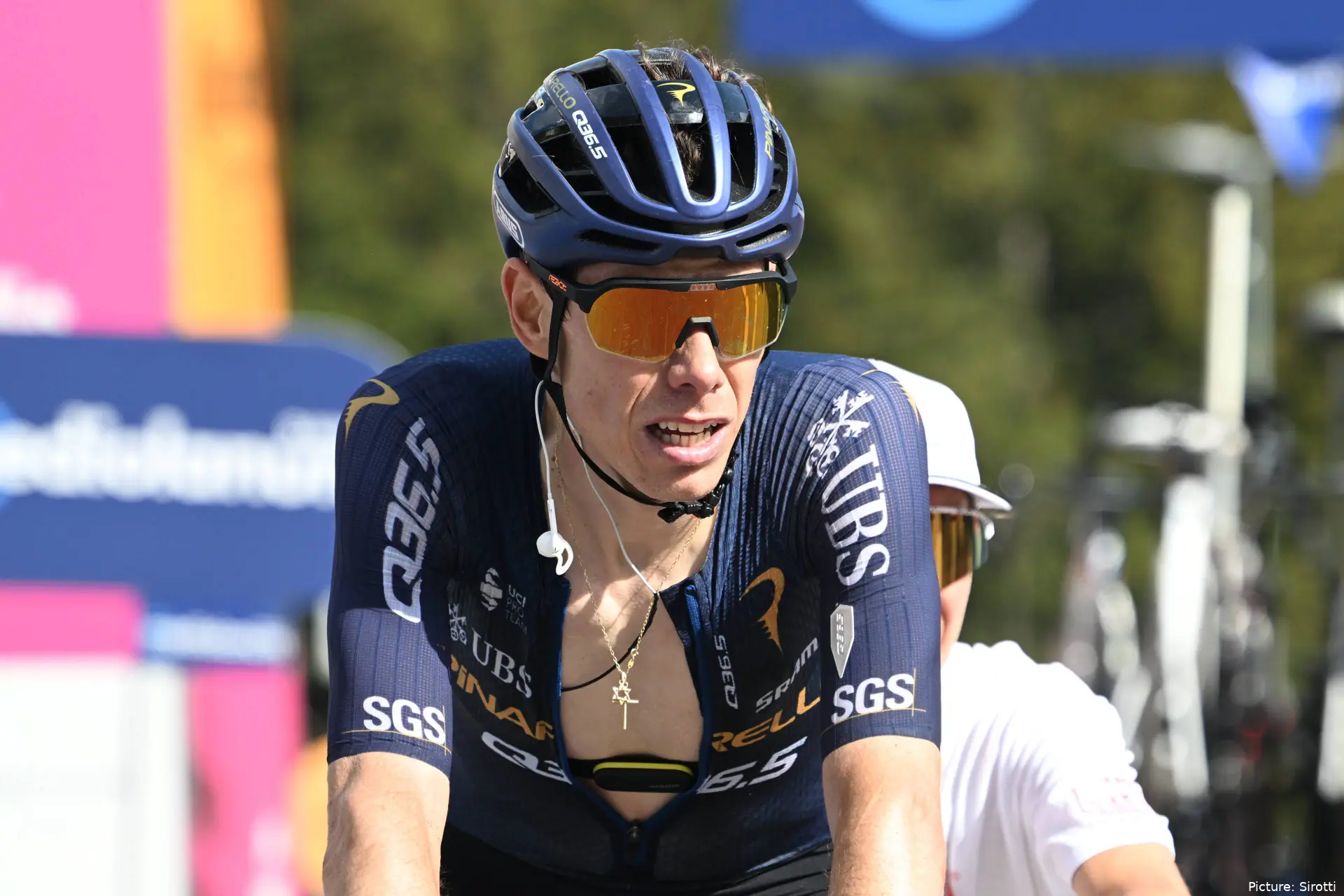
David de la Cruz approaches La Vuelta a España with a truth that’s getting harder to avoid. At 37, the Catalan from Q36.5 is riding one of his final races as a professional and, barring a radical turn in the coming weeks, the end of his career is drawing closer. “I’ve got more of one foot out than in,” he admits matter-of-factly.
It isn’t a done deal, though it’s a scenario gaining weight as the Spanish race advances. De la Cruz wanted to wait until the end of La Vuelta to sit down with his team and assess the future, while he still has the Tour of Guangxi, the season’s final WorldTour event, on his calendar. After 17 years in the pro ranks, the time to close a chapter is starting to feel real.
His journey has taken him through some of the peloton’s biggest teams. Caja Rural, NetApp, Quick Step, Sky, UAE, Astana and, since 2024, Q36.6 are part of a path that also includes a Vuelta stage win in 2016, when he pulled on red after triumphing at Alto del Naranco. He is now riding his 12th Spanish Grand Tour, a tally he hadn’t even kept track of.
“It’s not something I look at much. I’m methodical about plenty of things, but not about counting what I’ve done,” he tells Diario As. Experience, however, is impossible to hide. “When I started, I was the youngest on the team. Now I’m the oldest… that’s the clearest sign of how old I am,” he jokes.
A veteran in service of the team
Q36.6’s Vuelta has forced a reset of initial goals. The general classification was ruled out and the team has pivoted to stage hunting, aiming for constant visibility. “We’re animating the race every day,” De la Cruz says, citing teammates like Azparren, Camprubí and David González as examples.
In a group with younger riders, his experience has become a valuable tool. The Catalan is a point of reference, though he avoids calling himself a teacher. “I’m always open to give advice and help, but not to tell them what they must or mustn’t do because everyone feels things differently,” he explains. His role is more to contribute than to impose.
The sport he entered is not the same one he is leaving. Professionalisation has multiplied the details and the level of preparation, from strategy to nutrition. “Far more details are checked than ten years ago,” he notes, though he believes the biggest change lies in the rider himself. “As the years go by, you don’t feel your legs the same and my ceiling, maybe, isn’t as high anymore.”
🇪🇸 Una victoria que quedó grabada en la historia.
— La Vuelta (@lavuelta) October 16, 2025
David De La Cruz lo dio todo camino a Alto del Naranco y firmó su primer triunfo en una gran vuelta... ¡y el liderato de La Roja! 🔥
🔁 Revive esta etapa inolvidable
🇪🇸 A victory that went down in history.
David De La Cruz gave… pic.twitter.com/IYSLHgdSAx
Seventeen years and many memories
De la Cruz doesn’t need a single standout season to explain his career. He has shared jerseys and goals with some of the biggest names in modern cycling and has been part of major triumphs. He was there for the World Championship won by Alejandro Valverde, rode a Tour de France with Tadej Pogacar and a Giro d’Italia with Chris Froome, alongside notable individual results.
That’s precisely why picking a favourite moment is hard. “It’s a difficult question because I was in many teams,” he admits. For him, the value of his career lies less in choosing one specific period than in having enjoyed them all. “I enjoyed each era as it came, and that’s the most beautiful thing,” he says.
Nor does he view the end through nostalgia. De la Cruz says he feels satisfied with everything he achieved, but he doesn’t want to turn his sporting past into the best chapter of his life. “I don’t want to think that the best part of my life was when I was a professional cyclist,” he argues. When it’s time to step off the bike for good, his intention is to look ahead.
For now, there’s still road to cover. La Vuelta, the final decision about his future, and the Tour of Guangxi appear as the closing chapters of a career that began in 2010 and has spanned much of cycling’s recent history. “The old has to make room for the new, and everything arrives,” he sums up. A simple line to accept a change that, after so many years, already feels inevitable.
Javier RampeCycling Journalist
Javier Rampe is a sports analyst with more than 15 years of experience. He holds a degree in Economics from the University of Rome and a Diploma in Business Studies from the University of Cádiz. Despite coming from an academic background not particularly associated with cycling, his passion for both cycling and journalism was instilled in him from an early age. He grew up following Miguel Indurain and José María “El Chava” Jiménez. An admirer of Michael Robinson’s communication style and journalistic approach, he was inspired to pursue a degree in Journalism at the University of Buenos Aires, which he is currently completing.
He has always maintained close ties with the worlds of sport and culture, contributing from a young age to sports blogs and film and music review websites. His work has appeared in media outlets such as Cope, RAI, and Radio Con Vos. He is also the founder of the cycling-focused podcast El Contraanálisis and the football interview channel Días De Fútbol, dedicated to conversations with professional footballers.
In addition to his work at Ciclismoaldia, Javier has interviewed some of the most influential figures in modern cycling, including Alejandro Valverde and Tadej Pogačar, as well as key voices in anti-doping policy such as Alberto Yelmo, David Varillas, and Marcelo Milano. Marcos Maynar, in relation to the ‘Operación Ílex’ case, is also among the personalities he has interviewed. He enjoys conducting in-depth analysis of the cycling ecosystem and has attended major events such as Strade Bianche, the Vuelta a Andalucía, and Itzulia, as well as numerous national cyclo-cross races.
His background in economics, combined with extensive experience in marketing and corporate communications, drives his continuous study of positioning strategies and ensures that he always keeps his focus on crafting compelling and evocative headlines.
claps 1visitors 1
Just in

Popular news
Latest comments
- Like father, like son. Remco's father is also a BS-er.PogiSloFans16-10-2026
- No they wouldn't, because Pogi would beat him. Considering he crushed Pogi's balls 3X in a row the Belgians will have sympathy :))PogiSloFans16-10-2026
- Montmatre offers everybody a chance including the sprinters as seen from this year. So it should stay.abstractengineer16-10-2026
- Bassons: “How are we supposed to believe this world is clean? If it were, it would open itself up to the outside world. Everyone protects everyone else." I agree, the world is not clean, despite cycling, the world has become a shit hole. Big powers attacking smaller countries. Russia attacking Ukraine... more than half a million soldiers have likely died on both sides combined, with additional civilian deaths. Hamas attacking Israel, killing 1.300 people, Israel attacking Palestine, over 70.000 dead (20.000 children). Now how about the USA? The worst country in the world at this moment. Attacking Iran unlawfully, losing the war to them and creating a world wide energy crisis. Trumps ICE agents also deporting innocent people, tearing parents from their kids, killing american citizens, around 25 to 30 school shootings every year, no health care, bad education if you don't have money, stupid maga citizens, the most hated and ugliest president in the world, pedophile Donald J. Trump. Yeap, how are we supposed to believe this world is clean? We're all f***in doped, living in a delusional democracy.PogiSloFans16-10-2026
- Well they need to get rid of 11 riders and they are doing an OK job
 Rafionain-Glas16-10-2026
 - the hype comes from Remco. Give me leadership he says and then finishes lower than a domestique on other teams. He criticizes other riders for his tactical mistakes and crashes. He demands his co leader to help him in a sprint. He calls other riders no balls and then does not even challenge Pogi, in fact he sucks up to Pogi. Every time he fails , he has an excuse about how it was not his fault. Basically he makes himself unlikable regardless of how he performs.abstractengineer16-10-2026
- In 2024 Pogačar would have been able to pull all the way up a climb like Plateau du Solaison and still beat Evenepoel. He couldn't this timeRafionain-Glas16-10-2026
- Most of the DS and the managers are from the doping era. Some have never admitted to anything and vehemently claim they were clean when they won against heavily doped riders. Untill they get out of the sport, the stigma will remain and that will take 20-30 yearsabstractengineer16-10-2026
- How to say you know nothing about the Cross world, without saying it. You should stick to what you're good at- virtually sniffing Pogi's chamois.megasmacky16-10-2026
- Yeah that's logical- damage the sport to make your stupid point.megasmacky16-10-2026
Loading
Write a comment