"I did a good job for Lipowitz, but also for myself" - Remco Evenepoel stands by team role after Catalunya summit finish
Cycling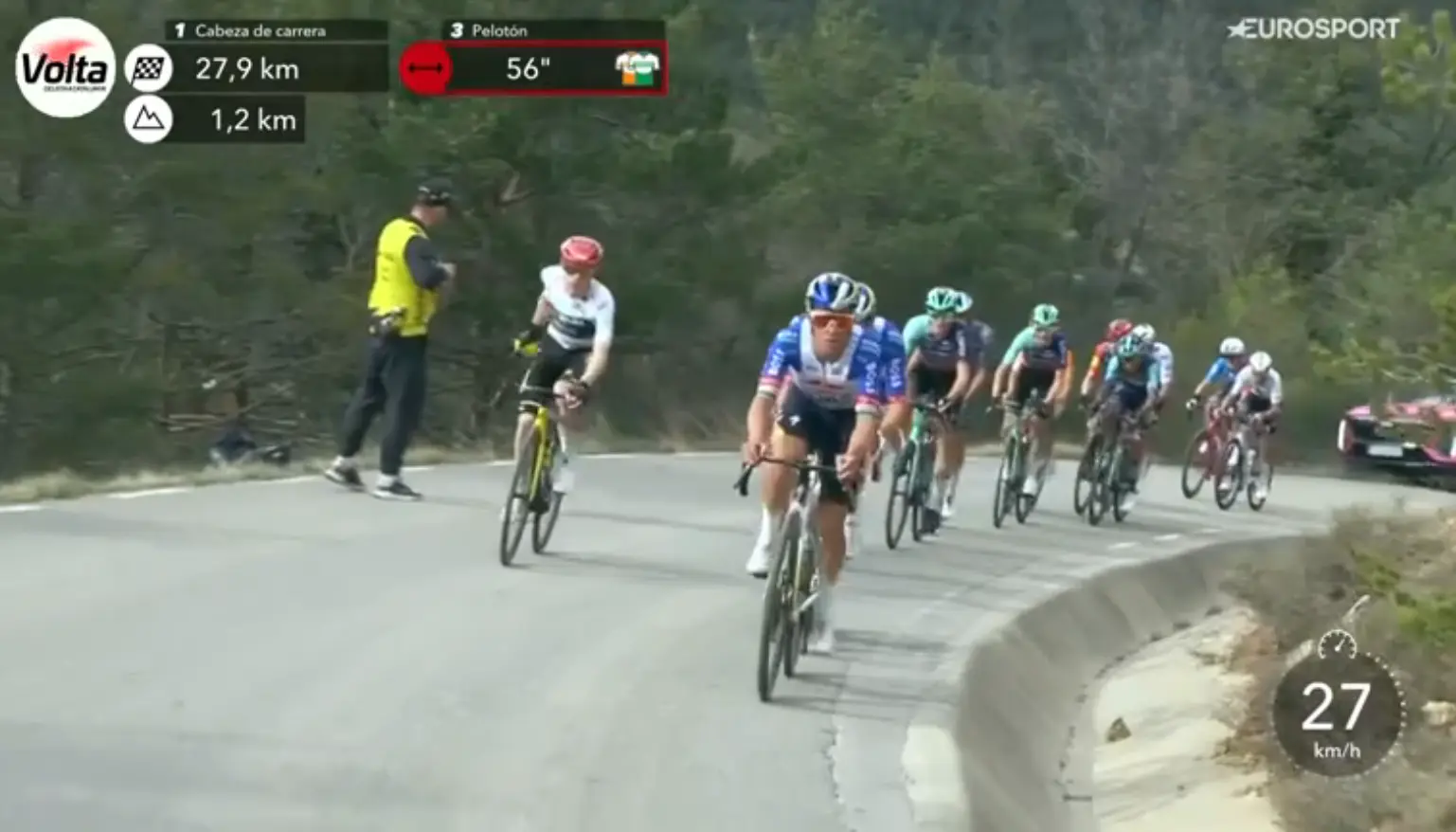
Remco Evenepoel’s view of the sixth stage of the 2026 Volta a Catalunya differed from that of Florian Lipowitz after Red Bull - BORA - hansgrohe reshaped the race but did not take the win.
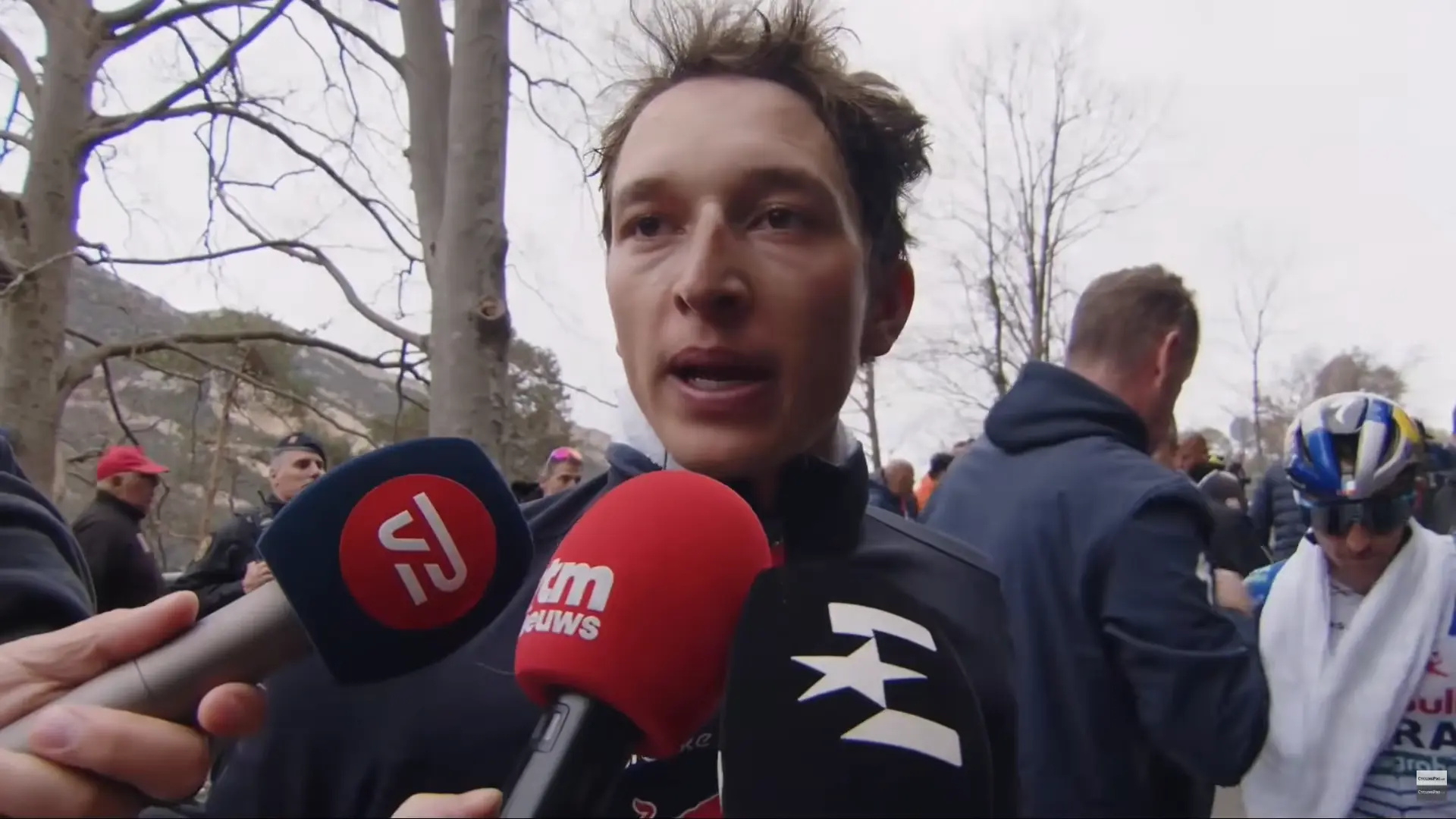
While Lipowitz focused on the opportunity that slipped away behind Jonas Vingegaard, Evenepoel pointed instead to what the move had delivered for both riders. “That was a good thing for him, but also for myself, because I gained a lot of time on the riders behind me,” he told Sporza afterwards.
Descent move defines the stage
The decisive moment came before the final climb, when the race split on a technical descent and a reduced group moved clear.
Evenepoel forced the issue in that section, using the terrain to create separation and position Lipowitz in the front group that would go on to decide the stage. “I knew it was a technical descent and that something could happen there,” he explained. “In the valley, I was able to work together with a Bahrain rider. On the final climb, I just rode a hard tempo to the top. In the end, I only lose around ten seconds to Lipowitz and Martinez.”
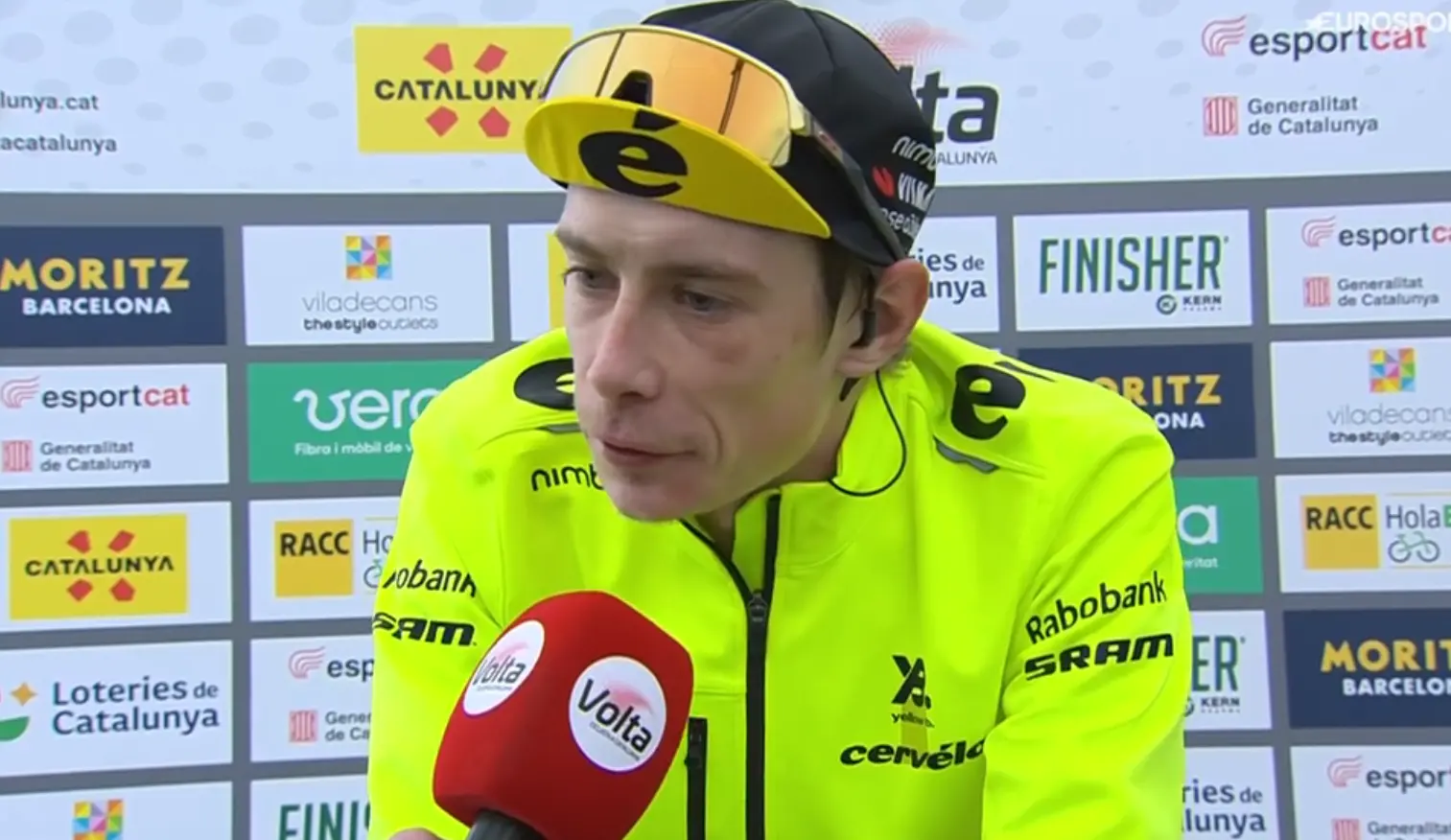
From there, the stage was settled on the climb to Queralt, where Vingegaard attacked clear, leaving Lipowitz and Lenny Martinez to complete the podium behind.
Plan adjusted on the road
Evenepoel had not set out to ride in that role at the start of the stage, but adapted once his condition became clearer on the climbs. “It was actually a bit of a decision in the moment, because the plan was to try something on the penultimate climb,” said the Olympic champion. “Halfway up that climb, I felt that my legs weren’t super. Good enough to ride hard, but I didn’t have the feeling that I could go over my limit. I also didn’t want to take any risks.”
His approach was also shaped by the after-effects of his earlier crash. “After that crash, I had a few difficult days. The impact was bigger than expected.”
One more opportunity to come
With the general classification now largely settled, Evenepoel turns his attention to the final stage in Barcelona. “Tomorrow’s stage to Barcelona should suit me. The general classification is more or less decided, so I think there should be room to try something.”
After committing fully to the team on the decisive day in the mountains, the Belgian heads into the finale with a final chance to chase a result of his own.

Kieran WoodDeputy Editor-in-Chief
Kieran Wood is a sports journalist based in Wales and has been active in journalism since 2022. He regularly contributes to DartsNews.com and CyclingUpToDate.com, where he covers professional cycling and darts. In cycling, his work includes liveblogs from major races, including the Tour de France, the Giro d’Italia, and La Vuelta a España, alongside race reports and analysis. He has also conducted interviews with professional riders.
His reporting spans the full racing calendar, from one-day classics to stage races, with a focus on accurate, real-time coverage and clear contextual analysis. For statistics, results, and historical context, he regularly uses resources such as ProCyclingStats. To support reporting on rider activity and training context where relevant, he also references Strava.
In his work, Kieran places strong emphasis on careful sourcing, editorial accuracy, and updating articles as new, verified information becomes available.
claps 6visitors 2
Just in
Popular news
Latest comments
- Strade? Never saw him as a gravel rider that can handle it.mij18-10-2026
- It surprises me that anyone still believes any professional (or amateur!) sport is clean--much less wants it to be. The best you can hope for is a reasonably level playing field that doesn't expose young, ambitious athletes to health risks they don't understand. In that regard, World Tour cycling appears to do a better job than almost any sport with independent, random testing. There are certainly fewer mysterious midnight "heart attacks" these days. If you want to see what an uneven playing field looks like, show up to masters nationals. It is also certainly the case that no major pharmaceutical corporation has developed a multi-billion dollar miracle drug just to give it only to one or two anointed ectomorphs in a minor non-revenue sport. If you don't like that all sports run on PEDs these days and you can't be bothered to contribute as a tester, a federation official, or pharmaceutical representative, then just turn off the TV and play outside.
 MarkFour18-10-2026
 - Good grief, who proofreads this stuff? Errors abound.wrsty18-10-2026
- You can add weight to a bike and limit gears or make it single speed if you like. I doubt that would reduce crashes. It would just add another dymanique. All good and well, but It wont stop cars getting on to the course.Cyclingsbestfan18-10-2026
- Seixas is probably second best in the World on short climbs. But that hasn't translated as well to long climbs
 Rafionain-Glas18-10-2026
 - Idiotic fellaRafionain-Glas18-10-2026
- Nothing. Against Pogi nothingabstractengineer18-10-2026
- He didn't even try to sprint all outvappaxbipmv18-10-2026
- Campenaerts looked like a rolling pumpkin with that all orange leaders skinsuit !frieders318-10-2026
- He can take his dumb a$$ politics somehwere else !frieders318-10-2026
Loading
Write a comment