Gino Bartali hid forged documents inside his bicycle and won five Grand Tours – The two lives of a champion
Cycling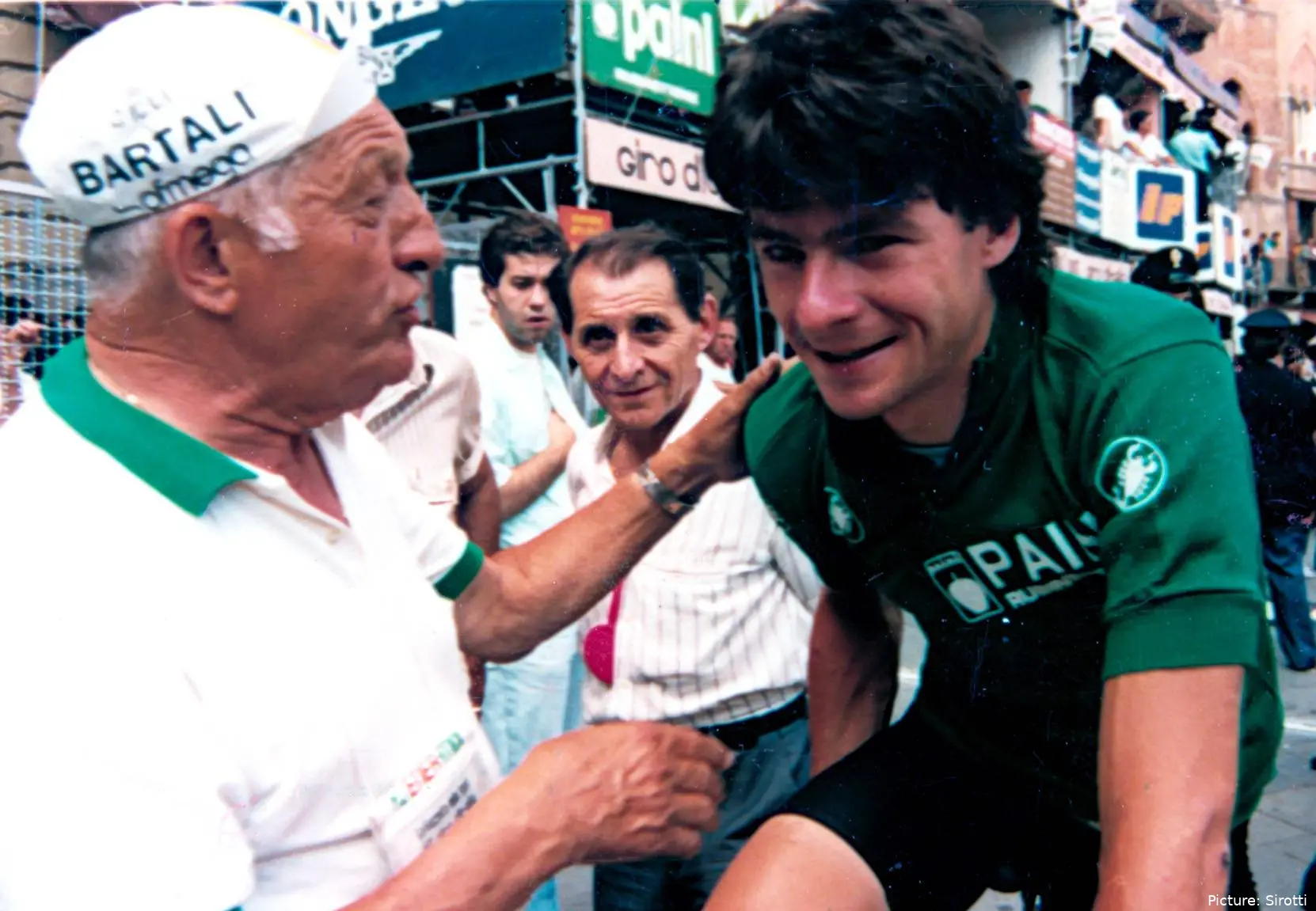
This is the sixth article in our Cycling Legends series, exploring the riders whose victories and stories helped shape the sport. Follow the series to discover more of cycling’s defining champions.
Born in Ponte a Ema, near Florence, on 18 July 1914, Gino Bartali became one of the most celebrated riders of cycling’s golden age. He won the Giro d’Italia three times and the Tour de France twice, with his Tour victories a decade apart because of the Second World War. He also excelled in the classics, winning Milan–Sanremo four times and the Giro di Lombardia three times.
Bartali’s story is inseparable from that of Fausto Coppi, his brilliant younger rival, who later became his friend. Their duels divided Italian fans and helped define an era. But Bartali’s career was about more than his rivalry with Coppi. It began with a boy’s bicycle, flourished on the climbs of the Alps and Apennines, and was repeatedly interrupted by tragedy and war.
How Gino Bartali discovered cycling in Ponte a Ema
Bartali grew up in a working-class family. As a boy, he worked in a bicycle repair shop run by Oscar Casamonti, a former rider and local mechanic. Cycling was already part of his everyday life: he rode between home and school and made deliveries for the workshop. The steep roads around Florence soon became his training ground.
He began racing as a teenager with Ponte a Ema’s Società Sportiva Aquila. In 1931, he won three of the eight races he entered. The following year, he claimed eight victories from 20 starts, establishing himself as a serious prospect before turning professional.

Ivan Basso poses for the cameras next to a photographic portrait of Gino Bartali and Fausto Coppi during the team presentation for the 2013 Settimana Internazionale Coppi e Bartali
Bartali joined Frejus in 1935. A year later, he moved to Legnano, the team with which he achieved many of his greatest results. Team director Eberardo Pavesi became an important figure in his development. Pavesi also played a central role in Legnano’s decision to sign Coppi in 1940, initially as a rider in support of Bartali. Coppi’s rapid rise soon made that arrangement far more complicated.
Giro, Tour and classics: Bartali’s Greatest Victories
Bartali’s palmarès extended well beyond the sport’s two biggest stage races. Florence’s Museo del Ciclismo lists four Milan–Sanremo victories, three Giro di Lombardia wins, two Tours of Switzerland, a Tour de Romandie, and an Itzulia Basque Country title among his major successes. He was also an Italian road champion four times.
His achievements in stage races were equally impressive. Bartali won 47 stages across stage races, including 17 at the Giro d’Italia and 12 at the Tour de France. He claimed nine Grand Tour mountains classifications, seven in Italy and two in France and wore the maglia rosa for 50 days and the maillot jaune for 20.
The Museo del Ciclismo records 124 victories across his career, although published totals vary according to how results are counted.
| Race | Victories |
| Giro d’Italia | 1936, 1937, 1946 |
| Tour de France | 1938, 1948 |
| Milan-Sanremo | 1939, 1940, 1947, 1950 |
| Giro di Lombardia | 1936, 1939, 1940 |
| Tour of Switzerland | 1946, 1947 |
| Tour de Romandie | 1949 |
| Itzulia Basque Country | 1935 |
| Italian road championship | 1935, 1937, 1940, 1952 |
Three Giro d’Italia wins, ten years apart
Bartali first won the Giro in 1936, aged 21. He took control in the mountains and finished ahead of Giuseppe Olmo and Severino Canavesi. He confirmed his status the following year, winning the 1937 edition after another demanding race that included several mountain stages. The Giro’s archive describes the race as a tough test in which Bartali established himself as the leading rider.
His third Giro victory came in 1946, in the first edition after the war. It was a race of renewal but also a direct duel with Coppi. Coppi won four stages, yet Bartali finished 47 seconds ahead in the general classification. The narrow margin captured the tension of their rivalry: two champions competing for leadership as Italy returned to normal life after years of conflict.
He also claimed the race’s mountains classification seven times, in 1935, 1936, 1937, 1939, 1940, 1946, and 1947, a record that underlined his reputation as one of the era’s greatest climbers.
Two Tour de France victories separated by war
Bartali’s first Grand Boucle victory came in 1938. He won the mountains classification and finished ahead of Belgian Félicien Vervaecke in the general classification. His second triumph followed exactly a decade later, in 1948, after the war had taken several of his prime racing years.
That second Tour became one of cycling’s great comebacks. Aged 34, Bartali faced a younger generation that included Frenchman Louison Bobet. In July, he won two consecutive Alpine stages, took the yellow jersey, and held on to win the race. He would finish his tour career with 12 stage victories and 20 days in yellow.
Bartali also won the Tour’s mountains classification in both 1938 and 1948. Across the two Grand Tours, he amassed nine climber’s titles, alongside five overall victories and 29 stage wins.
His 1948 triumph later became linked to a dramatic moment in Italian politics. On 14 July, Communist leader Palmiro Togliatti was shot, prompting fears of unrest. Bartali later recalled receiving a telephone call from Prime Minister Alcide De Gasperi, who asked him to do what he could in the tour.
The next day, Bartali won the Cannes–Briançon stage. He then claimed another stage and the yellow jersey. He later played down the suggestion that he had “saved the country,” writing that he had never attached much importance to the claim. It is a compelling story, but his sporting achievement should not be reduced to a simple political explanation for events in Italy.

Gino Bartali and Tony Rominger in Pont Saint Martin just before Stage 21 of the 1995 Giro d'Italia
Milan-Sanremo and Giro di Lombardia records
Bartali’s climbing ability made him a formidable one-day racer as well as a stage-race champion. He won Milan-Sanremo in 1939 and 1940, then returned to take the title in 1947 and 1950. At the Giro di Lombardia, he triumphed in 1936, 1939, and 1940. The official history of Il Lombardia places Bartali among the race’s defining early champions.
In 1935, he won the Itzulia Basque Country, one of his first major international successes. He added two tours of Switzerland, in 1946 and 1947, and the 1949 Tour de Romandie. Together, those results show the breadth of a career that spanned Italy’s great one-day races and stage races across Europe.
Fausto Coppi: the rivalry that divided Italy
Coppi and Bartali represented contrasting styles and, for many fans, contrasting identities. Bartali was the established champion, deeply Catholic and associated with rural Tuscany. Coppi was younger and technically elegant, and many supporters viewed him as a symbol of modernity. The press and public turned their competition into a national drama, with fans identifying as “Bartaliani” or "Coppiani."
The rivalry was fierce, but it was not simply a matter of animosity. The two raced together at Legnano, competed for leadership in national teams and sometimes helped each other when circumstances demanded it. Bartali later insisted that his rivalry with Coppi was sporting. Their relationship included respect and friendship, even as competition and public attention continued to shape it.
A famous photograph from the 1952 Tour de France captures that complicated relationship. On the climb towards the Col du Galibier, Bartali and Coppi appear to pass a bottle between them. The image became a symbol of sporting generosity, but neither rider settled the question of who gave it to whom. Bartali reportedly gave different answers depending on whether the person asking supported him or Coppi. The uncertainty became part of the story.

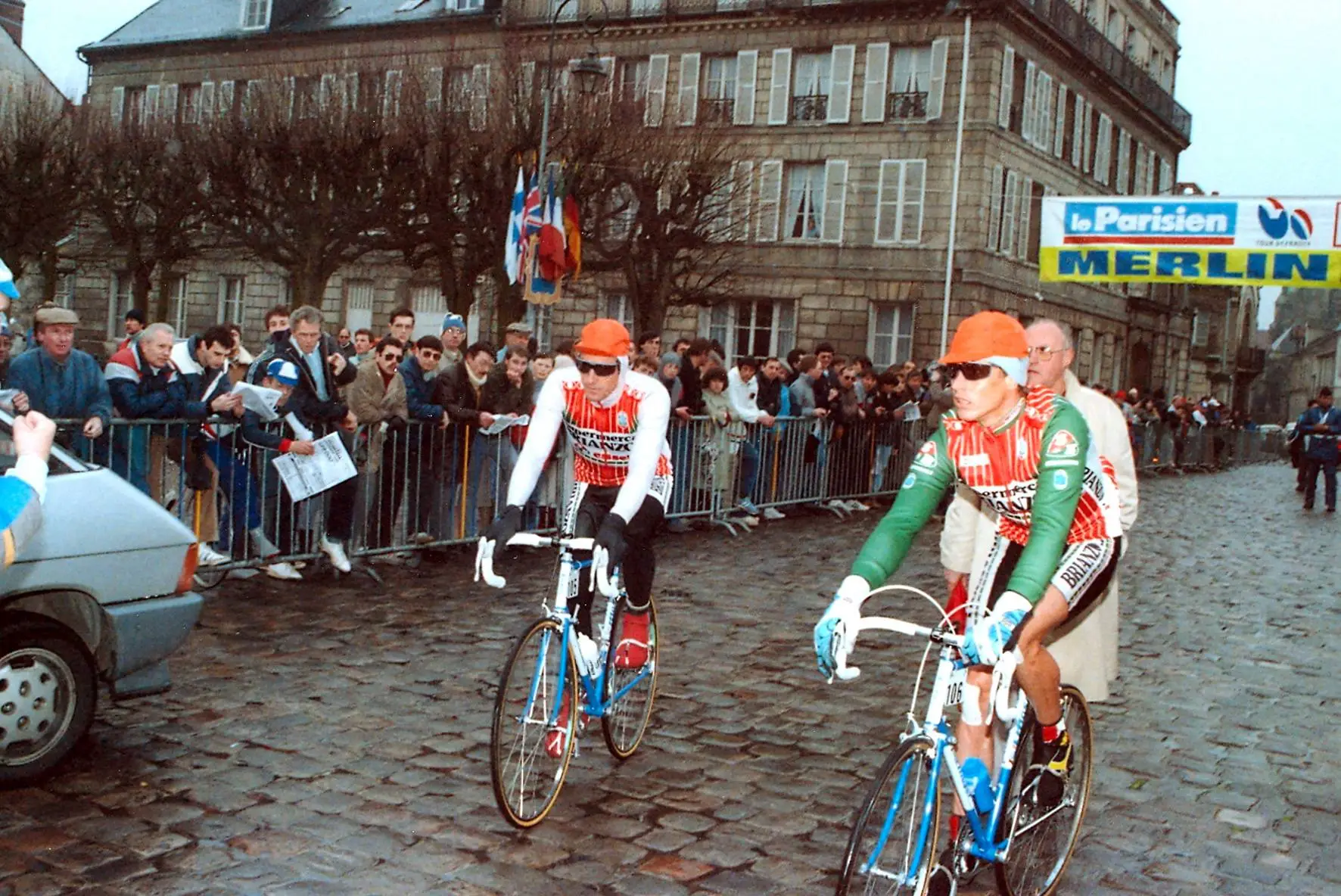
Gino Bartali alongside Greg Lemond before the start of the stage 3 of the 1991 Giro d'Italia
The teams behind Bartali’s long career
Bartali began his professional career with Frejus in 1935. From 1936 to 1948, he was principally associated with Legnano, although the fragmented team structures of the era mean that some seasons also appear under sponsor-linked or parallel names. Later, he rode under names including Bartali, Bartali-Gardiol, Bartali-Ursus, and Bartali-Brooklyn.
| Period | Team |
| 1935 | Frejus |
| 1936–1948 | Legnano, including sponsor-linked listings such as Legnano–Pirelli |
| 1949 | Bartali-Gardiol |
| 1950 | Bartali |
| 1951–1952 | Bartali-Ursus |
| 1953 | Bartali |
| 1954 | Bartali-Brooklyn |
Bartali was more than a team leader. His tactical choices shaped races, while his experience made him a reference point for younger riders. Coppi’s arrival at Legnano in 1940 began in a support role, but his talent quickly made the team’s internal hierarchy a source of tension.
Bartali’s final seasons came as a younger generation took over the sport. He continued to compete into his late thirties and early forties, but the Tour de France became increasingly difficult. In 1953, he finished the race after a crash and injuries, and he did not return.
His final competitive appearance came on 28 October 1954, at a track-style event in Città di Castello. He won the final of the speed test ahead of Alfredo Martini. Bartali was 40. He announced his retirement from racing in February 1956.
Bartali in his own words
One of the most revealing early records is a 1938 newspaper feature titled “Six Hours with Gino Bartali”. The reporter describes a series of conversations rather than a formal interview. Bartali speaks about his religious devotion and disciplined routine but also reveals his humor. Asked about food while travelling, he replies, "You can go wherever you like, but nowhere do you eat as well as at home.”
A warmer side of the champion emerges in a 1962 appearance on Non è mai troppo tardi. Speaking with teacher Alberto Manzi, Bartali urges viewers to value education, describing study as a challenge that, like sport, lasts a lifetime. He also shares a family anecdote about his daughter Biba and her habit of writing the words she learned around the house.
In 1968, journalist Sergio Zavoli interviewed Bartali on Processo alla tappa. The conversation began with a pointed challenge: race leader Michele Dancelli had reportedly said Bartali, then working as a directeur sportif, knew nothing about cycling. Zavoli pressed the former champion on the remark, making the exchange a rare chance to hear Bartali defend his understanding of the sport after his racing career.
In 1987, journalist Giancarlo Ottonello interviewed Bartali in Masone during Milan-Sanremo. Bartali recalled his four victories in the race, discussed cyclists past and present, and revisited the famous story of the bottle shared with Coppi. The conversation continued over coffee, with Bartali reflecting on the past and presenting his book, Tutto sbagliato, tutto da rifare.
Taken together, these records trace a shift in perspective: the young rider speaking about his routine and beliefs; the newsreel figure caught in brief moments of triumph; and the older Bartali revisiting cycling history in his own words.
Bartali remained closely connected to his hometown and to the people who had followed his career. The Italian presidency’s public archive preserves interviews in which he discussed the champions he raced against and the defining moments of his career. Those appearances helped keep the Coppi–Bartali story alive for generations who had not seen the two men race.
The secret missions that made Gino a hero beyond cycling
During the German occupation of Italy, Bartali put his fame and cycling routine to use as cover for work with an underground rescue network. According to Yad Vashem, he acted as a courier, carrying forged identity papers between contacts in different cities.
He hid documents in his bicycle and, when stopped, asked that it not be touched, saying its parts had been carefully adjusted for speed. His journeys looked like training rides, but they carried serious risks under German occupation.
Yad Vashem’s account draws on testimony from people connected to the network and those it helped. Giulia Baquis recalled that a cyclist once arrived at the home where her family was hiding with a package and asked for them.
The woman who answered, afraid he might be a collaborator, denied knowing the family. After the war, a resistance member told Baquis’s parents that the cyclist had been Bartali. Yad Vashem also records testimony from Shlomo Goldenberg about Bartali’s help and support for his family, and from Goldenberg’s cousin Aurelio Klein, who said that forged papers enabled him to flee to Switzerland.
These accounts describe specific acts and testimonies; they do not establish a reliable total for the number of people Bartali personally saved. He rarely spoke about his wartime work, and Yad Vashem recognised him as Righteous Among the Nations in 2013, thirteen years after his death. The record makes clear that his contribution was part of a wider network.
A rivalry that lives on in the Coppi e Bartali race
The Settimana Internazionale Coppi e Bartali is an Italian stage race named for the two champions whose rivalry became part of the country’s sporting identity. The race took its current name in 2001; its first two editions, in 1999 and 2000, were held as the Memorial Cecchi Gori. Its organisers describe it as a tribute to the two riders who shaped cycling in Italy and beyond.
Their shared legacy makes the name fitting. Coppi and Bartali did not race in isolation from one another: each made the other’s victories more meaningful, and their contrasting personalities gave Italian cycling a story that outlasted their careers. The 1952 bottle photograph remains unresolved, while their encounters continued to captivate fans long after their final races.
Read also
Bartali died in Florence on 5 May 2000, aged 85. His racing record alone would secure his place among cycling’s greats: five Grand Tours, 29 Grand Tour stage victories, nine Grand Tour mountains titles, four Milan–Sanremo wins and three Giro di Lombardia titles.
His was the story of a rider who began as a mechanic’s apprentice, returned from a war-scarred interruption to win again and became one half of the rivalry that helped define Italian cycling.
Carlos Silva is a writer for CyclingUpToDate.com, where he contributes race reports, interviews, analysis pieces, and live coverage of the international cycling calendar. Holding a degree in Sports from the Jean Piaget Institute, he combines academic knowledge of performance, training, and competition with hands-on journalism experience in professional cycling.
Throughout his career, Carlos has conducted interviews with leading figures in the sport, including Alberto Contador, Joaquim Rodríguez, Óscar Pereiro, João Almeida, Isaac del Toro, Derek Gee, John Degenkolb and Geraint Thomas. These conversations reflect direct engagement with Grand Tour winners, Classics specialists, and emerging talents.
He has provided on-site coverage at major events ranging from the Vuelta a España to the Tour de France, alongside stage races such as Vuelta a Andalucía, Volta ao Algarve, Volta a Portugal and O Gran Camiño. Covering the mythical climbs of the Giro d'Italia remains one of his professional ambitions.
Carlos is responsible for liveblog coverage of all major WorldTour races and beyond, including the Tour de France, Giro d'Italia and Vuelta a España. His reporting integrates verified data from ProCyclingStats to ensure statistical accuracy, contextual depth, and analytical precision.
A lifelong cycling enthusiast, he approaches storytelling across written, photographic, and video formats with a focus on credibility, tactical insight, and informed race interpretation.
claps 3visitors 3
Just in


Popular news
Latest comments
- Hey, did you guys see @frieders3 comments down below? He went off the rails. That usually happens when you're brought up by the maga society.PogiSloFans20-11-2026
- Hey Joey, try reading a book by Richard Dawkins, a British evolutionary biologist and zoologist: "The god delusion" or "The selfish gene." Maybe you won't be delusional any more. PS: You're saying "take your beliefs and politics elsewhere???? Then why is Cyclinguptodate doing the same thing... writing about the Pope and Vatican on a cycling site!?!? Capish?PogiSloFans20-11-2026
- It's the Church who decides who may or may not sit down with the Pope, not the other way round. The Pope seems a good man, but he works within a strict structure..Hills3320-11-2026
- It’s definitely a race where luck, or lack of it, usually plays a major role in who wins. It was about time Wout had the best of it for a change! Just hoping it’s Pog who gets the best of it next time!Lozza20-11-2026
- We'll be cheering you on from the sidelines, Cameron! Counting down the days.anonymouscyclist20-11-2026
- Just because a Team starts a Training Camp, doesn't mean the Season Starts, the preparation for it yes...
 leedorney20-11-2026
- t’s telling that you call him holy father. others call him the biggest fraud. however, if you get the chance to meet the biggest at something ... why not. just be aware that by doing so, you’re marketing for this organization. if you support this organization, do so. if you don't, then you shouldn't.Ketterechts20-11-2026
- The site is about the love of cycling, yes, but this article is about a group of riders being invited to receive the Pope's blessing. So readers may wonder why those riders were chosen, and not others (and some readers may get carried away while pondering on the topic!)Hills3320-11-2026
- I’ve watched Paris Roubaix a few times and I noticed that both TP and WVA both had incidents before and after MVDP had his one long setback. In each case they had to work their way back with just 1-5 rider groups. MVDP appeared to leap from one large group to another. But he didn’t do it by himself like everybody makes out. In truth it’s a testament to how smart he is, he used Ganna on multiple occasions to make huge moves and then on each Cobble section in general, he was the one pushing. On the tarmac, he let the Group do the work. My point is all of the race’s favorites had a lot of hurdles to overcome.Cbastnagel20-11-2026
- I think it's great move for him. Yes, he's not the rider he once was however he achieved great results in the Vuelta and the European Championships. I believe his contribution will be placing in major races for UCI points. What is interesting is how he'll work with Carapaz. On the lighter side, NSN can advertise them as "Two geezers as team leaders'Paggss20-11-2026
Loading
Write a comment