Greg LeMond won three Tours de France, survived a shooting and took on Lance Armstrong – The story of a cycling legend
Cycling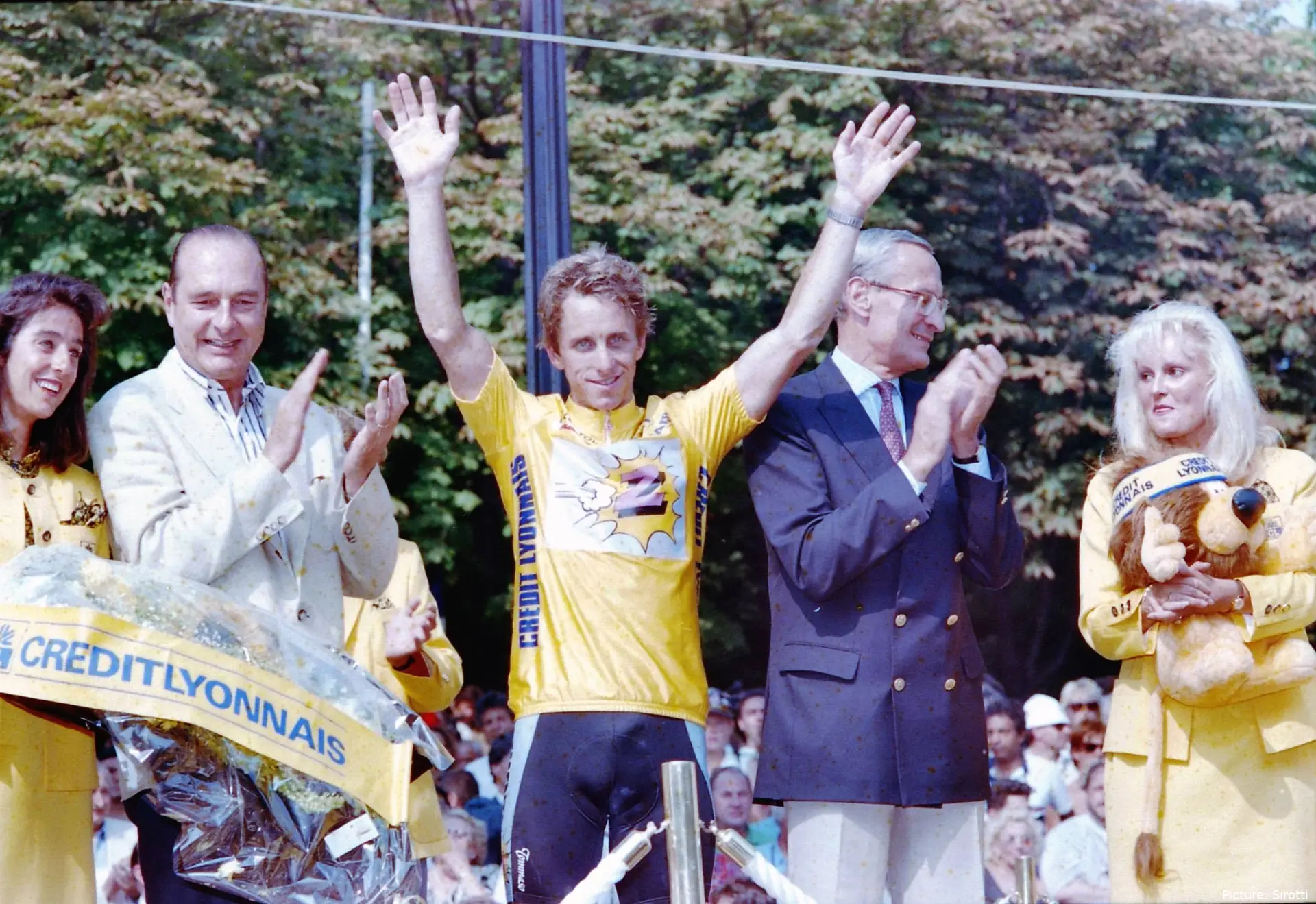
This is the fifth profile in our Cycling Legends series, revisiting the riders whose careers shaped the sport through their victories, rivalries and own memories.
Greg LeMond won the Tour de France three times and became world road race champion twice. But his career cannot be summed up by its victories. It included an explosive rivalry with Bernard Hinault, a hunting accident that nearly cost him his life and a public confrontation with Lance Armstrong, at a time when few people wanted to question the American champion.
The most famous image of LeMond’s career came in Paris in July 1989. Laurent Fignon held a 50-second lead in the general classification, with only a 24.5-kilometre individual time trial remaining. Less than half an hour later, LeMond crossed the finish line as Tour de France champion. He had erased the deficit and won by eight seconds, the smallest margin in the race’s history.
The result was extraordinary in its own right. It became even more remarkable because, just over two years earlier, LeMond had been shot during a hunting trip and had nearly died. His recovery looked improbable. Returning to professional cycling would have been difficult enough. Winning the Tour again seemed almost impossible.
That comeback was only one chapter in a career marked by conflict. Before the accident, LeMond had already felt betrayed by Hinault, the champion who had promised to help him win. Years later, he would confront Armstrong and question cycling’s relationship with doping. To understand LeMond’s place in the sport’s history, it is necessary to look at the rivalries and setbacks that accompanied his victories.
From American prospect to Tour contender

Greg Lemond at the ‘Hell of the North’ in 1986
Gregory James LeMond was born on 26 June 1961 in Lakewood, California, and grew up near Lake Tahoe. As a teenager, skiing occupied much of his time. Cycling began as a way to stay fit outside the ski season, but it soon became clear that LeMond had more than a passing talent for the sport.
He entered his first race at 14 and won. He later recalled winning his first 11 races. In 1979, he became junior world road race champion, establishing himself as one of the most promising young cyclists in the United States.
In 1981, he turned professional with the Renault-Elf team, managed by Cyrille Guimard. The move took him into the centre of European cycling, where he had to learn to compete against riders accustomed to the pressure of the biggest stage races. He adapted quickly. In 1983, he won the Critérium du Dauphiné Libéré and became the first American to win the professional men’s road race at the World Championships.
At the 1984 Tour de France, he finished third behind his teammate Laurent Fignon. The result confirmed that he could challenge for victory in cycling’s most important race. But the first major obstacle to his ambitions would come from within his own team.
Hinault promised to help him. Then he attacked
When LeMond joined La Vie Claire in 1985, he became teammates with Bernard Hinault, a four-time Tour winner determined to match the record of five victories held by Jacques Anquetil and Eddy Merckx.
That year, LeMond helped Hinault win his fifth Tour. The American finished second and expected his loyalty to be repaid. Hinault publicly committed to working for LeMond in the following year’s race. “Next year I will ride for Greg. I will be his second wheel,” he promised.
But the 1986 Tour did not become a straightforward transfer of leadership. Hinault attacked repeatedly, putting pressure on his rivals and on LeMond as well. Instead of taking on the traditional role of a domestique, the Frenchman continued to race as if he could still win the event himself.
LeMond faced a difficult situation. He had to defend his ambitions against his rivals while trying to understand his teammate’s intentions. Hinault said his attacks weakened their opponents and tested the American’s ability. LeMond suspected that the Frenchman was still pursuing a sixth Tour victory.
The tension reached its most visible point on Alpe d’Huez, where the two crossed the finish line side by side. The image was seen as a reconciliation, but it did not erase the questions about what had happened during the race. LeMond eventually won by 3 minutes and 10 seconds over Hinault.
The victory made him the first American to win the Tour, but it was not a simple triumph. Hinault described his attacks as a test of the new champion’s qualities. LeMond offered a less generous interpretation and suggested that the Frenchman had really wanted to win for a sixth time. Their dispute became inseparable from the story of the race.
The accident that nearly ended everything
In 1987, just over a year after his first Tour victory, LeMond was involved in a hunting accident in California. His brother-in-law accidentally fired a shotgun in his direction. The pellets struck LeMond in several parts of his body, causing extensive internal injuries and severe blood loss. He was flown to hospital by helicopter, where doctors fought to save his life.
The situation was especially difficult for his family. His wife, Kathy, was pregnant with their second child. LeMond would later recall fearing that he would never see his family again. In an interview with the Los Angeles Times, he said: “I was ready to die right there.”

Greg Lemond and Eddy Schepers on the Passo Gardena climb in the 1986 Giro d’Italia
Doctors removed several of the pellets, but others remained lodged in his body. His physical recovery was long, and the psychological impact was significant. LeMond, who had once considered himself one of the strongest riders in the peloton, had to rebuild his fitness and confidence. Teams and sponsors were uncertain about his future. For LeMond, every disappointing performance raised the question of whether he would ever return to the highest level.
In his early attempts to race again, he sometimes could not remain competitive for long. He later said that he had blamed mechanical problems for some of his abandonments rather than admit how much fitness he had lost. Appendicitis and other health problems also disrupted his training. Nearly two years after the accident, LeMond was still trying to convince the cycling world, and himself, that he could come back.
Paris, 1989: eight seconds
LeMond arrived at the 1989 Tour de France with the ADR team and was not considered a favourite. His recent results did not suggest that he could challenge for victory over three weeks. Among his main rivals were Fignon, a two-time winner, and Pedro Delgado, the defending champion.
The race developed into a duel between LeMond and Fignon. The time trials favoured the American, while the mountain stages gave the Frenchman chances to gain time. Before the final stage, an individual time trial from Versailles to Paris, Fignon led by 50 seconds. The course was only 24.5 kilometres long. LeMond needed to gain more than two seconds per kilometre against a high-quality rival.
The American used aerodynamic handlebars and a helmet, adopting a more efficient position against the wind. Fignon chose a more conventional setup. The Frenchman’s ponytail later became part of the mythology surrounding his defeat, but it would be too simple to blame the result on one detail. LeMond still had to produce an exceptional performance, and he did.
He completed the course in 26 minutes and 57 seconds, averaging around 54.5 kilometres per hour. Fignon lost 58 seconds to him on the stage. In the final standings, LeMond was eight seconds ahead.

Greg Lemond wins the sprint finish from a small group in Chambéry and becomes world champion in ’89
Fignon was devastated. Losing by such a narrow margin became one of the episodes most closely associated with his career, despite his two Tour victories, a Giro d’Italia title and other major wins. LeMond, by contrast, called it the happiest day of his life. His first Tour victory in 1986 had been marked by the conflict with Hinault. This time, he had won after recovering from an accident that nearly killed him.
Years later, the two men revisited their rivalry. LeMond acknowledged that the choice of equipment might have influenced the outcome. Fignon replied that each rider had made the most of his own strengths during the race. The Frenchman had been slightly stronger in the mountains, while the American had been better against the clock. The final eight seconds were the difference between them.
Greg LeMond’s major results
| Event | Year(s) |
| Tour de France | 1986, 1989, 1990 |
| UCI Road World Championships – Men’s Road Race | 1983, 1989 |
| Critérium du Dauphiné Libéré | 1983 |
| Coors Classic | 1981, 1985 |
| Giro d’Italia | 1986 |
| Tour DuPont | 1992 |
| Circuit Cycliste Sarthe – Pays de la Loire | 1980 |
Another world title and a third Tour
The 1989 season did not end in Paris. A few weeks later, LeMond won the road race at the World Championships in Chambéry, beating Dimitri Konyshev and Sean Kelly in a sprint from a small group. It was his second world title, following his 1983 victory, and confirmed that his Tour triumph had not been an isolated success.
In 1990, he returned as defending champion. The race unfolded differently. Italian rider Claudio Chiappucci gained time in an early breakaway and emerged as an unexpected contender. LeMond pursued him consistently, without dominating the race spectacularly, and eventually claimed his third Tour victory with a 2-minute, 16-second advantage.
LeMond’s three victories came in very different circumstances: in 1986, within a divided team; in 1989, after an improbable comeback and a decision by eight seconds; and in 1990, through a patient pursuit of Chiappucci. Over his career, LeMond also finished third in the 1985 Giro d’Italia and won the Critérium du Dauphiné Libéré and other important races.
The end of his career
After his third Tour victory, LeMond’s results began to decline. He finished seventh in 1991, abandoned the race in 1992, did not participate in 1993 and withdrew again in 1994. Persistent fatigue and an inability to maintain his previous level became increasingly serious problems.
In December 1994, at the age of 33, he announced his retirement. Doctors had diagnosed him with mitochondrial myopathy, a condition that affects the production of energy in the muscles. The diagnosis needs to be presented with care. It was announced at the time as an explanation for his physical decline, but a letter published later in the New England Journal of Medicine questioned the basis for that conclusion. LeMond later said that a biopsy supported the diagnosis.
Retirement ended a career that had produced three Tour victories and two world titles, but it did not remove LeMond from cycling’s public debates. His best-known confrontation after leaving the sport would be with Lance Armstrong.
Lance Armstrong and the doping dispute
In the late 1990s and early 2000s, Armstrong became cycling’s dominant figure. His recovery from cancer and consecutive Tour victories won him admirers around the world. LeMond, however, began questioning Armstrong’s relationship with Italian doctor Michele Ferrari, whose name was associated with doping controversies.
The criticism became personal. In 2006, LeMond told the media that Armstrong had threatened him after he questioned the connection with Ferrari. He also said that the pressure had affected his family, business and reputation. One of LeMond’s most serious allegations was that Armstrong had threatened to find witnesses who would claim that LeMond himself had used EPO.
Those claims should be identified as LeMond’s account, rather than independent findings about every detail of the confrontation. One of the most detailed reports of the phone call was attributed to Kathy LeMond in a deposition. It was not an authenticated recording of the conversation.
For years, Armstrong denied using banned substances. In 2012, the United States Anti-Doping Agency (USADA) presented an investigation into a doping programme within the U.S. Postal Service team. Armstrong was sanctioned and stripped of his Tour de France results from 1999 to 2005. He later admitted using performance-enhancing drugs. The USADA decision documented a doping scheme within the team, although it does not automatically confirm every allegation LeMond made about private conversations.
The revelations changed the way many people viewed LeMond’s criticism. For years, he had been attacked for questioning a champion celebrated as the symbol of a new era for American cycling. The investigation confirmed that doping was a serious problem in the peloton and gave weight to LeMond’s broader concerns, without turning every account of the personal dispute into a proven fact.
Read also

A legacy beyond the victories
LeMond’s career resists a simple heroic ending. He reached the summit of cycling, saw his career threatened by a near-fatal accident and fought his way back. But his story was never only about proving that he could race again.
Throughout his career, he questioned the loyalties and assumptions around him. That often put him at odds with people who held influence in the sport, and not every dispute ended in agreement or reconciliation. Still, he was willing to speak when keeping quiet might have been easier.
His results secure his place among cycling’s great champions. What makes his legacy distinctive is the way he challenged the sport around him, both on and off the bike. LeMond’s story endures because the questions he raised about power, trust and cycling’s credibility have not gone away.
Carlos Silva is a writer for CyclingUpToDate.com, where he contributes race reports, interviews, analysis pieces, and live coverage of the international cycling calendar. Holding a degree in Sports from the Jean Piaget Institute, he combines academic knowledge of performance, training, and competition with hands-on journalism experience in professional cycling.
Throughout his career, Carlos has conducted interviews with leading figures in the sport, including Alberto Contador, Joaquim Rodríguez, Óscar Pereiro, João Almeida, Isaac del Toro, Derek Gee, John Degenkolb and Geraint Thomas. These conversations reflect direct engagement with Grand Tour winners, Classics specialists, and emerging talents.
He has provided on-site coverage at major events ranging from the Vuelta a España to the Tour de France, alongside stage races such as Vuelta a Andalucía, Volta ao Algarve, Volta a Portugal and O Gran Camiño. Covering the mythical climbs of the Giro d'Italia remains one of his professional ambitions.
Carlos is responsible for liveblog coverage of all major WorldTour races and beyond, including the Tour de France, Giro d'Italia and Vuelta a España. His reporting integrates verified data from ProCyclingStats to ensure statistical accuracy, contextual depth, and analytical precision.
A lifelong cycling enthusiast, he approaches storytelling across written, photographic, and video formats with a focus on credibility, tactical insight, and informed race interpretation.
claps 1visitors 1
Just in
Popular news
Latest comments
- Care to name them?
 santiagobenites18-11-2026
- Also has a questionable history with doping suspicions
 Front24218-11-2026
- I agree, he had some really good results this year. I was really surprised he managed to finish 5th on GC at the Tour. Just some of the headlines and stories on this site (and others) are such bs.Lozza18-11-2026
- Always the same (stupid) story.MajorPayne18-11-2026
- Decoration, for the sake of this conversation, is strictly monetary and anti gender at that.flyer18-11-2026
- Good correction but everyone went off road with it for combat.flyer18-11-2026
- Still nauseating ! gag !frieders318-11-2026
- Go get em Wout!JoeyC18-11-2026
- I don't take my phone with me while I'm running, cycling, or swimming. And even if I had it with me, I don't need the selfie to remember or appreciate the meeting forever. The selfie is good for showing off to friends, but otherwise it's more of a TikTok vibe than something to bother with while jogging, walking, ...flyer18-11-2026
- Mas: “What I enjoy is the process leading up to the races and the racing itself.” That's always good to read. I hope his good form continues in 2027.flyer18-11-2026
Loading
2 Comments