Financial crisis forces closure of team behind Vuelta champion Paula Blasi's rise as eight-year project collapses
Cycling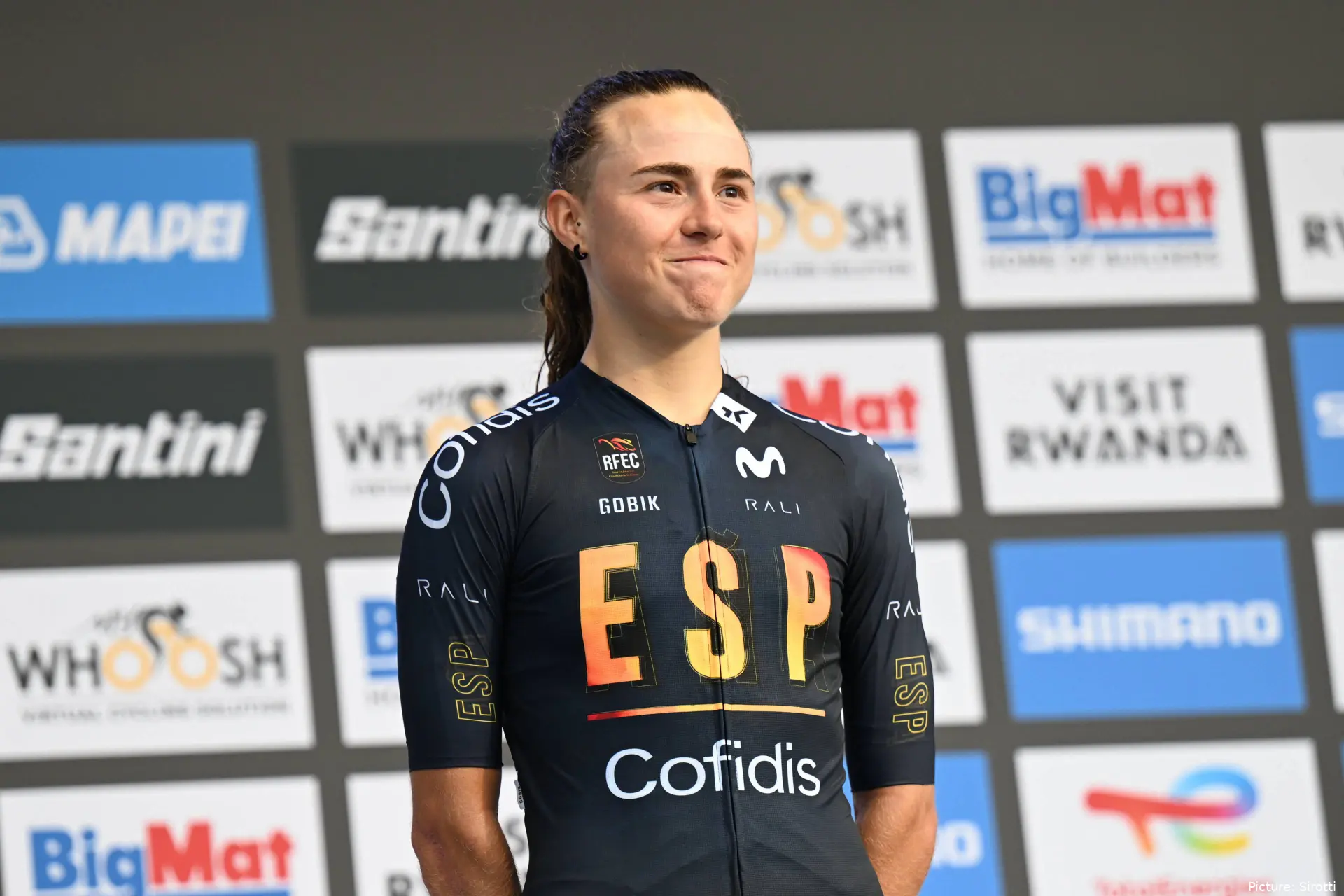
Catalan women's cycling has lost one of its leading teams. Massi Baix Ter has announced that it is closing down after eight seasons, with financial difficulties ultimately making its continued existence unsustainable. The closure affects both its senior team, Massi Baix Ter Women's Team, and its development set-up, Baix Ter Women's Academy, two projects that have provided a pathway for riders hoping to reach the highest level of the sport.
The news is a significant blow to women's cycling, particularly in Catalonia, where the Girona-based outfit had established itself as an important stepping stone for riders looking to progress beyond the junior ranks. Among those to have represented the team are Mireia Benito and Paula Blasi, both of whom subsequently moved on to higher-level teams. In total, more than 16 riders who developed within the organisation have gone on to join WorldTour teams over its eight-year existence.
The decision follows several years in which the team's budget became increasingly stretched while the costs of competing continued to rise. Massi Baix Ter president Sergi Güell explained to Mundo Deportivo that the situation had become impossible to sustain, both because of the financial constraints and the sporting demands placed on a team with ambitions of competing internationally.
"It's been a combination of circumstances. We created a team to compete internationally, but every year our budget was getting smaller and costs were rising. We were going to races with barely anything to our name, and you simply couldn't compete like that, either in terms of media exposure or sporting performance," Güell admitted.
The team had been competing at national level since dropping down a category in 2024 and operated on a budget of approximately €95,000. Its squad consisted of 11 riders in the senior team and another 15 in the development set-up. Although there remained the possibility of keeping the project going for another season through further cutbacks, the management decided that continuing under those circumstances was no longer worthwhile.
The president was particularly forthright about the lack of financial backing from the private sector, which he believes was a decisive factor in the team's demise.
"If we really stretched ourselves, we could carry on for another season, but that's not how we want to continue. We couldn't survive on pats on the back alone, and in the end nobody came forward with the money. The public authorities have always done everything they could. Girona Provincial Council has always helped us. The Catalan government has always been more inconsistent. They've always helped us to a greater or lesser extent, and of course we always want more, but we've never managed to bring in private-sector investment."
His comments illustrate the difficulties the project faced in maintaining a competitive team with limited resources. Despite the institutional support it received, the lack of greater private investment ultimately prevented it from securing the future of an organisation that had established itself on the racing calendar while providing opportunities for riders hoping to turn professional.

Paula Blasi at the 2026 Amstel Gold Race Ladies
A stepping stone for young riders
Throughout its eight seasons, Massi Baix Ter played a role that extended well beyond simply competing in races. Its structure allowed numerous riders to continue developing and pursue opportunities with higher-ranked teams, at a time when making the transition into professional cycling can be particularly difficult. Having both a senior team and an academy helped bridge the gap between youth development and competition at a higher level.
Paula Blasi and Mireia Benito are two examples of riders who followed that pathway. Both spent time with the Catalan organisation before continuing their respective careers elsewhere. The fact that more than 16 riders have subsequently reached WorldTour teams after passing through Massi Baix Ter underlines just how important the outfit had become in developing female cycling talent.
The closure of both teams therefore leaves a significant gap in Catalan cycling. Not only is a team competing on the national calendar disappearing, but so too is a development pathway that helped riders take their first steps towards professionalism and build careers beyond the junior categories.
Aware of the consequences of the decision, the management informed its riders well in advance that the project would not be continuing, giving them time to find new teams and consider their next steps. Meanwhile, those running the organisation explored possible alternatives to keep it alive, but were ultimately unable to secure the necessary funding.
Read also

Eight seasons that the president hopes will not mark the definitive end
Despite the closure, Güell has not ruled out the possibility of the project returning in the future. The disappearance of Massi Baix Ter brings its current activities to an end, but the president remains hopeful that the organisation could be revived if the financial circumstances change.
"Hopefully, rather than being a full stop, it's just the end of one chapter," he said, leaving open the possibility that the conclusion of this particular chapter might not necessarily mean the permanent disappearance of the project.

Jorge BorregueroWriter
Jorge Borreguero is a journalist with a degree from the Complutense University of Madrid and has been a writer for Cyclinguptodate and Ciclismoaldia since early 2023. In this role, he has played a key part in the evolution of the website, particularly as a specialist covering Movistar Team. He regularly writes race reports, analytical pieces, and in-depth features about the team, and has conducted exclusive interviews and attended multiple team presentations, providing readers with firsthand insights into one of the leading professional cycling squads.
Throughout his career, Jorge has maintained a strong focus on sports journalism, gaining experience across a variety of disciplines, including basketball and football. However, his current work is almost entirely dedicated to cycling, contributing extensively to Ciclismoaldia and its sister website Cyclinguptodate. For these platforms, he combines thorough research with detailed reporting to deliver high-quality content, ranging from race previews and results to expert analysis of teams and riders.
Jorge’s reporting is marked by accuracy, depth, and a commitment to providing readers with reliable and authoritative information. His direct engagement with teams, athletes, and events ensures that his coverage reflects firsthand knowledge and professional insight. Through his work, he has established himself as a trusted voice in professional cycling journalism, bridging the gap between the sport and its global audience while maintaining rigorous editorial standards.
claps 0visitors 0
Just in

Popular news

Latest comments
- Pog can be beat, so, yeh 👍
 leedorney22-10-2026
- absolutely iconic face/effortwrsty22-10-2026
- EF makes some pretty good signings. Tao and Sosa could be decent replacements for Carapazmij22-10-2026
- gravel is such a great discipline. I hope it gets bigger from a media standpoint. looking at old Tour de France stages, they were basically gravel before it was called gravelmij22-10-2026
- This is good for the sport ? Spreading of talent around the peloton.
 Davide22-10-2026
- Im all in with you Wally. Good Luck.Davide22-10-2026
- No it’s not, what utter drivel. How do you know he wasn’t presented the option to stay with a renegotiated contract. I’m sure if he’d not gotten a better deal elsewhere he would even have considered accepting. It’s not like they would have told him to ride for free like Cavendish had to.Jumpyjohn21-10-2026
- It’s been a long time since any real Special accomplishments.Jumpyjohn21-10-2026
- It's nice to know that (some of) this article is not AI generated... igneous is autocorrected Ineos
 Rafionain-Glas21-10-2026
- What are they doing nobody knows.abstractengineer21-10-2026
Loading
Write a comment