“For the sport, it is no longer possible like this” – Visma demand barriers along all 13km of Alpe d’Huez after Tour de France chaos
Cycling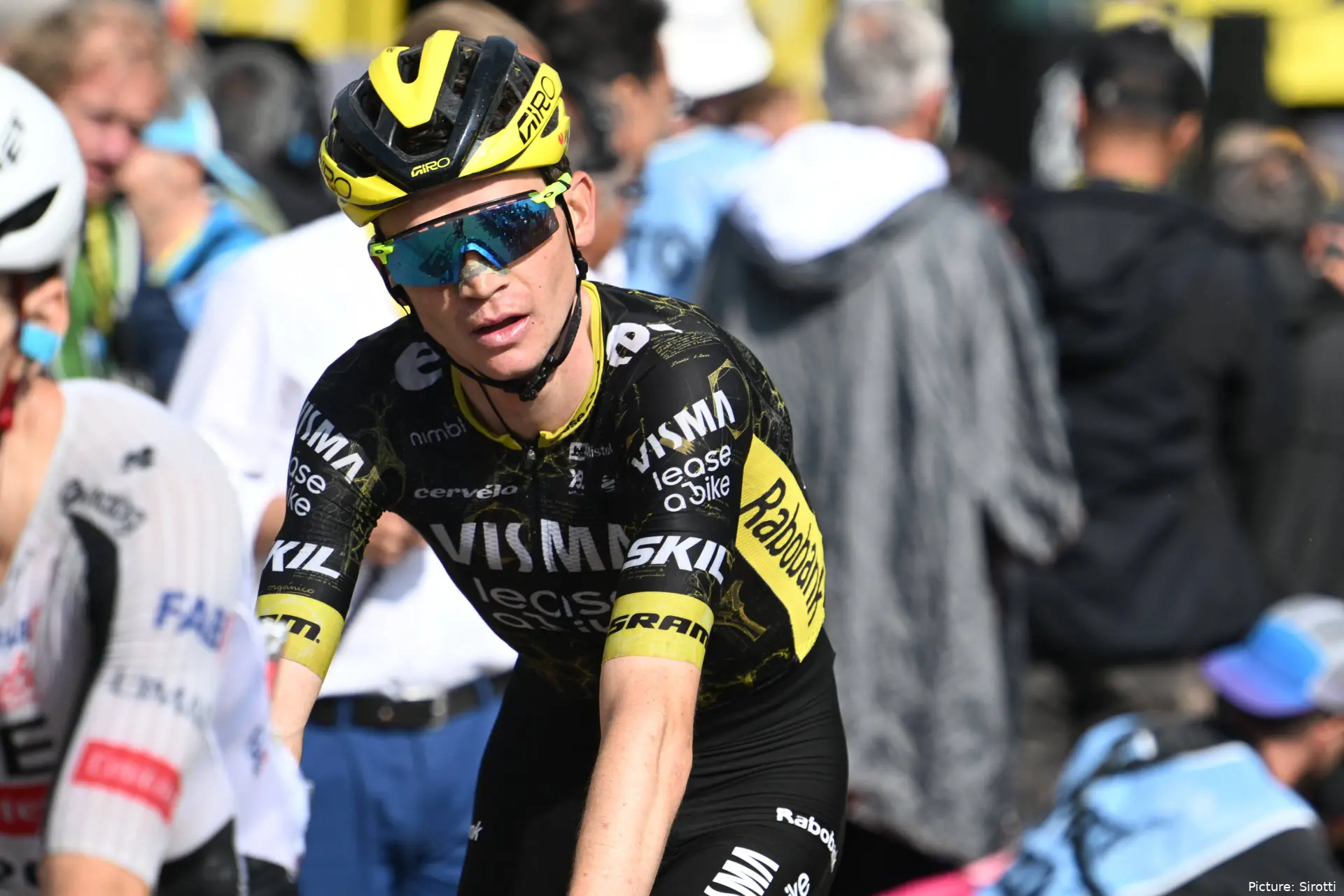
Team Visma | Lease a Bike have called for barriers along the full 13-kilometre ascent of Alpe d’Huez after stage 19 of the Tour de France was repeatedly disrupted by crowds spilling into the road.
Sports director Marc Reef said team cars were brought to a complete standstill on several occasions while the chasing group continued to close from behind. Riders were also forced through narrow corridors of spectators who often moved only at the final moment.
“What happened today cannot continue,” Reef told WielerFlits after the finish. “We were completely stationary several times with the team cars, while the group behind was getting closer. For the public it is fantastic. On television it probably looked fantastic as well. But for the sport, it is no longer possible like this.”
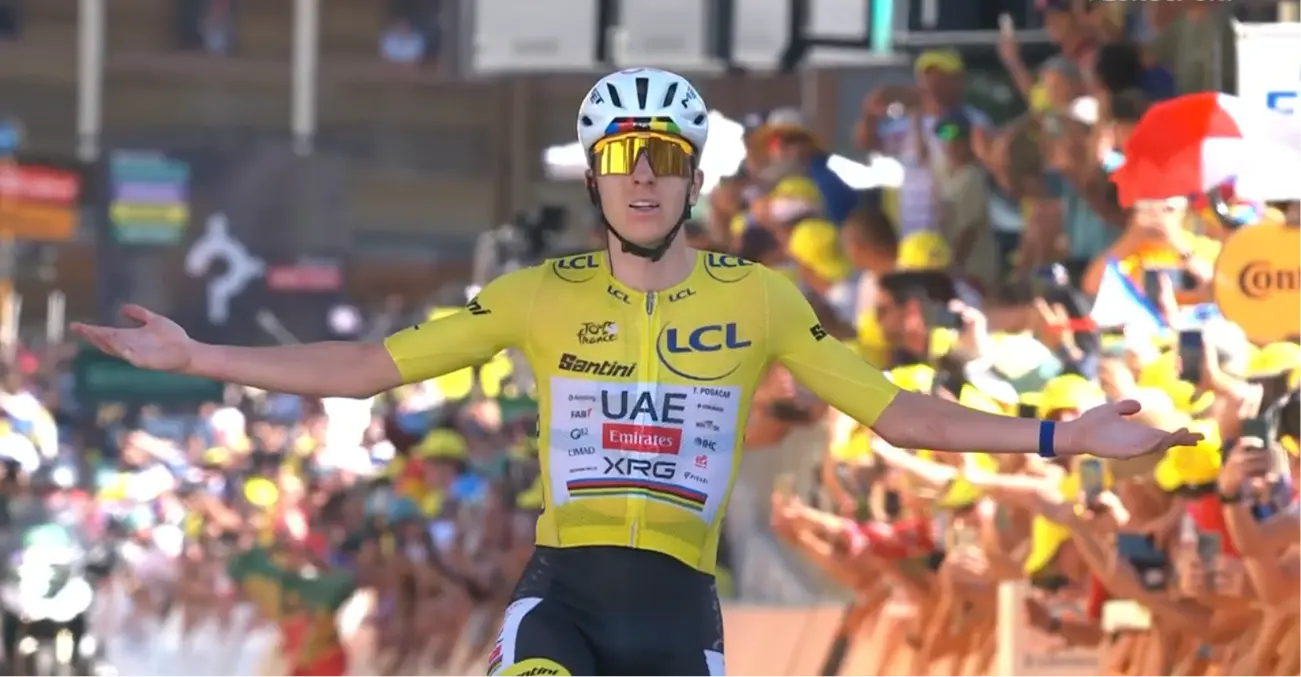
The vast crowds provided the backdrop to Tadej Pogacar’s record-breaking victory in yellow, but the congestion also interfered directly with the race. Remco Evenepoel said his attack had to be launched in two parts after he was blocked by supporters and motorbikes, while riders reported concern over flags hanging dangerously close to their wheels.
The most serious incident involved Einer Rubio. The Movistar Team rider struck the rear window of a UAE Team Emirates – XRG car after the vehicle braked sharply and was forced to leave the Tour with facial injuries requiring around 20 stitches. “I believe Rubio crashed into something and had blood all over his face,” Reef said. “We were standing still several times. I think it is also influencing the race when things happen in this way.”
Reef says Alpe d’Huez crowding crossed the line
Selected areas of Alpe d’Huez had been controlled with barriers, ropes and police, but large parts of the climb remained open.
That left riders, team vehicles and race motorbikes dependent on spectators creating space at the last possible moment. The effect was particularly severe in the convoy, where cars could become trapped while the race continued ahead and behind them.
“I think everybody was hindered at some point by spectators who only moved away at the last second,” Reef said.
His proposed solution was not another limited extension of the existing barriers. Reef called for the entire climb to be secured. “I think the only way you can still race on Alpe d’Huez is by placing barriers along all 13 kilometres.”
Alpe d’Huez has long been celebrated for the proximity of the crowd, but stage 19 showed the strain created when that tradition meets modern race speeds, a large vehicle convoy and spectators packed several rows deep.
Reef did not argue that the crowding had handed Pogacar the victory. The Slovenian attacked from the general classification group near the foot of the climb, erased an advantage of more than three minutes and caught the final survivors of the breakaway before the summit. “He still produced the best performance on Alpe d’Huez,” Reef said. “He was the strongest, so he deserved to win.”
Visma were trying to support Sepp Kuss from the breakaway while their team cars repeatedly stopped in the crowd, and the riders ahead were forced to race through the same shrinking space.

Tadej Pogacar wins on Alpe d'Huez
Four riders placed in the break for Kuss
Visma had committed heavily to the stage from the opening kilometres. Kuss, Bruno Armirail and two further teammates made the 42-rider breakaway, giving the team numbers at the front and allowing them to build the day around the American.
“I think we rode a very good stage,” Reef said. “We had four riders in the breakaway straight away and, from the beginning, we played the Sepp card.”
Visma wanted Kuss to reach Alpe d’Huez with enough of an advantage to resist the general classification favourites, particularly Pogacar.
Armirail became central to that effort. The Frenchman drove the break towards the final climb and helped maintain a lead of around three minutes and 20 seconds at the foot of Alpe d’Huez.
“We wanted the gap to be as large as possible at the foot of Alpe d’Huez,” Reef said. “Bruno was incredibly strong today and played a major role in getting us there with around three minutes and 20 seconds. We hoped it would be enough, but it was just not enough.”
Pogacar’s pursuit ultimately proved too fast, but Kuss remained among the riders still contesting the stage deep into the final climb.
He reached the decisive phase with Richard Carapaz, Lenny Martinez and Thymen Arensman, while the advantage behind began to disappear.
Carapaz and Martinez show ‘killer instinct’
The breakaway stopped functioning as a united group once the possibility of victory became real.
Carapaz and Martinez repeatedly attacked, forcing Kuss to respond while Pogacar continued to close from behind. Each rider knew that waiting too long risked being caught, but committing too early could leave them exposed before the summit.
“They all knew they could be riding for the victory, and then the game starts,” Reef said. “Carapaz and Martinez are very driven in those situations. They have a little more of that killer instinct.”
Kuss made his own move but could not establish a decisive gap. He was eventually dropped by Carapaz and Martinez before Pogacar reached the front and took control of the stage. “Sepp did what he could,” Reef said. “I think he rode very well and chose his moment to go. In the end, he was less strong than the other riders, and fourth was the maximum result possible.”
Visma had placed four riders in the break, Armirail had delivered Kuss to the climb with a substantial lead and Kuss had remained in contention until the final kilometres.
Carapaz and Martinez were sharper within the breakaway battle, while Pogacar was operating at another level entirely.
Pogacar quiz for cycling experts
10 questions · ≈ 5 min · 167 players
to compete in the ranking.
Kuss encouraged despite missed stage win
Kuss struck a similarly positive note in Visma’s post-stage release. “I felt really good today,” he said. “It was a great day for the team. We had several riders in the breakaway, where everyone did a great job.”
The American had started the Tour in service of Visma’s wider objectives, but Alpe d’Huez gave him a rare opportunity to ride for himself on terrain closely associated with his best performances.
“I had a great battle with Carapaz and Martinez on the final climb and tried several times to get away, but unfortunately it just didn’t work out,” Kuss said. “Still, I’m pleased with my performance today and I’m happy with how things went.”
Kuss could take encouragement from fourth place and Visma’s collective display. Reef’s verdict on the mountain was less forgiving: without barriers along the full climb, he does not believe Alpe d’Huez can continue to be raced in the same way.
Kieran WoodDeputy Editor-in-Chief
Kieran Wood is a sports journalist based in Wales and has been active in journalism since 2022. He regularly contributes to DartsNews.com and CyclingUpToDate.com, where he covers professional cycling and darts. In cycling, his work includes liveblogs from major races, including the Tour de France, the Giro d’Italia, and La Vuelta a España, alongside race reports and analysis. He has also conducted interviews with professional riders.
His reporting spans the full racing calendar, from one-day classics to stage races, with a focus on accurate, real-time coverage and clear contextual analysis. For statistics, results, and historical context, he regularly uses resources such as ProCyclingStats. To support reporting on rider activity and training context where relevant, he also references Strava.
In his work, Kieran places strong emphasis on careful sourcing, editorial accuracy, and updating articles as new, verified information becomes available.
claps 2visitors 2
Just in

Popular news
Latest comments
- They didn’t have or need “extraordinary information”. All they needed was for a French judge to sign off on the night-time testing for it to go ahead.Lozza25-11-2026
- If the sponsors voted for Primoz then you get him, otherwise not.flyer25-11-2026
- It sure can feel or seem that way but I wonder if the same amount of prodigious performances (compared to the others) would occur if no one was ever doping at all.flyer25-11-2026
- Given the similarity of two articles (published on I think the same date), I'm reusing (copy-n-pasting) my post from the twin: I've always thought the last day of each of the grand tours was problematic mostly in that the GC is considered completed before the race starts when that is not really true. There is some tension, but not desirable tension. What saves the awkward practice is the race finish is legit for those who participate - so it's not wholly different from the other stages. That neutralizations usually make good sense demonstrates their necessity so if that has to be the way to go I agree that the design plan for the neutralization should be completed before the race starts. This years end stage in the Vuelta had one of the best first half's I've seen in that many of the riders looked to be thoroughly enjoying themselves making it a joy to watch. But I think it was slightly closer to the exception rather than the rule.flyer25-11-2026
- Even I often win without being there at all, not even breaking a sweat. Beat that!flyer25-11-2026
- It is not about rest and peaking again - 5 weeks is not enough for that. It is about recovery while maintaining form. 4 weeks is easier for that. With a Giro-Vuelta, the 12 week break is enough to rest and then peak again. Not for the Tour
 Rafionain-Glas25-11-2026
- I fully agree that "2027 could completely reshape the pecking order" because this competition is a mix of skill, team support, luck opposition, and health. (What BS - as I start writing this post a popup hides what I've written so my only sane options are to hit POST prematurely or leave or reload the page. What a pathetic operation. I forgot where I was so I'm getting out of this crap trap.)flyer25-11-2026
- I've always thought the last day of each of the grand tours was problematic mostly in that the GC is considered completed before the race starts when that is not really true. There is some tension, but not desirable tension. What saves the awkward practice is the race finish is legit for those who participate - so it's not wholly different from the other stages. That neutralizations usually make good sense demonstrates their necessity so if that has to be the way to go I agree that the design plan for the neutralization should be completed before the race starts. This years end stage in the Vuelta had one of the best first half's I've seen in that many of the riders looked to be thoroughly enjoying themselves making it a joy to watch. But I think it was slightly closer to the exception rather than the rule.flyer25-11-2026
- Apparently that week is a MAJOR training disadvantage as "three major benefits" were claimed. When I read a proposal such as this, I want to also read the reasons why changing might not be so good - the CONS.flyer25-11-2026
- most likely they fudged it but i think they want to set an example to the riders that even the top riders are not exempt in the top races even during nighttime as a precedenceabstractengineer25-11-2026
Loading
Write a comment