“Cycling was hard in my day... I look at him and it's not hard” - Anti-doping whistleblower Paul Kimmage challenges Tadej Pogacar's claim that most riders are clean
Cycling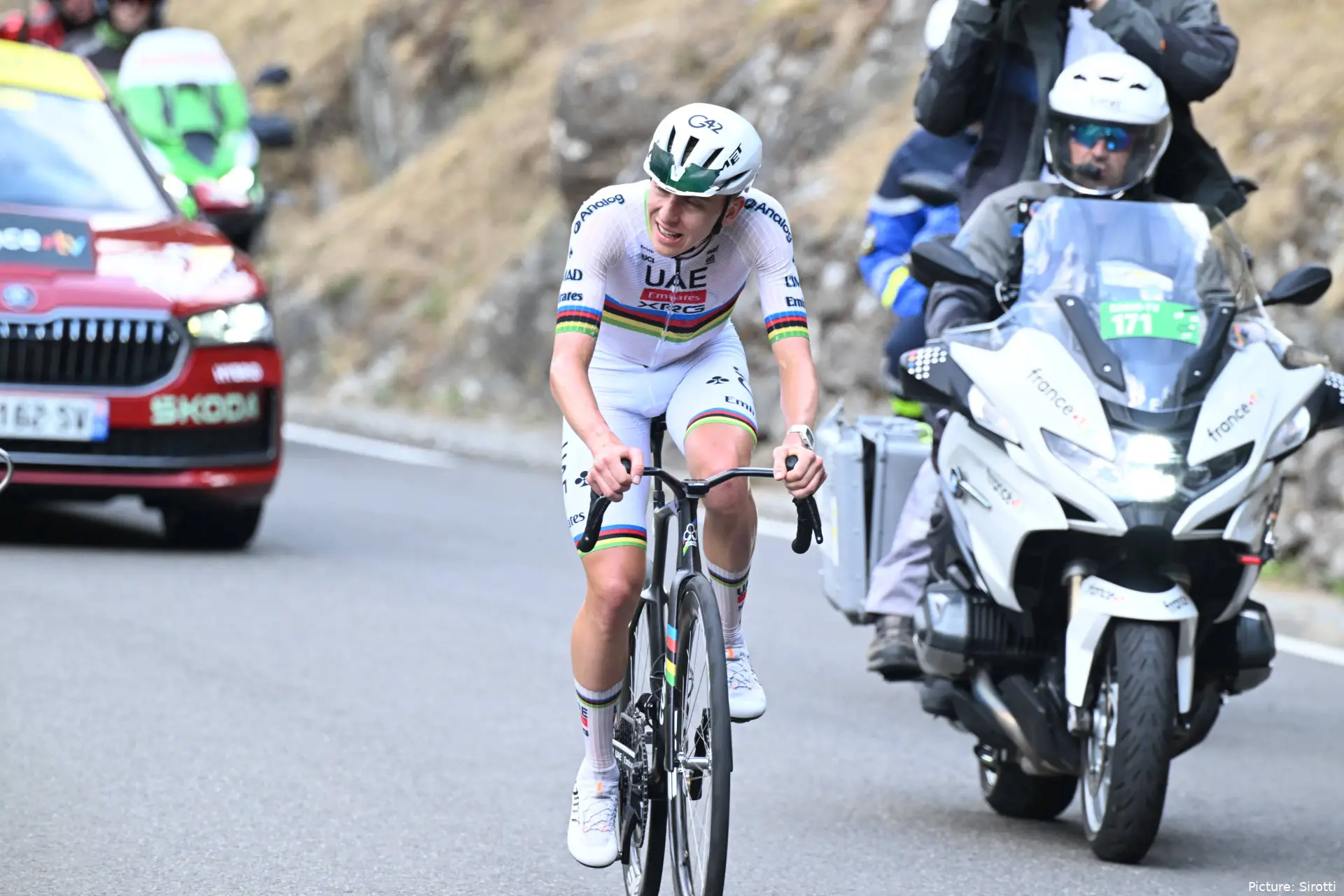
Paul Kimmage has spent much of the last 36 years asking uncomfortable questions of cycling's biggest stars. Having watched Tadej Pogacar sweep aside his rivals in the Classics and Grand Tours, the Irishman has admitted he struggles to understand how the Slovenian makes racing at the highest level look so easy.
Now, following Pogacar's assertion that doping is virtually non-existent among the majority of today's professional cyclists, Kimmage has challenged the five-time Tour de France winner to speak to UAE Team Emirates – XRG boss Mauro Gianetti about his experiences in the sport.
A professional between 1986 and 1989 before lifting the lid on cycling's doping culture in his autobiography Rough Ride, Kimmage recalled watching Pogacar on one of the most famous climbs in the Ardennes.
"There's so much about cycling now I don't understand," the Irishman told the road.cc Podcast. "I don't understand Pogacar. I look at him in Liege-Bastogne-Liege and he's riding up La Redoute sitting in the saddle, not even opening his mouth to breathe. Cycling was hard in my day when I raced. I think it's still hard. I look at him and it's not hard."
Kimmage takes issue with Pogacar's comments on doping
Pogacar had been asked about doping in an interview with La Gazzetta dello Sport earlier this week, following a Tour de France in which both he and Jonas Vingegaard were subjected to exceptional anti-doping controls authorised by a French judge.

Pogacar recently claimed he was sure that: "doping doesn't exist now for the majority of the peloton"
The world champion spoke of his confidence in his fellow professionals, arguing that the commitment required to make it in modern cycling and the opportunities available to riders after retirement made doping a risk that most were unwilling to take.
"Yes, you can be sure, doping doesn't exist now for the majority of the peloton. You race with your heart and with the right mentality," Pogacar said. "We all know that prohibited, banned substances can damage your health. And, at the same time, cycling is a sport and no one wants to risk their life for it. Of course, there will always be someone who tries to take a shortcut… But in any case, I've met so many riders over the years, everyone loves cycling, the sport."
Pogacar went on to discuss the attention paid to nutrition, training and recovery by modern professionals, suggesting few would be willing to throw away years of work and jeopardise their future careers in the sport. His remark about riders caught doping ending up selling ice cream had already drawn a response from lifetime-banned Italian climber Riccardo Ricco.
Kimmage's response centred on the man who was managing Ricco at Saunier Duval when the Italian tested positive for CERA at the 2008 Tour de France.
"Can I counter that by asking him who his team manager is and what his experiences are? Has Mauro Gianetti come and spoke to him?" Kimmage asked. "If he frames that answer he's given there as, 'I know from the experiences of my general manager Mauro Gianetti that doping was a really dangerous game, that people did this, and I'm not prepared to do it'. He could have framed it in that way and given it context. Not presenting it like, why would you ever do this? When that's all that's ever been done, going back to [Tom] Simpson and all that."
Simpson died on Mont Ventoux during the 1967 Tour de France, with amphetamines and alcohol among the contributing factors in his death.
Pogacar quiz for cycling experts
10 questions · ≈ 5 min · 176 players
to compete in the ranking.
From Saunier Duval to UAE: Gianetti's history in professional cycling
Gianetti was nearing the end of his professional career when the Festina affair rocked the 1998 Tour de France. Three years earlier, the Swiss had won both Liege-Bastogne-Liege and the Amstel Gold Race, riding for Polti.
Speaking to L'Equipe during this year's Tour, Gianetti denied ever using EPO during his career. He declined to discuss his hospitalisation at the 1998 Tour de Romandie, describing it as a personal matter.
As a team manager, Gianetti saw Saunier Duval withdraw from the 2008 Tour following Ricco's positive test. Leonardo Piepoli, who had crossed the line first on Hautacam just three days before Ricco's expulsion, also tested positive for CERA.
Another member of that Saunier Duval squad, Juan Jose Cobo, went on to win the 2011 Vuelta a Espana under Gianetti at Geox-TMC. The Spaniard was stripped of his title by the UCI in 2019 following abnormalities detected in his biological passport.
Gianetti addressed his association with all three riders in his L'Equipe interview in July, denying involvement in their doping offences and maintaining that their actions had cost him sponsors and damaged his reputation.
"I made the mistake of taking them in my team," said the Swiss, who acknowledged that he should have been clearer with the press at the time. He also explained that he had asked Ricco to undergo testing with the UCI before recruiting him.
According to Gianetti, the governing body provided documentation confirming that Ricco had a naturally occurring haematocrit level above 50 per cent. Gianetti also said he had filed a complaint in Italy against the riders he held responsible for the damage done to his team.
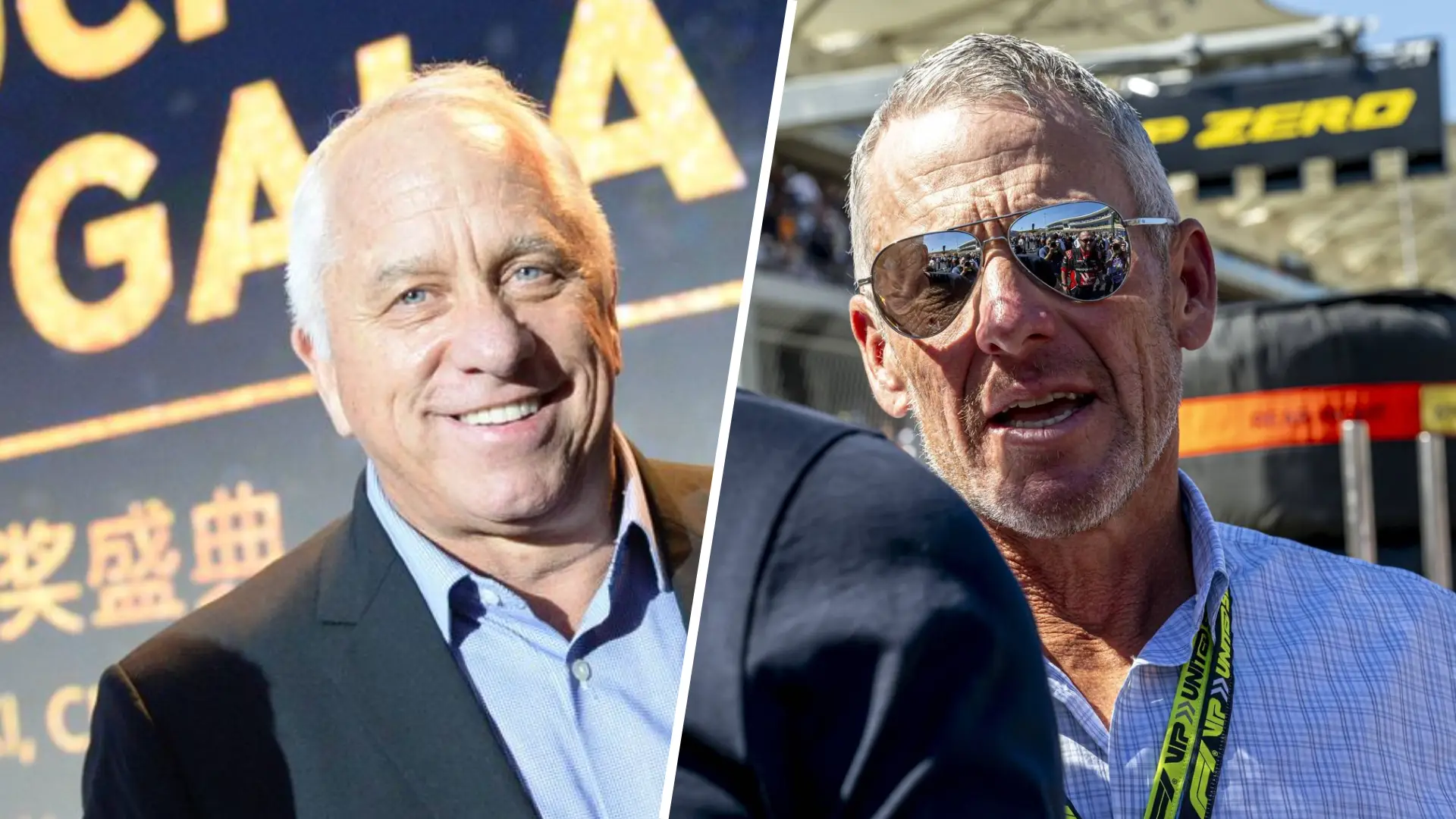
Kimmage is not alone among former professionals in questioning the continued presence of figures from that generation in senior positions within cycling. Christophe Bassons, one of the few riders who publicly spoke out about doping during the Lance Armstrong era, raised similar concerns about Pogacar's entourage in October.
Neither Kimmage nor Bassons has presented evidence of an anti-doping violation by Pogacar, who has never been sanctioned for a doping offence.

Mauro Gianetti previously claimed he had no role in the mass doping that occurred at the former Saunier Duval team
Kimmage believes Froome, Wiggins and Thomas should have invited scrutiny
Just three months after Bradley Wiggins became the first British winner of the Tour de France in July 2012, Armstrong was stripped of all seven of his Tour titles following the United States Anti-Doping Agency's investigation into US Postal Service.
British riders went on to win five of the next six editions of the Tour through Chris Froome and Geraint Thomas, with Vincenzo Nibali's victory in 2014 the only interruption to Team Sky's dominance.
For Kimmage, the emergence of a new generation of Tour winners offered cycling an opportunity to change the way its leading riders dealt with questions about their performances.
"I wanted to see Chris Froome, Bradley Wiggins, Geraint Thomas, the whole lot of them, walk into press conferences and raise their hands and say: 'before we start, I want you to ask me about doping and any questions you may have about performance and what I've just done'," he said. "That's what should have happened immediately after the Armstrong era. You're actually inviting scrutiny, that's what should have happened. But it didn't."
Kimmage had famously clashed with Armstrong at a press conference ahead of the 2009 Tour of California, when the American was making his comeback from retirement. Three years later, Kimmage himself faced legal action from the UCI and its former and then-serving presidents, Hein Verbruggen and Pat McQuaid, over his criticism of the organisation's handling of doping.
The action was suspended in October 2012 following the publication of USADA's findings against Armstrong.
Gianetti points to advances in equipment and nutrition behind modern cycling speeds
During the final week of this year's Tour de France, Pogacar took more than a minute off Marco Pantani's 1995 climbing record on Alpe d'Huez, winning stage 19 in the yellow jersey.
Gianetti was asked about the speeds being reached by the modern peloton during an interview with road.cc that same week. While the Swiss acknowledged the extent of the improvement over the previous five years, he attributed it to developments in several areas beyond the physical capabilities of the riders themselves. "The two main points for me are the material – the bicycle – and the nutrition," Gianetti said at the time.
Tyre pressures, wheels, frames, clothing, helmets and riding position were all among the improvements identified by the UAE boss. Gianetti also pointed out that the advances were not exclusive to Pogacar, citing how at least 10 riders had bettered a previous climbing time set by Vingegaard on the Col du Tourmalet.
Some of the climbing performances behind the debate
| Race | Climb | Performance |
| 2024 Tour de France | Plateau de Beille | Pogacar wins stage 15, surpassing Pantani's climbing record |
| 2026 Liege-Bastogne-Liege | La Redoute | Pogacar's seated climbing singled out by Kimmage |
| 2026 Tour de France | Col du Tourmalet | Gianetti cites multiple riders bettering Vingegaard's previous time |
| 2026 Tour de France | Alpe d'Huez | Pogacar takes over a minute off Pantani's 1995 record |
The UAE boss also highlighted how riders of his own generation had frequently under-fuelled both in training and competition, whereas the modern approach to nutrition allowed professionals to better sustain their workloads.
Pogacar made much the same argument when discussing his confidence in the current peloton with Gazzetta earlier this week, pointing to the work done by riders and their coaches and the consequences of potentially losing everything they had built through doping.
Read also
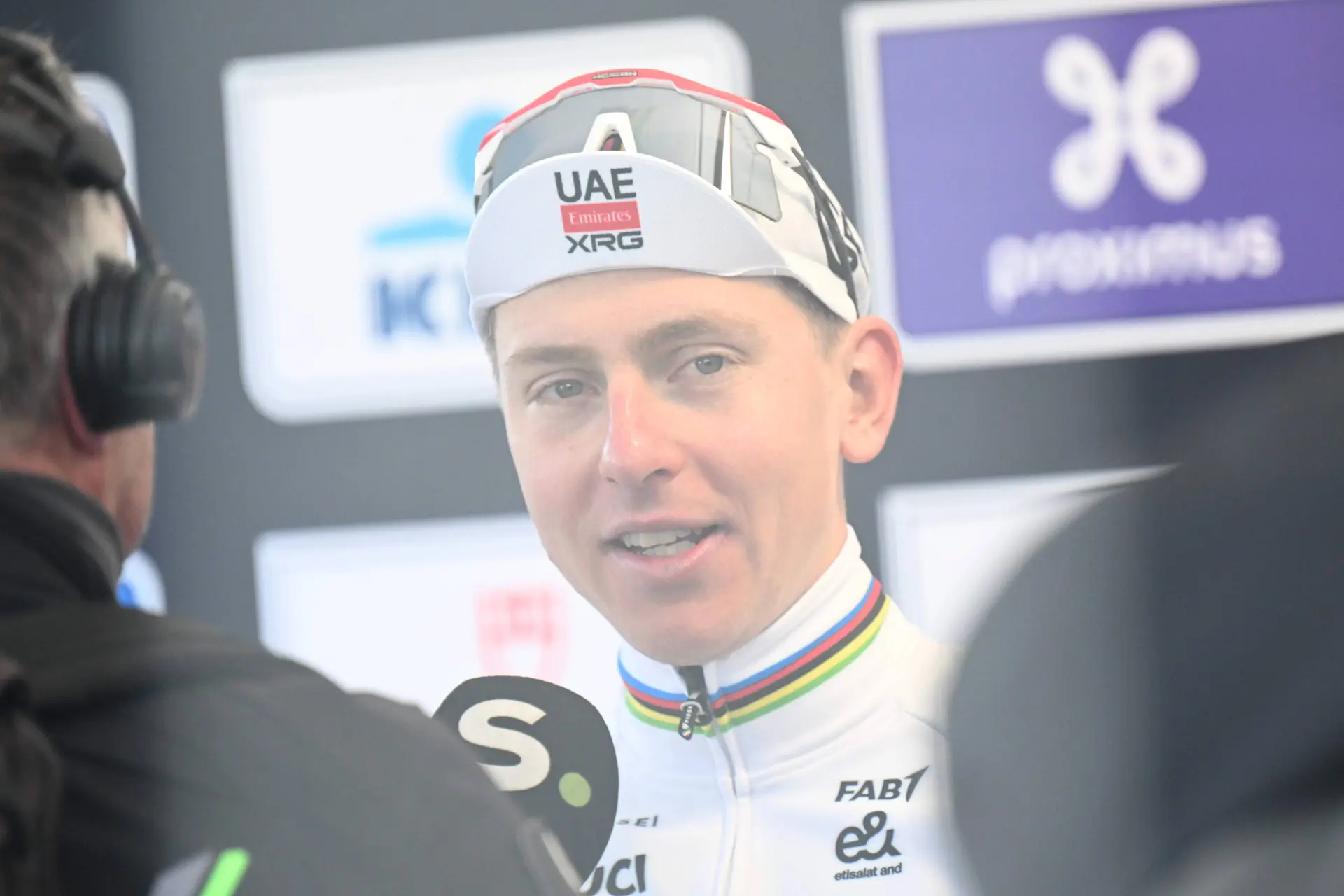
The testing programme itself came under scrutiny during the Tour when both Pogacar and Vingegaard were woken in the early hours of the morning for anti-doping controls. Pogacar expressed his willingness to undergo such tests, although he questioned the potential impact on riders' recovery.
The UCI defended the exceptional controls in a statement on 22 July, with president David Lappartient subsequently arguing that predictable testing windows could be exploited by riders looking to cheat. No positive test or anti-doping violation involving Pogacar has been publicly announced as a result of those controls.
Kieran WoodDeputy Editor-in-Chief
Kieran Wood is a sports journalist based in Wales and has been active in journalism since 2022. He regularly contributes to DartsNews.com and CyclingUpToDate.com, where he covers professional cycling and darts. In cycling, his work includes liveblogs from major races, including the Tour de France, the Giro d’Italia, and La Vuelta a España, alongside race reports and analysis. He has also conducted interviews with professional riders.
His reporting spans the full racing calendar, from one-day classics to stage races, with a focus on accurate, real-time coverage and clear contextual analysis. For statistics, results, and historical context, he regularly uses resources such as ProCyclingStats. To support reporting on rider activity and training context where relevant, he also references Strava.
In his work, Kieran places strong emphasis on careful sourcing, editorial accuracy, and updating articles as new, verified information becomes available.
claps 16visitors 5
Just in
Popular news
Latest comments
- At my age, I'm more like WalksHills, but thanks for the thumbs-up. Now that I read my comment over, with all it's talk of "freshness", it reads like an ad for a female hygiene product.megasmacky28-11-2026
- Thanks for this, it does a great job of summing up why doping isn't necessary anymore. Do you also get the sense that the sport is just kind of done with the whole doping thing? The stress of a positive hanging over your head. The expense. The constant worrying about being ready for tests, or hiding it from journalists. It must be exhausting. I believed back in the 90's that the EPO explosion was really just down to a few riders who didn't care about cheating, and everybody else was just playing catch-up, whether they wanted to dope or not.megasmacky28-11-2026
- Basically it boils down to these things Oxygen transport via blood - Altitude tents have replaced EPO, Blood transfusion Muscle - Supplements have replaced steroids Weight - Nutrition to Lower Weight, Harder efforts on 100-120g of carbs/hr Equipment - Pacing with power meters, lower air resistance Software - Better analysis of performance For doping you follow only one method not multiple since it has risk. Each legal method gives marginal gains of 1-3% and Teams are doing all of them together to give total gains comparable to a single doping method. Medical Assistance today is considerable.abstractengineer28-11-2026
- Chaos at Visma. typing been on the wall a long time for Visma with staff leaving mid contract even... They are broke and now only getting worse. Their major riders are all old and they decline alot compared to othersl, and Visma isnt a top 3 team anymore. Its looking grim. No shot in 2027 onward with how the trend been going for them vs the big boys. Even RBH and lidl overtaken em now and theres absolutely no reason even to think about UAE which are entirely in their own league... Visma also seem to have turbulence with staff leaving behind the scene etc..chaosmiguel28-11-2026
- By contrast, American Brandon McNulty won the men's 2026 World Championship road race, but I haven't heard him chirping about how now maybe things are going to be different at UAE because of it. He seems like a pretty humble guy, and though he may still get his chances next season, I expect we will see him in the rainbow jersey doing everything he can to help Pogi. Mads: 12 GT stages, a green Jersey, the points jersey, 5 Semi Classic wins and a Rainbow Jersey. Quinn: 0. ... Mads is a top 5 classics rider in the world. Quinn: Water Boy... Maga Quinn couldnt tie Pedersens shoe laces. He aint gonna be leading any TDF squad anytime soon. Maybe he should get into gravel racing in the US of A, and stay there. Europe cycling doesn't need an american maga Trump trouble maker. Simmons has had rascist remarks a few years ago. Shame on him.PogiSloFans28-11-2026
- Paul Kimmage will be rubbing his hands in glee. Another page on the sports section lol🫣🫣🫣🫣🫣🫣paultryan200228-11-2026
- Cycling is so much harder now. Lots if not most of the peleton are well versed in nutrition and training methods now. The days of Paul Kimmage when the peleton were rather chunky or over weight and not really professional compared to todays riders is long gone. Better bikes equipment and training methods. Sorry Paul as much as i enjoyed your book you did not really come across as a professional rider at all just a good amateur on a mediocre French team at best.paultryan200228-11-2026
- While none of us know if they are doping, I prefer to believe they aren't until it comes out, if it ever does. I think it's a disservice to the top riders who constantly have to defend themselves.awp28-11-2026
- I'm surprised because he seemed pretty happy with things, at least a few years ago. He was saying the racing was believable and the teams were more open than ever.megasmacky28-11-2026
- When?
 Rafionain-Glas27-11-2026
Loading
9 Comments