"At no point in this Tour did I feel like the rider I wanted to be" - Juan Ayuso downbeat after failing to race for Tour de France podium
Cycling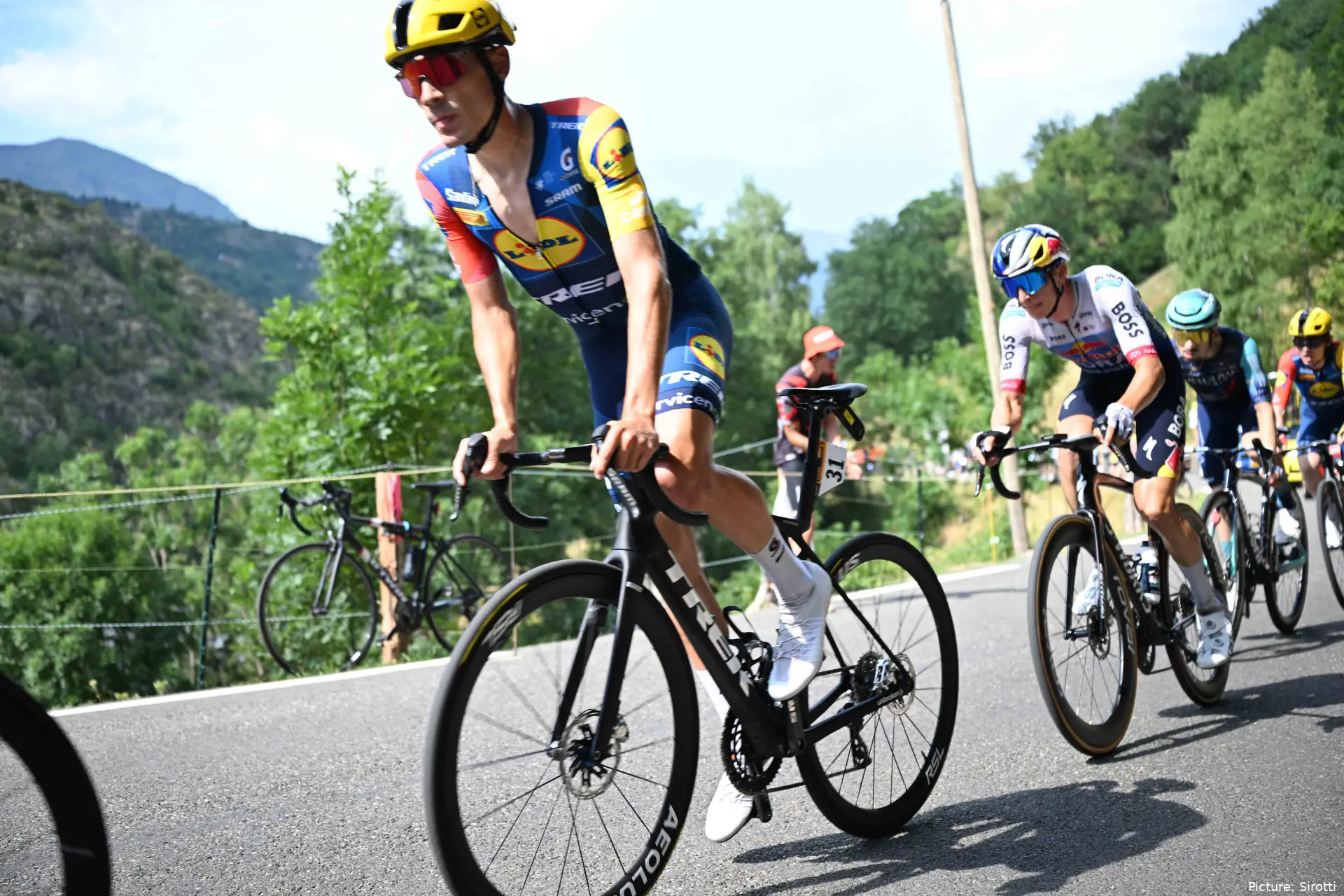
Juan Ayuso closed the 2026 Tour de France with mixed feelings. The Lidl-Trek leader finished seventh overall, far from the goal he set on the start line in Barcelona: fighting for the Paris podium. Although the team result was brightened by Lidl-Trek’s victory in the teams classification, the Spaniard did not hide his frustration after fading again as the three weeks wore on, a recurring pattern that continues to fuel doubt about his ability to contest the Grande Boucle.
Across the opening two weeks, Ayuso held firm among the best and established himself as a podium contender. From stage 14 onwards, however, he began to lose ground to the main favourites and eventually slipped behind teammate Mattias Skjelmose, initially earmarked as his domestique for the mountain stages.
Once again, accumulated fatigue pushed him away from the places of honour. The rider himself acknowledged the target was clear from day one. “The dream was to step onto the podium in Paris,” he admitted, while also valuing Lidl-Trek’s collective success. “Being up there with the whole team, especially in Luca Guercilena’s farewell, was very special. You have to enjoy those moments.”
Even so, the Spaniard made it clear the result falls short of his ambitions and he is already planning a different build-up. “I’m really eager to try again every year to reach the podium. I’ve had quite a few setbacks that complicated the whole process. We’ve discussed it with the team and I think next year we’ll approach things slightly differently.”

Juan Ayuso at the 2026 Tour de France
Read also

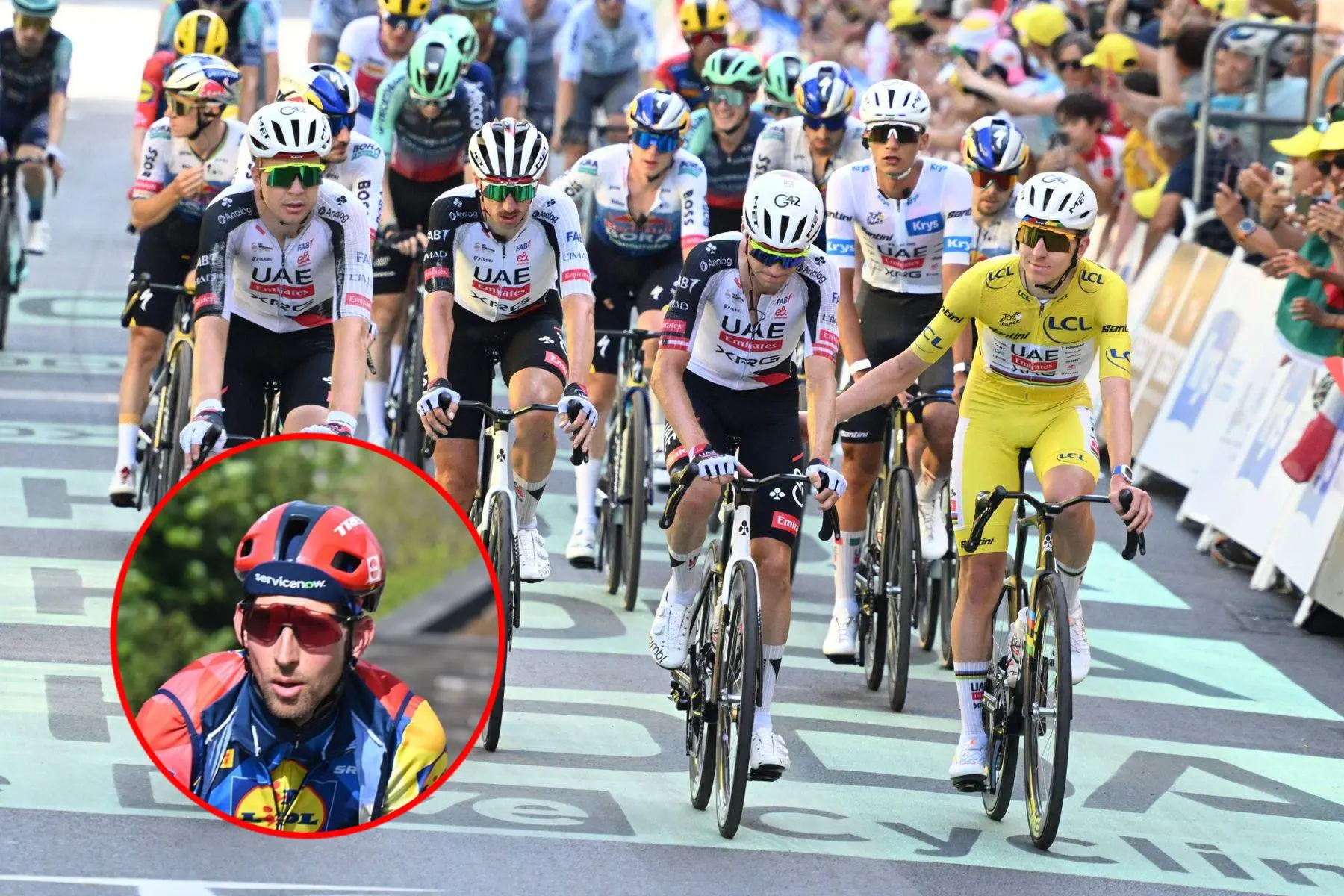
Juan Ayuso off the boil as Mattias Skjelmose beats him on GC
His self-critique sharpened when he assessed his sensations during the race. Ayuso admitted he never found the level he expected after a brilliant start to the season, highlighted by his win at the Volta ao Algarve before crashing at Paris–Nice. That lack of continuity also showed in the general classification, where he ultimately finished behind teammate Mattias Skjelmose, who began the race as a mountain domestique and ended up ahead of the Spaniard in Paris.
“At no point in this Tour did I feel like the rider I wanted to be, the one I was before the Paris–Nice crash,” he explained. “That’s part of my frustration, because I felt I’d taken a step forward compared to last year and I haven’t managed to show it in the biggest races, which are the ones that really count.”
Despite the disappointment, the Spaniard underlined his mental resilience in a race where he never stopped fighting. “I’m not disappointed because I was always swimming against the tide and I never stopped battling. I always gave my best,” he said.
However, beyond the rider’s own explanations, the Tour again posed a hard-to-ignore question. For the third year running, Ayuso lost competitiveness as the race progressed. His talent, his punch on explosive efforts, and his quality over one week remain beyond doubt, but the Tour de France and its three weeks demand something else: holding top physical and mental form for 21 stages.
At just 23, he still has room to evolve and refine his preparation. In fact, he himself admits he will change his approach for the next edition. But until he can sustain his level across the entire race, the Paris podium will remain more of a goal than a reality. Juan Ayuso’s talent is unquestionable; proving he can keep it intact over the Tour’s three weeks remains his biggest unfinished task.
Javier RampeCycling Journalist
Javier Rampe is a sports analyst with more than 15 years of experience. He holds a degree in Economics from the University of Rome and a Diploma in Business Studies from the University of Cádiz. Despite coming from an academic background not particularly associated with cycling, his passion for both cycling and journalism was instilled in him from an early age. He grew up following Miguel Indurain and José María “El Chava” Jiménez. An admirer of Michael Robinson’s communication style and journalistic approach, he was inspired to pursue a degree in Journalism at the University of Buenos Aires, which he is currently completing.
He has always maintained close ties with the worlds of sport and culture, contributing from a young age to sports blogs and film and music review websites. His work has appeared in media outlets such as Cope, RAI, and Radio Con Vos. He is also the founder of the cycling-focused podcast El Contraanálisis and the football interview channel Días De Fútbol, dedicated to conversations with professional footballers.
In addition to his work at Ciclismoaldia, Javier has interviewed some of the most influential figures in modern cycling, including Alejandro Valverde and Tadej Pogačar, as well as key voices in anti-doping policy such as Alberto Yelmo, David Varillas, and Marcelo Milano. Marcos Maynar, in relation to the ‘Operación Ílex’ case, is also among the personalities he has interviewed. He enjoys conducting in-depth analysis of the cycling ecosystem and has attended major events such as Strade Bianche, the Vuelta a Andalucía, and Itzulia, as well as numerous national cyclo-cross races.
His background in economics, combined with extensive experience in marketing and corporate communications, drives his continuous study of positioning strategies and ensures that he always keeps his focus on crafting compelling and evocative headlines.
claps 1visitors 1
Just in

Popular news
Latest comments
- Hmmm, you seem to have a very convenient black and white view of things. Perhaps you haven’t been around much to discover how complex problems can become over time with people who know how to control, manipulate (or worse) others so gradually or subtly that you arrive at an irresolvable situation before you realise. This is how many inconveniences get introduced to the young, naïve, passionate or “desperate”, knowing they are not armed, protected or strong enough to defend themselves once it’s too late. Why do you think omerta culture is so widespread, why do you think so many people continue to go through so many awful things in life that others can’t understand anyone getting into? Life may be far more jolly for you but you would do well to understand (or reflect more on) the real world to refrain from being so quick to criticise those in a hard spot that may have genuine reason for speaking out.Jumpyjohn07-11-2026
- Seriously do you think when somebody gets into a serious accident, the ambulance is called by the hurt person?🤦 there is always a buddy system in place for a risky job. police , firefighters etc so that if someone gets hurt, the other call that in.abstractengineer07-11-2026
- I get the point totally. We live in the snowflake society where some riders forget they are getting paid to ride and get results. When they have a few issues they try to look outside of the real issue instead of themselves. It odd so many of the team are making no complaints and getting on with their job. If you do not like what you do find another job simples. Tough love as my mum would say.paultryan200207-11-2026
- many people advise him to grow slowly and rather do giro and/or vuelta instead of tdf. but i can totally understand that he is not satisfied with taking over once pogi declines, but instead beat him in his prime. so if he goes for tdf again, i‘m all for it. let‘s hope that pogi recovers soon!Ketterechts07-11-2026
- So gracious to offer something no-one would be prepared to pay for. The Giro is not the Tour and doesn’t command the same interest or attract the same “elite” (those willing to pay to be a part of something they consider has ego boosting potential). Roadside viewing will always largely remain free for everyone outside circuits. Introduction of a symbolic entrance to mountain climbs is worthy of exploration. Asking 1-2€ isn’t going to repulse real fans (most will spend 50-100€ on their outing that day all things included) but will prevent a portion of the total knobhead thrillseekers who will join in any large gathering as long as it’s free, just because they’re attracted to crowds, without which it it difficult for them to work up their anti-social behaviour.Jumpyjohn07-11-2026
- How is radio going to help when someone went over a cliff or bridge or off the roadside into a forest unnoticed and is laying there unconscious?Jumpyjohn07-11-2026
- Yep, next we’ll be accusing F1 drivers of avoiding Le Mans.Jumpyjohn07-11-2026
- But on what is that opinion based? Are you holding him to a different standard than others? Are you saying he should do learn to like something he doesn’t Are you saying he hasn’t achieved enough Are you saying he pretends to be better than his results? It’s actually a really strange opinion to oust if you consider it objectively or rationally. Try applying it to others or yourself by asking if not EVERYONE should then be doing more? Nobody in athletics or swimming gets criticism for not expanding their repertoire when a rival or someone else does. In fact, most who move to another event get accused of running from their rival. Opinions are boring, the reasons behind them are what count.Jumpyjohn07-11-2026
- for a medical chief to throw things like is just bad. There are already radios which were banned for spectacle. allow radios. Gps trackers are not a complete solutionabstractengineer07-11-2026
- any rider less than 25 whether they are really ready for the position of leadership of GT is probably not the case. I think Pogi himself suffered when he was defeated by Jonas in the TDF twice. But that would be the team's job to ensure support so that they can bounce back. It requires a team and time to get back up and win after getting knocked down.abstractengineer07-11-2026
Loading
3 Comments