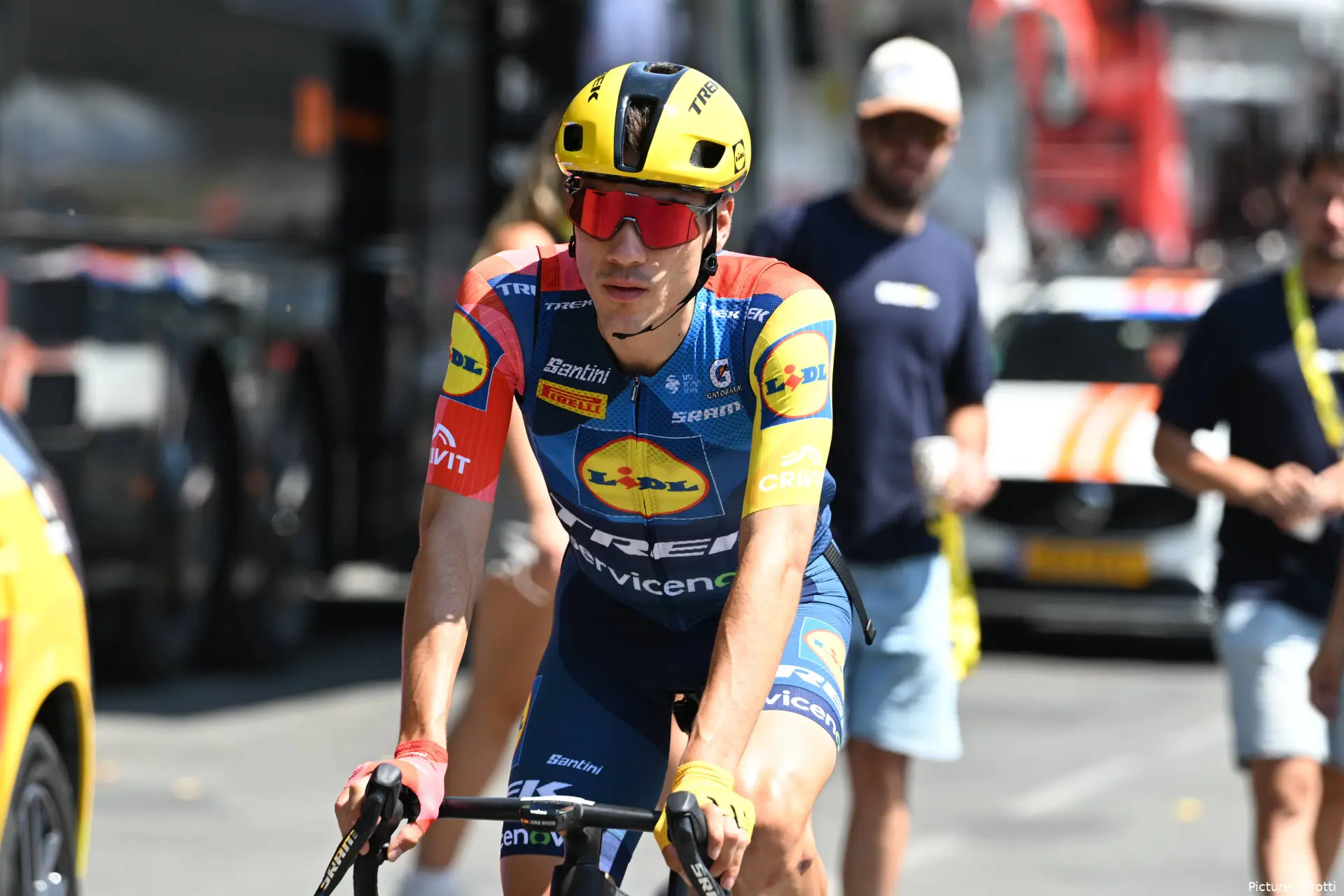
Juan Ayuso heads into 2027 at a crossroads that could shape the course of his career. At 24, the Spaniard still has time to become one of Spanish cycling’s leading figures, but his first season at Lidl-Trek has raised more questions than answers. Seventh place at the Tour de France, followed by a quiet end to the season, calls for a rethink of a strategy that has so far revolved too heavily around Grand Tours.
The problem is not a lack of talent, but choosing the right races in which to show it. Ayuso has demonstrated his ability to climb, time his attacks and take advantage of explosive finishes, but he still struggles when races demand sustained endurance or Grand Tours reach their third week. Trying to address those weaknesses at the expense of his strengths could prove a strategic mistake.
Javier Rampe, a writer for CiclismoAlDía, has long argued that Ayuso should move away from his fixation on establishing himself as a Grand Tour contender and adopt a more attacking approach, targeting hilly Classics and one-week stage races. Joaquim Rodriguez offers a particularly useful comparison: a rider who could turn his explosive ability into victories without having to dominate Grand Tours from start to finish.
Lidl-Trek should therefore build a calendar that allows Ayuso to race ambitiously from the early part of the season and gives him more opportunities to win. Strade Bianche, the Tour de Suisse and the Clasica San Sebastian stand out as three particularly appealing targets to rebuild his confidence and show that he can be much more than a rider chasing a top-ten finish. The Vuelta a España would remain an additional opportunity, depending on the route and the strength of the field.
Strade Bianche: an early chance to rediscover his winning instinct
Strade Bianche, scheduled for 6 March, should be one of Ayuso’s first major targets in 2027. The Italian Classic combines several features that suit his strengths: short, sharp climbs, gravel sectors that demand good positioning and the ability to respond to constant changes of pace. It is a race decided by reading the moves and having something left for the decisive moment, rather than by sustaining an effort across three weeks.
Ayuso has the attributes to perform on this sort of terrain. His ability on steep gradients, acceleration and tactical awareness could help him stay with the best when the race splits apart. The race also rewards riders who anticipate moves and choose the right moment to attack, an approach Ayuso needs to rediscover after a season in which he was too often preoccupied with protecting his position in the general classification.
Strade Bianche would also offer a chance to see how he measures up against Classics specialists and riders capable of maintaining a relentless pace on the gravel. The physical demands remain considerable, and racing over a single day does not automatically make it an ideal fit. Nevertheless, it would allow him to test himself without the pressure of having to sustain his performance for three weeks.
Lidl-Trek’s aim should be clear: take Ayuso to Italy as one of their leaders and give him the freedom to race for victory. A big result in March could change the outlook for his season and restore his confidence before his next targets. Rather than waiting until July to assess their star signing’s performance, the team would have an early opportunity to see whether a programme better suited to his strengths could deliver better results.
Tour de Suisse: a one-week race to prove he can deliver as a leader
The Tour de Suisse, taking place from 16 to 20 May, should be Ayuso’s second major target. One-week stage races offer an appealing middle ground for a rider who still has Grand Tour ambitions but needs to prove he can sustain a high level without the third week becoming a stumbling block. Over this distance, Ayuso could combine his climbing ability with his explosiveness and challenge for the overall title without staking his entire season on it.
That choice would also allow his results to be judged differently. Instead of spending months preparing for a single race and measuring success by his final position, Ayuso could focus on an event in which every stage could prove decisive. A time trial, a mountain stage or an explosive finish can create gaps big enough for his talent to have a direct impact on the standings. The priority would be to arrive with specific preparation and without placing excessive pressure on himself.
The route will be crucial in determining whether the Swiss race is the right fit. If it offers enough opportunities to attack on selective climbs and gain time through shorter efforts, Ayuso could find terrain that suits him. The Swiss mountains also demand endurance, recovery and consistency, so this would be far from an easy assignment. That is precisely why it would offer a useful measure of his progress without replicating the demands of a three-week Grand Tour.
Lidl-Trek should approach the race with victory as a genuine objective, rather than treating it simply as preparation for the summer. Ayuso needs to feel that he can lead the team and turn his status as a favourite into results. So far, he has managed one stage-race victory per season: Itzulia Basque Country in 2024, Tirreno-Adriatico in 2025 and the Volta ao Algarve in 2026. He has yet to go beyond that.
Winning a stage race of this calibre would strengthen his confidence and vindicate a season built around several peaks of form. If Ayuso wants to put the doubts of 2026 behind him, Switzerland offers a chance to prove that he can be a winning team leader without relying exclusively on the Tour or the Vuelta.

Juan Ayuso in action at Il Lombardia 2026
Clasica San Sebastian: the ideal terrain to make the most of his explosiveness
The Clasica San Sebastian, scheduled for 31 July, should complete Ayuso’s trio of major targets. The Basque race offers a particularly attractive setting for a rider who can handle demanding climbs and respond to accelerations at decisive moments. Its selective route favours riders who judge their efforts well, maintain good positioning and use the final climbs to split the race or set up a finish from a small group.
Ayuso’s strengths fit that combination of climbing and explosiveness. Instead of having to conserve energy over several weeks, he could focus on a single day and look to make the difference wherever the terrain allows. Attacking from distance, following the main favourites or winning from a small group would give him several tactical options. In those situations, his strengths could count for more than his ability to remain consistent throughout a Grand Tour.
San Sebastian also falls at a useful point in the calendar. After the first part of the season and the Tour de France, should he ride it, Ayuso could approach the Classic with targeted preparation and fresh ambitions. The race would allow him to test himself against one-day specialists and show that his talent can also deliver prestigious victories outside the Grand Tours. The result would, of course, depend on his form and the field, but the opportunity deserves to be made a priority in his planning.
Sending him to San Sebastian with the freedom to attack would also be a statement of intent from Lidl-Trek. Ayuso does not need to abandon Grand Tours for good, but he does need to stop building his entire identity as a rider around them. Victory in San Sebastian could carry enormous symbolic weight, reasserting the attacking qualities that once marked him out as a future star of Spanish cycling and opening the door to a more flexible race programme in the years ahead.
Read also
The Vuelta a España: an extra opportunity to hunt stage wins
The Vuelta a España, running from 4 to 26 September, should be considered a secondary target, subject to circumstances. That would not mean permanently ruling out another overall challenge from Ayuso, but avoiding a situation in which that obligation dictates his approach before the race has even begun. His participation would make more sense if the route offers opportunities to attack and the field suggests an open contest.
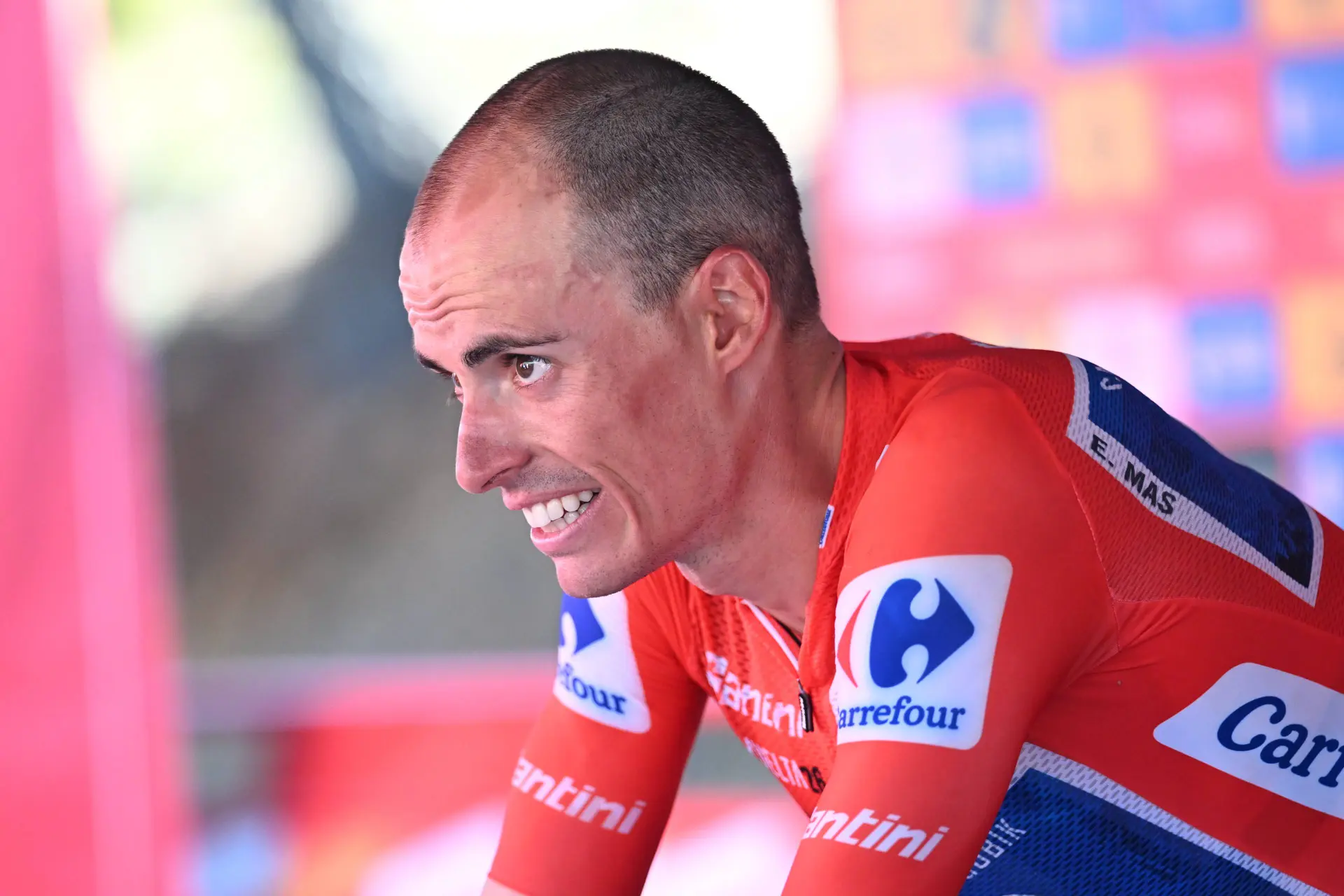
The presence of Tadej Pogacar or Jonas Vingegaard, for example, would raise the bar for any overall contender. Enric Mas would also have to be considered, given his greater ability to sustain his efforts in demanding endurance races and Grand Tours. The absence of any of those riders could change the picture, although a missing favourite would never, on its own, guarantee Ayuso a chance of overall victory.
In that context, Ayuso could take an approach closer to that of a stage hunter. Getting into mountain breakaways, making the most of explosive finishes and choosing the days on which he has a realistic chance of winning would allow him to race without the constant pressure of defending an overall position. Richard Carapaz’s experience at the Tour de France demonstrates the value of remaining aggressive even when overall victory is out of reach.
The Vuelta would also allow him to end the season with targets shaped by how he feels and how he has performed throughout the year. If Ayuso arrives in the form to challenge for the general classification and the circumstances are favourable, he could reconsider that option. But if he again struggles on the longer, more demanding stages, persisting with the same approach would risk repeating the mistakes of 2026.
The priority must be to rediscover his winning instinct, broaden his targets and establish his own identity as a rider. At 24, Ayuso still has time to do so. In 2027, he should stop trying to fit a single mould and start making full use of everything he has to offer.
Javier RampeCycling Journalist
Javier Rampe is a sports analyst with more than 15 years of experience. He holds a degree in Economics from the University of Rome and a Diploma in Business Studies from the University of Cádiz. Despite coming from an academic background not particularly associated with cycling, his passion for both cycling and journalism was instilled in him from an early age. He grew up following Miguel Indurain and José María “El Chava” Jiménez. An admirer of Michael Robinson’s communication style and journalistic approach, he was inspired to pursue a degree in Journalism at the University of Buenos Aires, which he is currently completing.
He has always maintained close ties with the worlds of sport and culture, contributing from a young age to sports blogs and film and music review websites. His work has appeared in media outlets such as Cope, RAI, and Radio Con Vos. He is also the founder of the cycling-focused podcast El Contraanálisis and the football interview channel Días De Fútbol, dedicated to conversations with professional footballers.
In addition to his work at Ciclismoaldia, Javier has interviewed some of the most influential figures in modern cycling, including Alejandro Valverde and Tadej Pogačar, as well as key voices in anti-doping policy such as Alberto Yelmo, David Varillas, and Marcelo Milano. Marcos Maynar, in relation to the ‘Operación Ílex’ case, is also among the personalities he has interviewed. He enjoys conducting in-depth analysis of the cycling ecosystem and has attended major events such as Strade Bianche, the Vuelta a Andalucía, and Itzulia, as well as numerous national cyclo-cross races.
His background in economics, combined with extensive experience in marketing and corporate communications, drives his continuous study of positioning strategies and ensures that he always keeps his focus on crafting compelling and evocative headlines.
claps 0visitors 0
Just in
Popular news
Latest comments
- I raced as an amateur for 12 years, including six years on my country’s national road cycling team. I secured two national titles and competed in three World Championships plus more than 15 international stage races. At 23, we travelled to Italy for a training camp—or so I assumed. On a rest day, we watched a presentation about adopting a more “professional” training approach. It was crystal clear what “professional” meant. That moment first exposed me to this dilemma. After returning from Italy, I left cycling—at least at the competitive level I had known. Over the following two years, the whole team was caught doping. I hold that everyone is innocent until proven guilty. In my view, current stakeholders operate on a different scale, and the sums involved are vast. I am unsure whether any doping would ever be revealed. I try to stay positive and enjoy the show. My 2c.
 vannpelt17-10-2026
 - Fiver he wins 🤣
 leedorney17-10-2026
 - “…measures to reduce speeds.” Might as well shorten the race course to just 50km as well? ASO generates at minimum €300m a year and 30- 40% profit. Maybe stop being greedy and spend more of the profit to protect the riders instead.b3tlla17-10-2026
- he also had quite the life off the bike during his pro years. he used his celebrity status to full affect.mij17-10-2026
- Nairo and Froome’s battles were great.mij17-10-2026
- I think it is a good sign to have only signed a couple of riders. it shows their system is working - retention of their own riders and using their development squad. As for retention of their own riders, they won a GT, a monument, they took a points jersey in another GT. They have a U23 WC. They have multiple one day and one week race wins. Keep the core. Their development squad has delivered fantastic results. And for all the talk of Vismas decline, their culture must be amazing since no one signed elsewhere. That is a very GOOD sign.mij17-10-2026
- Why is it beyond people's intellectual capabilities to stop accusing others of doping without proof? How are we supposed to live in a world where suspicion is evidence of guilt?This is pure infantile asinine nonsense.
 Brucegel17-10-2026
 - is that the standard for sharing thoughts here?OCexile17-10-2026
- If he was less brilliant than usual at the Tour, then I don't even want to imagine his 'usual' level of brilliance.Cooldude17-10-2026
- ok, i take back my wish. you’re right, i didn’t stop to think about how much i was damaging the sport. that was a close one. sometimes i forget how much power i wield and how capricious i can be…OCexile17-10-2026
Loading
Write a comment