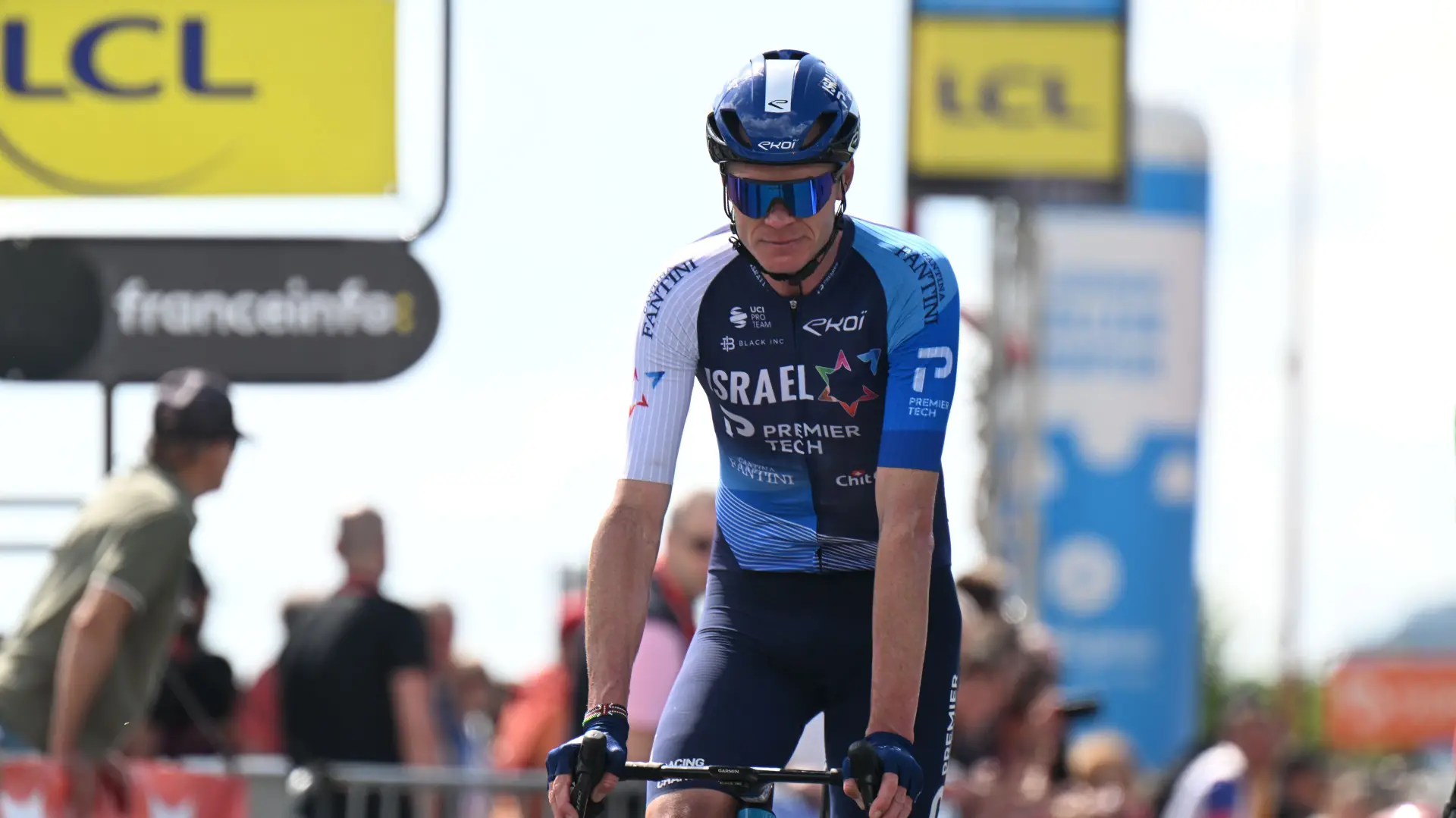
Chris Froome was once the greatest rider on the planet.
Throughout the 2010s, the Kenyan-born Briton dominated the world of
professional cycling, particularly in the Grand Tours. With four Tour de France
titles (2013, 2015, 2016, and 2017), two Vuelta a España wins (2011 and 2017),
and a stunning Giro d’Italia victory in 2018, Froome stood at the pinnacle of
the sport. His relentless climbing ability, tactical intelligence, and
devastating time trial skills made him nearly unbeatable in the mountains and
essential stages. Yet, the remarkable highs of his career have since been
overshadowed by a steep decline, particularly after his transfer to
Israel-Premier Tech in 2021.
The question many are left asking is: What went wrong for
Froome, and why has his career, once so unstoppable, taken such a sharp turn
for the worse?
Read also

Froome’s dominance in the 2010s
To truly understand Froome’s fall, we must first appreciate
just how good he was. Standing at 6ft 1in, Froome towered over many of his
Grand Tour rivals. His lean build, combined with his unique climbing technique,
made him formidable on the steepest ascents of the Alps and Pyrenees. Froome’s
dominance began in earnest with his first Tour de France victory in 2013, where
he rode away from rivals like Alberto Contador and Nairo Quintana. Froome
didn’t just win; he often destroyed his competition in the mountains and time
trials alike.
Between 2017 and 2018, Froome achieved what few riders have
ever done, he held all three Grand Tour titles simultaneously. After winning
the Tour and Vuelta in 2017, Froome launched an audacious attack in the Giro
d’Italia in 2018 that would go down in history. On the 19th stage of the Giro,
Froome attacked on the Colle delle Finestre with 80 kilometers left to ride,
bridging across a breakaway and taking the maglia rosa. It was a performance
for the ages, one that firmly cemented his place among cycling’s all-time
greats. Not even Tadej Pogacar, who won the prestigious “triple crown” in 2024,
has won all three Grand Tours yet, and he certainly would have been proud of an
attack like Froome’s in the Giro.
But the glory of Froome’s greatest wins, where he rode away
from legends like Vincenzo Nibali, Fabio Aru, and Quintana, stands in stark
contrast to the rider we see today.

The horror crash
Froome’s decline can be traced back to one tragic event: his
horrific crash in 2019. While reconning a time trial stage at the Critérium du
Dauphiné, Froome crashed into a wall at high speed, suffering multiple
fractures. His injuries included a broken femur, elbow, ribs, and a collapsed
lung. The crash was life-threatening, and Froome spent months recovering.
Though he returned to racing in 2020, he has never been the same rider since
that fateful day in 2019.
The severity of his injuries cannot be overstated. Froome’s
power on the bike, particularly in the mountains and time trials, was
significantly diminished. Despite the heroic comeback attempt, his performances
were a shadow of his former self. The physical toll of the injuries, combined
with the mental strain of returning to the peloton, left Froome struggling to
find his old form.

Chris Froome has never recovered from his 2019 crash
In 2021, Froome made the high-profile move from Team INEOS
(formerly Team Sky) to Israel-Premier Tech. The transfer, however, has proven
to be a disaster for both Froome and his new team. Although he remains one of
the highest-paid riders in the peloton, Froome’s results have not justified the
substantial investment. As Michael Rasmussen brutally stated, Froome’s time at
Israel-Premier Tech has been “the worst cycling signing in world history.”
Froome’s performance since joining Israel-Premier Tech has
been dismal. He has failed to score a single UCI point in 2024, with his best
result being a 21st place finish on a stage in the Tour du Rwanda. Froome, once
the dominant force in Grand Tours, has not raced in one since the 2022 Vuelta a
España, where he finished a lowly 114th. To make matters worse, he was entirely
left out of his team’s squad for the 2024 Tour de France, a race he once made
his own.
In an interview with Cycling Weekly, Israel-Premier
Tech’s team owner Sylvan Adams candidly admitted that Froome’s signing had not
delivered value for money. “Chris isn’t a symbol, he isn’t a PR tool, he’s
supposed to be our leader at the Tour de France and he’s not even here,” Adams
said, adding that Froome’s hefty salary has not been justified by his
performances.

The fall of INEOS Grenadiers
Froome’s downfall mirrors the fall from grace of his former
team, INEOS Grenadiers. Once the dominant force in professional cycling, INEOS
has endured one of their most challenging seasons in 2024. The team that once
boasted Froome, Geraint Thomas, and Bradley Wiggins as Grand Tour winners now
struggles to make an impact in the biggest races.
INEOS’ inability to adapt to the new generation of cycling,
dominated by the likes of Tadej Pogacar and Jonas Vingegaard, has been shocking.
The team, once known for its methodical, almost mechanical approach to Grand
Tour victories, has lost its edge. Just as Froome’s career has declined, so too
has INEOS’ dominance. The 2024 season has been particularly brutal for the
team, with little success in the Grand Tours or monuments. Perhaps the INEOS
and Froome divorce, was a catalyst to their respective declines.

Froome’s downfall is particularly glaring when compared to
today’s stars. Riders like Pogacar and Vingegaard are not just winning races, they
are doing so with the same dominance that Froome once displayed. In the 2022,
2023 and 2024 Tour de France, Vingegaard and Pogacar have battled for
supremacy, and the pair have won each of the last five editions of the Tour
between them. These riders have taken Froome’s place as the kings of the
mountains, riding away from their rivals with the same ease that Froome once
exhibited.
Froome’s last Tour de France stage win came in 2017, a full
seven years ago. In an interview with Eurosport earlier this year, Froome
expressed his desire to end his career with one more “amazing” stage win at the
Tour. Yet, as things stand, that seems an increasingly distant possibility.
Froome’s mountain performances, once awe-inspiring, now pale in comparison to
the climbing power of Pogacar, Vingegaard and Remco Evenepoel.
Can Chris Froome comeback?
With one year left on his contract at Israel-Premier Tech,
the question remains: Is there any chance Froome can stage a comeback? Based on
his recent form, the odds seem slim. Froome’s crash in 2019, his age (now 39),
and the demanding nature of modern cycling have all worked against him. While
the dream of one more Tour stage win persists, the reality is that Froome’s
time at the top has passed.

However, Froome’s persistence is undeniable. Despite the
harsh criticisms and poor results, he has refused to retire early. His desire
to keep racing, even when the results don’t follow, is a testament to his love
for the sport. Whether Froome can rediscover some form of his former self in
2025 remains to be seen, but his legacy as one of the greatest riders in
history is already secure.
Froome’s transfer to Israel-Premier Tech is just one of many
failed cycling transfers that have failed to deliver results. Other notable
examples include Peter Sagan’s move to TotalEnergies, which has seen the
Slovakian star struggle to replicate his earlier success, and Nairo Quintana’s
switch to Arkéa-Samsic, which didn’t lead to the Grand Tour success that both
the team and rider had hoped for.
These moves highlight the risks associated with high-profile
transfers in cycling. Teams often invest heavily in established stars, but as
Froome’s case shows, age, injuries, and changing dynamics in the peloton can
quickly diminish a rider’s value.

A legend nonetheless
Chris Froome’s career has been one of the most storied in
cycling history. Thanks to his legendary wins in the Tour de France, Vuelta a
España, and Giro d’Italia, Froome’s place in the sport’s hall of fame is
secure. Yet, the latter years of his career have been marked by a sharp
decline, one that has been exacerbated by his ill-fated transfer to
Israel-Premier Tech.
While Froome’s current results are a far cry from his past
glories, we shouldn’t forget his former career and the true legend he is of our
sport.

Fin MajorCycling Journalist
Fin Major is a UK-based writer at CyclingUpToDate and has been part of the team since 2024. He is the site’s main writer for FAQs and evergreen explainers and has written around 2,000 pieces for the platform. Alongside this work, he focuses on in-depth analysis and covers the biggest races on the calendar, including the Tour de France, the Giro d’Italia, and La Vuelta a España, providing clear context around performance trends, tactics, and key storylines.
In his reporting, Fin uses reputable data sources such as ProCyclingStats for results, statistics, and historical context. He places strong emphasis on careful sourcing, editorial accuracy, and updating articles promptly when new, verified information becomes available. Outside of writing, Fin is an active cyclist, which supports his practical understanding of the sport and its demands.
claps 4visitors 4
Just in

Popular news

Latest comments
- I get the point totally. We live in the snowflake society where some riders forget they are getting paid to ride and get results. When they have a few issues they try to look outside of the real issue instead of themselves. It odd so many of the team are making no complaints and getting on with their job. If you do not like what you do find another job simples. Tough love as my mum would say.paultryan200207-11-2026
- many people advise him to grow slowly and rather do giro and/or vuelta instead of tdf. but i can totally understand that he is not satisfied with taking over once pogi declines, but instead beat him in his prime. so if he goes for tdf again, i‘m all for it. let‘s hope that pogi recovers soon!Ketterechts07-11-2026
- So gracious to offer something no-one would be prepared to pay for. The Giro is not the Tour and doesn’t command the same interest or attract the same “elite” (those willing to pay to be a part of something they consider has ego boosting potential). Roadside viewing will always largely remain free for everyone outside circuits. Introduction of a symbolic entrance to mountain climbs is worthy of exploration. Asking 1-2€ isn’t going to repulse real fans (most will spend 50-100€ on their outing that day all things included) but will prevent a portion of the total knobhead thrillseekers who will join in any large gathering as long as it’s free, just because they’re attracted to crowds, without which it it difficult for them to work up their anti-social behaviour.Jumpyjohn07-11-2026
- How is radio going to help when someone went over a cliff or bridge or off the roadside into a forest unnoticed and is laying there unconscious?Jumpyjohn07-11-2026
- Yep, next we’ll be accusing F1 drivers of avoiding Le Mans.Jumpyjohn07-11-2026
- But on what is that opinion based? Are you holding him to a different standard than others? Are you saying he should do learn to like something he doesn’t Are you saying he hasn’t achieved enough Are you saying he pretends to be better than his results? It’s actually a really strange opinion to oust if you consider it objectively or rationally. Try applying it to others or yourself by asking if not EVERYONE should then be doing more? Nobody in athletics or swimming gets criticism for not expanding their repertoire when a rival or someone else does. In fact, most who move to another event get accused of running from their rival. Opinions are boring, the reasons behind them are what count.Jumpyjohn07-11-2026
- for a medical chief to throw things like is just bad. There are already radios which were banned for spectacle. allow radios. Gps trackers are not a complete solutionabstractengineer07-11-2026
- Yeah man...PogiSloFans07-11-2026
- any rider less than 25 whether they are really ready for the position of leadership of GT is probably not the case. I think Pogi himself suffered when he was defeated by Jonas in the TDF twice. But that would be the team's job to ensure support so that they can bounce back. It requires a team and time to get back up and win after getting knocked down.abstractengineer07-11-2026
- I'm very glad he got the big late Quickstep Vuelta win and I hope he has a few left for Euskaltel-Euskadi.flyer07-11-2026
Loading
5 Comments