"All the strongest have been caught for doping, except Cunego and Bettini" - Former pro Riccardo Riccò launches huge doping accusations against Italian legends
Cycling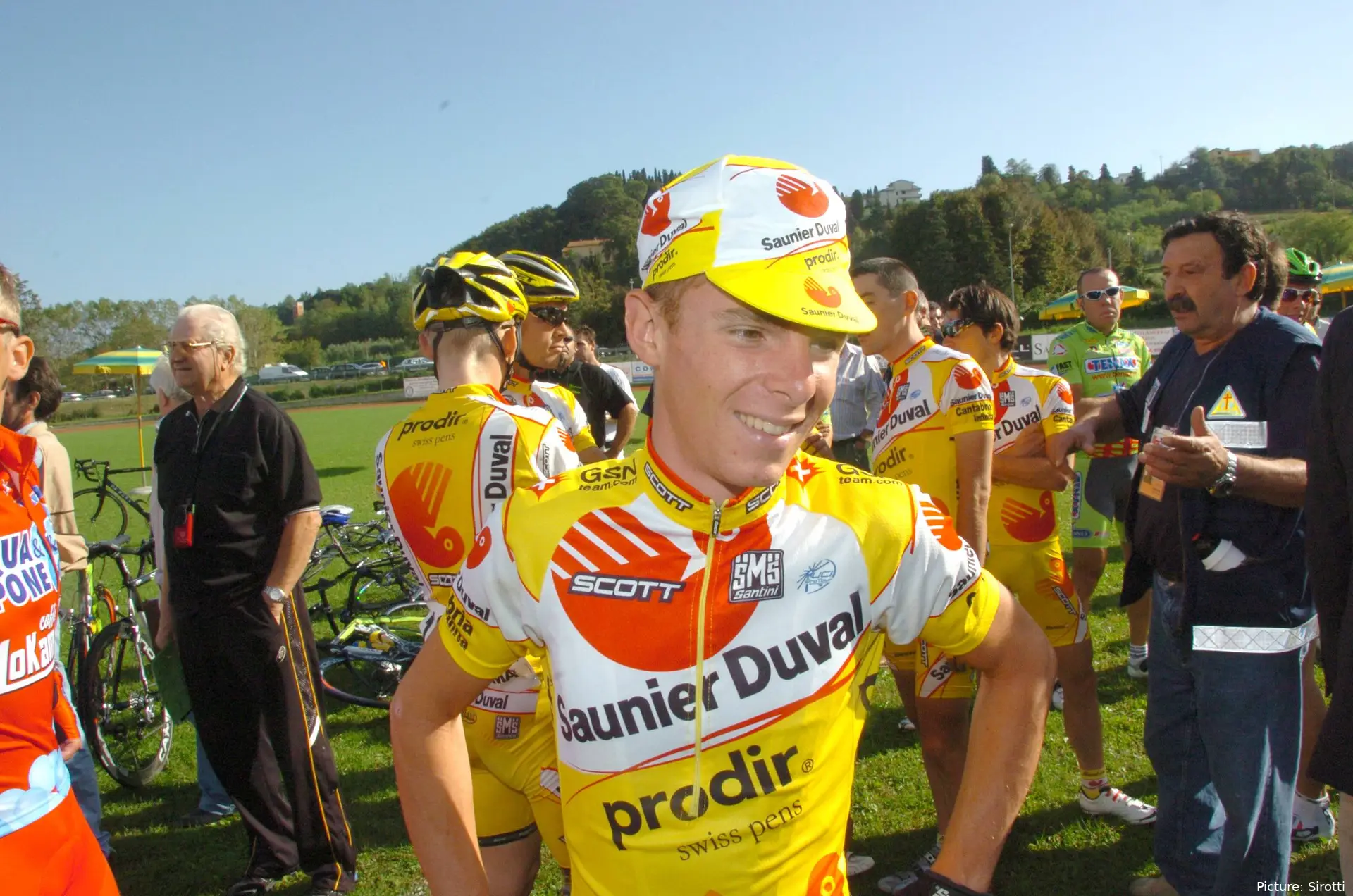
Riccardo Riccò’s life has taken a sharp turn away from professional cycling. Banned for life after several doping-related episodes, the Italian has rebuilt his day-to-day outside competition, focused on his business and a calmer relationship with the bike. In an interview with La Stampa, the former rider looks back on his past, owns his mistakes, and explains how he managed to recover after the hardest moments.
A pure climber, at the height of his time he battled for some of Italy's most prestigious races such as the Giro d'Italia and Il Lombardia, coming close to winning both but taking several high-level wins during his stint as a pro. Riccò was part of the disgraced Saunier Duval team, in which he performed well above expectations in his first years as a pro, which featured three Giro d'Italia wins. In 2008 he was second to Alberto Contador, but this level was not reached naturally, but instead through the use of CERA, a third-generation form of EPO.
However his doping habits did not stop after the suspension he was given. In 2011 he confessed to blood transfusions, after one such almost ended his life - although he initially denied his use of the forbidden procedure.

Riccardo Riccò, cyclist banned for life for doping
Riccò acknowledges the impact of his fall from grace: “They destroyed me, I went through tough times, fell into depression and other complicated situations, but I don’t want to play the victim.” For years, cycling was a painful memory: “I got back on the bike three years ago, after ten in which it hurt to see my former rivals racing and winning. It reminded me of what I couldn’t do. I didn’t even watch the races.”
With time and professional help, his perspective has shifted: “Then I began to process it, also thanks to therapy. Now I’m at peace, even though the wound is still there.” Today, cycling is no longer his profession, but it remains in his life as a hobby: “I use apps to compare myself with the pros’ times and I’m still competitive.”
The Italian also keeps a link to the sport through amateurs, whom he advises: “Besides giving tips, I do some coaching. I know two or three things about cycling. I’ve suffered and I’ve won, so I said to myself: why not? I’m coaching eight amateurs now, I enjoy it, it’s my world.”
On his past, he doesn’t dodge responsibility, though he frames the era: “I’m not looking for excuses and I accept my guilt, but over time many other cases have come out".
The Italian has also launched a stunning remark against two of his compatriots, some of Italy's most successful riders of the 21st century. "If you look at the list of riders, all the strongest have been caught for doping, except [Damiano] Cunego and [Paolo] Bettini".
"When there’s business involved, that’s how it works.” In the same vein, he claims he was part of a widespread dynamic: “I was doped when everyone was doped.”
One of the most serious episodes of his career was the self-blood transfusion that nearly cost him his life, a practice he describes starkly: “It wasn’t the first time I’d done it. I’d been doing it for a year, because it was the only way not to test positive: you take your own blood and then put it back in.” As he explains, it wasn’t an isolated idea: “I didn’t invent it. Moser set the Hour Record in Mexico City and said publicly that he’d done it.”
Acting without weighing the risks
Riccò admits he acted without weighing the risks: “With self-administered transfusions, it’s something that can happen. I wasn’t afraid and I did it carelessly. If I’d injected cortisone immediately, nothing would have happened, but I didn’t know and, at twenty, you feel omnipotent.”
Regarding his lifetime ban, he argues that his situation was aggravated by a case in which, he says, he had no direct responsibility: “I got caught up in a trafficking case involving doping substances that I had nothing to do with, and I proved it in court, but sporting justice wanted to remove me for good and it succeeded.”
Rúben SilvaEditor-in-Chief
A founding contributor to CyclingUpToDate since its launch in January 2022, Ruben Silva has played a central role in shaping the site’s editorial direction and long-term growth. Before joining the project, he built his experience through independent blogging at Echelons Hub and by producing race previews for Ciclismo Internacional, developing a strong analytical voice rooted in daily engagement with professional cycling.
Beyond editorial work, he has been closely involved in the expansion and coordination of CyclingUpToDate’s wider network, helping establish and support sister platforms across multiple languages. This includes ongoing collaboration with CiclismoAlDia (Spanish), CiclismoAtual (Portuguese), WielrennenUpToDate (Dutch), and RadsportAktuell (German), contributing to a shared editorial vision and consistent international coverage.
He also helps oversee editorial governance across the network, setting standards for accuracy and consistency and coordinating updates or corrections when needed.
Originally from the Porto metropolitan area in Portugal, he holds a bachelor’s degree in Geography. His path into cycling journalism was shaped not through formal media training, but through independent reporting, community engagement, and sustained on-the-ground involvement in the sport.
Over the course of his career, he has conducted approximately 100 interviews across road cycling and cyclocross, ranging from one-to-one conversations and online formats to press conferences and on-site pre- and post-race coverage. His interviews include leading riders, team managers, and prominent figures within cycling media: Tadej Pogacar, Jonas Vingegaard, Mathieu van der Poel, Primoz Roglic, Wout van Aert, Joao Almeida and Tom Pidcock; managers like Patrick Lefevere and Joxean Matxin; and YouTube personality Bryan Kennedy (BKXC)...
Within 18 months of launch, he helped grow CyclingUpToDate’s English-language platform into one of the most-read cycling news websites, built entirely from the ground up. As both a professional journalist and lifelong cycling enthusiast, his focus remains on delivering accurate, timely, and well-contextualized coverage.
claps 10visitors 6
Just in


Popular news
Latest comments
- he had one good year of his career. gotta think he was doping hard.mij25-11-2026
- bam! two grand tour starts claimed by the younger sprinter just like this. what if merlier also plans for 2 grand tours?Ketterechts25-11-2026
- writing about yourself in third person ... please, at least have someone else from your staff author these self-coverage articles!Ketterechts25-11-2026
- Don’t forget Yates’s podium at 2023 TdF!Lozza25-11-2026
- It was stage 14 to Morzine that Carlos Rodriguez won in 2023, not Puy de Dome. And Kwiato actually won the previous stage himself to Grand Colombier!Lozza25-11-2026
- Go Pogi!! 🐐❤️Lozza25-11-2026
- They didn’t have or need “extraordinary information”. All they needed was for a French judge to sign off on the night-time testing for it to go ahead.Lozza25-11-2026
- If the sponsors voted for Primoz then you get him, otherwise not.flyer25-11-2026
- It sure can feel or seem that way but I wonder if the same amount of prodigious performances (compared to the others) would occur if no one was ever doping at all.flyer25-11-2026
- Given the similarity of two articles (published on I think the same date), I'm reusing (copy-n-pasting) my post from the twin: I've always thought the last day of each of the grand tours was problematic mostly in that the GC is considered completed before the race starts when that is not really true. There is some tension, but not desirable tension. What saves the awkward practice is the race finish is legit for those who participate - so it's not wholly different from the other stages. That neutralizations usually make good sense demonstrates their necessity so if that has to be the way to go I agree that the design plan for the neutralization should be completed before the race starts. This years end stage in the Vuelta had one of the best first half's I've seen in that many of the riders looked to be thoroughly enjoying themselves making it a joy to watch. But I think it was slightly closer to the exception rather than the rule.flyer25-11-2026
Loading
4 Comments