"A 19-year-old Bernard Hinault – that's the level we're talking about": Marc Madiot raves about French wonderkid Paul Seixas
Cycling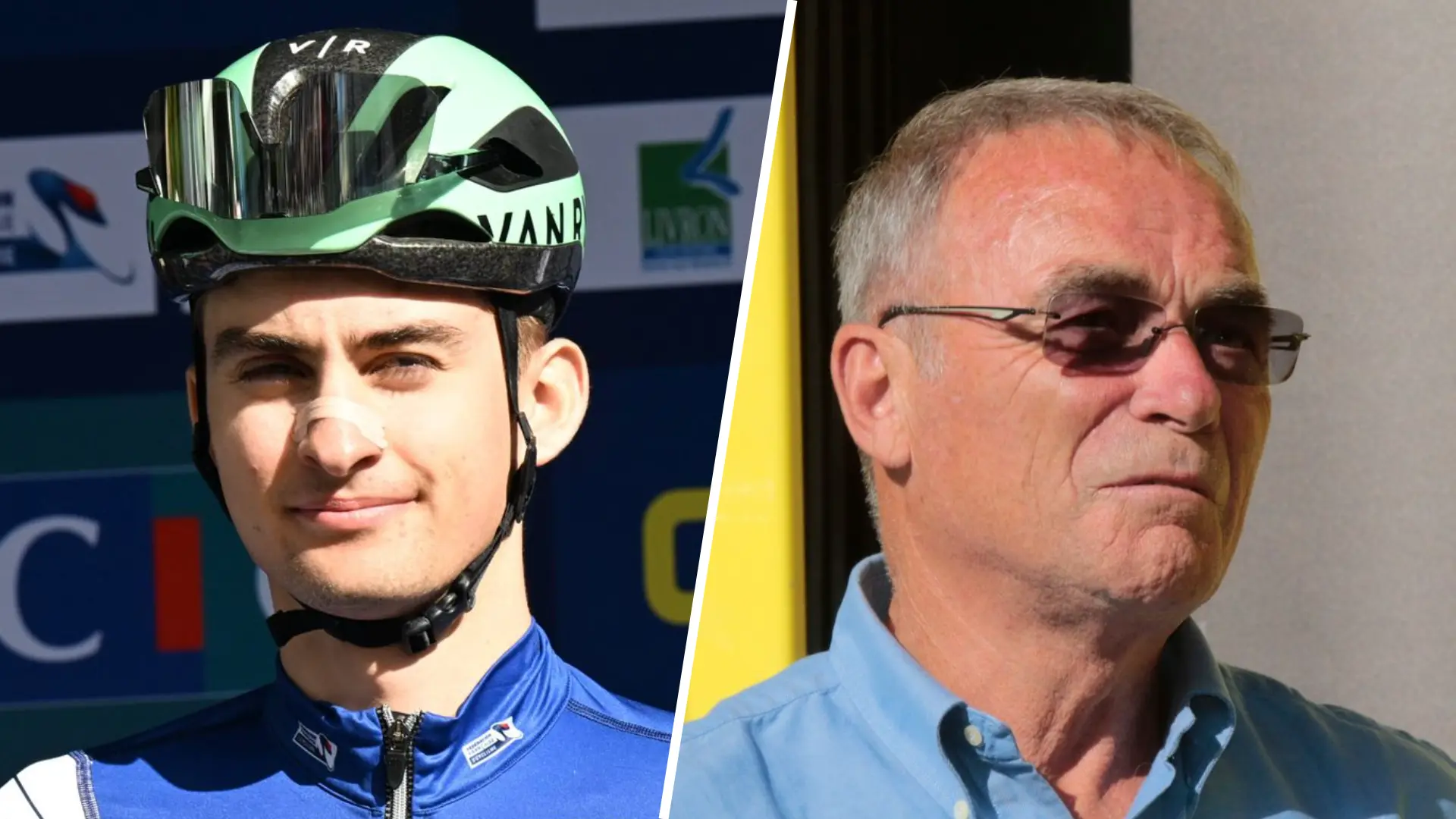
Few figures in French cycling command the same respect or longevity as Marc Madiot. The Groupama - FDJ boss, now into his fourth decade as a manager, has seen just about everything the sport can throw at him. Yet even he sounds genuinely excited when the conversation turns to 19-year-old Paul Seixas.
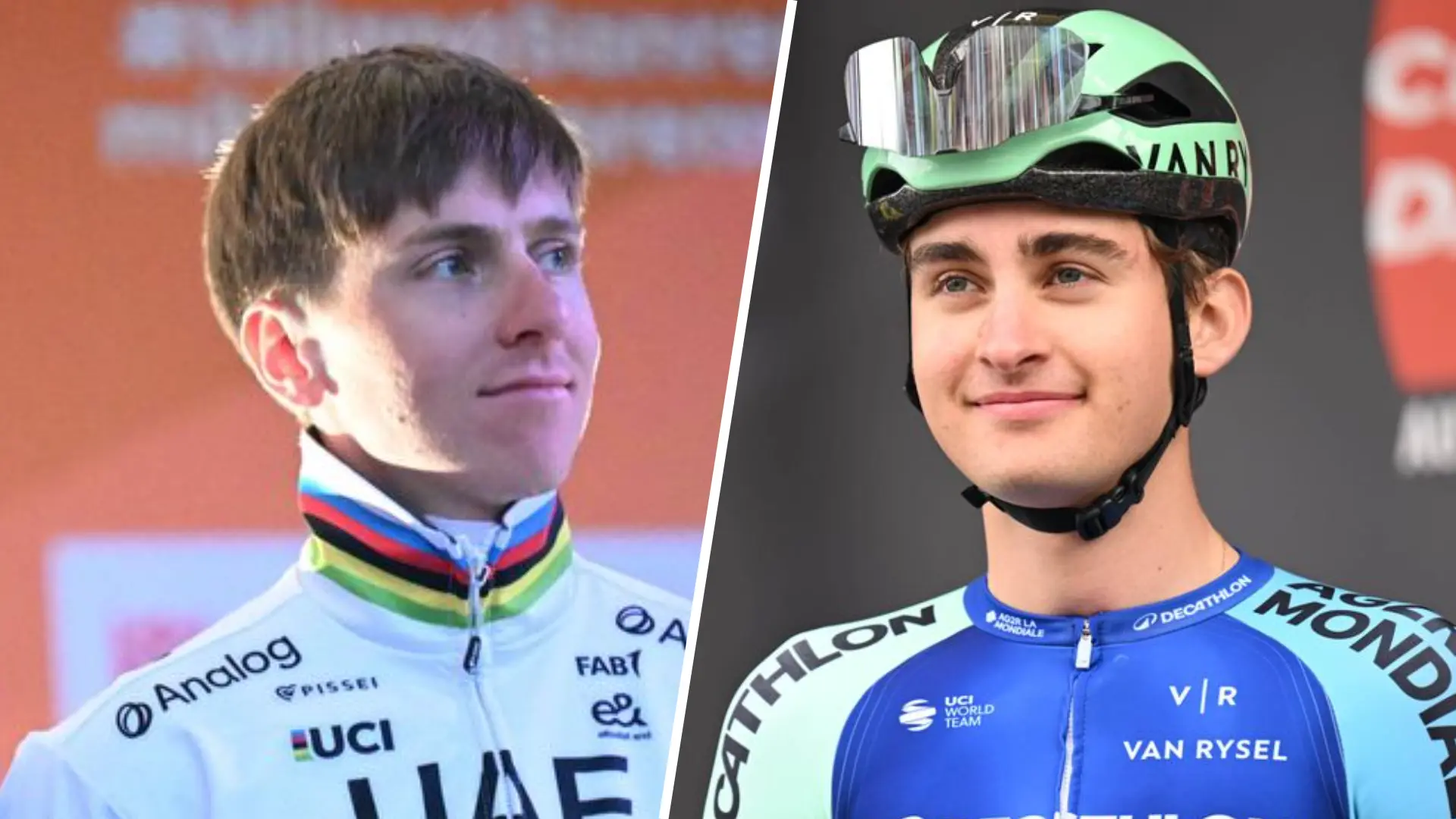
Speaking to Cyclism’Actu, Madiot was effusive in his praise for the teenager, whose dazzling late-season run included standout rides at the World Championships, European Championships and Il Lombardia. “I think he’s a phenomenal rider,” Madiot said. “He showed his class in the junior ranks and confirmed it immediately at pro level. If you put a 19-year-old Bernard Hinault in today’s context, he’d have the same capabilities as Paul Seixas — that’s the level we’re talking about.”
Madiot’s comparison is as bold as it is revealing. Hinault remains the ultimate reference point for French cycling – a five-time Tour de France winner, unflinchingly tough and utterly complete. For the Groupama–FDJ manager to place Seixas in that sort of company suggests the teenager’s potential has struck a rare chord.
“The phenomenon of youth is part of modern cycling,” Madiot continued. “Riders are better prepared, better trained, better educated. They’re ready much earlier than before. It’s true in cycling, and in other sports too — look at football. The new generations are more advanced physically and mentally because they’re better managed and better supported.”
Hope and concern for French cycling
While Madiot’s admiration for Seixas is clear, his tone shifts when the discussion broadens to the state of the French cycling ecosystem. The collapse of Arkéa - B&B Hotels, confirmed this week after Emmanuel Hubert failed to secure a new sponsor, has clearly hit a nerve.
“It’s sad for everyone — for the riders, the staff, for Manu himself,” Madiot said. “We know it’s a delicate economic period in France, and cycling is changing fast. Traditional cycling nations like France and Belgium are struggling to keep pace with the global economic expansion. I just hope the UCI will put safeguards in place to allow everyone to survive, because otherwise we’re heading for real difficulty.”
It’s a striking warning from a man who’s spent decades navigating the sport’s shifting financial tides. Madiot recalls an earlier era of French unity — when teams, riders and organisers maintained what he calls a “cohesion” that sustained the sport for forty years. “We had good races, strong teams, and harmony between everyone involved. That’s what got us through difficult times in the past. I just hope we can continue to evolve under good conditions — and above all, that we can try to preserve French cycling while it’s still possible.”

Marc Madiot has seen it all in terms of French cycling
“UAE dominating everything? It’s almost logical.”
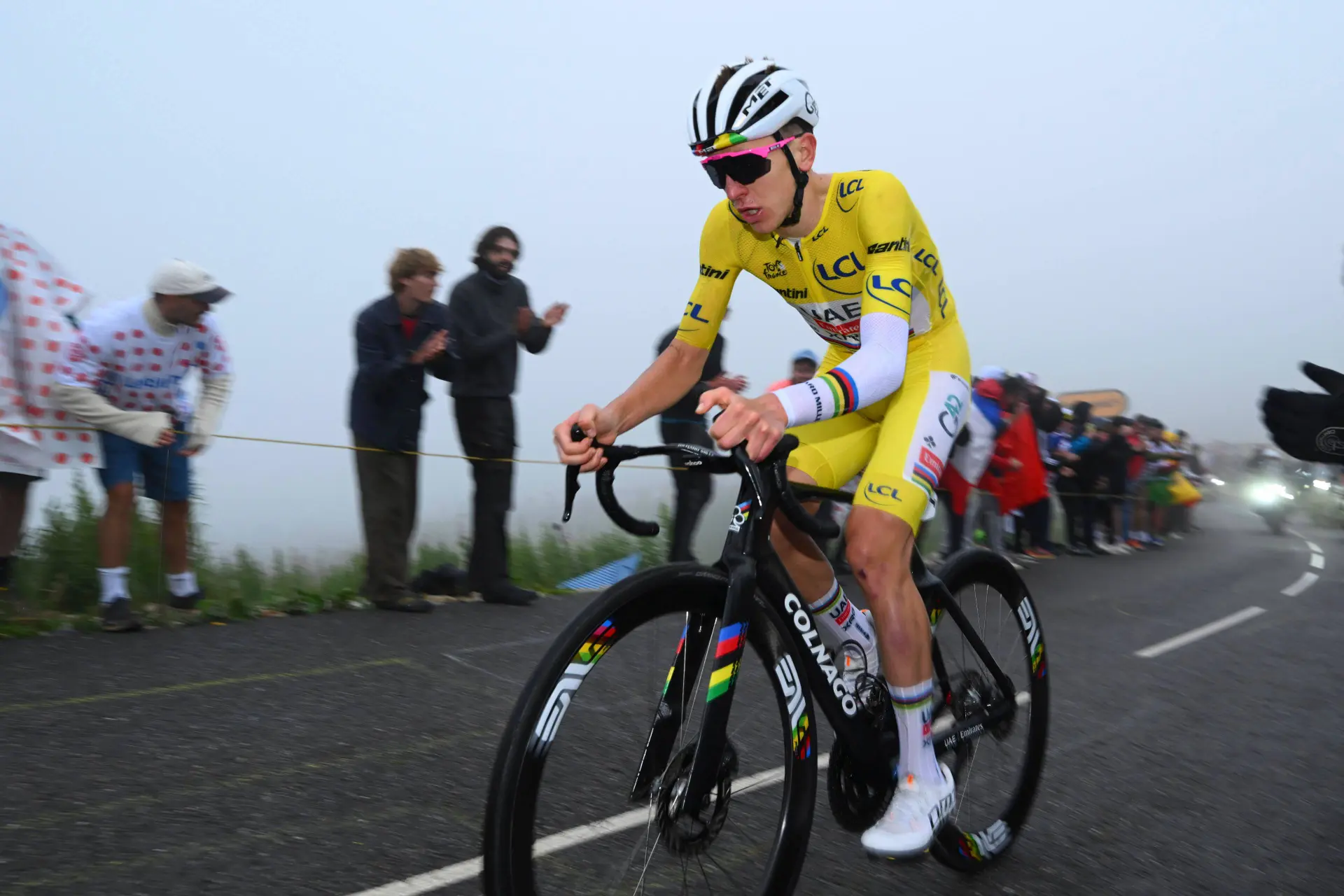
Beyond France’s internal challenges, Madiot also acknowledges a broader truth about the balance of power at the top of world cycling. UAE Team Emirates - XRG’s dominance — closing in on 100 wins this season — has raised questions about competitive imbalance. For Madiot, though, such supremacy is simply the natural order of things.
“The biggest teams have always won the most races,” he said. “Those with the biggest budgets are best placed to win more often. UAE dominating the season is almost logical — even normal — when you look at their depth. Out of 30 riders, 26 or 27 could be leaders anywhere else.”
It’s a pragmatic, unsentimental take — characteristic of a manager who’s lived through many eras of boom and bust. For all the talk of fan fatigue and predictable racing, Madiot remains convinced that enthusiasm will reset once the new season begins. “Fans might feel a bit of weariness, yes, but everything resets when we start again. By January, with Australia and the Tour Down Under, there’ll be excitement and motivation again — from both teams and fans.”
A model built on youth
Despite his concern for the wider landscape, Madiot continues to build for the long term through Groupama–FDJ’s renowned development system — a structure once considered overly forward-thinking, now proven essential.
“People criticised us for focusing on young riders thirty years ago,” he said. “Maybe we were too far ahead at the time — but it’s always been our model. The youth structure is the foundation of the team. Every few years, new talents arrive at the top level, and I hope they’ll keep progressing next season.”
Asked to name the next big name to emerge from the Groupama–FDJ academy, Madiot refused to single anyone out — a hint that the system, rather than any individual, is what matters most. “We’ll see with time,” he smiled. “Hopefully there’ll be several. We don’t want just one — we want a strong, ambitious young core.”

Groupama - FDJ pose for a team photo
From Hinault to Seixas
For all the uncertainties surrounding sponsorships, budgets and the UCI’s points system, Madiot still finds solace in the sight of young French talent breaking through. His comparison between Paul Seixas and Bernard Hinault may have raised eyebrows, but it captures something essential: belief that French cycling, for all its fragility, still produces riders capable of greatness.
“If Bernard Hinault were 19 today, he’d have the same abilities as Paul Seixas,” Madiot repeated. “That tells you the level.”
For a sport searching for its next true French superstar, few endorsements could carry more weight.

Kieran WoodDeputy Editor-in-Chief
Kieran Wood is a sports journalist based in Wales and has been active in journalism since 2022. He regularly contributes to DartsNews.com and CyclingUpToDate.com, where he covers professional cycling and darts. In cycling, his work includes liveblogs from major races, including the Tour de France, the Giro d’Italia, and La Vuelta a España, alongside race reports and analysis. He has also conducted interviews with professional riders.
His reporting spans the full racing calendar, from one-day classics to stage races, with a focus on accurate, real-time coverage and clear contextual analysis. For statistics, results, and historical context, he regularly uses resources such as ProCyclingStats. To support reporting on rider activity and training context where relevant, he also references Strava.
In his work, Kieran places strong emphasis on careful sourcing, editorial accuracy, and updating articles as new, verified information becomes available.
claps 0visitors 0
Just in
Popular news
Latest comments
- LOL...it's a predetermined finish ! N one is 'clashing' at these exhibition crits!frieders307-11-2026
- Surely the UCI and the race organisers have a responsibility to ensure the best medical care is available to riders when incidents like this happen. All very well pushing for global expansion but not so good if riders lives are put at risk because medical support is not up to scratch.Andy12306-11-2026
- Well it clearly helps that this was Pidcock's own car, no?Occam06-11-2026
- The American performance at the World's road race was a masterclass in cycling tactics. If it wasn't McNulty, it might well have been Jorgensen or Simmons to take off and win in a solo break.Occam06-11-2026
- What a gimmick
 Rafionain-Glas06-11-2026
- Thats only cause he rides for UAE. In any other team he would be captain in many races atleast. UAE is just to crazymiguel06-11-2026
- He seems to be the rare athlete whose passion and curiosity about life beyond his sport equals his extraordinary achievements in it. It would be great for him to risk less of that life. He seems very grateful and joyful for what he has already attained.
 MarkFour06-11-2026
- As much as I admire and even revere Wout, the less I know about his backside the better.MidnightRider06-11-2026
- Ok, Walt 🤣... Vingegaard would be lucky to get on the poduim. He would not beat Seixas or Del Toro, let alone TP. Then there are the Americans...BD06-11-2026
- So, for starters. Cycling is a saturated, static/dying sport in traditional lands, it will not have resurgences like eg running occasionally does because of several obstacular (yes, I know that’s not a word but don’t make me point out the obvious at your expense) factors. Obviously, like almost everything involving money, there is a desire/need/advantage to growth and that can only come from (developing or just testing) new markets. For me, the WC is the obvious and best choice for several reasons, it comes at the end of the season so is less critical season risk wise, it is not a “pro” team race but nation based which makes integration of uncommon participation more natural. It is a vehicle for redistribution (one of a very limited number of available mechanisms to develop new markers fairly) that the fixed calendar doesn’t allow and it helps make budgets fairer over the long run (moving the whole circus to everywhere evens out everyone’s budget as opposed to having everyone always come to the same location.Jumpyjohn06-11-2026
Loading
1 Comments