10 wins, two second places and one painful exit – Bernard Hinault’s almost unbelievable Grand Tour record
Cycling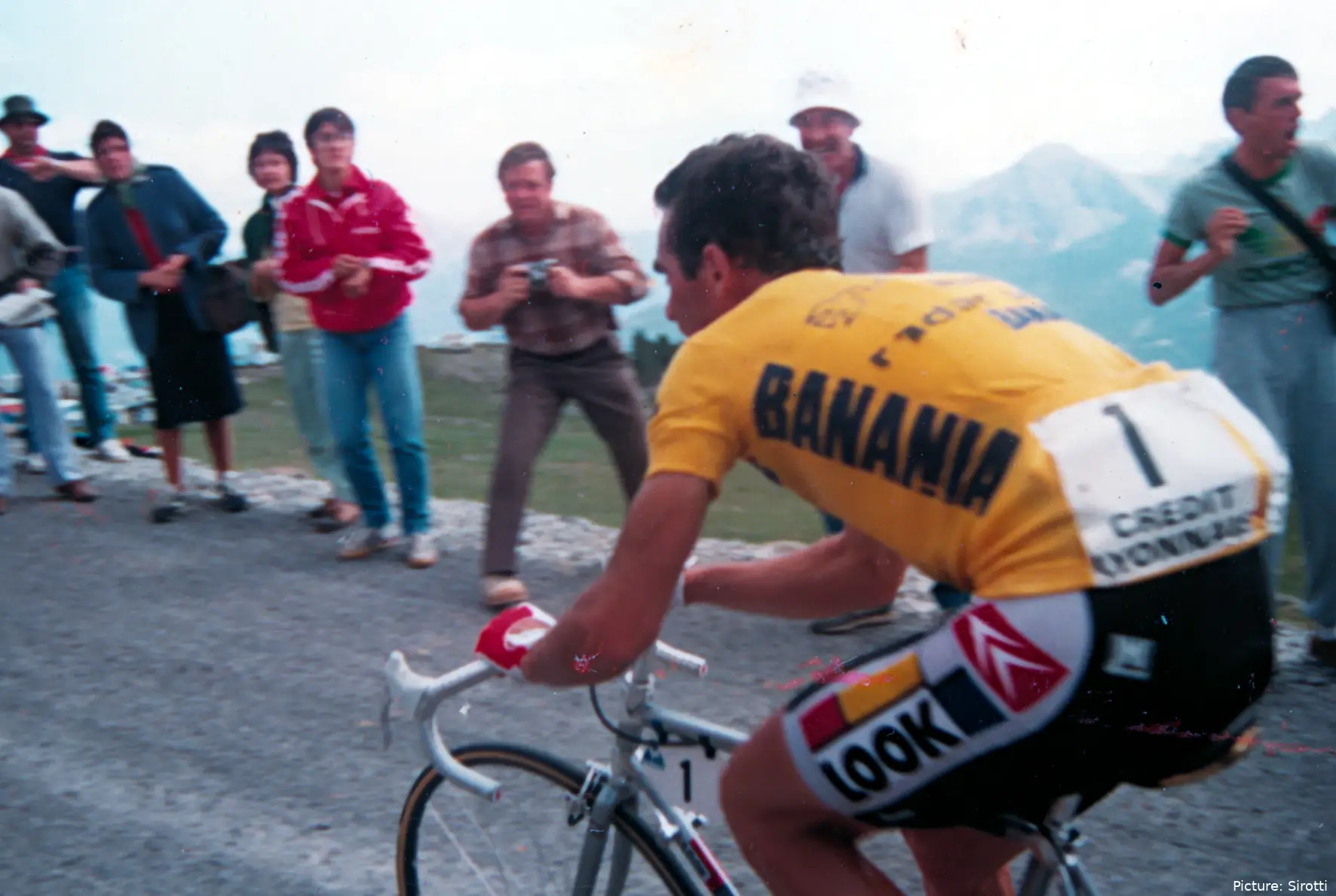
This is the latest instalment in CyclingUpToDate’s Cycling Legends series, revisiting the careers, rivalries and defining moments of cycling’s great champions.
Bernard Hinault won ten Grand Tours from just 13 starts. He claimed five Tours de France, three Giros d’Italia and two Vueltas a Espana, finishing second twice and abandoning once. His record was remarkable not only for its scale, but for its variety. Hinault could climb, time trial and win on the cobbles. He also took the road world title and classics including Paris-Roubaix, Liège-Bastogne-Liège and Il Lombardia.
Known as le Blaireau, or “the Badger”, Hinault built his reputation by racing on the front foot. His career was shaped by fierce contests with Joop Zoetemelk, Laurent Fignon and Greg LeMond, as well as by his partnership with sporting director Cyrille Guimard.
Born on 14 November 1954 in Yffiniac, Brittany, Hinault grew up in a modest family. He first used a bicycle for everyday journeys before taking up racing. In 1971, while still an amateur, he won a race in Planguenoual. He continued working as a fitter until 1974, then turned professional the following year, aged 20, with Gitane-Campagnolo.
Cyrille Guimard planned Bernard Hinault’s rise to the Tour
Hinault’s rise was swift, but his first Tour de France victory did not come from nowhere. Guimard helped him build towards it, setting progressively harder targets and using each successful season as a platform for the next. Hinault later described his first Tour win as the result of that long-term plan.

Greg LeMond and Bernard Hinault on the Alpe d’Huez mountain stage in 1985
In 1977, aged 22, Hinault won the Critérium du Dauphiné Libéré, Gent-Wevelgem and Liège-Bastogne-Liège. The results showed his range. He could win a demanding stage race, handle a fast one-day classic and prevail on steep climbs.
He continued that progression in 1978, winning the French national road race and the Vuelta a Espana before making his Tour debut. The Vuelta that year covered 2,995 kilometres over 19 stages, a shorter route than today’s race. Hinault took control in the time trials and finished 2 minutes and 52 seconds ahead of Spanish rider José Pesarrodona. It was Hinault’s first Grand Tour win. The official La Vuelta history of the 1978 edition describes how the young Frenchman established himself in the race.
Just months later, Hinault made his Tour de France debut. His principal rival was Joop Zoetemelk, an accomplished climber and time triallist who would finish behind him in three Tours. The two traded blows in the mountains. Zoetemelk gained time on Hinault at the Puy de Dôme, but Hinault’s strength against the clock proved decisive. In the final time trial, he gained more than four minutes and secured the yellow jersey by 3 minutes and 56 seconds.
At 23, Hinault had won the Tour on his first attempt. Zoetemelk had pushed him hard, but the result also announced the arrival of a rider who could turn a close contest around in a single day against the clock.
Joop Zoetemelk gave Hinault his toughest Tour rivalry
The 1979 Tour became a sustained duel between Hinault and Zoetemelk. Hinault was stronger across the race and built a substantial advantage, but the Dutchman kept fighting. On the final stage, he attacked on the Champs-Élysées, when the last day was still a genuine race rather than the largely ceremonial procession it later became. Hinault chased him down, beat him in the sprint and won the stage in the yellow jersey.
Hinault finished 13 minutes and 7 seconds ahead overall and claimed seven stage victories, the most prolific Tour of his career. The margin was large, but it did not mean the rivalry lacked tension. Zoetemelk continued to make Hinault work, and their battles became a recurring feature of the early years of Hinault’s Tour career.
The rivalry did not turn into lasting hostility. In an interview published by Velo on 12 November 2014, Hinault remembered Zoetemelk as the opponent who “gave me the most trouble”. He also described how the contest ended each day: “At 9 am we start the fight, at 5 pm we finish, at 7 pm we eat and laugh together.” The two became friends after their racing careers, and Hinault said they remained on good terms during their competitive years.

Bernard Hinault and Joop Zoetemelk climbing up the Col du Galibier at the 1979 Tour de France
Injury ended Hinault’s 1980 Tour, but not his season
In 1980, Hinault added the Giro d’Italia and Liège-Bastogne-Liège to his record. His Giro victory came after a decisive team effort on the Stelvio. Renault sent teammates up the road ahead of him; Hinault attacked, dropped Wladimiro Panizza on the climb and bridged towards teammate Jean-René Bernaudeau. The move helped establish his authority in the race.
The Giro d’Italia’s Hall of Fame profile confirms Hinault’s three Giro victories and his overall record of ten Grand Tour wins from 13 starts.
The Tour brought a painful setback. Hinault abandoned while wearing the yellow jersey after knee trouble, aggravated earlier in the season at Paris-Roubaix, became impossible to manage. His season was not over. In August, he won the world road title at Sallanches on a brutally demanding course. Gianbattista Baronchelli finished second, 1 minute and 1 second behind, with Juan Fernández third. Hinault had missed the chance to finish the Tour, but still won one of the sport’s biggest one-day races.
His return to the Tour in 1981 was emphatic. Earlier that spring, he had won Paris-Roubaix, a race whose cobbles he famously disliked. He was shaken repeatedly by the rough roads but kept coming back into contention to win. At the Tour, he took five stages and finished 14 minutes and 34 seconds ahead of Lucien Van Impe.
In 1982, Hinault won the Giro and the Tour in the same season for the first time in his career. He became the fourth rider to complete the Giro-Tour double at that point. The Giro’s historical archive records him as the winner of the 1982 edition.

Laurent Fignon turned Hinault’s former team into a rival
Hinault’s second Vuelta victory, in 1983, was no procession. Marino Lejarreta gained time in the mountains, and the race remained open deep into its final week. On stage 17, Hinault attacked on the Sierra de Gredos climbs. Lejarreta and Vicente Belda were the only riders able to stay with him. Hinault won the stage in Ávila, took the overall lead and held it to the finish. Lejarreta finished second, 1 minute and 12 seconds behind.
The Vuelta was Hinault’s last race with Guimard and Renault. He needed knee surgery and could not attempt the Tour that year. In 1984, he joined La Vie Claire, the team built by Bernard Tapie. His return to the Tour ended in second place, more than ten minutes behind Laurent Fignon.
Fignon had been Hinault’s teammate at Renault. Now they led rival teams, and their contest became one of the defining rivalries in French cycling. Fignon won the 1984 Tour with five stage victories, while Hinault was still returning from injury.
In a 2020 interview with L’Équipe, Hinault described the relationship as more complicated than a simple feud. He said they had not started on good terms because they belonged to different generations, but added that they had worked together and learned to respect each other. He called Fignon “a great champion” who had “really made me suffer on the bike towards the end of my career”.
Hinault returned to the top in 1985. He won the Giro and then the Tour, claiming his fifth Tour title and drawing level with Jacques Anquetil and Eddy Merckx. Greg LeMond, his La Vie Claire teammate, finished second, 1 minute and 42 seconds behind. Hinault had struggled with his knee and crashed during the race, but defended his lead with LeMond’s support.
That support came with an expectation. After the Tour, Hinault promised that he would help LeMond win the following year. In its coverage of the 1985 Tour podium, the Los Angeles Times reported Hinault’s promise: “I will sacrifice for you.”

One of Bernard Hinault’s greatest rivals of all time, Joop Zoetemelk at the 1986 Tour de France wearing the world champion’s jersey
Greg LeMond and Hinault’s 1986 promise
The 1986 Tour became a test of whether Hinault would keep that promise. He said he was riding for LeMond, but attacked repeatedly, took the yellow jersey and put his teammate under pressure. Their rivalry played out in public, within the same team, while the Tour was still being decided.
A contemporary Washington Post report, published on 26 July 1986, captured the tension. Hinault told journalists: “I pushed Greg to the limit. I didn’t spare him anything: aggressive words, provocative declarations.” He argued that LeMond’s ability to withstand the pressure showed he deserved to be champion. LeMond, by then in the yellow jersey, questioned Hinault’s motives. The exchange left the promise at the centre of the race rather than settling the question of whether Hinault had honoured it.
LeMond ultimately won by 3 minutes and 10 seconds, with Hinault second. It was Hinault’s final Tour podium. In an article published by TIME on 11 August 1986, Hinault defended his approach with another revealing phrase: “I do things to the limit.” He retired at the end of the season, aged 32.
Bernard Hinault’s palmarès covered Grand Tours and classics
Hinault’s record is remarkable not simply because of its size, but because of its breadth. He won all three Grand Tours and each of them at least twice. He also won stages in all three races: 28 at the Tour, six at the Giro and seven at the Vuelta, for a total of 41 Grand Tour stage victories.
| Race | Victories |
| Tour de France | 1978, 1979, 1981, 1982, 1985 |
| Giro d’Italia | 1980, 1982, 1985 |
| Vuelta a España | 1978, 1983 |
| UCI Road World Championships | 1980 |
| Paris-Roubaix | 1981 |
| Liège-Bastogne-Liège | 1977, 1980 |
| Il Lombardia | 1979, 1984 |
| La Flèche Wallonne | 1979, 1983 |
| Critérium du Dauphiné Libéré | 1977, 1979, 1981 |
He also won the French road race championship in 1978 and five editions of the Grand Prix des Nations, a prestigious time-trial event. At the Tour, he won 28 stages and wore the yellow jersey for 78 days. Those numbers reflect a rider who could win through climbing, time trialling, tactical aggression and strength.
His Paris-Roubaix and Monument victories sit alongside his Grand Tour record. Hinault was not only a stage-race specialist. He was also able to contend across very different kinds of racing.

Guimard, Zoetemelk, Fignon and LeMond shaped Hinault’s career
Guimard was the central mentor in Hinault’s career. The former professional rider became his sporting director and helped plan his progression from young professional to Tour contender. Guimard guided Hinault to four of his five Tour victories. Their partnership ended after Hinault left Renault following his knee surgery, as the team’s focus shifted towards Fignon.
Among Hinault’s long-serving teammates, Bernard Quilfen stands out as a loyal domestique. He rode alongside Hinault for years at Gitane and Renault and was remembered as a dependable teammate who put his leader first.
LeMond’s relationship with Hinault was more complicated. They were teammates, rivals for the Tour and, later, friends. Hinault recalled helping recruit the young American to the team and said he tried to pass on what he knew about racing. Former teammate Andy Hampsten also described Hinault as generous with younger riders who wanted to learn from him.
Hinault has since said he remains close to several former rivals, including LeMond, Zoetemelk, Eddy Merckx and Bernard Thévenet. The 1986 Tour remained controversial, but it did not prevent the two men from later speaking respectfully about their time together.
Hinault’s life after professional cycling
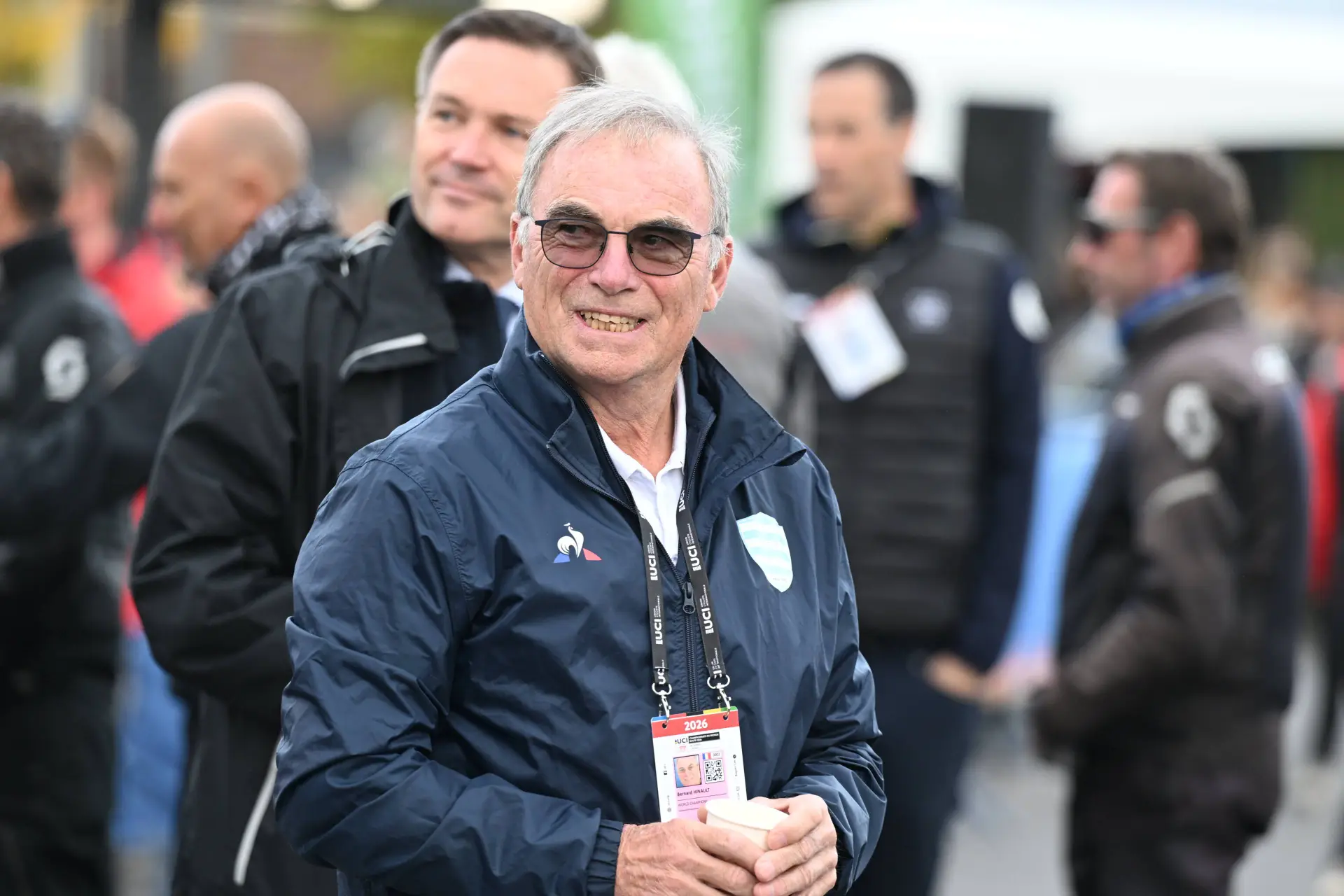
Hinault ended his professional career in November 1986 and returned to cattle farming on his property in Brittany. Soon after leaving competition, he began working with Tour de France organisers ASO in public relations and race protocol. He also served as France’s national team selector from 1988 to 1993. His work with ASO ended after the 2016 Tour, when he said he wanted to spend more time with his grandchildren.
He continued to speak publicly about riders’ independence and treatment. In 2012, Hinault criticised the use of race radios, arguing that riders were being controlled too closely by team directors and should have more freedom to make decisions in the race. He also suggested that radios could be used to warn riders about hazards on the course. In 2025, he defended Bryan Coquard after the French rider received online abuse following a crash at the Tour de France.
Hinault was known as le Blaireau, or “the Badger”, a nickname associated with his tenacity and combative temperament. He attacked, responded to his rivals and demanded that they race at his pace. He retired at 32, but left a palmarès that reaches across the Grand Tours, the classics and the world championship.
Carlos Silva is a writer for CyclingUpToDate.com, where he contributes race reports, interviews, analysis pieces, and live coverage of the international cycling calendar. Holding a degree in Sports from the Jean Piaget Institute, he combines academic knowledge of performance, training, and competition with hands-on journalism experience in professional cycling.
Throughout his career, Carlos has conducted interviews with leading figures in the sport, including Alberto Contador, Joaquim Rodríguez, Óscar Pereiro, João Almeida, Isaac del Toro, Derek Gee, John Degenkolb and Geraint Thomas. These conversations reflect direct engagement with Grand Tour winners, Classics specialists, and emerging talents.
He has provided on-site coverage at major events ranging from the Vuelta a España to the Tour de France, alongside stage races such as Vuelta a Andalucía, Volta ao Algarve, Volta a Portugal and O Gran Camiño. Covering the mythical climbs of the Giro d'Italia remains one of his professional ambitions.
Carlos is responsible for liveblog coverage of all major WorldTour races and beyond, including the Tour de France, Giro d'Italia and Vuelta a España. His reporting integrates verified data from ProCyclingStats to ensure statistical accuracy, contextual depth, and analytical precision.
A lifelong cycling enthusiast, he approaches storytelling across written, photographic, and video formats with a focus on credibility, tactical insight, and informed race interpretation.
claps 0visitors 0
Just in

Popular news
Latest comments
- Ciccone had a very strong end of season. Consistently attacking and livening up races. Hope he makes that last leap in progress and starts notching some significant wins. Great rider to watch.Occam10-11-2026
- Me too!!!!!Occam10-11-2026
- they can sign any 100 of top riders today but Pogi will win over Remco any time at the TDF unless something goes wrongabstractengineer10-11-2026
- the time for a GC rider to retire is when they cannot win stages, or have a significant level drop like from winner/podium into top 5/10 consistently. Roglic is still competitive and Froome raced even though he became pack fodder.abstractengineer10-11-2026
- He should be in a different team. It was detrimental. For them it does not matter if he does not develop. He should have gone to a team where they need him to succeed.abstractengineer10-11-2026
- Technically it is "strictly forbidden to deviate from the lane they selected when launching into the sprint and, in so doing, endangering others". But: 1. Marie did not endangered anyone. 2. Above rule 2.3.036 is a Road Cycling rule not CX. 3. In Cyclocross we have only not well defined "irregular sprint" without description what would that mean. But even if you use 2.3.036 for CX it is still wrongly applied rule.averagecyclist10-11-2026
- Technically, leedorney is correct. There was a deviation. It was just a very questionable call to disqualify Marie from the victory, especially since she most likely would have won regardless of it..
 santiagobenites10-11-2026
- You're WRONG!!! ... Capish?PogiSloFans10-11-2026
- ALBERTO CONTADOR isn't the only former cycling star who is praising Pogačar as the "greatest rider in history." EDDY MERCKX about TADEJ POGAČAR: “He has revived a style of cycling that we had almost forgotten. He is now better than me.” Key statements by Merckx about Pogačar in 2026: - Acknowledging his superiority: This time, Merckx openly admitted, without any subsequent backtracking or reservations, that Pogačar had surpassed him and was now above him. This contrasts with 2024, when he quickly softened his remarks about Pogačar being faster. - The possibility of a historic triple (Giro, Tour and Vuelta): During the July Tour de France (where Pogi claimed his fifth title), Merckx stated that Pogi was the only cyclist in history capable of winning all three Grand Tours (the Giro d'Italia, Tour de France and Vuelta a España) in a single season, provided the conditions were right and he had sufficient team support. - Lack of serious competition: Merckx emphasised that Pogačar has no real rivals in the mountains since 2024, thanks to his extraordinary climbing ability and the fact that he continues to improve despite still being under 28 (he turned 28 in autumn 2026). - Praise for his racing style: Merckx highlighted how Pogačar is bringing back the aggressive, uncompromising spirit of cycling's golden era, when races were not merely about calculated stages and tactical conservatism, but about attacking from long distances. PS: This is not "boring" ... this is called making real history... not statistical history. Capish?PogiSloFans10-11-2026
- No org will admit fault until the evidence in overwhelming and not even then. They have protected abusers and criminals.abstractengineer10-11-2026
Loading
Write a comment