"Why should we expect people to watch seven-hour races?" - Uno-X boss Thor Hushovd questions cycling’s TV format
Cycling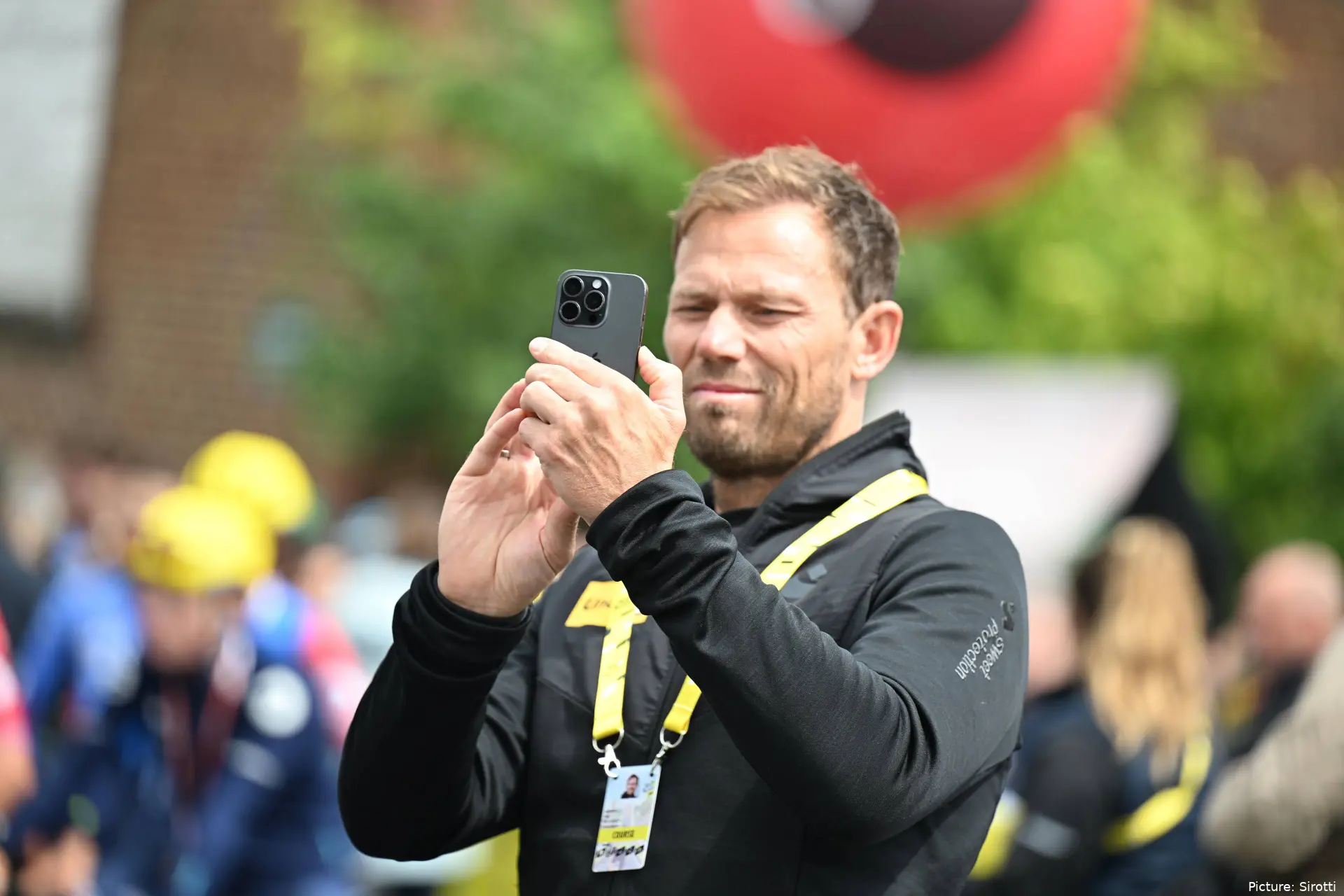
Thor Hushovd believes cycling needs to rethink how it entertains audiences and explore shorter competition formats. The Uno-X Mobility general manager even backed studying the creation of a criterium World Championship, a move that could deliver more dynamic and accessible racing.
During the Domestique Hotseat podcast, the former Norwegian pro focused on the habits of younger generations. "I think we should consider how life is for a fifteen year old kid today, who doesn't even have time to watch a thirty second social media video,” he said. "And why should we expect that these people should sit and watch a bike race over four, five, six, seven hours, racing from A to B, and half of the time the peloton sits and talks or there's one guy up the road?"
Hushovd calls for a format shift
For Hushovd, entertainment must become a core part of cycling’s evolution. "All sports, and cycling too, are entertainment. So we have to think about how we entertain the public today, live or the TV audience," he explained.
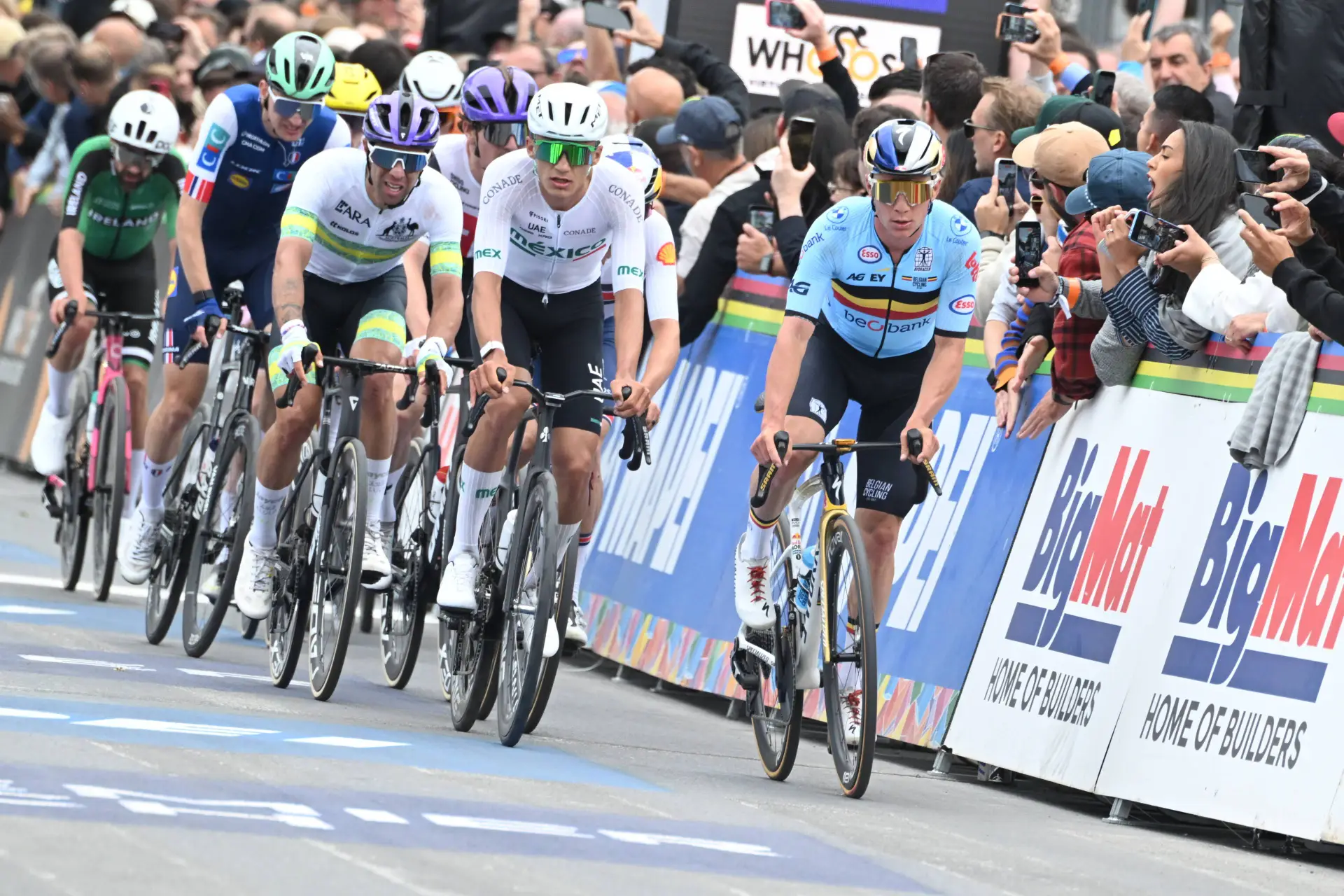
Asked about the possibility of the UCI organizing a criterium World Championship, the Norwegian argued it merits study. "There's no doubt that a race set up like this is more entertainment than a five hour road race from A to B. So I think this is something we should look into,” he stated.
The idea also ties into the safety debate. Richard Plugge, CEO of Visma | Lease a Bike, recently floated staging more races on short circuits given the growing challenges of securing 200-kilometre routes on open roads.
Read also
Circuits versus long-distance road races
Hushovd agrees that traditional road races pose major safety challenges. "In a road race, it's impossible because you have 200 kilometres and there's two sides of the road, so that's 400 kilometres. It's almost impossible,” he said.
The Norwegian believes organisers and the UCI must seek solutions, though there are financial limits. "You cannot cover every tree because it costs too much money. So then we will lose these organisers,” he warned. For Hushovd, circuits could offer a more manageable alternative.
The ex-rider cited cross-country skiing in Norway, where short formats have gained prominence over the years. "When I grew up there was only 10k, 15k, 30 and 50. But today there's a sprint and qualification. And they are maybe the most popular today,” he recalled.

A commercial opportunity for teams
Hushovd’s proposal goes beyond spectacle. He also sees economic arguments for races that pass several times through the same locations. A circuit would create new commercial opportunities and make hospitality structures easier to build around the event.
"If you pass through a town, it's hard to build up a full hospitality structure. But if you pass this town five times, you can actually sell a package. And there you have another external income,” he explained.
Hushovd does not present circuits as a definitive solution, nor is he certain how the model should be implemented. However, he believes it is essential to start debating alternatives. "How it will be and how we should be structured, I have no idea," Hushovd said. "But at least we have to start to think about something in that direction."
Javier RampeCycling Journalist
Javier Rampe is a sports analyst with more than 15 years of experience. He holds a degree in Economics from the University of Rome and a Diploma in Business Studies from the University of Cádiz. Despite coming from an academic background not particularly associated with cycling, his passion for both cycling and journalism was instilled in him from an early age. He grew up following Miguel Indurain and José María “El Chava” Jiménez. An admirer of Michael Robinson’s communication style and journalistic approach, he was inspired to pursue a degree in Journalism at the University of Buenos Aires, which he is currently completing.
He has always maintained close ties with the worlds of sport and culture, contributing from a young age to sports blogs and film and music review websites. His work has appeared in media outlets such as Cope, RAI, and Radio Con Vos. He is also the founder of the cycling-focused podcast El Contraanálisis and the football interview channel Días De Fútbol, dedicated to conversations with professional footballers.
In addition to his work at Ciclismoaldia, Javier has interviewed some of the most influential figures in modern cycling, including Alejandro Valverde and Tadej Pogačar, as well as key voices in anti-doping policy such as Alberto Yelmo, David Varillas, and Marcelo Milano. Marcos Maynar, in relation to the ‘Operación Ílex’ case, is also among the personalities he has interviewed. He enjoys conducting in-depth analysis of the cycling ecosystem and has attended major events such as Strade Bianche, the Vuelta a Andalucía, and Itzulia, as well as numerous national cyclo-cross races.
His background in economics, combined with extensive experience in marketing and corporate communications, drives his continuous study of positioning strategies and ensures that he always keeps his focus on crafting compelling and evocative headlines.
claps 1visitors 1
Just in

Popular news
Latest comments
- EF makes some pretty good signings. Tao and Sosa could be decent replacements for Carapazmij22-10-2026
- gravel is such a great discipline. I hope it gets bigger from a media standpoint. looking at old Tour de France stages, they were basically gravel before it was called gravelmij22-10-2026
- This is good for the sport ? Spreading of talent around the peloton.
 Davide22-10-2026
 - Im all in with you Wally. Good Luck.Davide22-10-2026
- No it’s not, what utter drivel. How do you know he wasn’t presented the option to stay with a renegotiated contract. I’m sure if he’d not gotten a better deal elsewhere he would even have considered accepting. It’s not like they would have told him to ride for free like Cavendish had to.Jumpyjohn21-10-2026
- It’s been a long time since any real Special accomplishments.Jumpyjohn21-10-2026
- It's nice to know that (some of) this article is not AI generated... igneous is autocorrected Ineos
 Rafionain-Glas21-10-2026
 - What are they doing nobody knows.abstractengineer21-10-2026
- Well JV, thats the text book definition of forced🤣🤦abstractengineer21-10-2026
- Sivakov was like the 5th best rider in the team, maybe not even that. He dropped before the other, he was not the final man. Besides when you got a leader who is attacking from 50-100k out , you dont really need a entire team, let alone Sivakovabstractengineer21-10-2026
Loading
1 Comments