Richard Plugge resigns as One Cycling director - Controversial Super League gains momentum with powerful investor
Cycling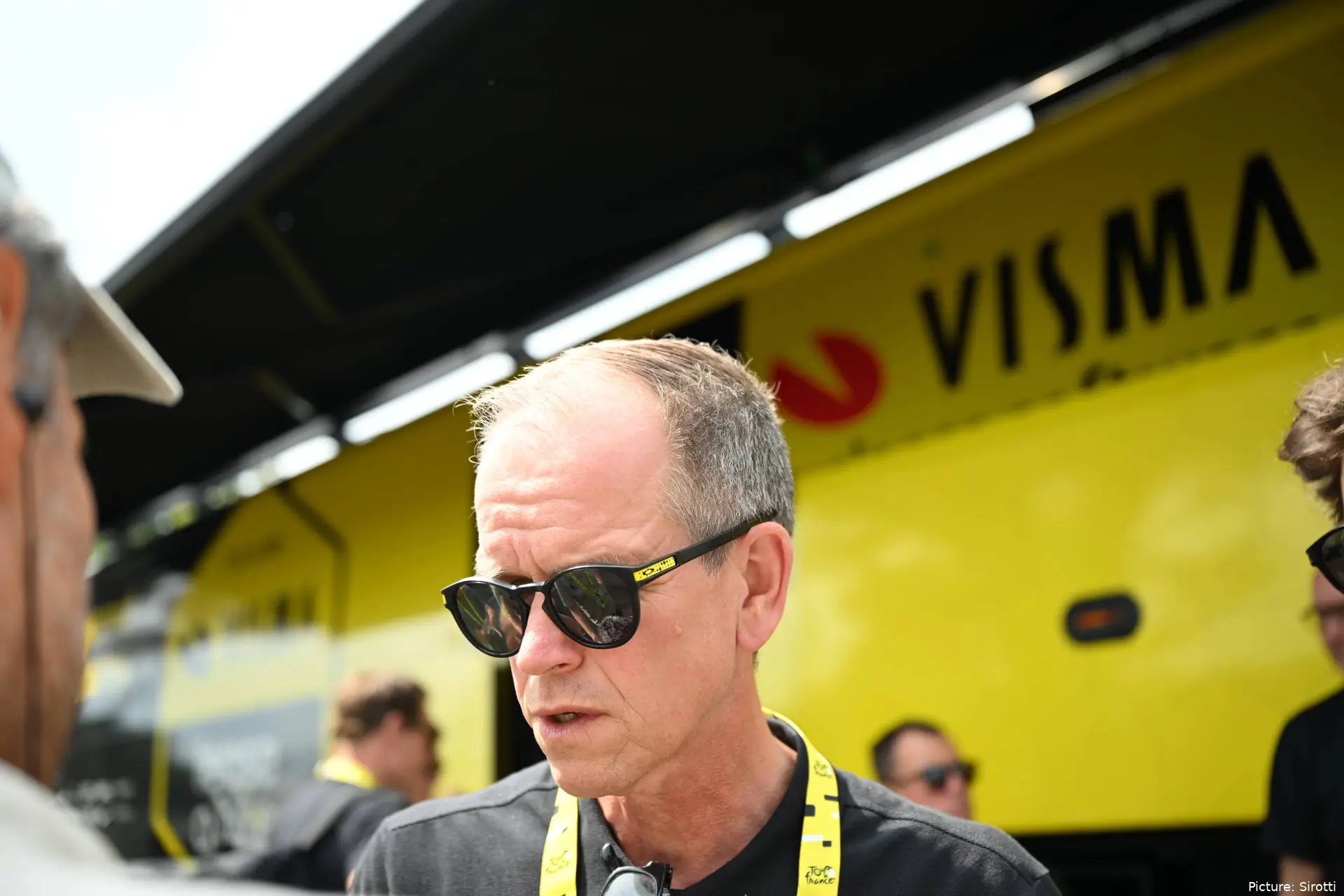
The project that set out to transform cycling’s economic and sporting model is entering a new phase. Richard Plugge, head of Visma - Lease a Bike and one of the leading forces behind One Cycling, the Cycling Super League, is no longer leading the initiative.
His departure took effect on 25 May, according to Daniel Benson, although the Dutchman will remain involved as one of the project’s supporters.
The organisation will also leave its original identity behind. One Cycling has been renamed Collective Cycling Group (CCG) and is trying to revive a proposal that met strong resistance from the Union Cycliste Internationale (UCI).
The change of name and leadership comes alongside a new funding structure involving major investors, including Saudi Arabia’s Public Investment Fund.
Plugge had been One Cycling’s leading advocate since its inception. The initiative brought together several professional teams, including Visma - Lease a Bike, and race organisers such as Flanders Classics, which runs numerous spring events. Its aim was to make major changes to cycling’s structure and secure greater financial resources for the sport as a whole.

Richard Plugge, head of Visma.
Richard Plugge steps down as leader as an outsider to cycling takes over
The Dutchman is no longer in charge, however. According to Daniel Benson, he stepped down from the role on 25 May and was replaced by Oliver Ciesla, a German executive with experience in the automotive industry but no notable track record in cycling.
The handover marks a significant change in the initiative’s management, but it does not mean Plugge has severed his ties with the project. The head of Visma continues to support it as it seeks to move forward under a new name and with a reworked structure.
One Cycling has faced opposition from the UCI from the outset. The international governing body argued that the proposal did not fit within the existing regulatory framework and also questioned its sporting coherence.
The UCI blocked the project and threatened to withdraw licences
In mid-2025, it made its position clear in a statement: “The project was deemed incompatible with the UCI’s administrative and regulatory framework and, moreover, lacked sporting coherence.”
The warning went beyond a simple institutional disagreement. UCI President David Lappartient sent a letter to the parties involved, urging them to stop the initiative. He also warned that teams and races continuing to take part could risk losing their licences.
The dispute put a project seeking to reshape key aspects of professional cycling in a difficult position. Even so, its backers have not abandoned the idea. The transition from One Cycling to Collective Cycling Group reflects an effort to keep the proposal alive, though its relationship with the sport’s governing body remains unresolved.
Saudi money remains behind the new structure
Funding remains central to CCG. One of its key investors is Ivan Glasenberg, the South African billionaire who already has a direct connection to cycling through his ownership of bicycle manufacturer Pinarello.
Saudi Arabia’s Public Investment Fund (PIF) is also still involved. The fund has a presence across various areas of sport and has been exploring opportunities to expand its influence in the sector for some time. It previously sought a partnership with the Giro d’Italia, but those talks did not lead to an agreement.
Saudi involvement gives Collective Cycling Group’s plans considerable financial weight, but also raises questions about their viability. The war in Iran could partly weaken the fund’s investment capacity, although Jeremy Whittle suggests the project is becoming more realistic.
Read also


The main question remains the UCI’s position. The organisation rejected the original proposal and even raised the prospect of sporting consequences for those who continued to back it. One Cycling has changed its name, leader and structure, but there is no sign that its institutional dispute has been resolved.
For now, Collective Cycling Group is seeking a way to push through a reform with significant financial backing, but it must still overcome opposition from the body that governs world cycling.

Jorge BorregueroWriter
Jorge Borreguero is a journalist with a degree from the Complutense University of Madrid and has been a writer for Cyclinguptodate and Ciclismoaldia since early 2023. In this role, he has played a key part in the evolution of the website, particularly as a specialist covering Movistar Team. He regularly writes race reports, analytical pieces, and in-depth features about the team, and has conducted exclusive interviews and attended multiple team presentations, providing readers with firsthand insights into one of the leading professional cycling squads.
Throughout his career, Jorge has maintained a strong focus on sports journalism, gaining experience across a variety of disciplines, including basketball and football. However, his current work is almost entirely dedicated to cycling, contributing extensively to Ciclismoaldia and its sister website Cyclinguptodate. For these platforms, he combines thorough research with detailed reporting to deliver high-quality content, ranging from race previews and results to expert analysis of teams and riders.
Jorge’s reporting is marked by accuracy, depth, and a commitment to providing readers with reliable and authoritative information. His direct engagement with teams, athletes, and events ensures that his coverage reflects firsthand knowledge and professional insight. Through his work, he has established himself as a trusted voice in professional cycling journalism, bridging the gap between the sport and its global audience while maintaining rigorous editorial standards.
claps 0visitors 0
Just in
Popular news

Latest comments
- Mathieu and Wout!!! You must start in CX this winter! (hope you reading comments here...) ;-)averagecyclist12-11-2026
- Who made you site boss?Lozza12-11-2026
- This shows so well you’ve never ventured out to a cycling event and checked out spectators.Jumpyjohn12-11-2026
- I preferred the one about amateur riders and passing (perhaps to explain why he can’t ride at 220 which would probably be more effective to return to shape).Jumpyjohn12-11-2026
- Not just ManU, far worse in some minority sports ventures.Jumpyjohn12-11-2026
- From your writing it sounds like you’ve been sharing your views with people here for quite a while, quite presumouptuous for a new profile.Jumpyjohn12-11-2026
- Which is amazing given his weight and size, though, unlike in boxing and some rare instances we haven’t a clue what his fighting weight was. Anybody know why these “public” figures floated around are considered as being accurate?Jumpyjohn12-11-2026
- That’s a first point, everyone can have an off year or just stagnate before a new upward cycle. What would have been more interesting is including Skjelmose’s performance into the discussion, things have also been expected from him after several performances in the past but he hasn’t really progressed either, his TdF was basically what you would have expected but he’s 26 and been kind of stuck at this level for at least 2-3 years. Maybe he’s a late developer or maybe he needs something to change but as manager I’d be just as demanding and worried about both. Perhaps the recruitment concept was to have enough talent so at least one every year would be in shape and they’ve just been unlucky. Don’t want to rub it in but you could even say Mads lost a notch, so is it the riders or is it more to do with the team?Jumpyjohn12-11-2026
- Bingo...I was also going to say that young pretty women are obsessed Pogi fan girls... who are chasing him. All glossy "____" (blank) about Tadej. PS: You can all fill in the "blank" yourselves, whatever you prefer. The definition of glossy is: It looks unusually shiny, glazed over, watery, or vacant/unfocused.PogiSloFans12-11-2026
- Are you able to discuss ANYTHING without making a reference back to your Special 1? It’s almost as if you’re paid by his marketing team to improve his ranking in search results.Jumpyjohn12-11-2026
Loading
Write a comment