Why Paul Seixas will never break 122-year Tour de France record despite his age - And the clock is ticking if he wants to beat Tadej Pogacar achievement
Cycling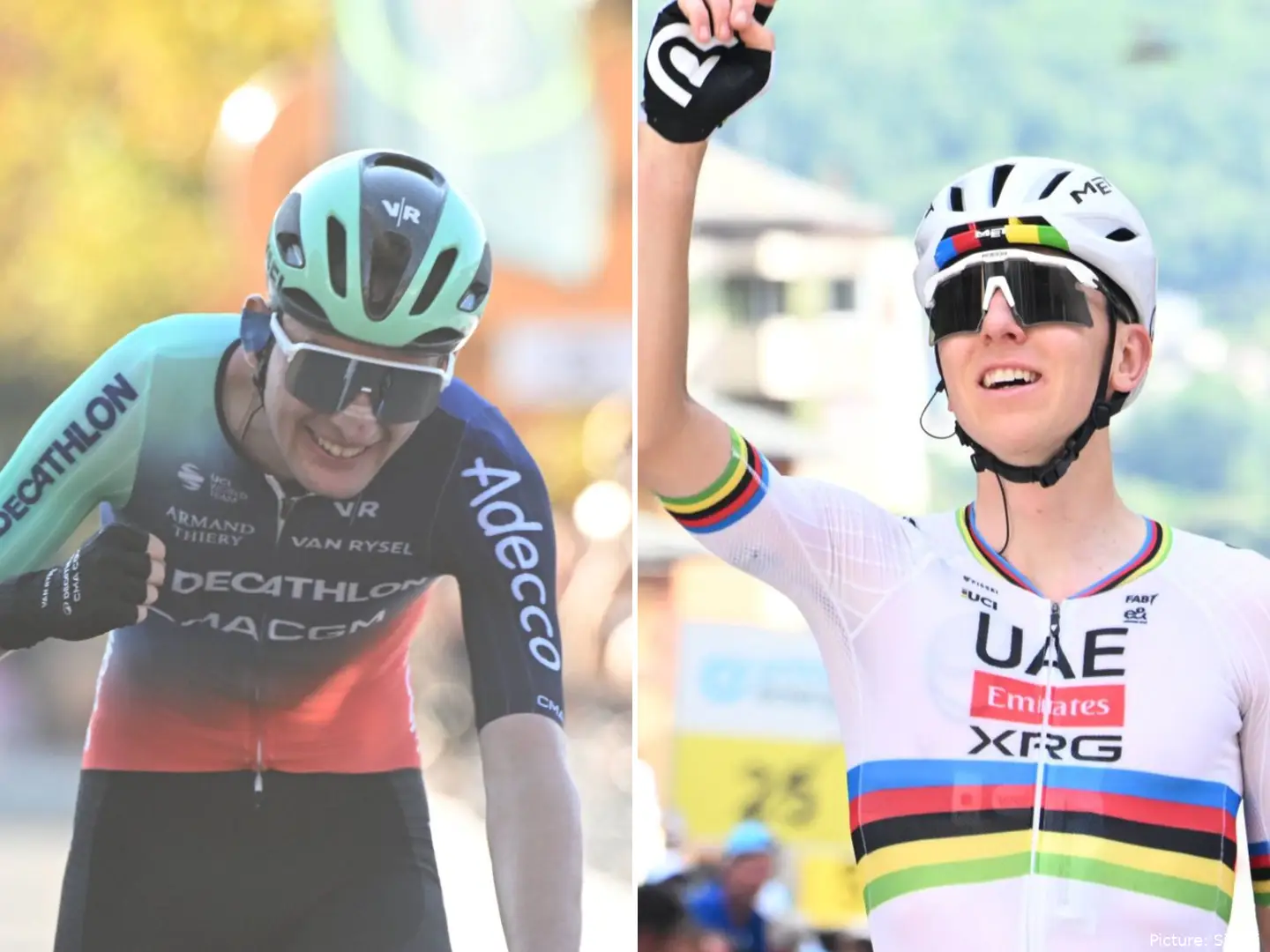
Paul Seixas is already part of Tour de France history, even though he has yet to wear the yellow jersey in Paris. Born on September 24th 2006, the Frenchman is now 20 and has become one of the peloton’s leading riders despite his young age.
His breakthrough in 2026 has revived a debate once thought to belong to another era: can a rider this young win the world’s biggest race?
The Decathlon CMA CGM rider has already shown he can compete with the sport’s biggest stars. His fourth place on his Tour debut is proof of that.
Tour de France history is full of champions who reached the top before turning 23. Some became legends, while others enjoyed less consistent careers. But they all share an extraordinary achievement: they won the French race at an age when many professionals are still developing their potential. The all-time record belongs to Henri Cornet, who won in 1904 at just 19 years and 354 days old.
Tadej Pogačar ranks second after his first victory in 2020, while Egan Bernal also features among the youngest winners. Now that Seixas has emerged as one of world cycling’s biggest sensations, a new generation could challenge the historical records once again.
Here is the ranking of the ten different riders who won the Tour de France at the youngest ages. The list considers each rider’s age when they claimed their first overall victory, without counting multiple wins by the same rider more than once.

Tadej Pogacar and Primoz Roglic at the end of the 2020 Tour de France
1. Henri Cornet: 19 years and 354 days (1904)
The toughest record to beat belongs to Henri Cornet. The Frenchman won the second Tour de France in history before turning 20, and his mark has stood for more than a century. His victory, however, came under very unusual circumstances. Cornet initially finished fifth, but the four riders ahead of him were disqualified after an edition marred by irregularities.
2. Tadej Pogačar: 21 years and 365 days (2020)
The Slovenian ranks second after winning his first Tour de France in 2020. He claimed victory in extraordinary fashion, taking the yellow jersey from Primož Roglič in the time trial on the penultimate stage.
Pogačar was just shy of his 22nd birthday when he won in Paris. Since then, he has built one of the most impressive palmarès in modern cycling. He now has five Tour de France victories and has become one of his generation’s dominant riders.
3. François Faber: 22 years and 187 days (1909)
The Luxembourger was one of the leading figures in the Tour’s early editions. In 1909, aged just 22, he won the general classification after an outstanding performance that included six stage victories.
Faber also excelled over exceptionally long stages and in conditions very different from those faced by riders today. His victory belongs to an era when physical endurance was one of the defining qualities of champions.
4. Egan Bernal: 22 years and 196 days (2019)
The Colombian brought young riders back into the spotlight at the modern Tour de France. In 2019, aged just 22, he became the first Latin American rider to win the race.
His victory followed a season in which he had already shown his potential in Grand Tours. Bernal beat Geraint Thomas and Steven Kruijswijk to become the new Tour champion and secure his place in this select ranking.
5. Octave Lapize: 22 years and 280 days (1910)
Lapize was one of the leading names in the Tour’s early years. The Frenchman won the 1910 edition, one of the toughest of that era, as major mountain challenges were introduced in the Pyrenees.
He won aged 22 years and less than ten months, making him one of the youngest champions in history. He also excelled in the Classics, winning Paris-Roubaix three times.
6. Felice Gimondi: 22 years and 288 days (1965)
The Italian achieved an extraordinary feat on his first Tour de France appearance. In 1965, aged just 22, he won the general classification and began a career that would make him one of his generation’s leading riders.
Gimondi went on to win all three Grand Tours, as well as Paris-Roubaix, Il Lombardia and the World Championships. He remains one of the most important figures in cycling history.
7. Philippe Thys: 22 years and 292 days (1913)
The Belgian was one of the Tour de France’s first great champions. He claimed his first victory in 1913, before turning 23, then added two more wins in 1914 and 1920.
His career was defined by remarkable consistency and his ability to compete in the punishing conditions of the race’s early decades. He was one of Belgian cycling’s leading figures before the arrival of later generations.

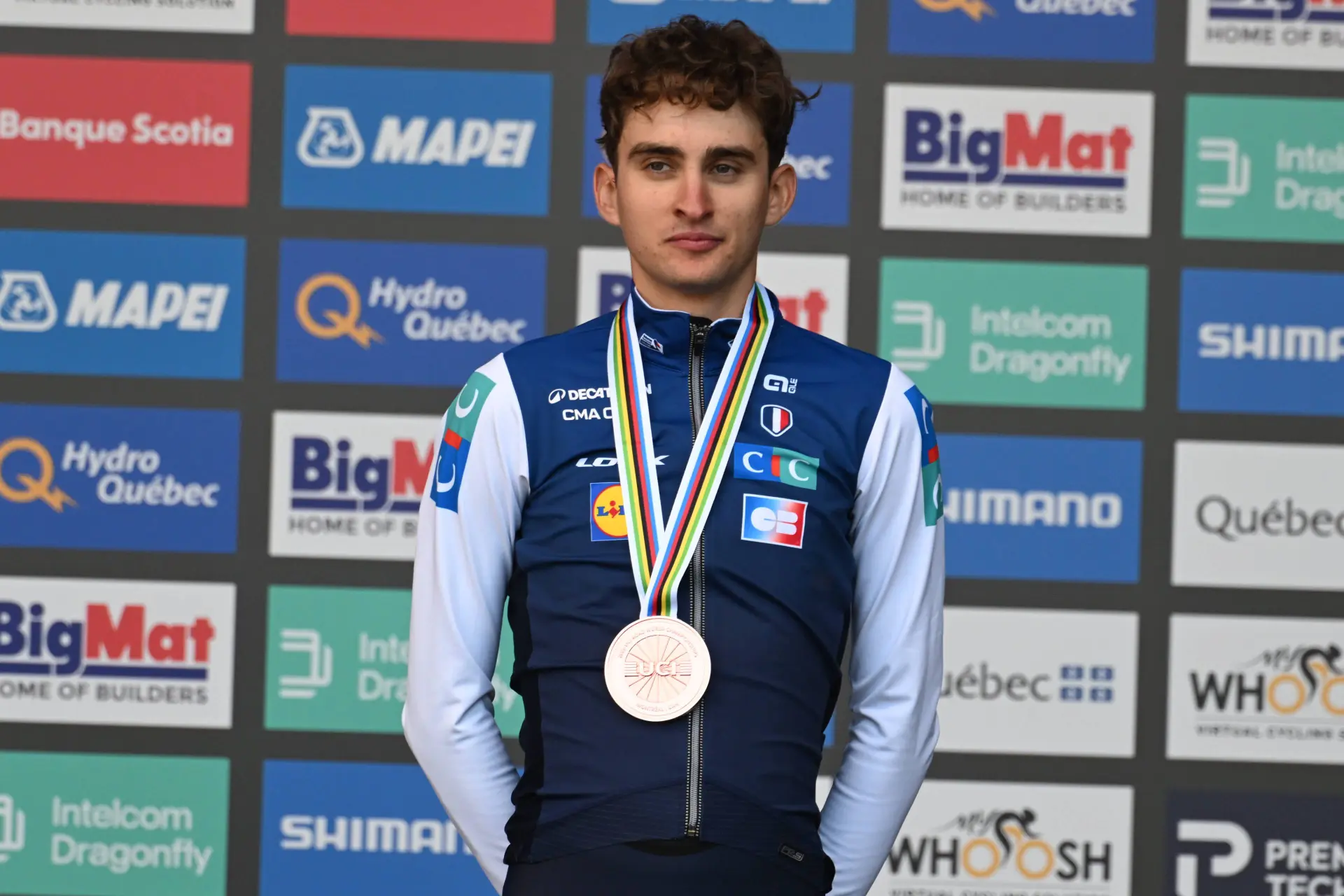
Paul Seixas, a world-class star of Decathlon CMA CGM.
8. Laurent Fignon: 22 years and 346 days (1983)
The Frenchman stunned the cycling world in 1983, winning the Tour de France before his 23rd birthday. Fignon combined his time-trialling strength with strong climbing to secure a victory that heralded an extraordinary career.
A year later, he won the Grande Boucle again and became one of Bernard Hinault’s leading rivals during the decade. His style and personality made him one of French cycling’s most distinctive figures.
9. Romain Maes: 22 years and 352 days (1935)
The Belgian won the 1935 Tour de France at 22, using remarkable consistency across the stages to beat his rivals.
Maes was one of the leading riders of his era, and his victory secured his place in the history of the French race. He remains among the youngest champions of the Grande Boucle.
Read also
10. Jacques Anquetil: 23 years and 193 days (1957)
The Frenchman completes this group of ten different riders with his first Tour de France victory, in 1957. Anquetil won on his Tour debut and began a career that would bring him five overall titles.
His time-trialling dominance was one of his defining strengths and helped him shape an era. He became the first rider to win the Grande Boucle five times, before other great champions matched his record.
| Position | Rider | Year | Age at victory |
| 1 | Henri Cornet | 1904 | 19 years and 354 days |
| 2 | Tadej Pogačar | 2020 | 21 years and 365 days |
| 3 | François Faber | 1909 | 22 years and 187 days |
| 4 | Egan Bernal | 2019 | 22 years and 196 days |
| 5 | Octave Lapize | 1910 | 22 years and 280 days |
| 6 | Felice Gimondi | 1965 | 22 years and 288 days |
| 7 | Philippe Thys | 1913 | 22 years and 292 days |
| 8 | Laurent Fignon | 1983 | 22 years and 346 days |
| 9 | Romain Maes | 1935 | 22 years and 352 days |
| 10 | Jacques Anquetil | 1957 | 23 years and 193 days |

Jorge BorregueroWriter
Jorge Borreguero is a journalist with a degree from the Complutense University of Madrid and has been a writer for Cyclinguptodate and Ciclismoaldia since early 2023. In this role, he has played a key part in the evolution of the website, particularly as a specialist covering Movistar Team. He regularly writes race reports, analytical pieces, and in-depth features about the team, and has conducted exclusive interviews and attended multiple team presentations, providing readers with firsthand insights into one of the leading professional cycling squads.
Throughout his career, Jorge has maintained a strong focus on sports journalism, gaining experience across a variety of disciplines, including basketball and football. However, his current work is almost entirely dedicated to cycling, contributing extensively to Ciclismoaldia and its sister website Cyclinguptodate. For these platforms, he combines thorough research with detailed reporting to deliver high-quality content, ranging from race previews and results to expert analysis of teams and riders.
Jorge’s reporting is marked by accuracy, depth, and a commitment to providing readers with reliable and authoritative information. His direct engagement with teams, athletes, and events ensures that his coverage reflects firsthand knowledge and professional insight. Through his work, he has established himself as a trusted voice in professional cycling journalism, bridging the gap between the sport and its global audience while maintaining rigorous editorial standards.
claps 0visitors 0
Just in


Popular news
Latest comments
- Hey, did you guys see @frieders3 comments down below? He went off the rails. That usually happens when you're brought up by the maga society.PogiSloFans20-11-2026
- Hey Joey, try reading a book by Richard Dawkins, a British evolutionary biologist and zoologist: "The god delusion" or "The selfish gene." Maybe you won't be delusional any more. PS: You're saying "take your beliefs and politics elsewhere???? Then why is Cyclinguptodate doing the same thing... writing about the Pope and Vatican on a cycling site!?!? Capish?PogiSloFans20-11-2026
- It's the Church who decides who may or may not sit down with the Pope, not the other way round. The Pope seems a good man, but he works within a strict structure..Hills3320-11-2026
- It’s definitely a race where luck, or lack of it, usually plays a major role in who wins. It was about time Wout had the best of it for a change! Just hoping it’s Pog who gets the best of it next time!Lozza20-11-2026
- We'll be cheering you on from the sidelines, Cameron! Counting down the days.anonymouscyclist20-11-2026
- Just because a Team starts a Training Camp, doesn't mean the Season Starts, the preparation for it yes...
 leedorney20-11-2026
- t’s telling that you call him holy father. others call him the biggest fraud. however, if you get the chance to meet the biggest at something ... why not. just be aware that by doing so, you’re marketing for this organization. if you support this organization, do so. if you don't, then you shouldn't.Ketterechts20-11-2026
- The site is about the love of cycling, yes, but this article is about a group of riders being invited to receive the Pope's blessing. So readers may wonder why those riders were chosen, and not others (and some readers may get carried away while pondering on the topic!)Hills3320-11-2026
- I’ve watched Paris Roubaix a few times and I noticed that both TP and WVA both had incidents before and after MVDP had his one long setback. In each case they had to work their way back with just 1-5 rider groups. MVDP appeared to leap from one large group to another. But he didn’t do it by himself like everybody makes out. In truth it’s a testament to how smart he is, he used Ganna on multiple occasions to make huge moves and then on each Cobble section in general, he was the one pushing. On the tarmac, he let the Group do the work. My point is all of the race’s favorites had a lot of hurdles to overcome.Cbastnagel20-11-2026
- I think it's great move for him. Yes, he's not the rider he once was however he achieved great results in the Vuelta and the European Championships. I believe his contribution will be placing in major races for UCI points. What is interesting is how he'll work with Carapaz. On the lighter side, NSN can advertise them as "Two geezers as team leaders'Paggss20-11-2026
Loading
Write a comment