"When you have a serious problem..." - Former Giro d'Italia stage winner on the illness that changed his career
Cycling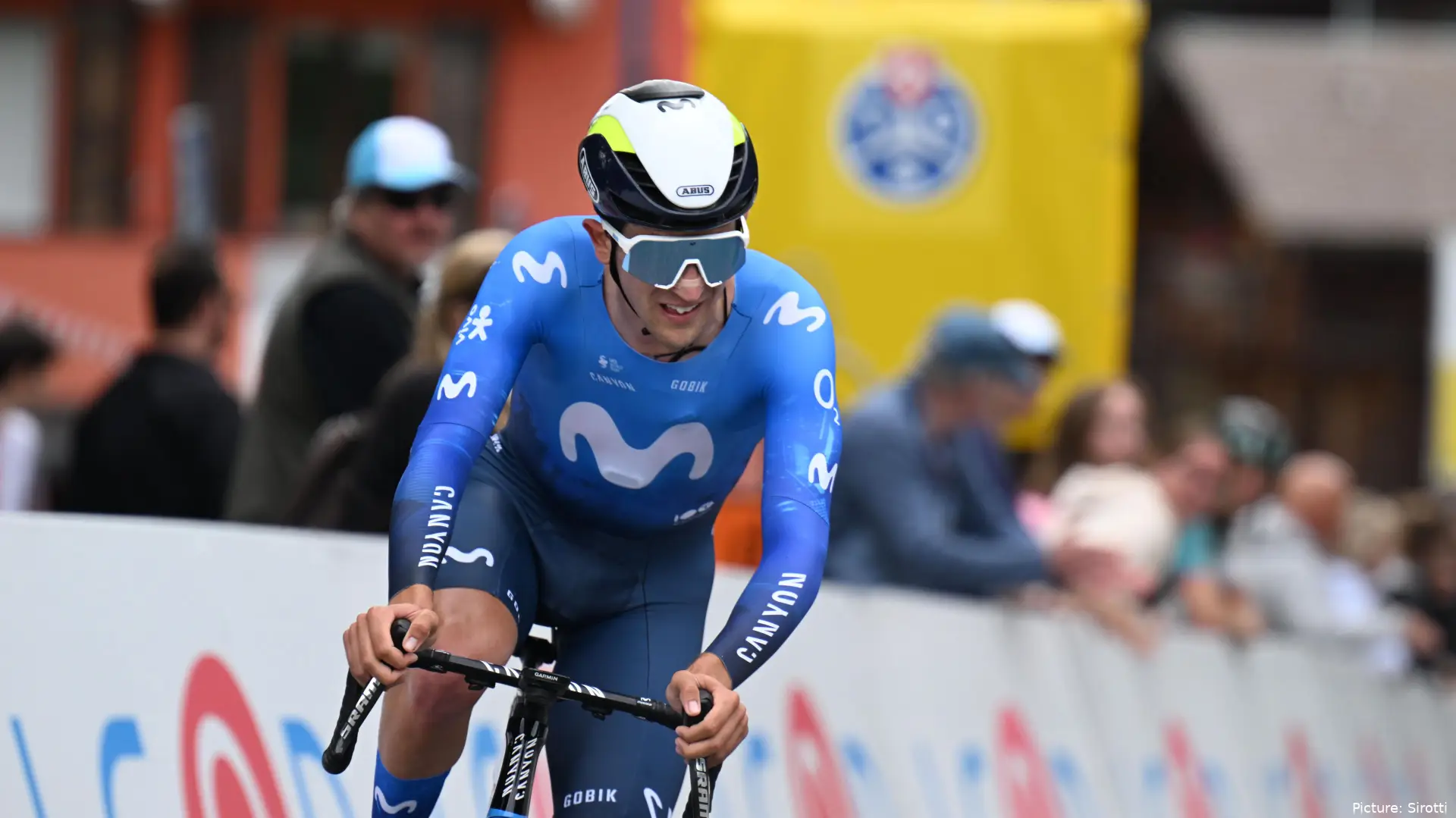
In just two seasons, Pelayo Sánchez has experienced both sides of professional cycling. In 2024, he reached one of the biggest milestones of his career by winning a stage at the Giro d’Italia, beating riders of Julian Alaphilippe’s calibre. But everything has changed since.
The next two years, however, were marked by physical problems, doubts and a recovery far more difficult than expected. The Movistar Team rider from Asturias has had to learn to live with a reality very different from the one he knew during his first months at the top level.
His arrival at the Spanish team was especially promising. After progressing through the ranks of Spanish cycling and turning professional with Burgos BH, he found his chance to race on the World Tour with Movistar. His first season was full of new experiences and ended with an outstanding performance in Italy, where he claimed a victory he still regards as the greatest success of his career.
His progress, however, did not continue uninterrupted. After a strong 2024, physical problems began to affect his performances. First came a crash at the Vuelta a España, followed by an illness that turned 2025 into a genuine nightmare. He had to stop racing, undergo numerous medical tests and accept that his body needed time to recover.
In a conversation with Laura Meseguer on the “Bajo el Maillot” podcast, Pelayo Sánchez looked back on the journey from the euphoria of his Giro victory to the most difficult months of his career.
The rider from Asturias explained how he dealt with the shingles that disrupted his 2025 season, the challenge of coping with medical uncertainty and the lessons he learned during a period that, as he admits, changed the way he viewed the sport.

Pelayo Sanchez racing for Movistar
From dreaming of a Giro win to two years of highs and lows
His 2024 Giro d’Italia victory came when he least expected it. Pelayo had started the season well, even winning in Mallorca, but his form during preparations for the Italian Grand Tour was less convincing.
His usual April allergies and doubts about his fitness meant he arrived at the start without high expectations. “I started that race with no expectations at all. I was motivated by the team we had, and simply wanted to see how far the race would take me,” he recalled.
The result surpassed every prediction. On stage six, he took the win in a day that put him in the spotlight alongside Julian Alaphilippe, one of the riders he had admired since childhood.
The Frenchman was one of two cyclists whose posters hung in the young Asturian’s room, alongside Joaquim Rodríguez. “Going toe to toe with one of your idols is incredibly special, although in the moment they’re still just another rival,” he explained.
For Sánchez, the victory was also special because of how it unfolded. The rider acknowledged that, despite the scale of the occasion, racing still feels much the same as it did when he was a child.
“In the final kilometer, in the sprint, it doesn’t matter whether the rival is Alaphilippe. It’s simply a bike race,” he said. The difference comes after the finish line, when the cameras, fans and media attention surrounding a Grand Tour victory come into play.
That season also had its difficult moments. After racing both the Giro and the Vuelta, a crash at the Spanish Grand Tour forced him to abandon, bringing a first Movistar season of highs and lows to a close.
In 2025, with a more structured calendar and plans to keep progressing, health problems entirely changed his plans. “Sometimes you win, sometimes you learn. In this case, it was time to get out the pen and paper and take plenty of notes,” he summed up.
The shingles that turned 2025 into a nightmare
The first symptoms appeared in late February, while he was racing in Ardèche and Drôme. Pelayo began to feel unwell, initially with symptoms that seemed like a simple cold. But instead of improving, his condition gradually worsened.
He lined up for Strade Bianche and Tirreno-Adriatico, two of the main goals of his first block of racing, but had to abandon and begin undergoing medical tests. The illness would not let up, and performance became a secondary concern.
After several examinations produced no conclusive results, skin lesions appeared on his side and back. The diagnosis was shingles, a reactivation of the chickenpox virus. “It started to spread and gradually grew,” the Asturian explained.
He also experienced severe pain in one arm and bouts of numbness. The rider admitted that even now, doctors have not found a definitive explanation for why the illness appeared.
Recovery was no easy matter either. Sánchez explained that professional athletes are particularly affected by their health, as any physical problem can jeopardise months of preparation and important goals.
“When you have a serious problem, the momentum of competition often makes us want to race and think we’re smarter than the illness. But there’s no choice but to slow down, stop and take the engine into the workshop to see what’s wrong,” he reflected.
Read also

Changing pace and accepting the body’s recovery timeline have been some of the main lessons from a period he still remembers bitterly. The Asturian admitted that at times he made his recovery harder by wanting to return to racing as soon as possible.
After experiencing success at the Giro and discovering his potential on the WorldTour, he had to face a far less welcome reality: training, hard work and determination are not always enough to get back to full health. In cycling, as in life, sometimes the greatest victory is simply getting your health back.
Javier RampeCycling Journalist
Javier Rampe is a sports analyst with more than 15 years of experience. He holds a degree in Economics from the University of Rome and a Diploma in Business Studies from the University of Cádiz. Despite coming from an academic background not particularly associated with cycling, his passion for both cycling and journalism was instilled in him from an early age. He grew up following Miguel Indurain and José María “El Chava” Jiménez. An admirer of Michael Robinson’s communication style and journalistic approach, he was inspired to pursue a degree in Journalism at the University of Buenos Aires, which he is currently completing.
He has always maintained close ties with the worlds of sport and culture, contributing from a young age to sports blogs and film and music review websites. His work has appeared in media outlets such as Cope, RAI, and Radio Con Vos. He is also the founder of the cycling-focused podcast El Contraanálisis and the football interview channel Días De Fútbol, dedicated to conversations with professional footballers.
In addition to his work at Ciclismoaldia, Javier has interviewed some of the most influential figures in modern cycling, including Alejandro Valverde and Tadej Pogačar, as well as key voices in anti-doping policy such as Alberto Yelmo, David Varillas, and Marcelo Milano. Marcos Maynar, in relation to the ‘Operación Ílex’ case, is also among the personalities he has interviewed. He enjoys conducting in-depth analysis of the cycling ecosystem and has attended major events such as Strade Bianche, the Vuelta a Andalucía, and Itzulia, as well as numerous national cyclo-cross races.
His background in economics, combined with extensive experience in marketing and corporate communications, drives his continuous study of positioning strategies and ensures that he always keeps his focus on crafting compelling and evocative headlines.
claps 0visitors 0
Just in

Popular news

Latest comments
- No no my friend, I have proven all my arguments. But you saying that "God" exists is your problem, not mine. Under common logic and debate principles, whoever asserts that something exists ("God exists") carries the burden of proving it. In other words, the burden of proof is the obligation to provide evidence or logical justification for a claim. Ad acta!!!PogiSloFans22-11-2026
- pure class!Ketterechts22-11-2026
- First: You actually need my permission and I give it to you. I grant you that privilege. I'm a left-wing democrat. Second: I just can't believe you also believe in the "invisible man in the sky." WHY???PogiSloFans22-11-2026
- May "God Almighty" help Primož win the Tour. He should go visit the Pope, to get a blessing from him. You know @awp, "God" sees all these things :))PogiSloFans22-11-2026
- Stuyven was a great signing because he helped get them wins and he competed - unlike the others you mentioned that didn't - and all the others on all teams that didn't. Merlier didn't race much (mostly) early in the season because of a knee but I thought he was good after that so it wasn't such a big deal. His coolness, speed, and experience have carried him, but I doubt he'll be able to keep it up. I hope so though.flyer22-11-2026
- If you look at where Pogi actually needs support, that would be at MSR or PR. THe rest he can do with the 2nd level climbers and roulers. The likes of Almeida or Del Toro should be in the other racesabstractengineer22-11-2026
- Even when he has a big mishap he's lucky in timing so there's a chance it's not slowing him in the least.flyer22-11-2026
- It almost feels like he got a pardon. I don't know about this one but at least it wasn't a politician playing god.flyer22-11-2026
- "The Move" made this garbage for me.flyer22-11-2026
- Nice. Pellizzari is a guy to watch at least have on your team.flyer22-11-2026
Loading
Write a comment