"When it is 42, 46 or even 50 degrees, why not find an alternative time?" - UAE manager Matxin proposes radical change to Vuelta stage times to beat the heat
Cycling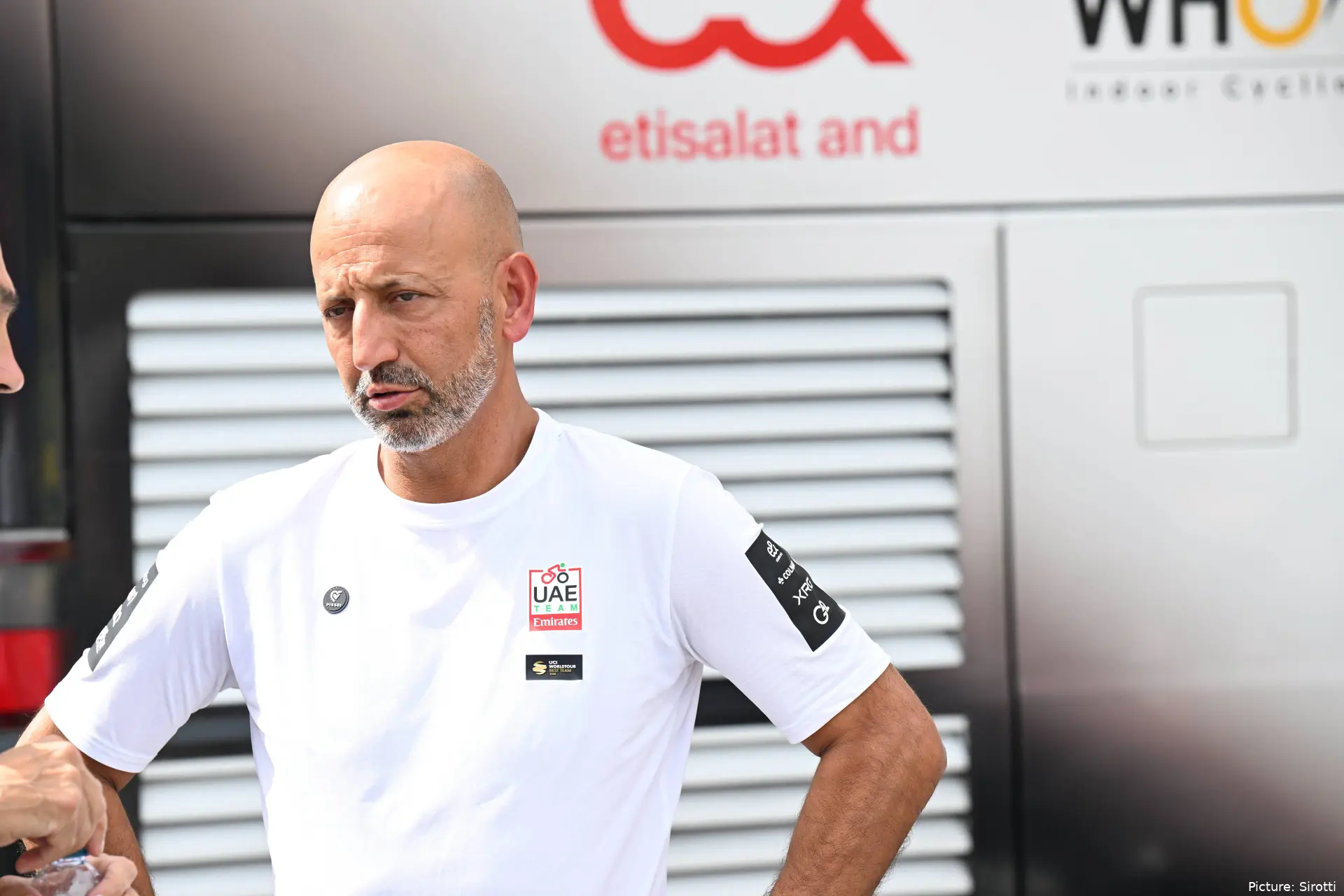
UAE Team Emirates - XRG team manager Joxean Matxin has proposed a radical change at the Vuelta a Espana to beat the heat as the temperatures sore at the Grand Tour, with many riders voicing their concerns and the extreme heat protocol already used over the weekend.
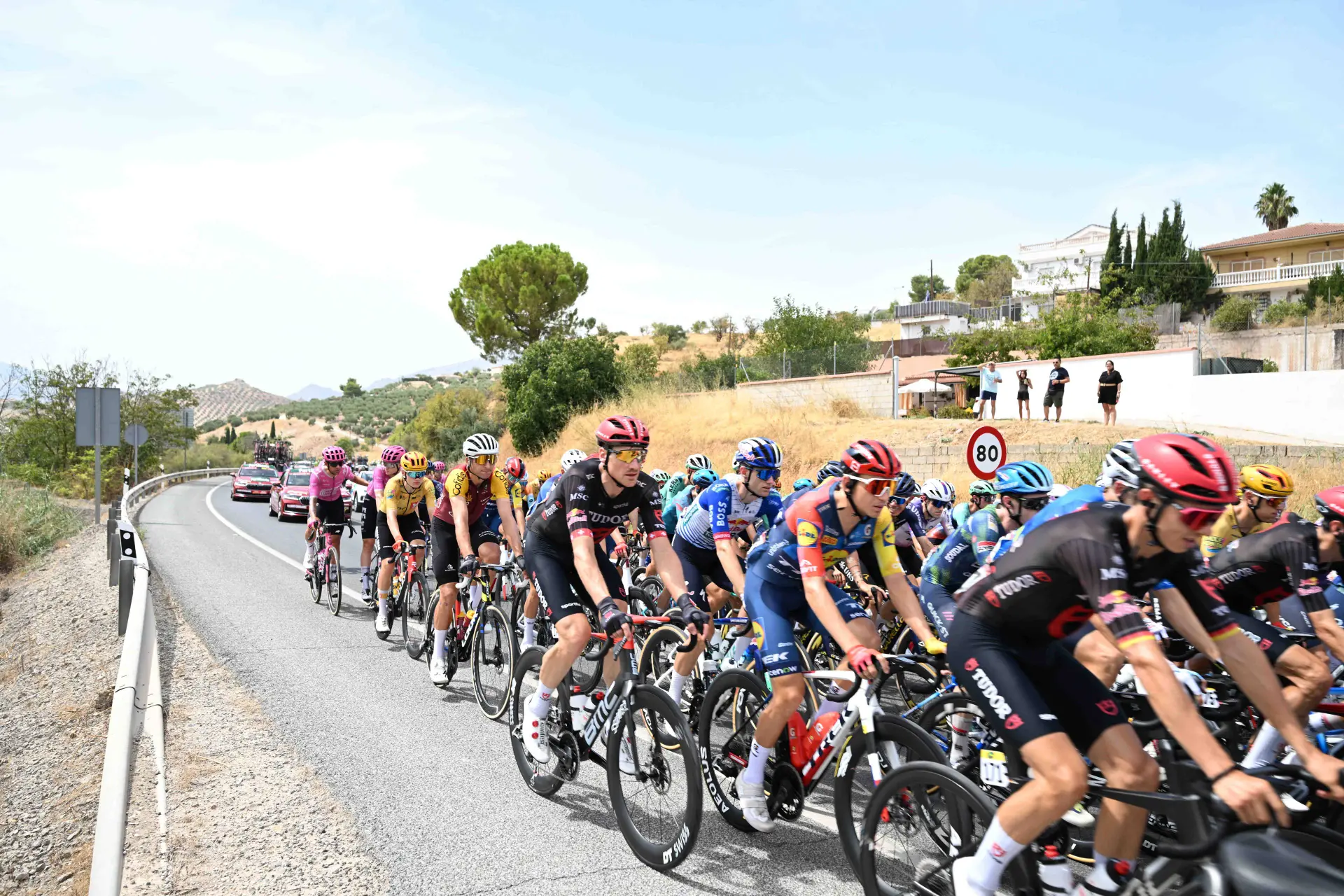
UAE are down to just four riders at the Spanish Grand Tour after Pogacar's abandon was followed up with Pablo Torres, Jay Vine and Pavel Sivakov leaving the race. They continue with Joao Almeida, Kevin Vermaerke, Domen Novak and Iyo Oliveira.
However, the UAE boss has called on the Vuelta organisers and TV broadcasters to consider changing the times stages start to avoid the peak heat that has seen temperatures reach as high as 41 degrees.
Acknowledging that the organisers made the right move to shorten stage 15 on Sunday, he believes that more needs to be done to prepare for extreme temperatures that threaten the wellbeing of the riders, with several sighting the heat as a reason to leave the race.
“The feeling of heat is often difficult to appreciate on television, but when you are here you realise what it is really like,” Matxin told Eurosport.

Joxean Matxin
Matxin thinks stage times could be changed
“Racing a stage in these conditions can cause serious problems. We have already seen riders abandon because of heatstroke and two days ago we also lost Pavel Sivakov because of the heat.”
A different schedule is what Matxin proposes: “In many cases these can be dangerous situations. There is a heat protocol and I think the organisation made a good decision by shortening the stage.
“Why don’t we look at a different schedule as well? I know that might not be ideal for television, but when it is 42, 46 or even 50 degrees, why not find an alternative time?”
With the race often starting in the early afternoon, riders are exposed to extreme temparatures right from the off. Acknowledging that the afternoon and early evening stage start and finish times are TV-friendly, he believes that something can be done.
Matxin hopes cycling organisers and broadcasters can adapt
“Starting and racing at three in the afternoon, when the heat is at its strongest, does not really help the heat protocol either.
“So I would put that idea forward as well. Television may also have to adapt to these situations.”
Ultimately, rider safety is Matxin's concern. Finding a solution to ensure that the situation can be avoided rather than eased is suggested.
Read also
“We have to try to be neutral in these situations. When we lose a rider because of heatstroke, that should not be the moment to think about whether changing the race benefits or disadvantages someone.”
“I don’t want to get into whether one rider benefits more or another loses out. We have to find a neutral solution where everyone is competing in equal conditions.”
He added: “Shortening a stage will benefit some riders and hurt others as well. But I think looking for the common good is the most sensible approach and, above all, a question of respect.”

Gavin QuinnCycling Journalist
Gavin Quinn is a cycling journalist and ultra-distance cyclist with a BA in Journalism from Dublin City University. Formerly the Press & Communications Officer for Cycling Ireland, Gavin has worked inside the national team at the World Championships and has reported for the Irish Mirror, Mirror UK, and The42.
His expertise is backed by elite-level access, having interviewed stars like Sam Bennett and Ben Healy, as well as immense personal endurance. In 2025, he completed a 12,000km solo cycle from Ireland to Vietnam, following a 4,600km tour across Europe. From the cobbles of Paris-Roubaix to the gradients of the Tourmalet, Gavin’s writing focuses on the "romance and brutality" of the sport. Having visited 50+ countries, he brings a global, cultural perspective to his coverage of the pro peloton for CyclingUpToDate.
claps 0visitors 0
Just in

Popular news

Latest comments
- How would stats back it up? You realise tactics involved could mean Vine saved his legs for a faster finish? Some riders can choose to go all out and fade later in the ride, others can hold steady state the whole way, and others can have a reserved start and power up later in the ride. You can't judge just by the stats unless you have power data to be able to prove Vine is riding faster even though he is putting out the same or less power (suggesting drafting). I'm sure the stats prove that Vine didn't cheat because UCI would monitor the stats to make sure this exact scenario doesn't happen (and disqualify them for drafting if the stats proved it).Pogboom19-10-2026
- Only one person would say such a thing here. Sorry to burst your bubble but I’m afraid that window of opportunity has now closed. You can beat some of the people all of the time and all of the people some of the time but you can’t beat all of the people all of the time.Jumpyjohn19-10-2026
- Both prizes are actually pathetic, almost amateur like, not even covering the cost of participatingJumpyjohn19-10-2026
- It depends on how you define doping and you would do well to give your definition so we can see how against it you are. If you consider the use (as a hypothetical example) of a new beneficial artificial product unknown to anti-doping agencies ok without considering asking them if it would constitute doping if you told them about it then we’re never going to agree on who could be or couldn’t be doping and according to what threshold, moral, statistical, legal, comparative. In football even financial doping is now consideredJumpyjohn19-10-2026
- I can’t wait to follow Pogi's races in 2027. Cycling will be exciting again!!!PogiSloFans19-10-2026
- I saw it for quite a while and the stats back it up
 Rafionain-Glas19-10-2026
 - Hope he can make a redemption by winning all grand tour or all monuments in single seasonZamorano19-10-2026
- great for Brandon to get this monkey off his back - first win in Rainbow has got to feel good.mij19-10-2026
- they are super good.mij19-10-2026
- agree
 Davide19-10-2026
Loading
Write a comment