“There’s no hiding” - Tom Pidcock sends clear message before Superga showdown at Milano-Torino 2026
Cycling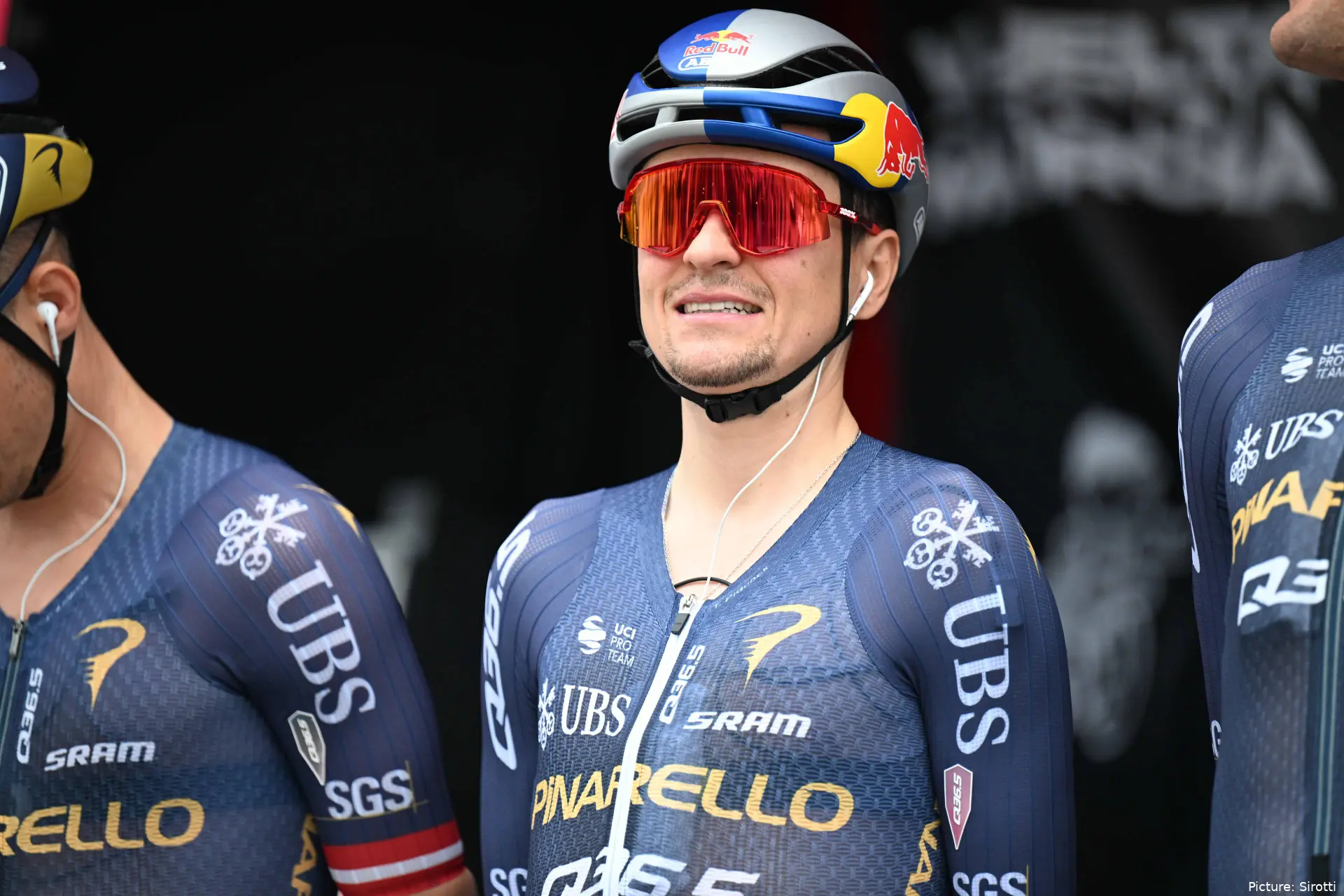
Tom Pidcock arrives at Milano-Torino with a clarity that cuts through the usual pre-race noise. On a day where the oldest race in cycling is once again expected to be decided on the slopes of Superga, the Brit has made his approach unmistakably simple: no excuses, no unknowns, just legs.
“Yeah, for sure. That’s why I’m here,” Pidcock said in conversation with Cycling Pro Net when asked if he sees himself as one of the favourites. “It’s a race that suits me. I’ve never done it before, but the climb suits me really well. We’re here to try and win.”
That final point matters. Milano-Torino, in its modern form, is rarely about nuance. With a largely flat opening phase before the race explodes on the climb to the Basilica of Superga, the script is usually stripped back to a single question: who has the best legs when the road kicks up.
Pidcock is not overcomplicating it. “It’s the legs that will do the talking on the climb. There’s no hiding.”
A race defined by Superga
The current version of Milano-Torino has become one of the clearest tests of climbing punch in the early season. After rolling out from Rho and across the plains of northern Italy, the race builds towards two ascents of Superga, with gradients that regularly push beyond 10 per cent.
There is little room for tactics in the traditional sense. Positioning matters, timing matters, but ultimately the decisive move tends to come down to raw climbing strength over a 12 to 13 minute effort.
Pidcock, notably, has never raced the climb. “No, I’ve never been. I don’t know it,” he admitted.
But even that unfamiliarity does not appear to concern him. “Roughly it’s like 12, 13 minutes. It’s a hard climb. That’s all I know. I mean, what is there to know? It’s uphill.”
That line sums up both the rider and the race. Superga does not hide its demands, and neither does Pidcock. The simplicity of the challenge is exactly what makes it so decisive.

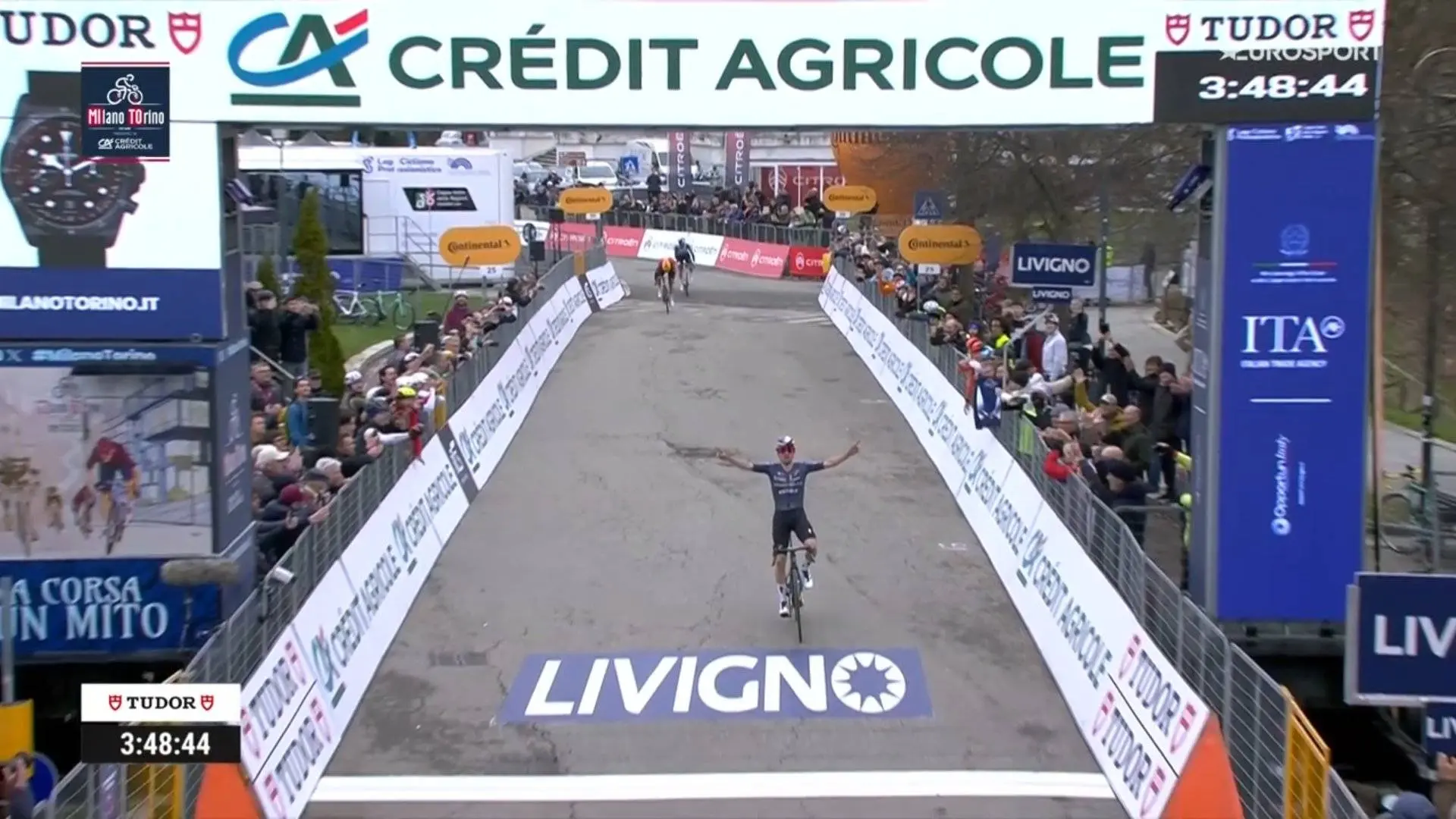
Pidcock is looking for win number 2 of 2026
Fresh legs after Strade Bianche
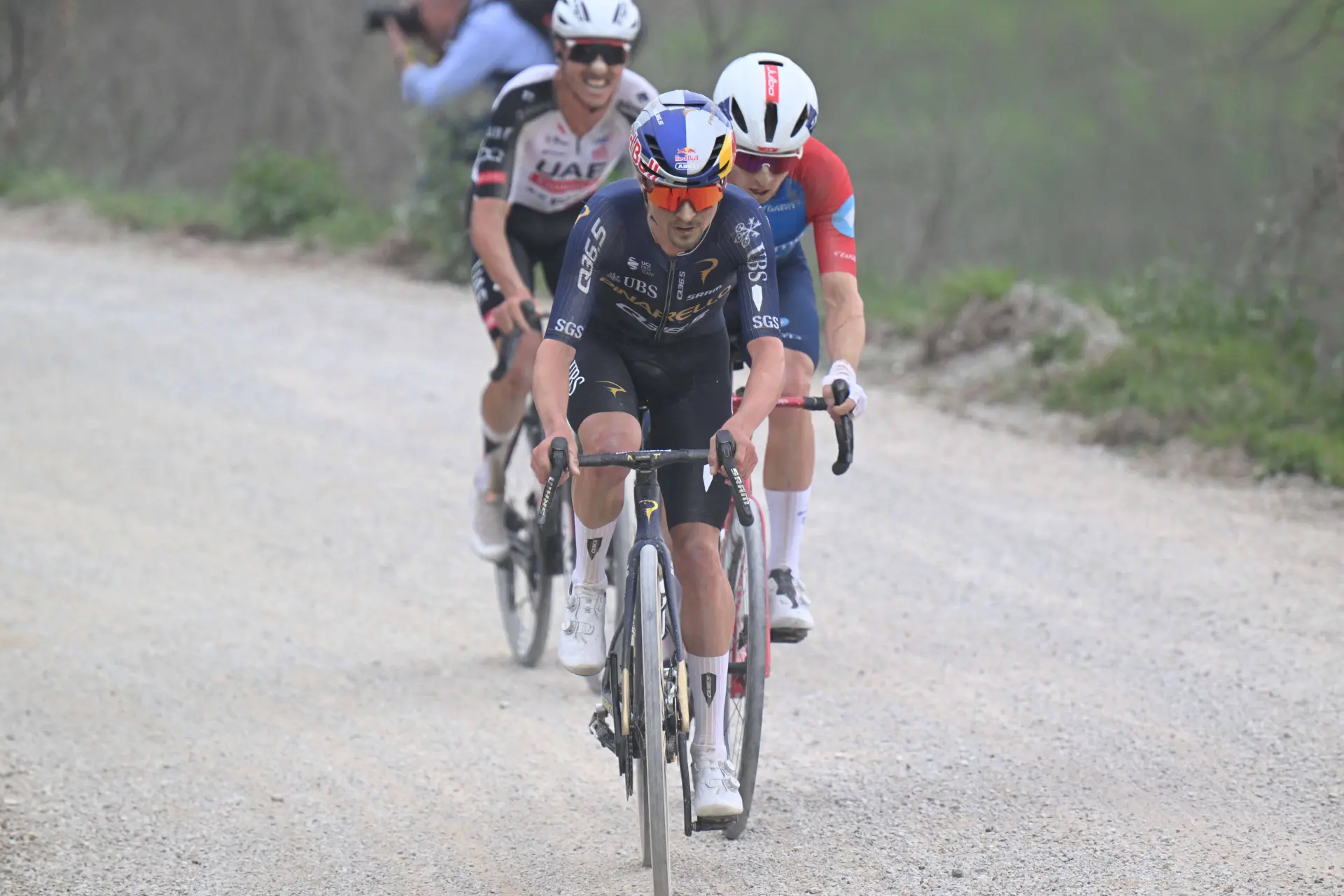
Pidcock’s presence in Turin also comes after a slightly adjusted build compared to his early March programme. Following the demands of Strade Bianche, the Brit has leaned into recovery and training rather than racing straight through.
“It was good. The terrain suited me,” he said of his recent block. “Strade was such a hard race that it was actually good to have a bit of recovery, spend some time training, and now come into these races with a different preparation.”
That reset could prove significant. Milano-Torino often rewards riders who arrive with freshness rather than accumulated fatigue, especially given how abruptly the race shifts from steady build-up to full intensity on the final climb.
A simple equation
For all the talk of favourites and form, the equation at Milano-Torino remains brutally straightforward. The race will unfold gradually across the plains, the peloton will thin on the first ascent, and everything will be decided the second time the road tilts skyward towards Superga.
Pidcock knows it. He is not trying to dress it up as anything more complex.
There are no reconnaissance advantages to lean on, no intricate tactical plans to hide behind. Just a climb, a field of contenders, and the expectation that the strongest rider will rise to the top.
On a day where the oldest race in cycling once again reduces itself to its purest form, Pidcock’s message is as direct as the road ahead. There is no hiding.

Kieran WoodDeputy Editor-in-Chief
Kieran Wood is a sports journalist based in Wales and has been active in journalism since 2022. He regularly contributes to DartsNews.com and CyclingUpToDate.com, where he covers professional cycling and darts. In cycling, his work includes liveblogs from major races, including the Tour de France, the Giro d’Italia, and La Vuelta a España, alongside race reports and analysis. He has also conducted interviews with professional riders.
His reporting spans the full racing calendar, from one-day classics to stage races, with a focus on accurate, real-time coverage and clear contextual analysis. For statistics, results, and historical context, he regularly uses resources such as ProCyclingStats. To support reporting on rider activity and training context where relevant, he also references Strava.
In his work, Kieran places strong emphasis on careful sourcing, editorial accuracy, and updating articles as new, verified information becomes available.
claps 2visitors 2
Just in
Popular news

Latest comments
- Bernal won the Tour because his attack stuck after Thomas’s was reeled in, and then they ended the stage due to the landslide - a deserved win, but contingent on many things. He won the Giro with quality and skill. And then, like so often happens for the cruelest of reasons, his injuries left him an incomplete version of his former self. He’s had a great career, what a great GC rider (8 of his 23 wins are GC, including 2 grand tours and 2 of the 7 major GC races), but already was struggling after COVID. I wish him the best, and if he retires, he should retire with pride for a career well done!RidesHills07-10-2026
- Roglič? In an interview he’ll continue to be hilariously dry about his goals, emphasize that he’s still having fun, and keep churning along until he doesn’t want to do this anymore. “Ah, you know, 100 wins would be nice, but eh - it’s just a number. I have fun, you know?” I can almost hear him saying those words. He’s not heading for low rank races to get the wins, he continues to race the major races (and I suspect would have won the Vuelta again were it not for that awful accident and that disgusting purple leg right before racing began).RidesHills07-10-2026
- BTW the list of classics you gave from PCS is participation, not winning
 Rafionain-Glas07-10-2026
 - Yes, though we saw that last week already.Jumpyjohn07-10-2026
- Or that riders get out in time.Jumpyjohn07-10-2026
- Hope he doesn’t stick with it just for that, would hate to see him exhibiting any has been footballer behaviour.Jumpyjohn07-10-2026
- Yep, that’s about it, couldn’t imagine someone wouldn’t get that.Jumpyjohn07-10-2026
- Time for your meds I thinkJumpyjohn07-10-2026
- No surprise here. Nice the oldies are having success, not the first discipline where you expect age to be an advantageJumpyjohn07-10-2026
- Any idea why Remco wasn’t there, Lombardia?Jumpyjohn07-10-2026
Loading
Write a comment