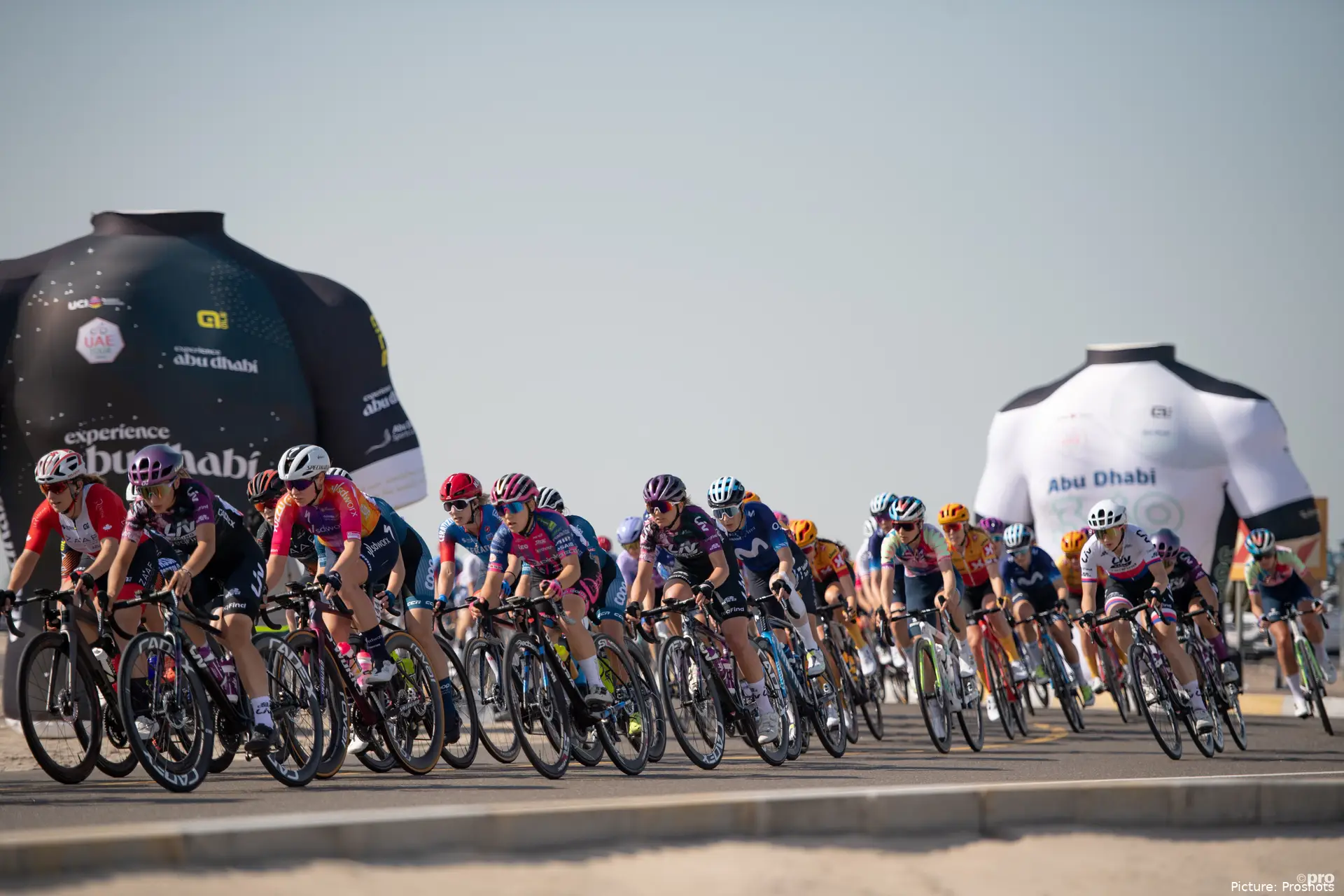
International cycling is once again facing a familiar challenge whenever it tries to establish projects beyond its traditional strongholds. The Tour of Qatar will not return to the calendar until 2028, after its planned comeback in 2027 was postponed once again. The news is another setback for a race that featured on the international calendar for years and represented one of the Middle East’s leading bids to gain a foothold in professional cycling.
The decision prompts reflection on the sport’s ability to turn major financial investment into sustainable sporting projects. Qatar, the United Arab Emirates, and Saudi Arabia have expanded their presence in cycling through sponsorships, teams, races, and commercial agreements.
However, staging a top-level race requires more than financial resources. It also needs continuity, a stable organizational structure, sporting appeal, and a clear place on an increasingly crowded calendar.
Qatar’s case is particularly significant because the peloton is already familiar with the country. The Tour of Qatar became a fixture in the opening weeks of the season over the past decades, especially for time trial specialists and Classics riders.
Its route, often shaped by the wind and echelons, offered a different challenge from European races and gave teams a chance to prepare for the season in distinctive racing conditions.
Its prolonged absence therefore raises a question that goes beyond a specific date: is international cycling building a lasting presence in the Middle East, or does it still depend on projects that come and go as circumstances change?
A decade away and another delay to its return
The Tour of Qatar disappeared from the calendar after its 2016 edition, when funding problems led to the cancellation of both the men’s and women’s races. Across its 15 editions, the event had become an important fixture early in the season. Its desert route, exposed roads, and potential for echelons made it an attractive challenge for teams and Classics specialists.
Mark Cavendish was the last winner of the men’s race, while Dutch rider Kirsten Wild conquered the women's event.
Ten years later, the revival plan seemed to have found an opening. The Qatar Cycling Federation had secured the necessary funding and enlisted ASO to organize both races again. The goal was not simply to revive a race that had disappeared; it was part of a broader sporting strategy linked to preparations for the 2030 Asian Games. Qatar had also appointed Belgian Rik Verbrugghe as technical director of its national team.

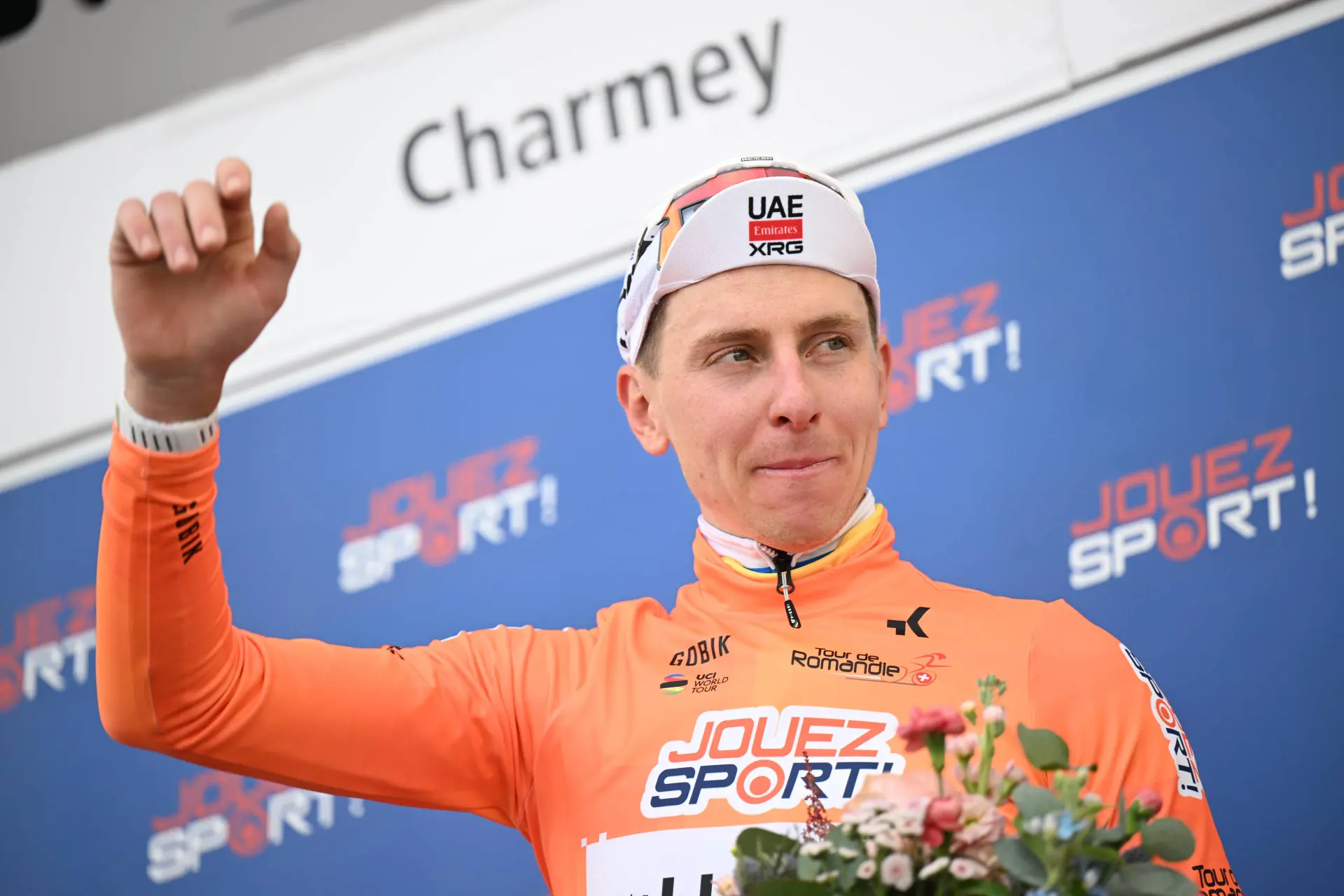
Pogacar at the 2021 UAE Tour
However, the plans have not gone as expected. The 2027 edition has been ruled out because of logistical problems, pushing the return back to 2028. Verbrugghe confirmed to Cyclingnews that the race will not take place next year, though the plan remains to bring it back later. The delay is another blow to an initiative that had overcome the financial difficulties behind its original demise.
The regional context has not helped. Geopolitical instability in the Middle East has complicated the staging of various sporting events and forced organizers to review calendars and projects.
However, the reasons should be distinguished: logistical problems have been cited in Qatar’s case, while other cancellations in the region stem from different organizational and financial decisions. In any case, the result is renewed uncertainty over cycling’s ability to maintain a lasting presence in the market.
Saudi Arabia also hits the brakes: the AlUla Tour
Qatar’s postponement coincides with another significant development: the AlUla Tour will also be absent from the 2027 calendar. The Saudi race, launched in 2020 as the Saudi Tour and renamed after the region of AlUla in 2024, had steadily grown to reach ProSeries status in 2026. Jan Christen won the latest edition, ahead of Sergio Higuita and Igor Arrieta. However, the organizers have not registered the race with the UCI for next season, ASO confirmed.
The situation is particularly striking because Saudi Arabia had made AlUla one of its leading showcases for sport and tourism. The region had also entered professional cycling sponsorship through its links with Jayco AlUla and Liv AlUla Jayco.
However, AlUla Development Company’s withdrawal as a co-title sponsor of both teams from 2027 points to a review of its sports investments. The company belongs to Saudi Arabia’s Public Investment Fund (PIF), which has reduced its exposure to various international projects in recent months.
The two situations should not be confused. Qatar is still considering a return for its races in 2028, while no confirmed date has been set for the AlUla Tour’s return. These are separate projects, but their timing highlights the challenges facing professional cycling’s expansion in a region that had gained prominence thanks to its financial resources.
Read also
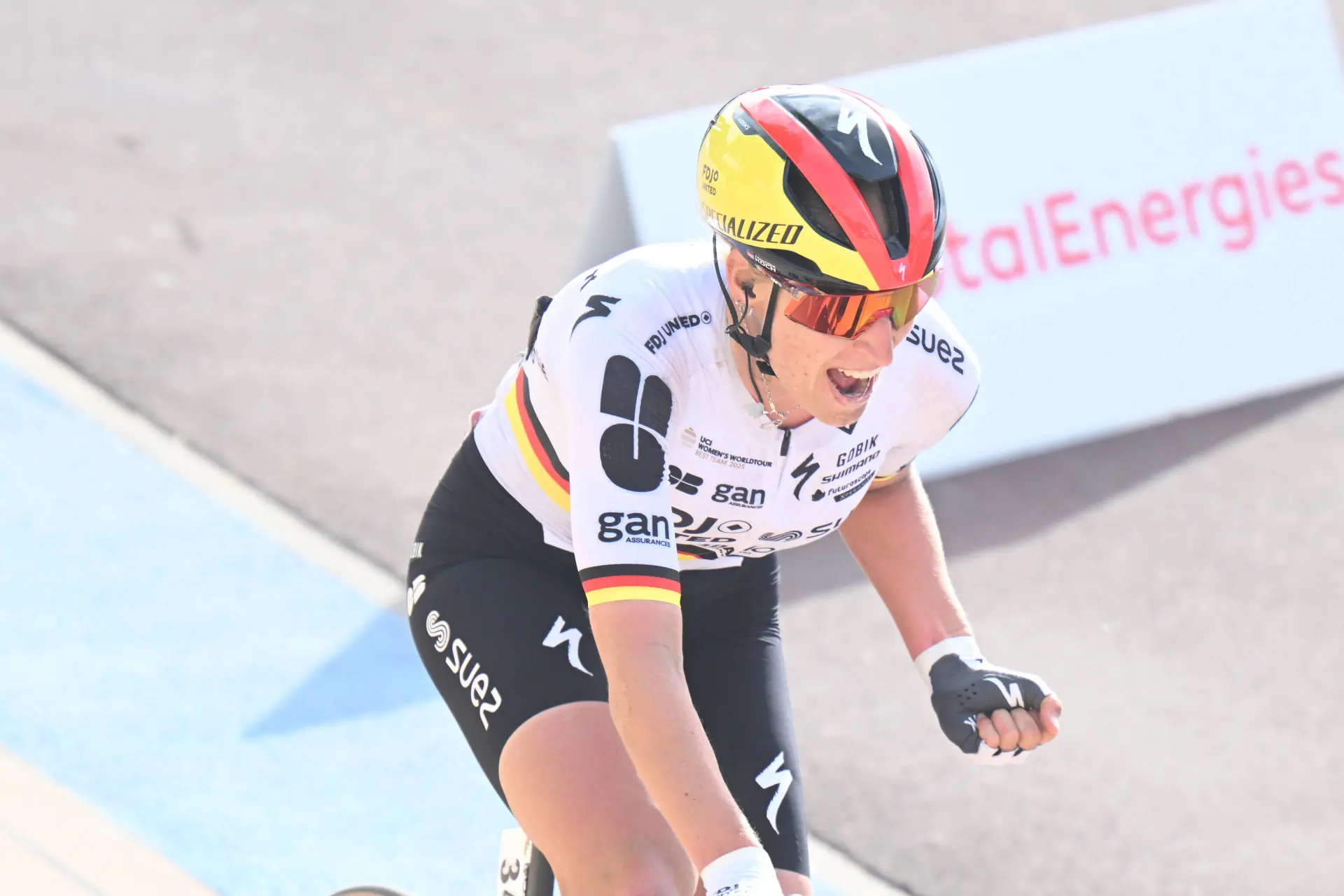
The UAE and Oman projects must sustain the region’s presence
The outlook also means the continuity of every Middle Eastern race cannot be taken for granted. The men’s and women’s UAE Tours remain two of the region’s leading events on the international calendar.
The men’s race, part of the WorldTour, has become an important February fixture for the peloton’s biggest stars. The chance to race in stages and prepare for major spring goals continues to make it an attractive sporting prospect, regardless of the commercial investment behind it.
The Tour of Oman is another example of a race that has maintained a longer-running presence. Organized by ASO, it has offered teams an alternative with favorable weather and demanding routes during the European winter.
However, doubts about its place on the 2027 calendar have also emerged following recent reports about the regional situation. For now, its future should not be written off, but neither should the race be treated as a certainty without confirmation from the organizers.
The paradox is clear: the Middle East has attracted some of cycling’s biggest stars, financed top-level teams, and staged international races. UAE Team Emirates - XRG has become one of the peloton's dominant teams, while governments and companies across the region have used sport to raise their international profile. Yet the success of a professional team does not automatically guarantee the stability of races held in the same territory. These investments have different aims and financial structures.
Money does not guarantee cycling’s future
The underlying challenge is that cycling needs more than large budgets to establish itself in new markets. A professional race requires multi-year agreements, stable sponsors, institutional support, infrastructure, and a connection with local fans. It also needs to find its place in an increasingly demanding international calendar. Races that fail to build their own identity or rely too heavily on a single source of funding are vulnerable whenever priorities change.
Qatar is one example of that challenge. Its plan to revive the Tour and stage a women’s edition as well shows an interest in developing cycling, but the postponement underlines how many hurdles stand between an intention and an established race.
Saudi Arabia, meanwhile, has shown it can build major sports projects, though the withdrawal of some investments raises questions about how sustainable they are when economic or strategic circumstances change.
Cycling cannot view the Middle East solely as a source of funding. It needs races that survive beyond their first editions, teams that can maintain their structures, and fans who have reasons to identify with them.
The Tour of Qatar will have to wait until 2028 to try to reclaim its place, while the AlUla Tour’s future remains uncertain.

Ondrej ZhasilCycling Journalist
Ondřej Zhasil is a cycling journalist at CyclingUpToDate and has been part of the team since 2023. He is based in Ostrava, the third-largest city in the Czech Republic, and covers professional cycling across the main UCI competitions, including the Tour de France, the Giro d’Italia, and La Vuelta a España. A key focus of his work is startlist analysis and pre-race coverage, where he examines team selections, rider line-ups, and tactical scenarios ahead of major events.
Alongside WorldTour coverage, Ondřej has developed specific expertise in junior cycling and in racing across East Asia, including competitions in China and Japan. He also maintains a broad working knowledge of other disciplines and levels, including cyclocross, while continuing to expand his understanding of mountain bike racing.
Ondřej holds a bachelor’s degree in Mathematics and Physics, which supports his analytical, data-driven approach to performance and race analysis. In his reporting, he regularly uses ProCyclingStats for results, statistics, and historical context. He places strong emphasis on careful sourcing, editorial accuracy, and updating articles promptly when new, verified information becomes available.
claps 0visitors 0
Just in


Popular news
Latest comments
- What Roglic needs to hope for is a sensible strategy. Remember, towards the end of the 2025 Tour he was 5th on GC, had good legs, the freedom to do whatever he wanted,, and threw it all away to finish 8th overall (and couldn't help Lipowitz). What he needs is a plan.Hills3323-11-2026
- you think this unknown rider challenged Tadej? LOL what a clown show statementmij23-11-2026
- Dear Lord, Heavenly Father, and occasional time-trial timekeeper, We gather here (well, I do, anyway) to humbly request a small miracle for the upcoming Tour. Please send Primož Roglič down from the Slovenian mountains with his usual calm smile, legs of pure titanium, and that special ability to make time gaps look like polite suggestions. Let him float up the cols, crush the time trials, and finally plant that yellow jersey on the Champs-Élysées like it owes him money. Amen to the watts, amen to the aero, and amen to whatever secret Slovenian cheese he’s packing this year. And while you’re at it, Lord… please help my dear atheist friend PogiSloFans. Grant him a life. A real one. Hobbies that don’t involve camping in the comments section of our favorite cycling website like it’s his full-time unpaid job. Bless him with fresh air, actual human conversation, maybe even a bike ride of his own so he can feel the burn instead of just typing about it. Soften his heart, quiet his keyboard, and gently redirect all that passionate energy toward something that doesn’t involve arguing about power meters at 2 a.m. We ask this in the name of clean racing, fewer internet arguments, and Primož finally getting the damn Tour. Amen. (And don’t forget the green jersey either, just in case.) May the road rise to meet Roglič, and may the forums finally know peace.awp23-11-2026
- I never once said that God exists but rather we all have the right to believe what we believe. Although, I have enjoyed trolling you..😂🤡🫵🏻awp23-11-2026
- And where did you think I believe in religion in any form and not that it matters? You assume a LOT which means you are an A## as proven by your comments here !frieders323-11-2026
- And yet another GAG comment !frieders323-11-2026
- welcome to clickbaitwrsty23-11-2026
- Prayers don't work on me... I'm an atheist, but I'm also a humanist, which means following a philosophy and way of life centered on human values, reason, logic, empathy, and human dignity... without relying on supernatural beliefs or some non-existing god authority.PogiSloFans22-11-2026
- No no my friend, I have proven all my arguments. But you saying that something in the sky that we can not see, exists, is your problem not mine. Under common logic and debate principles, whoever asserts that something exists, carries the burden of proving it. In other words, the burden of proof is the obligation to provide evidence or logical justification for a claim. Ad acta!!!PogiSloFans22-11-2026
- I’m on board with you. I constantly see articles on the internet comparing so and so to Pogi. For now he is the GOAT. His physiology., metrics and his race intellect are extraordinary. IMOJoeyC22-11-2026
Loading
Write a comment