Who are the best young riders in World Championships time trial history? - Top U23 performances ever on the world stage
Cycling
The history of the U23 World Championships time trial is full of riders who found in this category the first major showcase of their careers. Since its inception, the event has measured the world’s best young specialists and, in many cases, hinted at who would become benchmarks against the clock.
Some of those champions and medallists then stepped up to the elite and confirmed the expectations. That was the case with Mikkel Bjerg, who achieved a rare feat by taking three consecutive world titles, or Luke Durbridge, a champion in back-to-back editions.
Others took a different path. Fabian Cancellara and Michael Rogers never won U23 gold, but went on to build extraordinary palmarès in the elite category, with multiple world titles and years of dominance. Rohan Dennis also turned his U23 silver into the launchpad for a career defined by time trial success.
We revisit five names that best capture the connection between the U23 Worlds and the elite, weighing both their results in the category and their subsequent pro careers. Winning in the youth ranks does not always guarantee a top-tier career, but these five proved that success was only the beginning.
Mikkel Bjerg: the king of the U23 category
Mikkel Bjerg is the outstanding historical dominator of the U23 Worlds time trial. The Dane secured three consecutive titles between 2017 and 2019, a feat no other rider has matched. Bergen, Innsbruck, and Yorkshire framed an extraordinary streak that confirmed his specialist status from a very young age.
His first gold arrived in 2017, ahead of American Brandon McNulty and Frenchman Corentin Ermenault. A year later he won again, this time beating Belgian Brent Van Moer and compatriot Mathias Norsgaard. In 2019 he completed the hat-trick by defeating Ian Garrison and Brandon McNulty.
Bjerg thus became the first rider to string together three U23 world time trial titles. His dominance in the category remains one of the event’s most significant milestones.
Luke Durbridge: two golds before joining the elite
Luke Durbridge also forged an exceptional trajectory in the category. The Australian took two consecutive titles, in Copenhagen 2011 and Valkenburg 2012, after finishing second in 2010.
In 2011 he defeated Rasmus Quaade and Michael Hepburn, while a year later he returned to the top step of the podium ahead of Rohan Dennis and Damien Howson. That consistency confirmed he was ready to compete at the highest level.
Durbridge stood out for years as one of Australia’s leading time trial specialists and paired his individual results with a strong record in team events. His U23 double was the springboard for a long international career.

Luke Durbridge en la pasada edición del Tour de Flandes
Fabian Cancellara: U23 silver and four elite rainbows
Fabian Cancellara has a unique place on this list because he never won the U23 Worlds. However, his silver medal in Plouay 2000 was the prelude to an extraordinary career against the clock.
The Swiss finished second behind Yevgueni Petrov and ahead of Michael Rogers. Five years later, as an established professional, he claimed his first elite world title and then added three more, reaching four golds between 2006 and 2010.
His progression shows that U23 results do not always predict the future exactly. From that silver in France, Cancellara became one of the greatest specialists of all time.
Michael Rogers: from U23 bronze to a world championship hat-trick
Michael Rogers also missed out on U23 gold, but his bronze in Plouay 2000 gained special significance over time. The Australian placed third behind Petrov and Cancellara before building an outstanding professional career.
Between 2003 and 2005 he won three consecutive elite World Championships in Hamilton, Verona, and Madrid. Over that period he defeated specialists such as Uwe Peschel, Michael Rich, Alexandr Vinokurov, and Fabian Cancellara.
His case is another example of how a U23 medal could mark the start of a career destined to dominate the elite discipline.

Rohan Dennis en posición de contrarreloj
Rohan Dennis: from U23 silver to the elite rainbow
Rohan Dennis completes this group after finishing second at the U23 Worlds in Valkenburg 2012. The Australian placed behind Luke Durbridge and ahead of Damien Howson, in an edition that gathered several riders destined for prominent years in the elite.
His major breakthrough came later. Dennis became elite world champion in Innsbruck 2018 and retained the title a year later in Yorkshire. On both occasions he proved his time trial potential had been far more than a youthful promise.
His trajectory, from that U23 silver to two consecutive elite world titles, perfectly sums up the historic importance of this category as a talent pool for top specialists.
Read also

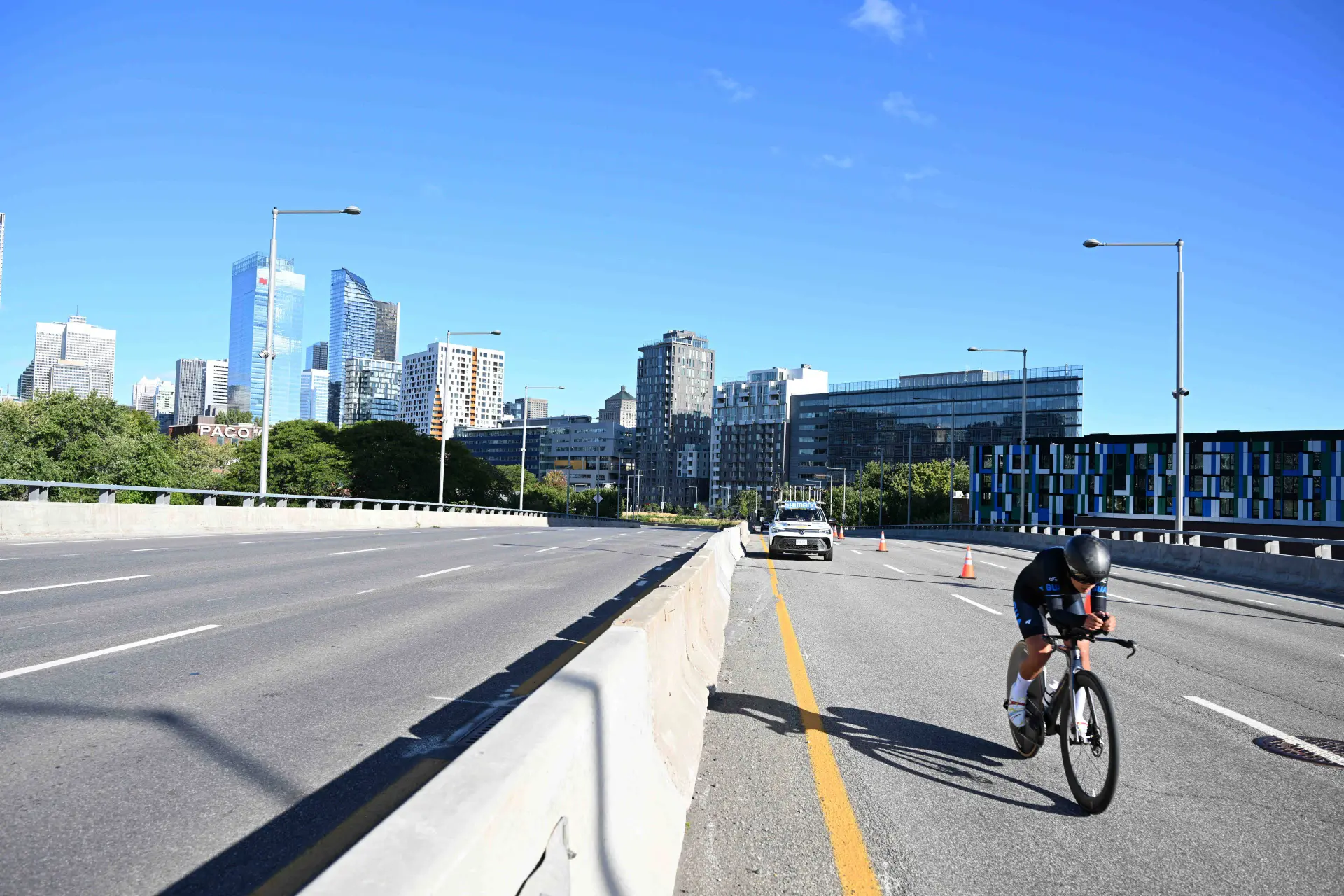
The big names of the U23 Worlds
| Edition | Year | Venue | Gold | Silver | Bronze |
| I–LXII | 1927–1995 | — | Not held | — | — |
| LXIII | 1996 | Lugano | Luca Sironi | Roberto Sgambelluri | Andreas Klöden |
| LXIV | 1997 | San Sebastián | Fabio Malberti | László Bodrogi | David George |
| LXV | 1998 | Valkenburg | Thor Hushovd | Frédéric Finot | Gianmario Ortenzi |
| LXVI | 1999 | Treviso | José Iván Gutiérrez | Michael Rogers | Yevgueni Petrov |
| LXVII | 2000 | Plouay | Yevgueni Petrov | Fabian Cancellara | Michael Rogers |
| LXVIII | 2001 | Lisbon | Danny Pate | Sebastian Lang | James Perry |
| LXIX | 2002 | Zolder | Tomas Vaitkus | Alexandr Bespalov | Sérgio Paulinho |
| LXX | 2003 | Hamilton | Markus Fothen | Niels Scheuneman | Alexandr Bespalov |
| LXXI | 2004 | Verona | Janez Brajkovič | Thomas Dekker | Vincenzo Nibali |
| LXXII | 2005 | Madrid | Mikhail Ignatiev | Dmytro Grabovsky | Peter Latham |
| LXXIII | 2006 | Salzburg | Dominique Cornu | Mikhail Ignatiev | Jérôme Coppel |
| LXXIV | 2007 | Stuttgart | Lars Boom | Mikhail Ignatiev | Jérôme Coppel |
| LXXV | 2008 | Varese | Adriano Malori | Patrick Gretsch | Cameron Meyer |
| LXXVI | 2009 | Mendrisio | Jack Bobridge | Nélson Oliveira | Patrick Gretsch |
| LXXVII | 2010 | Melbourne | Taylor Phinney | Luke Durbridge | Marcel Kittel |
| LXXVIII | 2011 | Copenhagen | Luke Durbridge | Rasmus Quaade | Michael Hepburn |
| LXXIX | 2012 | Valkenburg | Anton Vorobiev | Rohan Dennis | Damien Howson |
| LXXX | 2013 | Florence | Damien Howson | Yoann Paillot | Lasse Norman Hansen |
| LXXXI | 2014 | Ponferrada | Campbell Flakemore | Ryan Mullen | Stefan Küng |
| LXXXII | 2015 | Richmond | Mads Würtz Schmidt | Maximilian Schachmann | Lennard Kämna |
| LXXXIII | 2016 | Doha | Marco Mathis | Maximilian Schachmann | Miles Scotson |
| LXXXIV | 2017 | Bergen | Mikkel Bjerg | Brandon McNulty | Corentin Ermenault |
| LXXXV | 2018 | Innsbruck | Mikkel Bjerg | Brent Van Moer | Mathias Norsgaard Jørgensen |
| LXXXVI | 2019 | Yorkshire | Mikkel Bjerg | Ian Garrison | Brandon McNulty |
| LXXXVII | 2020 | Imola | Not held | — | — |
| LXXXVIII | 2021 | Flanders | Johan Price-Pejtersen | Lucas Plapp | Florian Vermeersch |
| LXXXIX | 2022 | Wollongong | Søren Wærenskjold | Alec Segaert | Leo Hayter |
| XC | 2023 | Stirling | Lorenzo Milesi | Alec Segaert | Hamish McKenzie |
| XCI | 2024 | Zürich | Iván Romeo | Jakob Söderqvist | Jan Christen |
| XCII | 2025 | Kigali | Jakob Söderqvist | Nate Pringle | Maxime Decomble |
Javier RampeCycling Journalist
Javier Rampe is a sports analyst with more than 15 years of experience. He holds a degree in Economics from the University of Rome and a Diploma in Business Studies from the University of Cádiz. Despite coming from an academic background not particularly associated with cycling, his passion for both cycling and journalism was instilled in him from an early age. He grew up following Miguel Indurain and José María “El Chava” Jiménez. An admirer of Michael Robinson’s communication style and journalistic approach, he was inspired to pursue a degree in Journalism at the University of Buenos Aires, which he is currently completing.
He has always maintained close ties with the worlds of sport and culture, contributing from a young age to sports blogs and film and music review websites. His work has appeared in media outlets such as Cope, RAI, and Radio Con Vos. He is also the founder of the cycling-focused podcast El Contraanálisis and the football interview channel Días De Fútbol, dedicated to conversations with professional footballers.
In addition to his work at Ciclismoaldia, Javier has interviewed some of the most influential figures in modern cycling, including Alejandro Valverde and Tadej Pogačar, as well as key voices in anti-doping policy such as Alberto Yelmo, David Varillas, and Marcelo Milano. Marcos Maynar, in relation to the ‘Operación Ílex’ case, is also among the personalities he has interviewed. He enjoys conducting in-depth analysis of the cycling ecosystem and has attended major events such as Strade Bianche, the Vuelta a Andalucía, and Itzulia, as well as numerous national cyclo-cross races.
His background in economics, combined with extensive experience in marketing and corporate communications, drives his continuous study of positioning strategies and ensures that he always keeps his focus on crafting compelling and evocative headlines.
claps 0visitors 0
Just in
Popular news
Latest comments
- JV is really slighting himself with not doing the 1 dayers.. 🤷
 leedorney02-11-2026
- Watch the interview on youtube. I don't speak French. I do speak English and Spanish and you can hear it in his voice. Years ago LeMond had real personal problems I imagine in no small part because of Armstrong. then Armstrong goes round "full blast" re: LeMond having drinking and drug problems. The same way Andreu was expelled from mainstream cycling so was LeMond. On the positive side the clips of the ride and chatting with old teammates and was good. To seemed like a fun day and experience and good reason brush up his French.atom02-11-2026
- and another no-news article around the ‚2 tokyo jogging rounds‘ headline, this time spiced with some days old ‚news‘ that the LA and japan vacation trips come during or after the tdf route release. i am getting more and more annoyed by this time-stealing no-news crap. but who am i to complain? nobody forces me to come back for more ‚news‘ day after day …Ketterechts02-11-2026
- It would likely be a very steep section of 4.1 km, not changing the average gradient considerably, with the climb remaining 10.1 km at 11.8%. It would reach 20% on the gravel. It would start 1.6 km in, and finish with 4.2 km left to climb (before the short final descent)
 Rafionain-Glas02-11-2026
- Welcome to the off-season.
 santiagobenites02-11-2026
- guillaume martin in this list is quite a surprise as a gc rider.Ketterechts02-11-2026
- Who cares what Bruyneel thinks. He and his best mate Lance, the biggest fraud in the history of sport, have no place commenting on anything but how to lie and cheat!whit2pet02-11-2026
- Eeesh!Lozza02-11-2026
- bravo! a rider likes jonas needs motivation and he needs to believe in being able to reach goals. he - like anybody else in the world - doesn't believe that he can win the tdf with pogi present. and what's it worth for when pogi is not there? second class victory only. he has checked all three grand tours, so what is left if not retire? the classics! go for it, jonas!Ketterechts02-11-2026
- i am sure that under the pretext of medical examination a lot worse has happened when they were under.abstractengineer02-11-2026
Loading
Write a comment