“Stage 18 is really a disgrace – It makes no sense”: Tour de France route designers under fire for controversial 2026 parcours
Cycling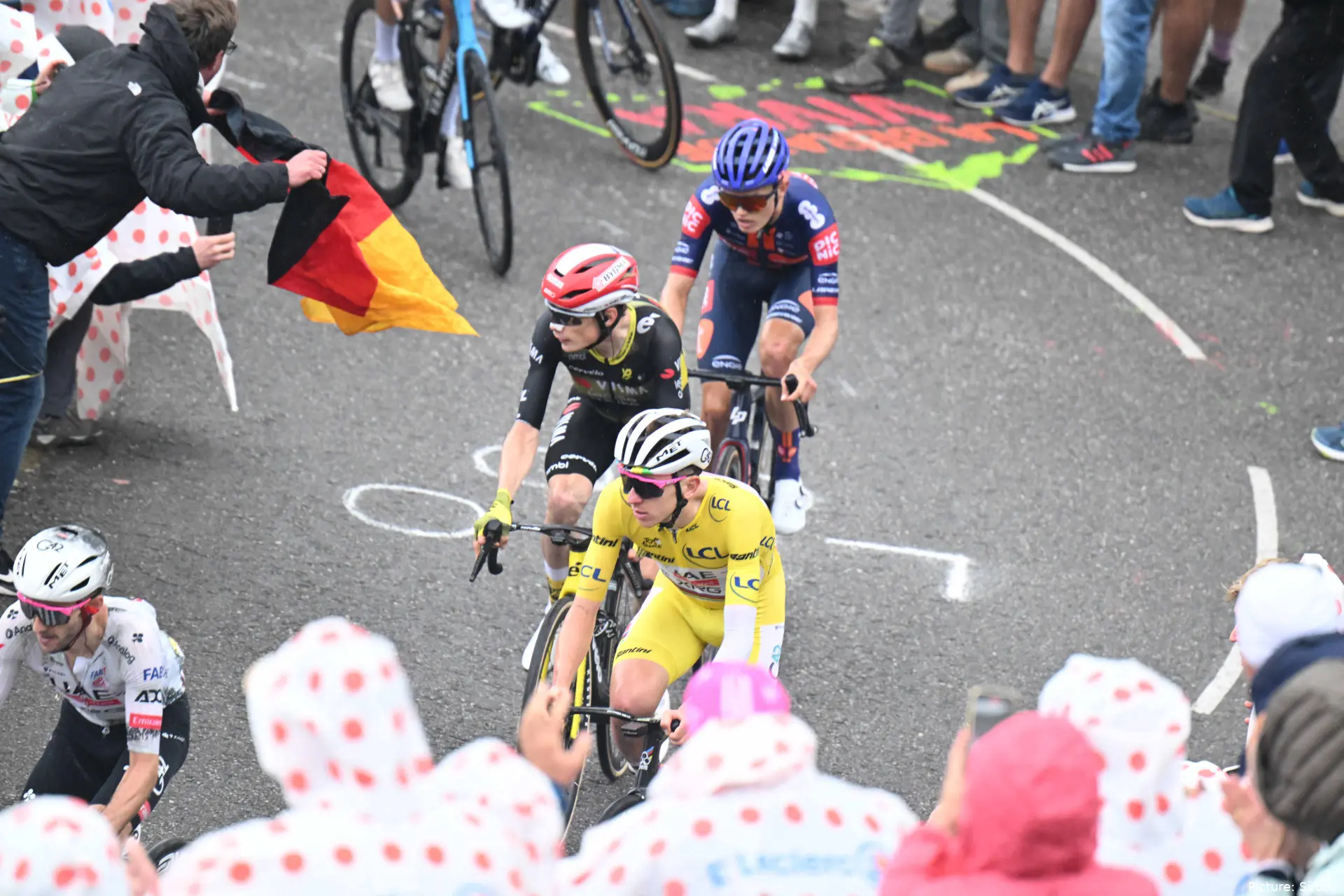
Dutch ex-pro turned analyst Thijs Zonneveld has never been one to hold back — and his verdict on the newly revealed 2026 Tour de France route is as sharp as ever. The 45-year-old has accused organisers of “playing it safe” and serving up a mountain week that “makes no sense”, describing one Alpine stage as “really a disgrace”.
Rather than applauding the design of the final week, Zonneveld has criticised what he sees as a cautious approach that strips the Tour of its trademark tension. “Last year, every stage could go in any direction,” he said. “That’s been completely abandoned now.”
For him, the problem is not the inclusion of climbing but the way it’s presented — long, steady gradients that discourage aggressive racing.
The “mountain stage” that isn’t one
Zonneveld’s most scathing remarks were aimed at the ride to Orcières-Merlette, officially billed as a mountain stage. He argues that the profile is far too tame to justify the label.
“Stage 18 is, in my opinion, really a disgrace,” he said. “They call it a mountain stage, but it’s more like a light version of a one-climb day. Two or three percent for hours, then five, and the last climb averages maybe six. You can ride up it in the big ring at 35 kilometres per hour.”
He compared the layout to the 2020 edition, when Primoz Roglic won on the same summit finish with barely any gaps behind. “Jumbo pulled from the bottom like it was a lead-out, and there were still about fifteen riders together at the top,” he recalled. “I honestly don’t understand why you’d add stages like this.”
Predictable racing, misplaced timing
The Dutchman’s main gripe is that such a steady profile has been placed deep in the decisive final week — precisely when, he argues, the Tour should be at its most explosive. “If it were early in the race, I’d get it,” he explained. “Then you keep the gaps small. But now? It makes no sense.”
He calls the stage “just boring”, lamenting that “nothing happens until the final five kilometres”.
Even Alpe d’Huez fails to inspire
Zonneveld also poured cold water on the hype surrounding the following day’s Alpe d’Huez finish. While the climb itself is legendary, he believes the run-in to it lacks bite. “Maybe Marco Pantani’s record goes, but that’s about the only exciting thing that might happen,” he said. “If you design a stage like that, you should at least make something of it.”
In Zonneveld’s eyes, the 2026 edition risks feeling too tidy, too predictable — a Tour lacking the chaos and unpredictability that made recent years must-watch television.
“This feels like a race without courage,” he concluded. “Even the queen stages feel like missed opportunities.”
Kieran WoodDeputy Editor-in-Chief
Kieran Wood is a sports journalist based in Wales and has been active in journalism since 2022. He regularly contributes to DartsNews.com and CyclingUpToDate.com, where he covers professional cycling and darts. In cycling, his work includes liveblogs from major races, including the Tour de France, the Giro d’Italia, and La Vuelta a España, alongside race reports and analysis. He has also conducted interviews with professional riders.
His reporting spans the full racing calendar, from one-day classics to stage races, with a focus on accurate, real-time coverage and clear contextual analysis. For statistics, results, and historical context, he regularly uses resources such as ProCyclingStats. To support reporting on rider activity and training context where relevant, he also references Strava.
In his work, Kieran places strong emphasis on careful sourcing, editorial accuracy, and updating articles as new, verified information becomes available.
claps 8visitors 3
Just in
Popular news
Latest comments
- Campenaerts looked like a rolling pumpkin with that all orange leaders skinsuit !frieders318-10-2026
- He can take his dumb a$$ politics somehwere else !frieders318-10-2026
- good to have her back. fingers crossed she‘ll be able to stay!Ketterechts17-10-2026
- A tenner and he wins the Tour next year, too 😂anonymouscyclist17-10-2026
- the answer is either stick to classics or GTs but not bothabstractengineer17-10-2026
- the exodus already stared with Ciccone. Already they were struggling with two sprinters, now there are three. Also Ganna will demand leadership. Gall is the most proven GC, Ayuso has the most potential. GC leadership for everybody will be impossible. Literally a UAE style mess without pogi.abstractengineer17-10-2026
- I raced as an amateur for 12 years, including six years on my country’s national road cycling team. I secured two national titles and competed in three World Championships plus more than 15 international stage races. At 23, we travelled to Italy for a training camp—or so I assumed. On a rest day, we watched a presentation about adopting a more “professional” training approach. It was crystal clear what “professional” meant. That moment first exposed me to this dilemma. After returning from Italy, I left cycling—at least at the competitive level I had known. Over the following two years, the whole team was caught doping. I hold that everyone is innocent until proven guilty. In my view, current stakeholders operate on a different scale, and the sums involved are vast. I am unsure whether any doping would ever be revealed. I try to stay positive and enjoy the show. My 2c.
 vannpelt17-10-2026
 - Fiver he wins 🤣
 leedorney17-10-2026
 - “…measures to reduce speeds.” Might as well shorten the race course to just 50km as well? ASO generates at minimum €300m a year and 30- 40% profit. Maybe stop being greedy and spend more of the profit to protect the riders instead.b3tlla17-10-2026
- he also had quite the life off the bike during his pro years. he used his celebrity status to full affect.mij17-10-2026
Loading
2 Comments