“Riders are losing public credibility” - Leading online analysts condemn Vuelta’s final-stage neutralisation
Cycling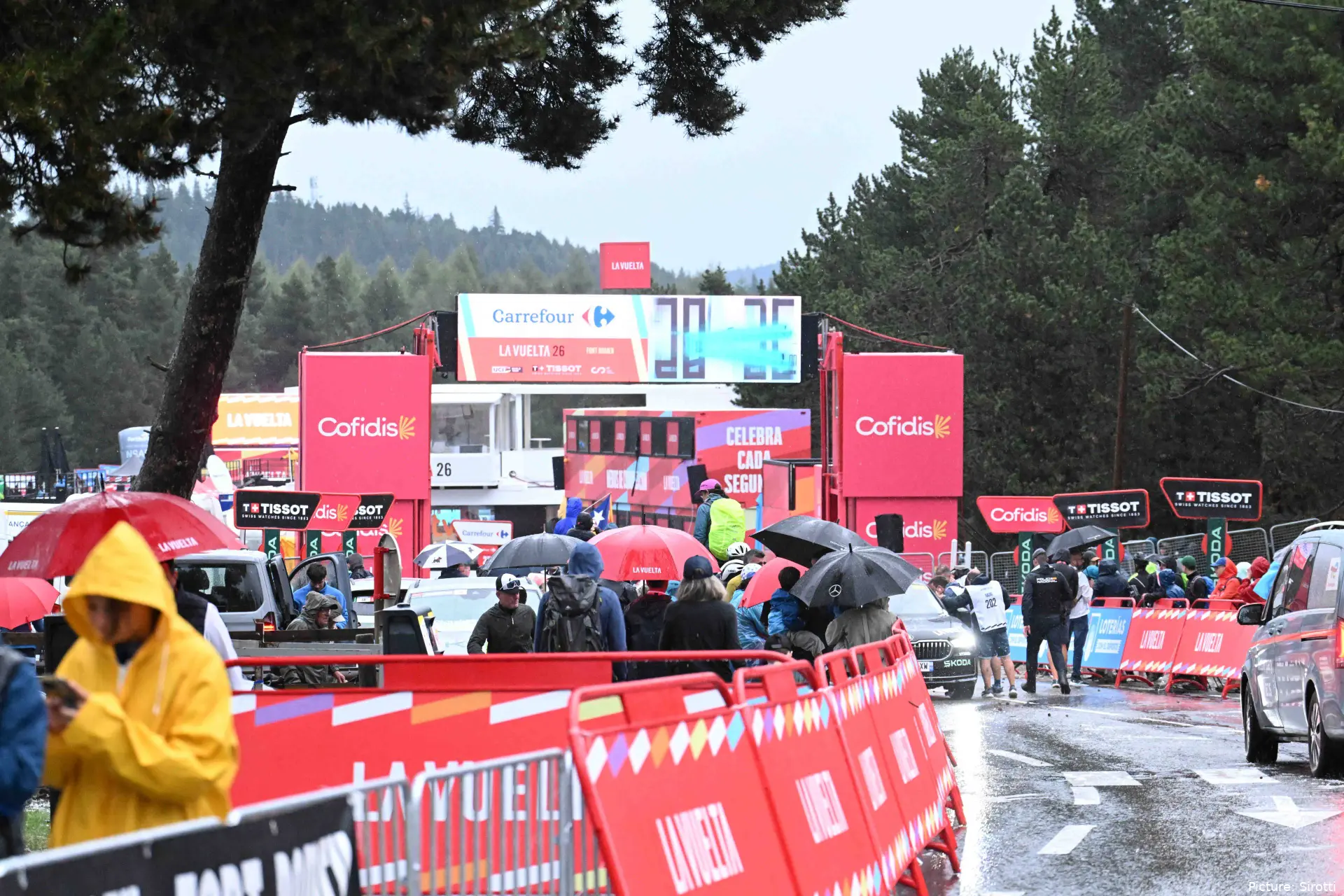
The 2026 Vuelta a Espana will end beneath a cloud of controversy after the riders and CPA successfully pushed for the final 9.8 kilometres of Stage 21 to be neutralised for the general classification.
The stage victory and points classification will remain live until the finish, but GC times will be taken at the fourth of five passages across the line. No bonus seconds will count towards the overall standings.
Race organisers and the UCI had initially opposed neutralisation before reaching a compromise with the riders and CPA.
The decision quickly drew criticism from notable online analysts Benji Naesen and La Flamme Rouge, whose X accounts have a combined following of more than 180,000. Both challenged the use of safety concerns to protect the general classification while the peloton will still race across the same roads in pursuit of the stage win.
“Unnecessary” intervention risks weakening future demands
“By having the CPA force this unnecessary GC neutralisation on a stage with no prominent safety concerns nor weather conditions affecting the safety, riders are losing public credibility and support when they ask for a neutralisation in actual unsafe conditions,” Naesen wrote.
By having the CPA force this unnecessary GC neutralisation on a stage with no prominent safety concerns nor weather conditions affecting the safety, riders are losing public credibility and support when they ask for a neutralisation in actual unsafe conditions. #LaVuelta26
— Benji Naesen (@BenjiNaesen) September 13, 2026
Teams reportedly objected to narrow roads and technical corners on the Granada circuit, which also features a partially cobbled 2.1-kilometre climb averaging 6.6%. The request was made before racing began and without extreme weather or an incident forcing the organisers to reconsider the route.
The peloton will have raced three complete laps of the same circuit before reaching the GC checkpoint. Once the clock stops, the stage contenders must tackle every corner, descent and section of cobbles again at racing speed. “It's mostly sad because there's so many places where riders should unite and stand up for their rights and safety that are a billion times more important than a symbolic GC neutralisation of a single lap on Stage 21 of this Vuelta,” Naesen continued.
Professional cycling did not arrive in Granada short of unresolved safety disputes. Extreme heat had already disrupted this Vuelta, with Stage 15 shortened substantially when temperatures rose beyond 40 degrees. Naesen questioned whether the Extreme Weather Protocol had been followed according to its own guidelines when temperatures first exceeded 35.
He also drew attention to the protection riders carry on their heads and the health monitoring available away from competition. “Riders are wearing helmets that only have to adhere to the most basic safety specifications,” he wrote. “Unlike other sports, there's no comprehensive health screening and prevention policy related to RED-S.”
The rollout of GPS tracking technology has meanwhile been slowed by a prolonged dispute between the UCI and teams over ownership of rider data. Devices capable of identifying the precise location of a crash and accelerating the medical response have spent two years caught between competing interests.
Naesen’s list continued with downhill approaches to mass-sprint finishes, despite UCI president David Lappartient previously saying they should not feature, and €300,000 from the SafeR budget being ringfenced for the governing body’s legal battle with SRAM over equipment regulations. “But apparently these issues aren't important enough,” he concluded.
Read also
Teams face questions over circuit safety U-turn
La Flamme Rouge turned to the contrast between the Granada request and previous calls for more circuit-based racing. “Teams: we needs more races in circuits because circuits are safer,” the account posted. “Also teams: we needs to neutralize GC times in circuits because they are not safe.”
Local circuits require fewer roads to be secured and give riders several opportunities to learn the corners, surfaces and hazards before the finish. In Granada, three competitive passages will serve as reconnaissance before the overall standings are frozen for the fourth and final lap.
Nothing in the agreement requires the peloton to complete that last circuit at a controlled speed. Riders chasing the stage will remain free to attack, descend and sprint for the final victory of the Vuelta, while those protecting positions in the general classification can ease off after the timing point. “This is what damages the image of cycling,” La Flamme Rouge added. “Not riders urinating in public.”
Mas carries a 2:15 advantage over Roglic into Stage 21, with Gall another 29 seconds behind in third. Those margins remain vulnerable until the fourth passage across the finish line, after which only the stage result and remaining classification points will be decided on the roads of Granada.

Kieran WoodDeputy Editor-in-Chief
Kieran Wood is a sports journalist based in Wales and has been active in journalism since 2022. He regularly contributes to DartsNews.com and CyclingUpToDate.com, where he covers professional cycling and darts. In cycling, his work includes liveblogs from major races, including the Tour de France, the Giro d’Italia, and La Vuelta a España, alongside race reports and analysis. He has also conducted interviews with professional riders.
His reporting spans the full racing calendar, from one-day classics to stage races, with a focus on accurate, real-time coverage and clear contextual analysis. For statistics, results, and historical context, he regularly uses resources such as ProCyclingStats. To support reporting on rider activity and training context where relevant, he also references Strava.
In his work, Kieran places strong emphasis on careful sourcing, editorial accuracy, and updating articles as new, verified information becomes available.
claps 1visitors 1
Just in

Popular news
Latest comments
- so Remco takes 2 minutes. that means Tadej wins the GC by 8 minutes instead of 10.mij24-10-2026
- facts are facts. he has podiumed over 50% of his tts and won about 30% of them.mij24-10-2026
- agreed on the Roglic TT win. take that off and he has 15 wins in 54 TTs. still pretty solid. especially for someone that doesn't specialize in the discipline like Remcomij24-10-2026
- Crashes happen to everyone, he got sick in 2023 with covid when he was leading. He's not magic but he's currently the third best in the world. Not for long though, Seixas is coming!awp24-10-2026
- He has crashed, got sick or had a bad day even if Pogi and jonas were not there, There is no way 6+ is even possible.he manages to screw himself no matter who is there and of course everything else but himself is to blame. one day performance is not equal to GT performanceabstractengineer24-10-2026
- In 2024 Tadej, Jonas and Remco took over the first three places in a few mountain top finishes. Making them pretty much the best three climbers in the history of those climbs since they have been keeping records. If Tadej and Jonas weren't here Remco would have already won over six grand tours.awp24-10-2026
- Remco could conceivably take two minutes out of Tadej over 70km of time trials. That said, Tadej could take ten to fifteen minutes out of Remco in the mountains. The real tell about the time trials will be how comfortable Tadej will be after his back fracture, I had a burst fracture of my L1 in a bad cycling crash, when I returned it was hard to tt fast because I couldn't make power being so low in the ski's like I did before the crash.awp24-10-2026
- I believe you should support your argument with relevant examples. Pogi’s wasn’t an organisational problem and the TdF has a pretty good track record regarding rider safety (comparing to other organisers). You could also make a few suggestions to help those who don’t seem to manageJumpyjohn24-10-2026
- If you want peoples to believe you’re called Miguel, at least make the kind of errors a Miguel would and stop being so Mouey. All you do is repeat how much you love anything UAE and hate anything Visma, you can’t even make it seem as if you enjoy cycling, all your enthusiasm goes towards bashing and pumping those 2.Jumpyjohn24-10-2026
- I actually expect Remco to crash or have a bad day due to the aircon or something.abstractengineer24-10-2026
Loading
2 Comments