"Pogacar on Cofidis would be fun": Jonathan Vaughters slams "monotonous" UAE dominance and calls for urgent budget cap
Cycling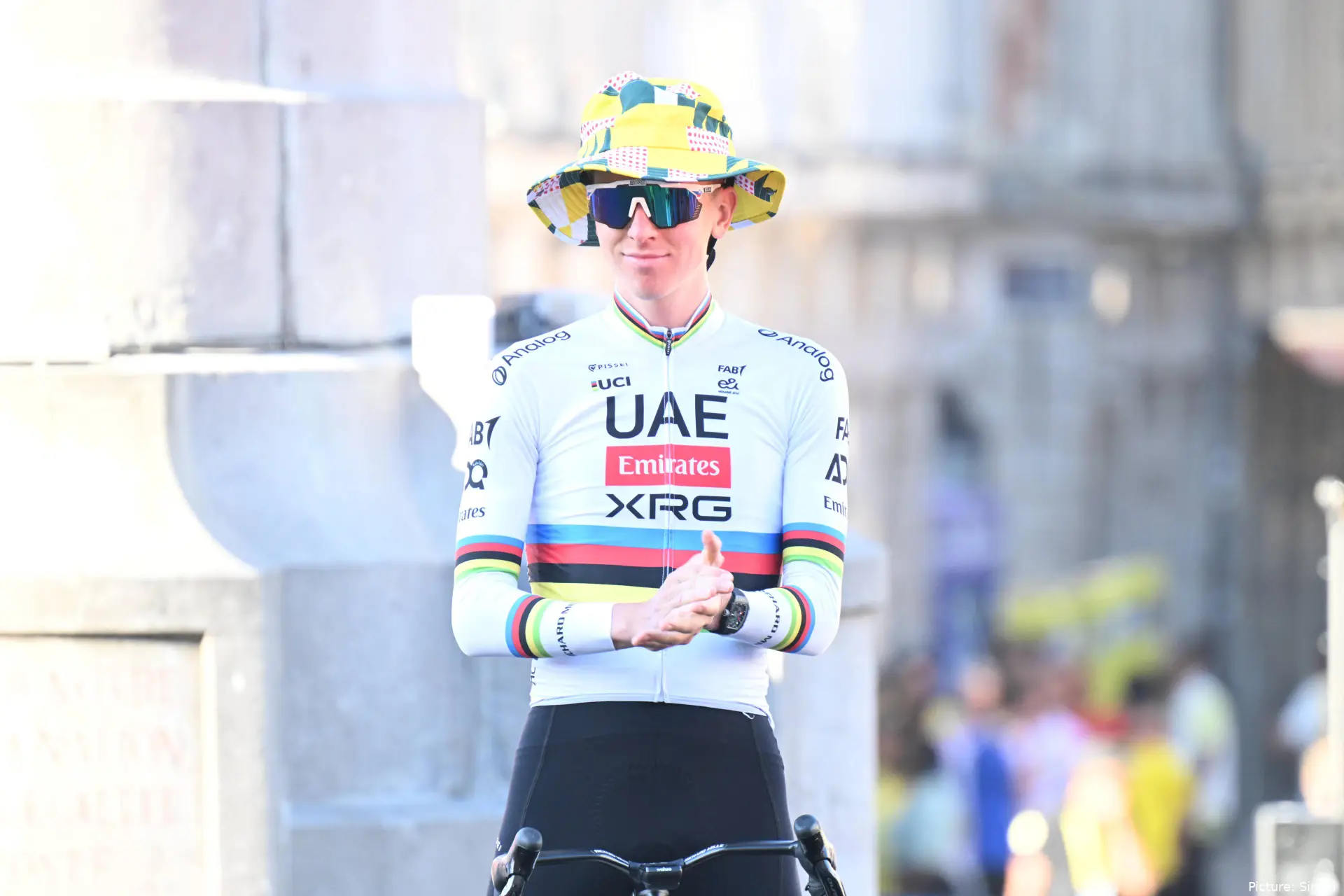
During a recent interview, Jonathan Vaughters, manager of EF Education-EasyPost, and Thomas van den Spiegel, CEO of Flanders Classics, engaged in a wide-ranging discussion regarding the economic and structural future of professional cycling.
The two figures debated the barriers preventing the sport from reaching a global audience, the overwhelming dominance of super-teams, and the potential implementation of salary caps. They argued that the current business model is unsustainable and confusing for new fans, proposing radical changes to the calendar and financial regulations to ensure competitive balance.
A sport "impossible to understand"
One of the central themes of the discussion was the complexity of the cycling calendar. Vaughters argued that for the uninitiated, the sport is a labyrinth that fails to communicate the significance of its biggest events outside of the Tour de France.
"For those of you who have been lifelong cycling fans, you probably understand it, because you’ve grown up with it... but for a new entrant, for somebody who’s a new fan of the sport, our sport is impossible to understand and it doesn’t make any sense," Vaughters began in an interview with Rouleur.

"The best example of this that I remember is in 2013, Dan Martin won Liège-Bastogne-Liège and we were sponsored by Garmin then. So very excitedly, at the finish line of Liège-Bastogne-Liège, I call up the CEO of Garmin and say, 'oh my god, we won a monument! We won Liège-Bastogne-Liège wearing a Garmin jersey!' And he says, 'oh, where’s that race?' He had no idea. He says, 'so does this mean that our team qualified for the Tour de France this year?' Again, to him Liège-Bastogne-Liège had no meaning outside the context of the Tour de France."
This confusion extends to casual interactions in the United States, where Vaughters notes that explaining his job is often impossible unless he explicitly mentions the Tour.
"For most people, even when I introduce myself when I’m in the US, they’ll say, 'what do you do?' I can’t say, 'I run a bicycle racing team'. That makes no sense to your average person in the US. If I say, 'well, have you ever watched the Tour de France on TV?' Quite a few people in the US will say, 'yes, I have.' And I’ll say, 'okay, well, I run one of the teams that races in the Tour de France.' And then they say, 'oh, great!' And that’s all well and good, but that’s extremely limiting."

For the general public, the Tour de France is often the only cycling race they recognize
The "gobbledygook" of the calendar
The reliance on a single event creates a structural weakness where the rest of the season becomes irrelevant to the broader market. Vaughters described the non-Tour calendar as "a gobbledygook of nothingness" to outsiders.
Van Den Spiegel agreed with him. "We have two hundred WorldTour racedays today. And the question is which races would be the pinnacle in the future? We need to reduce those two hundred days. That’s for sure," Van Den Spiegel stated.
"Do we go to sixty days? To eighty days? What do we do? We all believe that the Tour de France, rightfully so, is the biggest race in the world. It’s almost three and a half weeks. Should the Giro and the Vuelta in the future also be three and a half weeks? Because we need to reduce that number of race days."
Vaughters pointed out that this dilution affects the competitive integrity of smaller races. He cited the example of Juan Ayuso winning the Trofeo Laigueglia, a race where top-tier millionaires compete against semi-pros.

"This year in Trofeo Laigueglia... Juan Ayuso won it. Congratulations to Juan Ayuso, but here’s a rider getting paid maybe €3-4 million a year that wins the thing. There are Italian Continental-level pros there that are racing, that basically have to work in a pizza shop in the off-season in order to survive. That race should be a third division race for third division teams," Vaughters argued.
"As opposed to having UAE, who quite often this year would send a roster with a total value of probably over €10 million to a little tiny village race in the south of Italy. And we’re diluting the value of our own sport by doing that."
The discussion inevitably turned to the dominance of UAE Team Emirates and Tadej Pogacar. Vaughters did not shy away from addressing the massive financial disparity that currently exists in the WorldTour, suggesting that the lack of a budget cap is destroying the entertainment value of the sport.
"It’s definitely time for budget caps. I mean, you’ve got UAE, speaking in US dollars, that’s functioning on about $75 million, competing against quite a few teams that are functioning on $20 million. I mean, there’s a disparity there. It’s more than three times, so you know who’s going to win. Well, I’ll give you two guesses."
The Pogacar on Cofidis hypothesis
In perhaps the most striking moment of the debate, Vaughters proposed a thought experiment to illustrate why a salary cap would improve the fan experience. He suggested that if the best riders were forced to spread out across different teams due to financial restrictions, the racing would become unpredictable and exciting.
"Think of it this way, because people get a little bit upset about budget caps and salary caps. Why don’t you just let the best rider be on the best team? But how much fun would it be if we had this, right? So Pogacar, the greatest rider in the world... but he has to race for Cofidis," Vaughters suggested.
"Now imagine that. The racing is going to be pretty fun from this standpoint, because he’s going to have a team that has no capacity of controlling the race whatsoever. He’s going to have to figure it out on his own, whereas there’s this other team and they maybe have five strong riders. They’re not as good as Tadej by any stretch of the imagination, but they’ve got more depth. Well, now who wins? Now the race is pretty interesting, because the outcome is not certain."
He contrasted this potential excitement with the reality of the last season. "Whereas right now, we watched a hundred of the two-hundred race days that we were talking about won by one team, just monotonously over and over again."
Vaughters admitted that his perspective might stem partly from jealousy, but insisted it was ultimately about the health of the sport. "And of course, you could say, 'okay JV, you’re just jealous here.' And you’re right, I am. But what I would say is, what I’m more concerned about is that the racing becomes boring and that there’s just this one guy that keeps winning, or it’s just this one team that’s super rich that keeps winning. Then, that hurts all of the sport," he concluded.
Read also

Félix SernaCycling Journalist
Félix Serna is a writer at CyclingUpToDate and has been part of the team since 2025. He covers professional cycling across both the men’s and women’s calendars, with a focus on UCI rankings, race developments, and rider performance. His work includes interview-based reports, liveblogs, and tournament coverage designed to provide clear, accurate context throughout the season.
In his reporting, Félix regularly uses ProCyclingStats for results, statistics, and historical reference. He places strong emphasis on careful sourcing, editorial accuracy, and updating articles promptly when new, verified information becomes available. He holds a bachelor’s degree in International Studies.
claps 1visitors 1
Just in


Popular news
Latest comments
- he is fun - he goes back to the Sagan days with his showmanshipmij23-11-2026
- he doesn't sound ready to retire anytime soonmij23-11-2026
- U17 and juniors on national races are routinely using caffeine tablets before races. They are also using creatine and the like. sure, it's legal. the point is, it is performance enhancing and they are 14-17 years old. as juniors it will be decided whether they have a chance to move towards some sort of (semi-)professional cycling, no matter which discipline. what do you think they will regard acceptable to reach this goal and then to sustain it?Ketterechts23-11-2026
- Both of them, Geraint Thomas and Alberto Contador said if Pogi had gone to the Vuelta in 2024, he would have won. Ofcourse considering he wouldn't crash. They were right.PogiSloFans23-11-2026
- Merckx said that Pogi could race the Giro, Tour and Vuelta in a single season? Pogi said: "I can’t rule that out. In fact, I’ll try it sooner or later, but certainly not in 2027. I'm feeling great at the moment. I'm training and eagerly looking forward to getting back to racing. I'm confident that I can return to the same level, or even a higher one. Life moves fast, very fast. Sometimes you need a break; you need to stop for a while. That's what I needed. If I hadn't taken a break, my body would simply have forced me to.”PogiSloFans23-11-2026
- One of the most tenacious and entertaining riders in the peloton. His (and Jorgensen's) work at the world championships was elite craftmanship.Occam23-11-2026
- I'd add being seriously annoying to your self-description.Occam23-11-2026
- Meh. For whatever their sins, the boys at The Move know cycling strategy, building a team and tactics. You don't win the TdF 7 times in a row if you're a hack.Occam23-11-2026
- Of course there is doping in any professional sport. Game theory dictates that someone will do it for an advantage. Human nature always wins. And for all those who criticize, imagine what you'd do if you were facing the possibility to be a pro but you had to dope to do it. Almost everybody would do it at that point.Occam23-11-2026
- It's not nice to think about all the stuff that athletes must take to return to the top level long before they could heal naturally (Jonas after the Itzulia crash, for example). But it's not doping.Hills3323-11-2026
Loading
4 Comments