Giro d'Italia 2027 offers Tadej Pogacar an irresistible temptation: Will he abandon his Vuelta plans for the Corsa Rosa?
Cycling
The route for the 2027 Giro d'Italia has been unveiled, and there is plenty to suggest it could become one of the highlights of next season. Starting in Trieste, crossing into Slovenia, climbing the Mortirolo twice, bringing back the Passo di Gavia and finishing its final mountain stage on the legendary Monte Zoncolan, the race promises a demanding mix of high mountains and two very different individual time trials.
It is a route that could also influence Tadej Pogacar's plans for 2027. The Slovenian has yet to decide whether to stick with his intention of returning to the Vuelta a Espana or make a second appearance at the Giro instead.
Pogacar previously identified the Tour de France, the World Championships and the Vuelta as his three major objectives for 2027. However, he has also admitted that he would actually prefer to ride the Giro, which he won in 2024. Now that the Italian Grand Tour's route has been revealed, he has another reason to reconsider, with several features of the course seemingly tailor-made for the UAE Team Emirates - XRG leader.
The opportunity to start in Trieste, close to his home country, and race through Slovenia during the opening stages is an obvious attraction. But there is far more to the route than its opening weekend. Historic climbs and a demanding final week should have a major influence on the general classification, while the uphill time trial to Campo di Giove and the 37-kilometre test between Monza and Milan provide two very different opportunities to gain time.
Pogacar has given no indication that the announcement has changed his thinking. His eventual programme will be agreed with UAE's management, and for now, the Vuelta remains the one Grand Tour missing from his palmares. Nevertheless, the Giro's route could make that decision considerably more difficult.

Pogacar already has one Giro d'Italia win under his belt
A start in Trieste and a visit to Slovenia could tempt Pogacar
One of the biggest attractions of the 2027 edition is its Grande Partenza. The race will begin in Trieste before heading into Slovenia during the opening days, with the second stage running from Ljubljana to Koper.
For Pogacar, it would be a particularly special opportunity to race a Grand Tour on home roads, in front of Slovenian supporters who rarely get the chance to watch him compete in one of cycling's three biggest stage races so close to home.
The opening stage, starting and finishing in Trieste, should suit the sprinters. Stage two offers a more explosive finale in Slovenia, before the peloton returns to Italy for a tricky finish in Possagno on the third day. The race then heads south, with another opportunity for the fast men on stage four before the first major mountain challenges arrive.
The Slovenian connection certainly does not guarantee Pogacar's participation, but it adds an extra incentive to a race he has already admitted he would prefer to ride. Having won the Giro and Tour, a return to Italy featuring a stage in his home country could hold considerable appeal.
The question is whether that would be enough to convince him to abandon plans that have so far pointed towards the Vuelta. Pogacar has already completed the Giro-Tour double, but victory in Spain would make him a winner of all three Grand Tours.
Mortirolo, Gavia and Zoncolan: A route packed with legendary climbs
The biggest sporting attraction of the 2027 Giro is undoubtedly its mountainous terrain. Organisers have brought back some of the most famous climbs in the race's history, with a particularly demanding combination awaiting the general classification contenders in the final week.
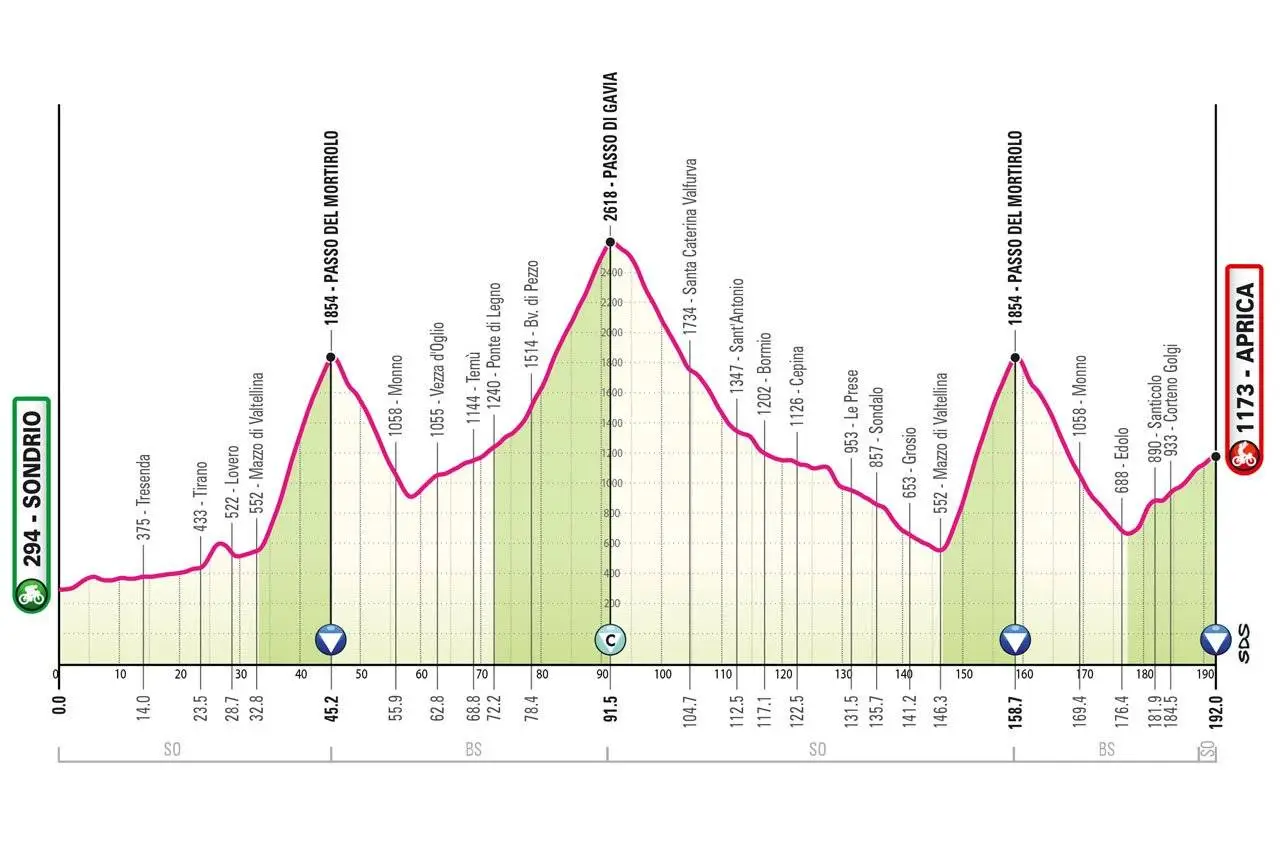
Stage 16 could prove one of the toughest days of the entire race. Starting in Sondrio and finishing in Aprica, the riders will tackle the Passo del Mortirolo twice, with the Passo di Gavia sandwiched between the two ascents.
It is a formidable combination of historic climbs that will test even the strongest riders and could provide an ideal opportunity for the general classification favourites to launch decisive attacks.
There is also a summit finish at Madonna di Campiglio on stage 18, following a day featuring several difficult climbs. But the final major obstacle will be Monte Zoncolan, which hosts the finish of stage 20 and provides one last opportunity to reshape the overall standings before the race concludes in Rome.
For Pogacar, these are the sorts of challenges on which he has repeatedly demonstrated his superiority. The Slovenian has consistently shown his ability to make the difference on both long mountain passes and steeper, more explosive ascents. The combination of Mortirolo, Gavia and Zoncolan would give him plenty of opportunities to exploit those strengths.
And the climbing is not restricted to the final week. Stage five finishes at Sassotetto after a 13.1-kilometre ascent averaging 7.4%. There are also summit finishes at Monte Livata and Passo dei Santi before another demanding mountain stage ending at Piani di Bobbio.
That distribution of climbing ensures the general classification contenders will face significant tests throughout the race, rather than simply waiting for the final few days.
Two contrasting time trials offer further opportunities
Another factor that could appeal to Pogacar is the inclusion of two individual time trials with very different characteristics.
The first comes on stage seven, with a 19.6-kilometre uphill time trial to Campo di Giove. The final 12.5 kilometres are uphill, averaging 4.4%, making it a particularly interesting test for the general classification contenders.
Unlike a conventional flat time trial, where pure power and aerodynamics tend to dominate, climbing ability will also play an important role. Pogacar has repeatedly shown that he can perform at the highest level in both disciplines and is particularly effective when a time trial includes significant climbing.
The second test comes on stage 15, with 37 kilometres between Monza and Milan. This is a much more conventional time trial, favouring powerful riders capable of maintaining high speeds over a prolonged individual effort. The distance could produce substantial gaps, particularly for climbers who struggle against the clock.
Together, the two stages give the Giro an additional dimension. Being among the strongest in the mountains will not be enough on its own. The overall contenders will also need to perform in an uphill time trial and a longer, flatter effort.
For Pogacar, that balance is another reason the course could suit him. His climbing ability would make him a major threat on the race's biggest mountain stages, while the time trials could provide further opportunities to extend his advantage over his rivals.
Key stages of the 2027 Giro d'Italia
| Stage | Route or main challenge | Key feature |
| 1 | Trieste - Trieste | Expected sprint finish |
| 2 | Ljubljana - Koper | Slovenian stage with explosive finale |
| 5 | Sassotetto summit finish | 13.1km at 7.4% |
| 7 | Campo di Giove time trial | 19.6km, including 12.5km uphill |
| 9 | Monte Livata summit finish | 13.9km at 6.9% |
| 12 | Passo dei Santi, Zeri | 8.7km at 8.7% |
| 14 | Piani di Bobbio summit finish | Final 10km averaging 9% |
| 15 | Monza - Milan | 37km individual time trial |
| 16 | Sondrio - Aprica | Double Mortirolo and Passo di Gavia |
| 18 | Madonna di Campiglio | Summit finish after mountainous stage |
| 20 | Monte Zoncolan | Final major mountain stage |
| 21 | Rome | Final stage |
The course offers plenty to tempt Pogacar. Starting in Trieste and racing through Slovenia would provide a special occasion, while the mountain stages and time trials suit his characteristics almost perfectly.
But the decision will involve more than whether he likes the route. He must also consider how the Giro would fit into a season in which the Tour de France and World Championships remain major priorities.
The Vuelta remains Pogacar's unfinished business
The biggest obstacle to Pogacar returning to the Giro is his previously stated intention to race the Vuelta a Espana in 2027.
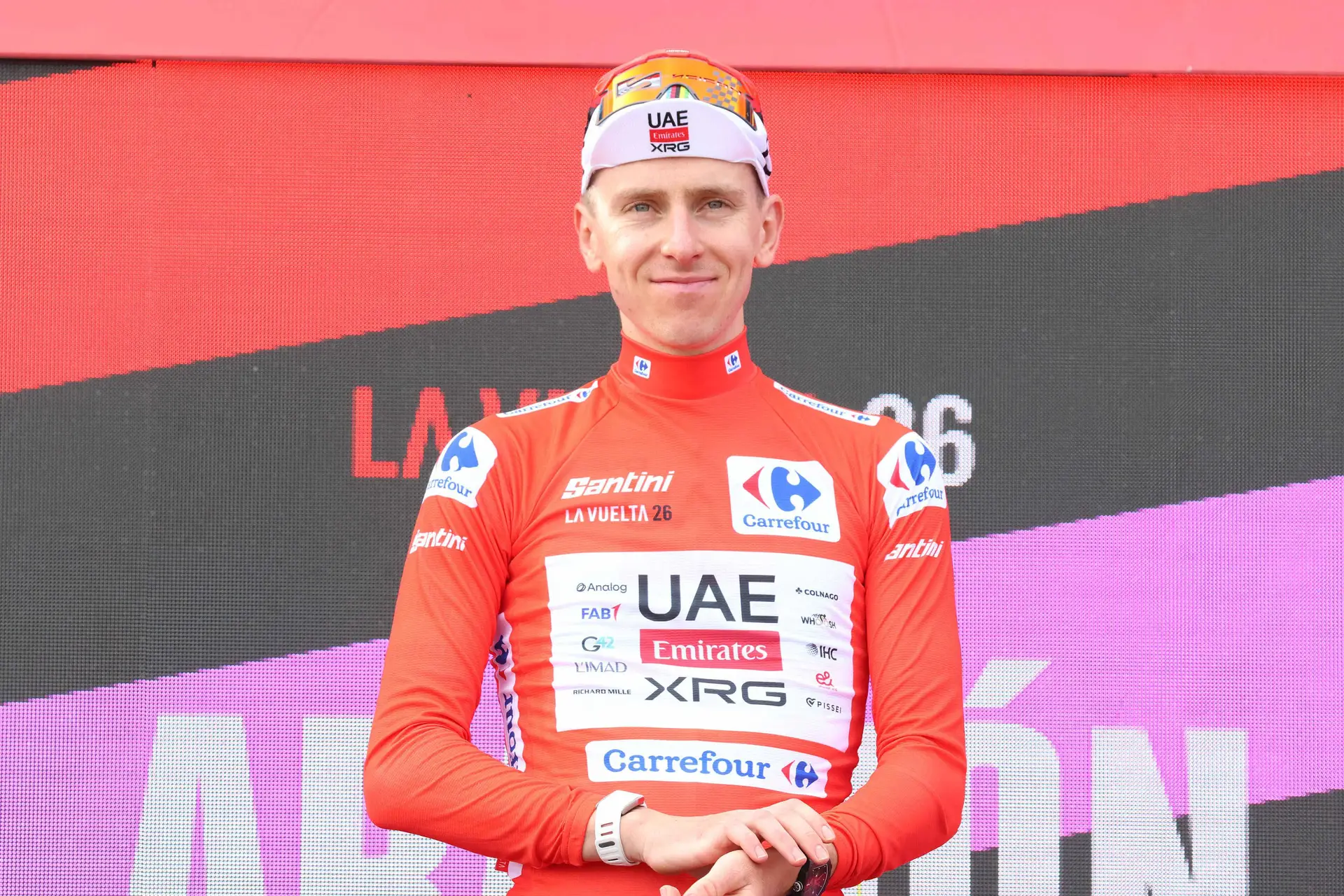
The Slovenian was leading the 2026 edition in the red jersey when a crash on stage eight forced him to abandon, bringing his season to a premature end. Returning to Spain would therefore offer both the chance to make up for that disappointment and an opportunity to complete his collection of Grand Tour victories.
"The goal for next year would, of course, be to combine the World Championships with the Tour and Vuelta," Pogacar explained in an interview with Slovenian broadcaster RTV SLO. "Although I'd prefer to ride the Giro, I'll have to complete the Vuelta at some point. I think that will be the target for next year."
His agent, Alex Carera, has also suggested that a return to Spain is more likely than another Giro appearance. Carera explained that Pogacar has unfinished business with the Vuelta and does not like leaving objectives unfulfilled. However, he also stressed that the final decision would be made during UAE's December training camp, when Pogacar and the team's sporting management discuss his programme.
The Giro's new route could influence those discussions, but it does not remove the sporting motivation behind returning to Spain. Having already won the Giro in 2024 and established himself as a multiple Tour de France champion, the Vuelta is the final Grand Tour missing from Pogacar's palmares.
Choosing Spain would give him another opportunity to complete that achievement and return to the race he was forced to leave early in 2026. Opting for Italy instead would mean postponing that unfinished business, at least for another season.
Read also
Could the Giro persuade Pogacar to change his 2027 plans?
The central question is how Pogacar can accommodate so many major objectives within a single season. The Tour de France remains an obvious priority, particularly with the Slovenian targeting a sixth overall victory. That would take him beyond the record of five currently shared by Jacques Anquetil, Eddy Merckx, Bernard Hinault and Miguel Indurain.
The World Championships in Haute-Savoie are another major target. The men's road race is scheduled for late August, with the Vuelta beginning just days afterwards, making a combination of the two events especially demanding.
Should Pogacar stick with his intention to race both, he would face a complicated challenge in managing his recovery following the Tour and ensuring he arrives at the World Championships and Vuelta in competitive condition.
The Giro, by contrast, takes place in May and would allow him to spread his biggest objectives more evenly across the season. Returning to Italy would likely mean reconsidering his Vuelta ambitions or committing to a particularly demanding combination of Grand Tours. Racing both the Giro and Tour would not be unfamiliar territory, given that Pogacar won both in 2024, but repeating that achievement would still require careful preparation.
There has been no indication so far that the unveiling of the Giro route has prompted a change of heart. Pogacar has admitted that he would prefer to race in Italy, but he has also repeatedly emphasised his desire to complete the set of Grand Tour victories by winning the Vuelta.
The Slovenian stages and the mountainous nature of the 2027 Giro have certainly added to the attraction of returning to the Corsa Rosa, but his decision will ultimately be made in consultation with UAE's management.
The team must determine which programme gives its leader the best opportunity to challenge for the Tour, World Championships and whichever other Grand Tour he decides to target. His spring Classics schedule and the physical demands of the early season will also have to be taken into account.
The 2027 Giro has presented Pogacar with a particularly tempting alternative. Mortirolo, Gavia, Zoncolan and a stage through his home country make the Italian Grand Tour an appealing prospect for a rider with his strengths.
But the Vuelta remains the one major missing piece of his Grand Tour record. Whether the Giro's route is enough to change his mind, or whether he sticks with the plans outlined before its unveiling, will become clearer when his 2027 programme is finalised.

Jorge BorregueroWriter
Jorge Borreguero is a journalist with a degree from the Complutense University of Madrid and has been a writer for Cyclinguptodate and Ciclismoaldia since early 2023. In this role, he has played a key part in the evolution of the website, particularly as a specialist covering Movistar Team. He regularly writes race reports, analytical pieces, and in-depth features about the team, and has conducted exclusive interviews and attended multiple team presentations, providing readers with firsthand insights into one of the leading professional cycling squads.
Throughout his career, Jorge has maintained a strong focus on sports journalism, gaining experience across a variety of disciplines, including basketball and football. However, his current work is almost entirely dedicated to cycling, contributing extensively to Ciclismoaldia and its sister website Cyclinguptodate. For these platforms, he combines thorough research with detailed reporting to deliver high-quality content, ranging from race previews and results to expert analysis of teams and riders.
Jorge’s reporting is marked by accuracy, depth, and a commitment to providing readers with reliable and authoritative information. His direct engagement with teams, athletes, and events ensures that his coverage reflects firsthand knowledge and professional insight. Through his work, he has established himself as a trusted voice in professional cycling journalism, bridging the gap between the sport and its global audience while maintaining rigorous editorial standards.
claps 0visitors 0
Just in

Popular news
Latest comments
- Good Point, I wonder if he's been testedmhfrvz03-11-2026
- A busy boy!Lozza03-11-2026
- I hope 2027 is his year.mij03-11-2026
- why does he have to? many GT riders from Froome to Contador to Indurain didn't do them.mij03-11-2026
- I think Jonas would have lost the TDF by 4+ minutes (at the least) and might not have even been in the top 3. Too much talent in the younger riders to say anyone not named Pogačar would have been top 3md197503-11-2026
- this is just stupid. you already have 23%, gravel is over the topabstractengineer03-11-2026
- There was once a time when Lance was supremely popular and he used his artificial "It's Not About the Bike: My Journey Back to Life" persona to lead his mob in going after Greg. There was no one Lance did not abuse in protecting his phony hero image. Lance promoted himself as a divine megastar and he let down millions of cancer victims and gullible devotees who clung far too long to the charade. Lance is the epitome of a corrupt person and because of his power, many around him, including business enterprises, succumbed to the evil. All who got in Armstrong's way were mercilessly attacked by him and his minions. This remarkably continues today with a new generation. LeMond was a number one enemy and paid a huge price. Who do you think slandered who?Yepperoni03-11-2026
- You despise him because he calls out the truth....OK clown !frieders303-11-2026
- JV is really slighting himself with not doing the 1 dayers.. 🤷
 leedorney02-11-2026
- Watch the interview on youtube. I don't speak French. I do speak English and Spanish and you can hear it in his voice. Years ago LeMond had real personal problems I imagine in no small part because of Armstrong. then Armstrong goes round "full blast" re: LeMond having drinking and drug problems. The same way Andreu was expelled from mainstream cycling so was LeMond. On the positive side the clips of the ride and chatting with old teammates and was good. To seemed like a fun day and experience and good reason brush up his French.atom02-11-2026
Loading
Write a comment